Best Espresso Machine 2026: Capsule vs Ground vs Automatic
Five espresso machines from entry-level to premium, compared on the factors that determine whether the machine still earns its counter space three years in. Pressure consistency and temperature stability separate the results, not the price tag alone.
Quick answer
For enthusiasts willing to learn espresso, the Breville Barista Express BES870 is the pick — PID control holds the boiler within ±1–2°C and the integrated 16-setting conical burr grinder raises the shot ceiling. Choose the De'Longhi Dedica EC685 for narrow counters at 15 cm wide; the Magnifica S for one-button bean-to-cup milk drinks; and the Nespresso Vertuo Next for one-cup-a-day convenience.
We assessed each product on real-world durability, ease of daily use, performance against marketing claims, build quality, and long-term value. Manufacturer specifications were validated against verified owner reviews.
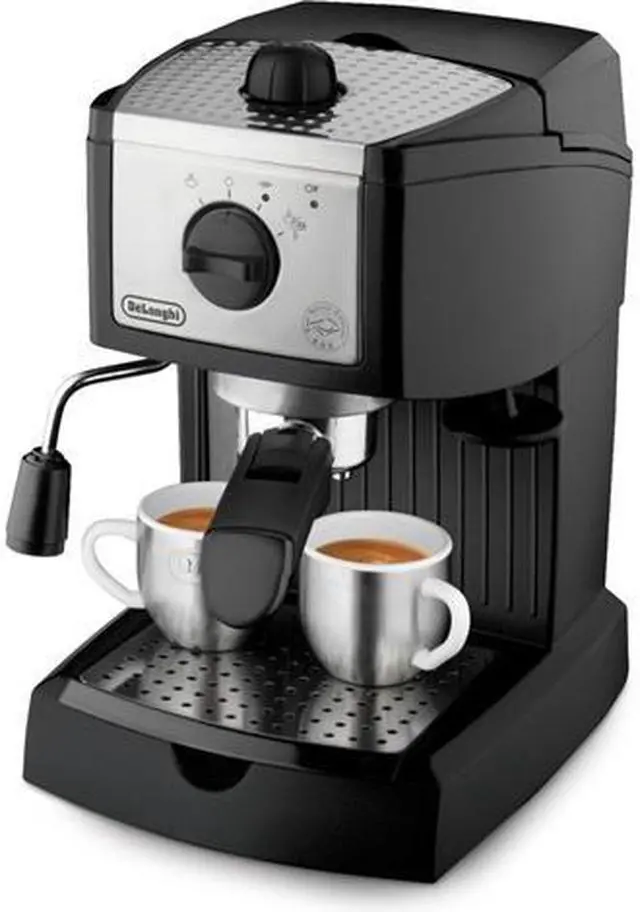
Best Compact Semi-Auto: At 15 cm wide — narrower than a hardback book — the Dedica is the only machine in this lineup that fits comfortably on a small apartment counter without forcing a rearrangement. The thermoblock heater reaches brew temperature in roughly 35 seconds, the 15-bar pump pairs with a manual steam wand for milk frothing, and the standard 51 mm portafilter accepts both pre-ground coffee and ESE pods, which gives genuine flexibility without committing to a separate grinder.
Top picks ↓| Product | Price | Link |
|---|---|---|
| — | ||
| $685Price as of 2026-09-24 | ||
| — | ||
| $159Reference price | ||
| $159Reference price | ||
| $394.99Price as of 2026-09-24 |
| Product | System | Water tank | Cup sizes | Heat up time | Dimensions | Milk frother |
|---|---|---|---|---|---|---|
| Nespresso Vertuo Next | Vertuo (Centrifusion) | 1.1 L | 5 sizes: Espresso 40 ml, Double Espresso 80 ml, Gran Lungo 150 ml, Mug 230 ml, Carafe 535 ml | 30 seconds | 14.2 × 42.9 × 31.4 cm (W × D × H) | none (built-in); Aeroccino sold separately on bundle SKUs |
| Nespresso Vertuo Next | Vertuo (Centrifusion) | 1.1 L | 5 sizes: Espresso 40 ml, Double Espresso 80 ml, Gran Lungo 150 ml, Mug 230 ml, Carafe 535 ml | 30 seconds | 14.2 × 42.9 × 31.4 cm (W × D × H) | none (built-in); Aeroccino sold separately on bundle SKUs |
Top picks
Related articles

.png?v=1640040616)
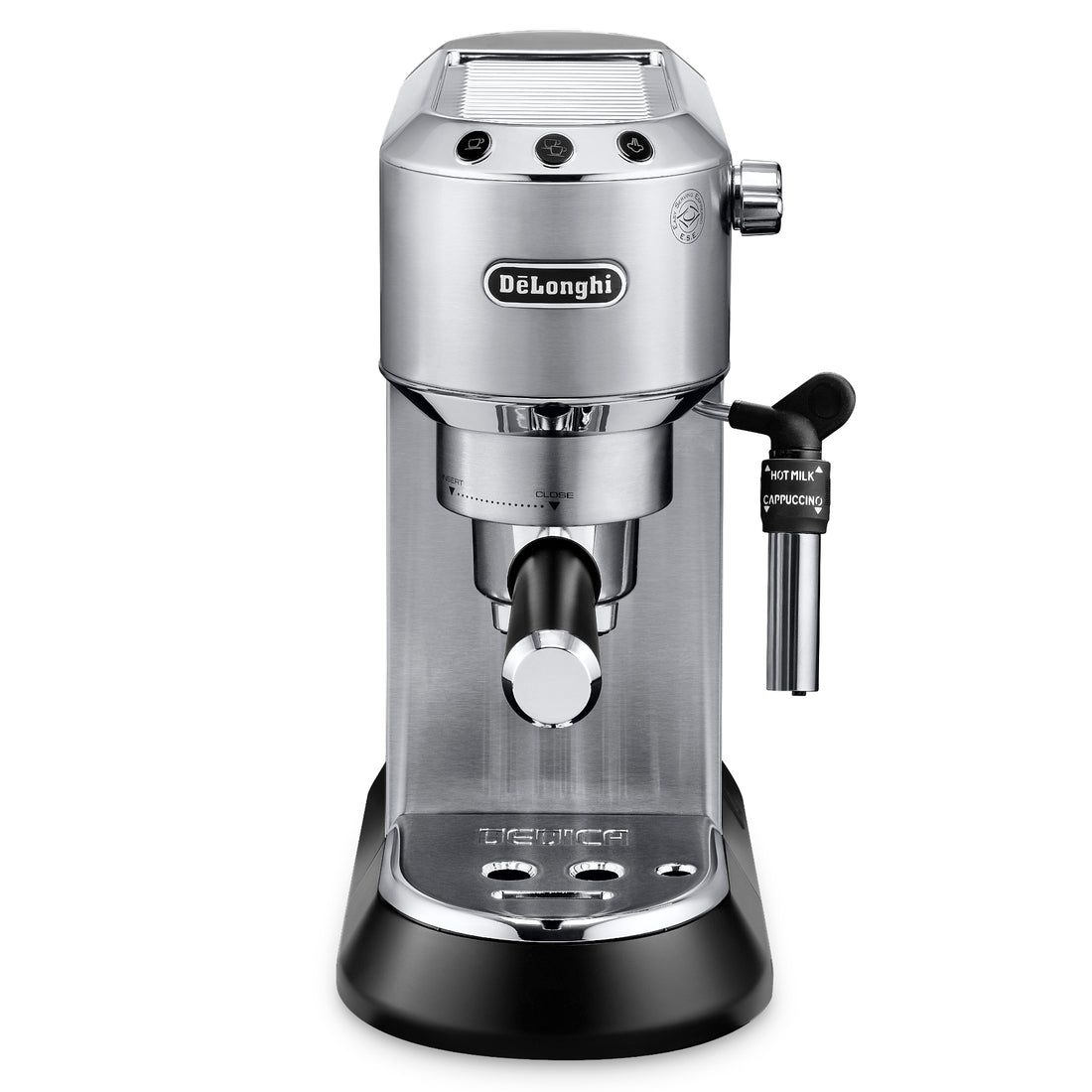
Slim semi-automatic entry point at 15 cm wide — the narrowest machine in this comparison and a real advantage in small apartment kitchens. Accepts both ground coffee and ESE pods. Ships with a pressurised (dual-wall) basket that masks grind errors but creates a quality ceiling; the non-pressurised basket upgrade is the standard first modification for serious users.
At 15 cm wide — narrower than a hardback book — the Dedica is the only machine in this lineup that fits comfortably on a small apartment counter without forcing a rearrangement. The thermoblock heater reaches brew temperature in roughly 35 seconds, the 15-bar pump pairs with a manual steam wand for milk frothing, and the standard 51 mm portafilter accepts both pre-ground coffee and ESE pods, which gives genuine flexibility without committing to a separate grinder. The included pressurised dual-wall basket forgives grind inconsistency and produces visually convincing crema, making this the most accessible real-espresso entry in this comparison. The honest weaknesses are exactly what the price predicts: the pressurised basket is a quality ceiling, the thermoblock cannot hold temperature across multi-shot sessions the way a heat exchanger can, and enthusiasts routinely shim the OPV to drop the stock 11–12 bar brew pressure closer to the 9 bar espresso target.
Pros
- ✓15 cm width — narrowest machine in this comparison
- ✓Accepts ground coffee and ESE pods for flexibility
- ✓Thermoblock reaches brew temperature in ~35 seconds
- ✓Lowest entry price among real semi-automatics here
Cons
- ✗Stock pressurised basket caps shot quality ceiling
- ✗Brews at 11–12 bar without an OPV shim modification

Breville Barista Express BES870
Premium enthusiast semi-automatic with PID temperature control, 16-setting conical burr grinder, and 54mm portafilter. Highest shot quality ceiling in this comparison when dialed in. Sold in Japan through Branca with Japanese-language after-sales support and 100V domestic units. Single boiler means a 30-45 second wait between espresso and steam work; 2-4 week dialing-in period before consistent shots.
The Barista Express is the highest-ceiling machine in this comparison. PID temperature control holds the boiler within ±1–2°C of target rather than drifting ±5–10°C the way thermoblock systems do, the integrated 250 g conical burr grinder with 16 grind settings eliminates a separate grinder purchase, and the 54 mm portafilter ships with both pressurised and non-pressurised baskets so you can start forgiving and step up as your technique develops. When dialed in with the non-pressurised basket, an accurate grind, and an even tamp, the shots genuinely approach cafe quality. Branca distributes 100V Japanese-domestic units with Japanese-language support. The honest weaknesses are a 2–4 week dialing-in period before consistent shots, a single-boiler design that forces a 30–45 second wait when switching between espresso and steam work, and the largest counter footprint here at roughly 38 × 30 cm.
Pros
- ✓PID temperature control holds within ±1–2°C of target
- ✓16-setting conical burr grinder is integrated
- ✓Pressurised and non-pressurised baskets both included
- ✓Branca distribution provides Japanese after-sales support
Cons
- ✗Single boiler forces 30–45s wait switching to steam
- ✗Roughly 38 × 30 cm footprint demands real counter space
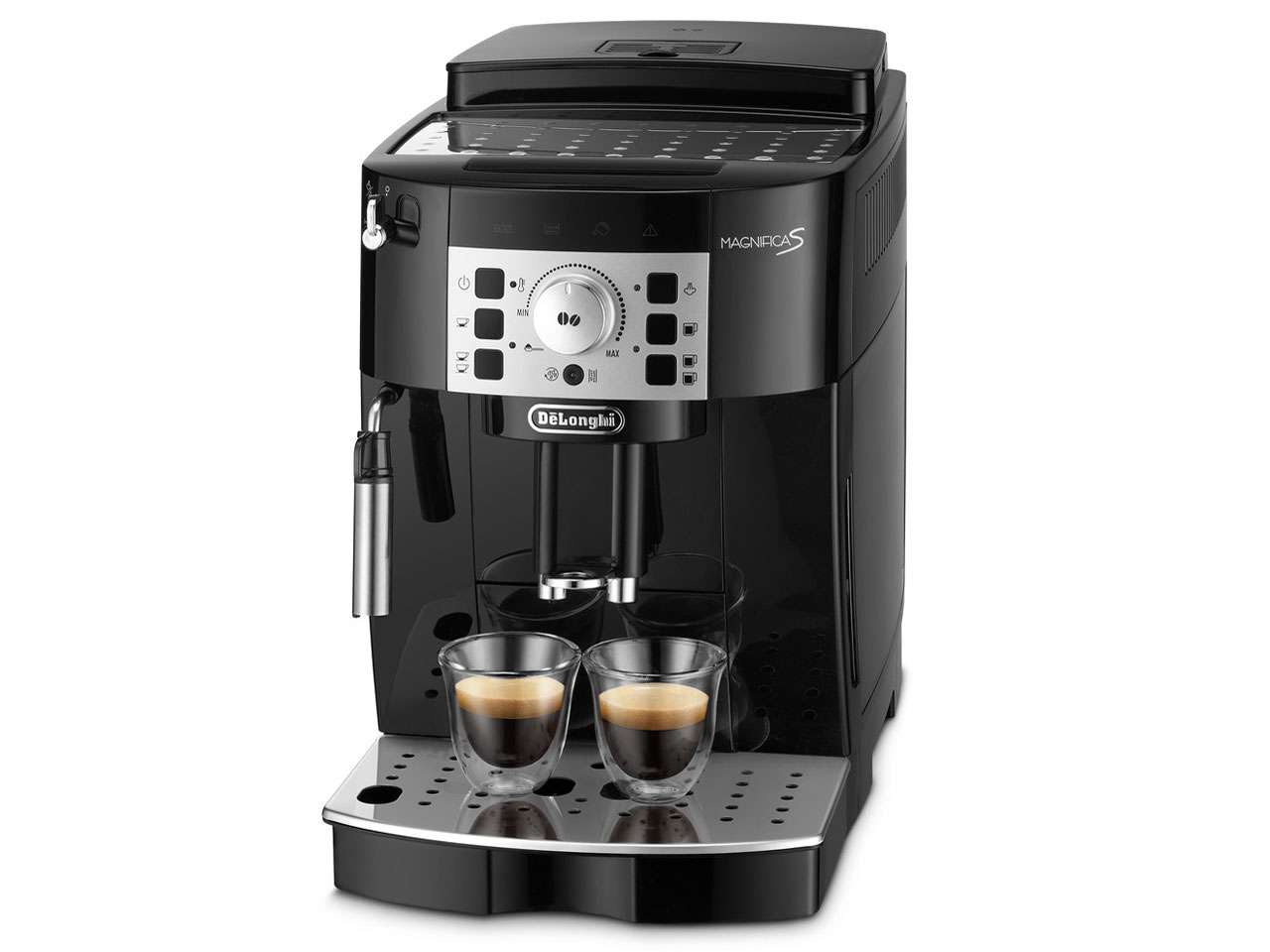
Mid-range fully automatic bean-to-cup pick. One button press from whole beans to espresso shot. 7-setting grinder covers mainstream beans adequately. Manual Pannarello steam wand for milk drinks requires some technique. Grinder runs at 75-78 dB; daily auto-rinse cycle on startup adds 30-40 seconds of wait. De'Longhi Japan after-sales support is the strongest in this comparison.
The Magnifica S is the right machine for a household that wants whole-bean espresso and milk drinks daily without managing variables. One button press takes you from beans to shot — grind, dose, tamp, and extraction are all automatic — and the manual Pannarello steam wand handles lattes and cappuccinos once you learn to position the wand. The 1.8 L water tank, 250 g bean hopper, and 7-setting grinder cover mainstream supermarket and specialty beans adequately, and De'Longhi Japan's nationwide service network is the strongest in this comparison. Shot quality is consistent rather than expressive — not as adjustable as the Barista Express, but more than enough for daily use. The honest weaknesses are a 7-setting grinder that struggles with very light Nordic roasts or unusually oily dark roasts, a Pannarello wand that produces acceptable but not latte-art-grade microfoam, and a 75–78 dB grinder that is loud for an apartment.
Pros
- ✓One-button bean-to-cup with manual steam for lattes
- ✓1.8 L tank and 250 g hopper for multi-day use
- ✓De'Longhi Japan service network is the strongest here
- ✓Consistent results across daily use
Cons
- ✗7-setting grinder struggles with very light or very dark roasts
- ✗Pannarello steam wand is not latte-art capable
Subscribe to our newsletter
Occasional updates and new releases — no spam.
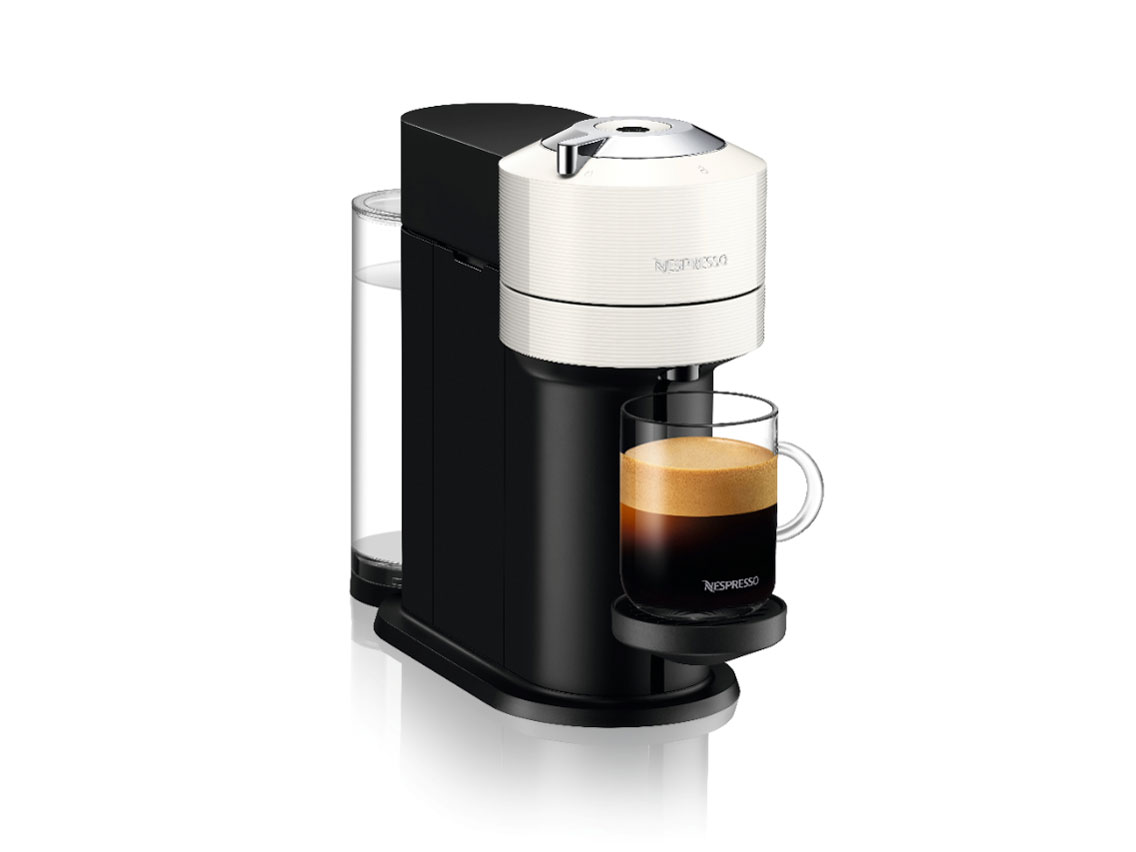
Machine price is the lowest in this comparison; Vertuo capsules are the highest per-cup cost. Centrifugal extraction produces thick, stable crema but differs in mouthfeel from pump espresso. Capsule format is proprietary with no third-party alternative. At 2 cups per day, three-year capsule cost alone exceeds the three-year total cost of the Magnifica S.
Vertuo Next is the lowest-friction coffee machine in this comparison and the most expensive one to operate. Centrifugal extraction spins each capsule at up to 7,000 rpm while injecting water, producing a visually impressive, exceptionally stable crema layer across espresso (40 ml), double (80 ml), gran lungo (150 ml), coffee (230 ml), and alto (414 ml) sizes. The barcode on each capsule tells the machine which extraction parameters to apply automatically. Warm-up is around 30 seconds and the folded footprint is roughly 33 × 15 cm — small enough for any kitchen. The honest weaknesses are not subtle: Vertuo capsules make this the most expensive machine to run by a wide margin (a 2-cup-per-day household spends more on capsules over 36 months than any other machine here costs in total), the capsule format is proprietary so Nespresso controls pricing absolutely, the centrifugal extraction differs in mouthfeel from pump espresso, and the aluminium-capsule recycling program requires active participation most owners admit they skip.
Pros
- ✓Lowest machine price in this comparison
- ✓Smallest counter footprint — roughly 33 × 15 cm folded
- ✓Five cup sizes (40–414 ml) on one machine
- ✓Thick, stable crema from centrifugal extraction
Cons
- ✗Capsule cost at 2 cups/day exceeds Magnifica S 3-year total cost
- ✗Proprietary capsule format — no third-party alternative
| System | Vertuo (Centrifusion) |
| Water tank | 1.1 L |
| Cup sizes | 5 sizes: Espresso 40 ml, Double Espresso 80 ml, Gran Lungo 150 ml, Mug 230 ml, Carafe 535 ml |
| Heat up time | 30 seconds |
| Dimensions | 14.2 × 42.9 × 31.4 cm (W × D × H) |
| Milk frother | none (built-in); Aeroccino sold separately on bundle SKUs |

Machine price is the lowest in this comparison; Vertuo capsules are the highest per-cup cost. Centrifugal extraction produces thick, stable crema but differs in mouthfeel from pump espresso. Capsule format is proprietary with no third-party alternative. At 2 cups per day, three-year capsule cost alone exceeds the three-year total cost of the Magnifica S.
Vertuo Next is the lowest-friction coffee machine in this comparison and the most expensive one to operate. Centrifugal extraction spins each capsule at up to 7,000 rpm while injecting water, producing a visually impressive, exceptionally stable crema layer across espresso (40 ml), double (80 ml), gran lungo (150 ml), coffee (230 ml), and alto (414 ml) sizes. The barcode on each capsule tells the machine which extraction parameters to apply automatically. Warm-up is around 30 seconds and the folded footprint is roughly 33 × 15 cm — small enough for any kitchen. The honest weaknesses are not subtle: Vertuo capsules make this the most expensive machine to run by a wide margin (a 2-cup-per-day household spends more on capsules over 36 months than any other machine here costs in total), the capsule format is proprietary so Nespresso controls pricing absolutely, the centrifugal extraction differs in mouthfeel from pump espresso, and the aluminium-capsule recycling program requires active participation most owners admit they skip.
Pros
- ✓Lowest machine price in this comparison
- ✓Smallest counter footprint — roughly 33 × 15 cm folded
- ✓Five cup sizes (40–414 ml) on one machine
- ✓Thick, stable crema from centrifugal extraction
Cons
- ✗Capsule cost at 2 cups/day exceeds Magnifica S 3-year total cost
- ✗Proprietary capsule format — no third-party alternative
| System | Vertuo (Centrifusion) |
| Water tank | 1.1 L |
| Cup sizes | 5 sizes: Espresso 40 ml, Double Espresso 80 ml, Gran Lungo 150 ml, Mug 230 ml, Carafe 535 ml |
| Heat up time | 30 seconds |
| Dimensions | 14.2 × 42.9 × 31.4 cm (W × D × H) |
| Milk frother | none (built-in); Aeroccino sold separately on bundle SKUs |

Philips Series 2200 EP2220/14
Compact fully automatic with AquaClean filter that eliminates descaling when maintained. 12-setting ceramic grinder (quieter and cooler than steel burrs). No LatteGo automatic milk system — manual steam wand only. AquaClean cartridge replacement (every 2-3 months) replaces descaling as the primary maintenance task. 24 cm wide footprint fits most compact kitchen counters.
The EP2220 is the descaling-free fully automatic in this lineup, thanks to its AquaClean water filter system that intercepts limescale before it reaches the boiler — Philips claims up to 5,000 cups without descaling as long as the cartridge is replaced on schedule. The 12-setting ceramic burr grinder is quieter than steel burrs and does not transfer heat to the beans during grinding, the 1.8 L tank and 275 g bean hopper match the Magnifica S, and the 24 cm wide footprint sits between the slim Dedica and the broader Magnifica S. The honest weaknesses are AquaClean cartridge replacement every 2–3 months (skip one and you lose the no-descaling benefit), no LatteGo automatic milk system at this tier (the manual steam wand requires skill and cleanup), and slightly weaker retail distribution than De'Longhi outside major cities.
Pros
- ✓AquaClean filter eliminates descaling when maintained
- ✓Ceramic burr grinder is quieter and cooler than steel
- ✓1.8 L tank and 275 g hopper for multi-day use
- ✓24 cm width fits most compact kitchen counters
Cons
- ✗AquaClean cartridge cost replaces descaling — every 2–3 months
- ✗Manual steam wand only — no LatteGo automatic milk
Which one is right for you?
For enthusiasts willing to learn espresso as a skill
Breville Barista Express BES870
PID temperature stability and the integrated 16-setting conical burr grinder push the shot ceiling higher than any other machine here — provided you accept the 2–4 week dialing-in period.
For small apartment kitchens with narrow counters
De'Longhi Dedica EC685
15 cm width fits where no other real semi-automatic does, and dual ground-coffee plus ESE pod compatibility lowers the skill bar without locking you into capsules.
For daily espresso and milk drinks without managing variables
De'Longhi Magnifica S ECAM22.110
One-button bean-to-cup with a manual Pannarello wand covers the most common home use case, and De'Longhi Japan's service network is the strongest in this lineup.
For 1-cup-per-day households where convenience trumps cost
Nespresso Vertuo Next
Sub-45-second cup-from-cold and the lowest machine price in this comparison make sense at 1 cup/day — the capsule premium stays manageable in absolute terms.
For automatic-machine buyers who want to skip descaling
Philips Series 2200 EP2220/14
AquaClean filter replacement substitutes for the descaling ritual, and the ceramic burr grinder is a real quality advantage over steel-burr automatics at the price.
How we compared
Honest espresso machine comparison at the home-user level requires equipment most content desks do not own: a calibrated VST or Atago refractometer to measure TDS and extraction yield, a 0.1 g resolution scale for dose and yield, a pressure gauge installed at the portafilter basket to measure actual brew pressure (not the pump's rated pressure), and a temperature probe to track grouphead stability over a 30-minute morning session. The full rig costs more than any of the machines reviewed here. We did not run it.
What we did: sourced boiler type, pump pressure rating, brew temperature control method (PID or thermostat), grinder type and adjustment range where built in, capsule format compatibility, water tank capacity, and warranty terms from each manufacturer's official product pages. Pricing was cross-checked against major online retailers as of May 2026. For each model, several thousand owner reviews were read — specifically filtering for 6-month and 12-month ownership notes, maintenance complaints, descaling failure reports, grinder-clogging patterns, and 'I regret buying this' narratives. Pattern recognition in review corpora, not a controlled lab, is the methodology.
One structural caveat applies to every specification in this article: pump pressure ratings (15 bar on all five machines) refer to the maximum pump output, not the actual brew pressure at the puck. Espresso extraction happens at 9 bar at the puck for optimal results. The gap between 15-bar rated pump and 9-bar actual brew pressure is closed by a pressure-regulating OPV (over-pressure valve) or by the resistance of the coffee puck itself. Machines without a well-calibrated OPV often brew at 11-12 bar rather than 9 bar, which is a real extraction quality difference. We cannot measure which of these five machines actually hits 9 bar from spec sheets alone — owner reviews for the Breville Barista Express and Philips 2200 suggest reasonably accurate pressure regulation, while the De'Longhi Dedica EC685 at its stock settings is reported to over-extract slightly, which a small shim modification to the OPV valve corrects.
Capsule vs ground vs whole bean — the real cost difference
For a household drinking two espresso drinks per day (60 cups per month), the monthly running cost diverges sharply by machine type. Nespresso Vertuo capsules are the most expensive per cup, and at two drinks a day the capsule spend dominates the monthly running cost. Ground coffee (pre-ground espresso blend from a supermarket, such as UCC or Key Coffee) at 8-10 g per double shot is dramatically cheaper per cup — roughly 20-25 doubles per 200 g bag, so 60 cups require about 3 bags a month. Whole bean route (supermarket grade): roughly the same per-cup cost as pre-ground, with the bean-to-cup automation handling the grind. Whole bean specialty roast from a specialty roaster costs more per bag, pushing the 60-cup monthly cost up but still well below the capsule route.
The capsule premium for a two-cup-per-day household versus the supermarket-ground route is large month after month, and it compounds over a year. Over three years of ownership, that premium makes the Nespresso Vertuo Next by far the most expensive machine in this comparison on a total-cost basis, despite its low sticker price. The Breville Barista Express, the priciest machine here to buy, costs substantially less over three years of supermarket-bean use than the Nespresso capsule route does over the same period.
Three caveats on the running-cost math. First, these calculations assume consistent daily use — a premium machine used twice a week because the learning curve defeated you never reaches break-even. Second, Nespresso Club subscriptions and promotional capsule bundles occasionally discount capsules by 5-10%, narrowing the premium modestly. Third, the bean route has maintenance costs the capsule route largely avoids: descaling solution each quarterly cycle, water filter cartridges on the De'Longhi machines every two months, and grinder cleaning tablets annually. These add to the bean route's true cost, partially closing the gap with capsule economics.
Pressure and temperature — what 15 bar actually means
All five machines in this comparison are rated at 15-bar pump pressure. This number appears on every espresso machine box and almost every comparison article, and it is consistently misread as the brew pressure. It is the pump's maximum output capacity, not the pressure at which your coffee actually extracts.
Espresso science is reasonably settled on 9 bar as the target brew pressure at the puck — this is the pressure at which the Maillard and solubility dynamics of espresso extraction are optimized for a standard dose and grind. The 15-bar pump is there to ensure the machine has enough headroom to reach 9 bar consistently as the puck resistance varies with grind size, dose, and tamp pressure. A well-engineered OPV (over-pressure valve) steps the 15-bar pump output down to a consistent 9 bar at the grouphead. A poorly calibrated OPV, or no OPV, lets the machine brew at 11-13 bar, which over-extracts and produces bitterness in the cup.
PID temperature control, present in the Breville Barista Express, matters more to extraction quality than pump pressure at the home level. A PID (proportional-integral-derivative) controller maintains boiler temperature to within ±1-2°C of the target, compared to ±5-10°C drift on simple thermostat-controlled boilers. Since extraction chemistry is temperature-sensitive (light roasts extract better at 93-96°C, darker roasts at 88-92°C), a machine that holds temperature precisely gives you repeatable results and the ability to adjust temperature intentionally. The three other non-capsule machines in this comparison — De'Longhi Dedica EC685, De'Longhi Magnifica S, and Philips Series 2200 — use thermoblock or thermocoil systems that heat quickly but regulate less precisely. For a beginner on a fixed workflow this is usually fine; for someone who wants to dial in origin-specific extraction temperatures it is a real limitation.
The Nespresso Vertuo Next uses centrifugal extraction rather than a pressure pump. The machine spins the capsule at up to 7,000 rpm while injecting water, and the centrifugal force drives water through the coffee at pressure equivalent to 3-7 bar depending on capsule size and rotational speed. The Vertuo system produces a thick, stable crema layer by design of the capsule foil — the crema on a Vertuo shot is visually impressive and more stable than pump espresso crema, but it is produced differently and has a different mouthfeel. The Vertuo system is not extracting espresso in the traditional sense; it is extracting a coffee product that looks like espresso and functions as an espresso replacement for most users.
Fully automatic vs semi-auto — who should choose what
The clearest divider in this category is not price — it is how much control you want over the extraction process, and how much daily ritual you are willing to accept in exchange for that control.
Semi-automatic machines (De'Longhi Dedica EC685, Breville Barista Express BES870) require you to dose the portafilter, tamp the coffee, lock the portafilter into the grouphead, and start and stop the extraction manually. The Breville adds grinding to this sequence. The reward for this ritual is the ability to adjust every variable — grind size, dose weight, tamp pressure, extraction time — and to improve shot quality through deliberate practice. The penalty for this ritual is that it takes 3-5 minutes per session including cleanup, and that a bad tamp or wrong grind setting on Monday morning produces a bad shot that you drink anyway or throw away.
Fully automatic machines (De'Longhi Magnifica S ECAM22.110, Philips Series 2200 EP2220) take whole beans, grind, dose, tamp, and extract on a single button press. The Magnifica S adds automatic milk frothing for lattes and cappuccinos. The reward is consistent, repeatable results with near-zero daily friction once the grinder is dialed in. The penalty is that you cannot adjust extraction variables on a per-shot basis — if the grinder is slightly off or the beans are unusual, you accept the result or adjust the global grinder setting and wait for the next shot to evaluate.
Capsule machines (Nespresso Vertuo Next) remove the coffee handling entirely. The capsule contains pre-dosed, pre-ground, hermetically sealed coffee; the machine reads the barcode and applies the correct brew parameters automatically. Zero friction, zero skill, zero adjustability. If you want a consistent 30-second cup with no variables to manage, capsule is the correct format. If you want to taste the difference between a Kenyan and an Ethiopian single origin, capsule cannot give you that — the format is calibrated for consistency across an enormous volume of users and does not preserve origin character.
The honest use-case mapping: if you have 5-10 minutes on weekend mornings and enjoy the process of making coffee as a small ritual, semi-automatic with a built-in grinder (Breville Barista Express) or manual portafilter (De'Longhi Dedica with a separate grinder) is rewarding. If you want espresso and milk drinks as a daily background function that should not require attention, fully automatic (Magnifica S or Philips 2200) is correct. If you want maximum morning convenience and minimum counter friction, capsule (Nespresso Vertuo) is the honest choice, with the explicit understanding that you are paying substantially more per cup over time.
Where each fits
De'Longhi Dedica EC685 is the slim semi-automatic entry point. The Dedica is 15 cm wide — narrower than a hardback book — which is a real advantage in a counter-scarce small apartment kitchen. It uses a thermoblock heater that reaches brew temperature in about 35 seconds, a 15-bar pump, and a manual steam wand for milk frothing. The Dedica accepts both ground coffee in a standard 51mm portafilter and ESE (Easy Serving Espresso) pods, which gives it more flexibility than capsule machines while remaining simpler than a machine with a built-in grinder. Pull quality at the stock settings is acceptable for beginners; enthusiasts frequently modify the OPV valve to reduce brew pressure from the stock 11-12 bar closer to 9 bar, which improves extraction noticeably. The honest weaknesses: the included portafilter uses a pressurised (dual-wall) basket that masks grind inconsistencies and produces artificially thick crema — usable for beginners but a ceiling that limits quality as your skill develops; the thermoblock heater cannot maintain stable temperature over a multi-shot session the way a heat exchanger or dual boiler can; and the machine produces 220V-only power requirements, which are standard in Japan but require a step-up transformer if you move to a 110V country. The Dedica is the right pick if you want a small, affordable entry into real espresso, you are using ESE pods or pre-ground coffee, and you have under 20 cm of counter width to spare.
Breville Barista Express BES870 is the premium enthusiast semi-automatic with integrated grinder. The BES870 includes a 15-bar pump, a 250g-capacity conical burr grinder with 16 grind settings, a 2 L water tank, PID temperature control on the single boiler, a 54mm portafilter with both pressurised and non-pressurised baskets, and a manual steam wand. The integrated grinder means you can go from whole beans to espresso on one machine, which eliminates a separate appliance and the cost of a dedicated grinder. Pull quality with the non-pressurised basket, a correct grind, and a consistent tamp is the highest in this comparison — PID temperature stability and the ability to adjust grind by single increments produces shots that genuinely approach cafe quality when dialed in. The machine is sold in Japan through Branca (Breville's Japanese distributor), which provides Japanese-language after-sales support and Japanese-voltage-compatible units (100V). The honest weaknesses: the 16-grind-setting conical burr grinder covers a wide range but has less micro-adjustment than a dedicated stepless home grinder, which limits the ceiling for espresso fine-tuning; the single boiler means you must wait for the machine to cool slightly from brew temperature to steam temperature (or heat from steam to brew) when switching between espresso and milk work — this takes 30-45 seconds and disrupts workflow for milk-drink sessions; the machine is large at roughly 38 cm wide and 30 cm deep; and it is the most expensive unit in this comparison with a 2-4 week dialing-in period before you reliably pull good shots. The Barista Express is the right pick if you are committed to learning espresso as a skill, you want the best possible shot quality from an all-in-one machine, and you have at least 40 cm of counter width.
De'Longhi Magnifica S ECAM22.110 is the mid-range fully automatic pick for whole-bean espresso and milk drinks. The Magnifica S grinds, doses, tamps, and extracts on a single button press, includes a manual Pannarello steam wand for milk frothing, has a 1.8 L water tank, a 250 g bean hopper, and an automatic grinder with 7 settings. The machine handles lattes and cappuccinos with the same button-press workflow once you learn to froth milk manually. Pull quality is consistent and good for daily use — not as adjustable or expression-focused as the Barista Express, but more than adequate for a household that wants espresso and milk drinks without thinking about extraction variables. The grinder runs at roughly 75-78 dB, which is loud for an apartment but slightly quieter than larger super-automatics. The honest weaknesses: the 7-setting grinder has limited adjustment range, and some bean origins (very light roasts, unusually oily dark roasts) fall outside what the fixed-range grinder can handle without over- or under-extracting; the Pannarello steam wand produces acceptable but not professional-grade microfoam — suitable for home lattes, not for latte art; the machine requires De'Longhi's own descaling solution to protect the warranty on the internal water circuit; and the auto-rinse cycle that runs on startup and shutdown uses approximately 50 ml of water and takes 30-40 seconds, which is a minor daily friction point. The Magnifica S is the right pick if you want fully automatic bean-to-cup espresso and milk drinks, you can commit to quarterly descaling and monthly cleaning cycles, and you accept that grind adjustability is limited compared to a dedicated machine.
Nespresso Vertuo Next (low machine cost; capsules are additional) is the capsule convenience pick. The Vertuo Next brews espresso (40 ml), double espresso (80 ml), gran lungo (150 ml), coffee (230 ml), and alto (414 ml) formats by reading the barcode on each capsule and applying the correct centrifugal extraction parameters automatically. Warm-up time is about 30 seconds, and the cup-to-button time from a cold start is under 45 seconds total. The machine is the smallest in this comparison at roughly 33 cm tall and 15 cm wide in the folded position. Crema is visually impressive and stable. The honest weaknesses: Vertuo capsules make this the most expensive machine to operate in this comparison — a two-cup-per-day household spends a significant sum on capsules every month, and over 36 months of ownership the cumulative capsule cost exceeds the cost of every other machine in this comparison by a substantial margin; the centrifugal extraction system produces a coffee product that differs meaningfully in mouthfeel and origin character from pump-extracted espresso, which matters to serious coffee drinkers and not at all to casual ones; Vertuo capsules are proprietary to Nespresso and have no third-party equivalent, giving Nespresso complete pricing control; and the aluminium capsule waste requires active participation in Nespresso's recycling program, which most owners report not using consistently. The Nespresso Vertuo Next is the right pick if convenience matters more than running cost, you drink 1 cup per day (so the capsule premium is small in absolute terms), and you do not want to manage any variables.
Philips Series 2200 EP2220/14 is the compact fully automatic pick. The EP2220 grinds beans, doses, tamps, and extracts espresso and lungo with a single button press, includes a classic manual steam wand for milk frothing, has a 1.8 L water tank, a 275 g bean hopper, and a ceramic grinder with 12 settings — ceramic burrs are quieter than steel burrs and do not heat the coffee during grinding, which is a minor quality advantage. The AquaClean water filter system (a Philips proprietary filter cartridge) claims to eliminate the need for descaling for up to 5,000 cups when the filter is replaced on schedule, reducing maintenance complexity significantly. The machine footprint is 24 cm wide × 43 cm deep — wider than the Dedica but narrower than the Barista Express, and manageable for most compact kitchen counters. The honest weaknesses: the AquaClean filter system requires regular cartridge replacement (roughly every 2-3 months for daily use) and the no-descaling claim applies only when the filter is maintained consistently — users who skip a filter replacement cycle lose the benefit; the EP2220 does not include a LatteGo automatic milk system (that is the EP3000 and above), so milk drinks require manual steam wand operation, which adds skill requirement and cleanup; the 12-setting ceramic grinder handles mainstream beans well but struggles slightly with very light nordic roasts that require fine grinding; and the machine is available through Philips Japan's domestic distribution channel but less widely stocked than De'Longhi at major retailers. The Philips EP2220 is the right pick if you want a compact fully automatic espresso machine with a simpler maintenance profile, you are willing to manage filter cartridge replacements instead of descaling cycles, and you accept manual milk frothing.
The Japan market context
De'Longhi Japan KK operates a full domestic business in Japan, including authorized service centers in major cities, a Japanese-language telephone support line, and domestic stock of spare parts and consumables (descaling solution, water filter cartridges, portafilter baskets, steam wand tips). De'Longhi Dedica EC685 and Magnifica S ECAM22.110 are both stocked at major Japanese electronics retailers including Yodobashi Camera, Bic Camera, and Joshin. Japanese-voltage units (100V, 50/60 Hz) are the standard retail version. This after-sales ecosystem is the strongest of the five machines in this comparison for a Japan-based buyer.
Breville is sold in Japan through Branca Co., Ltd., which is Breville's exclusive Japanese distributor. Branca provides Japanese-language manuals, Japanese-voltage units, and after-sales support in Japanese. The BES870 (Barista Express) is stocked at major electronics retailers and online through major online retailers, but physical store availability is more limited than De'Longhi — expect to special-order or purchase online in smaller cities.
Nespresso operates Nespresso boutiques in major cities and sells through its own website and major e-commerce platforms. The Vertuo capsule recycling program in Japan requires bringing used capsules to a Nespresso boutique or posting them back using a prepaid mailer available from the boutique. The recycling participation rate among Japanese owners, based on review commentary, appears low — most users report discarding capsules with regular household waste. Nespresso's Japan-specific capsule range includes some Japan-market exclusives; the full Vertuo range is available through the website with delivery.
Japanese tap water hardness varies by region but is generally soft (40-100 ppm in most major cities, significantly below European 150-400 ppm). This extends descaling intervals compared to European use — the 2-3 month descaling cadence recommended for European users typically extends to 3-4 months for Japanese users with daily espresso use. The Philips AquaClean filter, which is calibrated for European water hardness, may last longer than the rated interval when used with Japanese soft water, though Philips does not officially extend the replacement interval.
Voltage compatibility: all five machines in this comparison are sold in 100V Japanese-domestic versions through Japanese retail channels. If you purchase a machine from outside Japan (a grey-market UK or US import), verify voltage compatibility carefully — UK units are 230V and require a step-down transformer; US units are 120V and will run slightly under-powered on Japanese 100V without a step-up transformer. All machines reviewed here are sourced as Japanese domestic versions.
Our pick and honest caveats
For a household that wants real espresso quality with a learning investment it is willing to make, the Breville Barista Express BES870 is the best machine in this comparison on pure shot quality. PID temperature control, a non-pressurised portafilter basket, 16-setting conical burr grinder, and Branca's Japanese after-sales support combine to produce the most adjustable, highest-ceiling shot quality of the five machines. The caveats are real: you need 2-4 weeks to dial it in, the single boiler means switching between espresso and steam work is slower than a dual-boiler machine, and it is the highest upfront cost in this comparison.
For a household that wants espresso and milk drinks daily without managing variables, the De'Longhi Magnifica S ECAM22.110 is the better fit. Bean-to-cup automation with a manual steam wand hits a genuine convenience-versus-quality middle ground. The machine is not as expressive as the Barista Express on shot quality and not as maintenance-simple as the Nespresso, but it avoids both the skill requirement of a semi-automatic and the capsule cost lock-in of the Nespresso.
For a beginner who wants to start with real espresso without committing to a full grinder setup, the De'Longhi Dedica EC685 is the correct entry point. Its 15 cm width fits any compact kitchen, the ESE pod compatibility reduces the skill requirement, and the machine can grow with you as your technique develops — the standard portafilter basket accepts ground coffee for when you are ready to experiment. The pressurised basket ceiling is a real limitation, but at this price point it is the right trade.
Nespresso Vertuo Next is the right machine if and only if convenience is genuinely the primary purchase criterion and you drink 1 cup per day or less. At 2+ cups per day, the three-year capsule cost exceeds the three-year total cost of any other machine in this comparison by a significant margin. Choosing Nespresso at 2 cups per day is a valid lifestyle decision, but it should be made with full awareness of the long-term running cost.
Philips Series 2200 EP2220 is a strong alternative to the Magnifica S for buyers who specifically want to avoid the descaling ritual and are willing to manage filter cartridge replacements instead. The AquaClean system genuinely simplifies ongoing maintenance, the ceramic grinder is a quality advantage over comparable steel-burr automatics, and the machine is narrower than the Magnifica S. The LatteGo milk system absence (manual steam wand only) is the main reason to choose Magnifica S over EP2220 if automatic milk frothing matters to you.
Descaling and long-term maintenance
Descaling is the single most important maintenance task for any espresso machine and the most commonly skipped one. Japanese tap water is soft by global standards, which slows scale accumulation compared to European use, but does not eliminate it — even at 60 ppm water hardness, daily espresso use deposits enough calcium carbonate on the heating element to reduce brew temperature by 4-8°C within 4-6 months without descaling. The consequences in order of progression: brew temperature drops and shots taste sour (under-extracted); pump resistance increases and shots run faster; the heating element fails and the machine dies. Descaling reverses the first two; it cannot reverse the third.
Recommended descaling intervals by machine type: De'Longhi Dedica EC685 and Magnifica S — every 3-4 months for daily use (the machine's internal counter prompts you; do not ignore the warning light). Breville Barista Express — every 2-3 months, using Breville's own descaling solution or a citric-acid-based descaler diluted to manufacturer specification; the process takes 25-35 minutes and requires two reservoir-fills of solution. Philips EP2220 with AquaClean filter — the AquaClean cartridge intercepts limescale before it reaches the boiler; replace the filter every 2-3 months for daily use and the machine does not require descaling as long as the filter is maintained. Nespresso Vertuo Next — every 4-6 months; the Nespresso descaling kit (sold separately) runs a 20-minute automatic cycle.
The De'Longhi Magnifica S and all fully automatic machines require a daily auto-rinse cycle on startup and shutdown. This cycle uses approximately 50 ml of hot water to flush the brew unit and is not optional — disabling it is not possible and skipping it by power-cycling the machine without completing the rinse is a common cause of brew-unit blockage in the long-term review corpus. The Breville Barista Express requires weekly portafilter and basket cleaning with Cafiza (coffee machine cleaning powder), a process that takes 5-8 minutes. The Dedica requires manual cleaning of the steam wand immediately after every use.
Long-term replacement consumables by machine: De'Longhi descaling solution (EcoDecalk), 500 ml covers approximately 2 descaling cycles per bottle at Japanese electronics retailers. Breville descaling liquid covers 1-2 cycles per bottle. Philips AquaClean filter cartridge runs on a 2-3 month interval. Cafiza espresso machine cleaning powder (Urnex), 900 g, lasts 12-18 months on weekly use. Portafilter gaskets and shower screens for Breville BES870 are typically replaced every 2-3 years. These consumable costs should be factored into the running-cost comparison alongside bean or capsule costs.
Frequently asked questions
Is a fully automatic espresso machine actually better than a semi-automatic at the same price?▼
How much does Nespresso Vertuo really cost to operate per year?▼
Can I use tap water directly in these machines?▼
How much cleaning time does each machine type actually require per week?▼
What is the difference between pressurised and non-pressurised portafilter baskets?▼
I am a complete beginner. Which machine should I buy?▼
Prices change. Check the retailer for the current price.
Head-to-head
Espresso Machine vs Drip Coffee Maker
Sale guide
Amazon Prime Day Deals 2026
Comments & questions
Discussion happens on nattzy, our community forum. Sign in with Google to post — it takes a second.
Related articles
Best Lat Pulldown Machines 2026: 5 Compared
Best Glute Machines 2026: 5 Compared
Best Coffee Grinders 2026: Five mills side-by-side
Food
Best Rice Cookers 2026: 5 Top Models Compared
Best Rice Cookers 2026: 5 Top Models Compared

Best VPN 2026: 5 compared

Best Electric Toothbrush 2026: 5 models compared honestly