Best Baby Sound Machine 2026: 5 Picks for Every Budget
Five machines compared on published sound options, volume range, timer behaviour and power source, using manufacturer documentation and independent reviews.
Quick answer
Keep nursery sound below 50 dB at the child's ear, per AAP guidance — that constraint matters more than the feature list. The Marpac Dohm Classic is the best baby sound machine if you want real fan-driven white noise with no audible loop point; the Hatch Rest 2nd Gen at $70-90 combines sound, nightlight and app control in one device.
This comparison is desk research. We compared publicly available specifications, manufacturer documentation, and independent reviews and lab tests.
| Product | Price | Link |
|---|---|---|
| $70〜$90Reference price | ||
| $91.98Price as of 2026-09-20 | ||
| $35.99Price as of 2026-09-20 | ||
| $99.99Price as of 2026-09-20 | ||
| $60〜$80Reference price | No partner store here — this opens an Amazon search. |
Top picks
Related articles
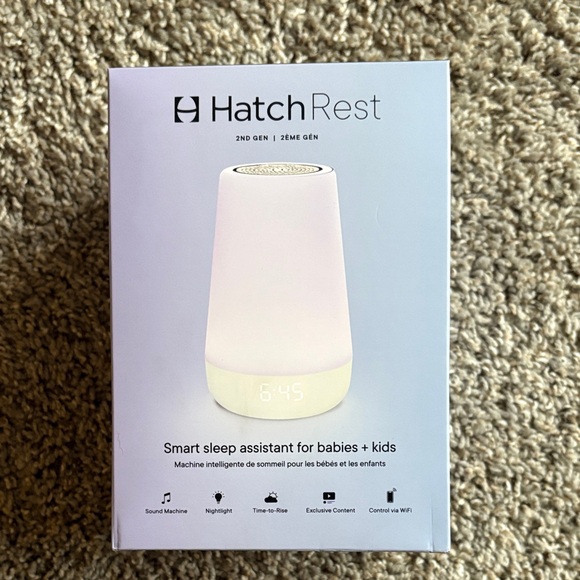
3-in-1: sound machine, night light, and wake-up clock in one app-controlled device; $70–$90 depending on retailer.

Real mechanical fan produces true broadband white noise with zero digital looping; $50–$60 at Yogasleep.com and major retailers.

Battery-powered (3 AA or USB) with 6 sounds; compact enough for a diaper bag, $25–$35.
Subscribe to our newsletter
Occasional updates and new releases — no spam.
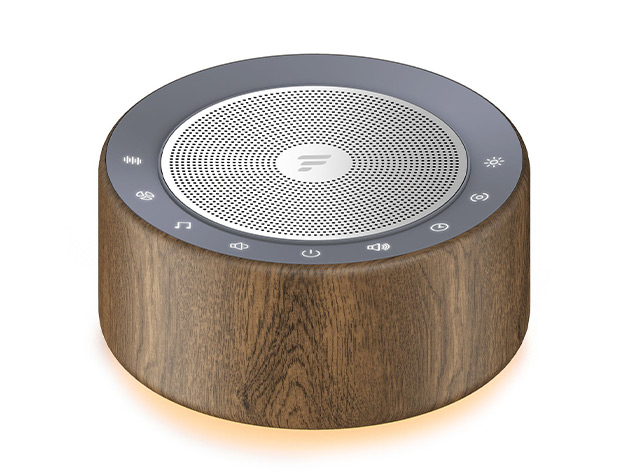
31 sounds and 32-step volume precision for under $30; USB powered, includes 1/2/4/8-hour auto-off timer.
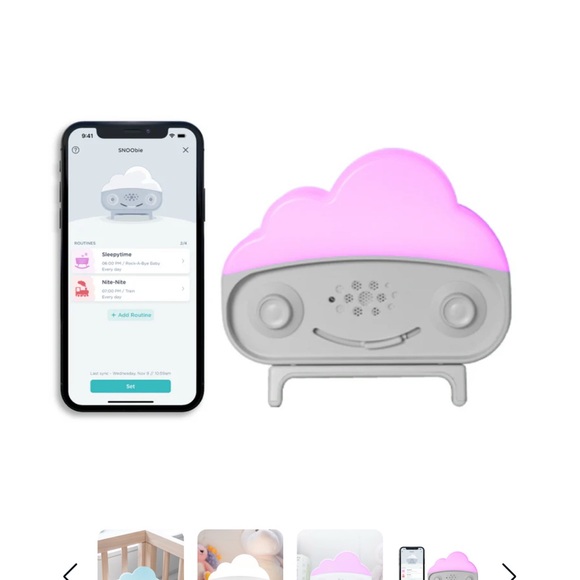
Dr. Harvey Karp's womb-sound shushing pattern targeting the newborn Moro reflex; designed for the 0–4 month window, $60–$80.
How we compared
The American Academy of Pediatrics recommends keeping nursery sound below 50 dB at the child's ear level. So raw volume ceiling mattered less than tonal consistency: does the sound stay uniform, or does it pulse and cycle in ways that disrupt light sleep?
The Marpac Dohm has no loop because it uses a real fan. Every electronic machine here has a detectable loop; owners single out the Hatch Rest as the one where it stays hard to pick out at nursery volume.
| Machine | Price | Key Strength | Verdict | |---|---|---|---| | Hatch Rest 2nd Gen | $70–$90 | App + night light + sunrise | Best all-rounder | | Marpac Dohm Classic | $50–$60 | Real fan, zero loops | Best mechanical | | Homedics SoundSpa Portable | $25–$35 | Battery + compact | Best travel | | LetsFit White Noise Machine | $20–$30 | 31 sounds, 32-step volume | Best budget | | SNOO Sound Machine | $60–$80 | Dr. Karp 5 S's for newborns | Best newborn | One note on volume: every machine here goes far louder than an infant needs. Set it to the lowest level that masks household noise and place it across the room rather than on the crib rail — distance does more to keep the level at the mattress down than any setting on the dial.
Hatch Rest 2nd Gen — Best for Parents Who Want Everything in One
At $70–$90, the Hatch Rest 2nd Gen costs more than any other device here, and it earns that premium by replacing three separate nursery gadgets: a white noise machine, a night light, and a wake-up clock. The app — Hatch Sleep — lets you create time-based routines down to the minute. Set it to fade from rain sounds to silence at exactly 7:00 a.m. when your toddler is allowed to leave their room. That single feature has more parenting utility than anything else on this list.
Sound quality is genuinely good. Reviewers rarely pick out the loop point on the rain and fan tracks; the ocean track is the one that draws occasional complaints about an audible repeat in a quiet room.
The weak point is app dependency. If the Hatch app servers are down or your Wi-Fi drops, you can still control the unit manually — but only by tapping through a limited cycle on the device itself. Parents in rural areas with spotty Wi-Fi reported frustration; for offline households, the Marpac Dohm is a more reliable choice. The subscription Hatch+ (currently $4.99/month) unlocks additional sounds and content, which feels like a reach for a standalone device in this price range.
Marpac Dohm Classic — Best if You Want Real White Noise, Not a Recording
The Marpac Dohm Classic uses an actual fan inside a plastic housing. There is no audio file, no loop, no digital processing — just a motor spinning air through an adjustable aperture. That distinction matters more than it sounds: the Dohm produces true broadband noise, meaning it masks a wider frequency range than most electronic machines, which concentrate sound in the 200–2000 Hz window and leave high-frequency noises (jingling keys, a dog barking) partially audible.
Parents of light sleepers consistently rate it above the LetsFit and the Hatch Rest for keeping a baby down, and that single difference is worth the price gap for many families. Volume adjustment is analog: you twist the outer cap to widen or narrow the aperture, which changes both volume and tone. Two motor speeds (low/high) give you a second axis of adjustment.
There's no app, no timer, no light, no way to schedule anything. The Dohm turns on when you plug it in and off when you unplug it. Parents who want scheduled bedtime routines or a nightlight will need a separate device. The unit also runs continuously — it doesn't have a sleep timer — which some parents see as a feature, others as a power-waste. It draws about 8W, adding roughly $2/month to an electricity bill at average US rates.
Homedics SoundSpa Portable — Best for Travel and Hotel Rooms
The Homedics SoundSpa Portable is the only battery-powered machine in this roundup. It runs on 3 AA batteries (included) or USB power, weighs under 200g, and fits in a diaper bag side pocket. For families who travel frequently — visiting grandparents, hotel stays, weekend trips — those specs matter enormously. A white noise machine on the nightstand of an unfamiliar room is the single cheapest way to preserve a baby's sleep routine on the road.
Six sounds cover the basics: white noise, thunder, ocean, summer night, brook, and rain. The loop on the ocean track cycles every 90 seconds and is audible if you're paying attention.
Battery life is listed at 8 hours; owners report closer to 6–7 hours at max volume before it drops noticeably. Running on USB power eliminated that concern — any phone charger or portable battery bank works. At $25–$35 this is the most affordable machine with a portable form factor; the trade-off is a thin sound library and no app control.
LetsFit White Noise Machine — Best Under $30 for Home Use
The LetsFit offers 31 sounds, a 32-step volume adjustment, and a 1/2/4/8-hour auto-off timer — all for $20–$30. On paper that sounds like a budget machine punching above its weight. In practice, the 31 sounds include a lot of filler: lullaby, thunderstorm, campfire, and a handful of nature tracks that overlap sonically with one another. The usable shortlist is about 8: white noise, pink noise, brown noise, fan, rain, brook, ocean, and heartbeat.
The 32-step volume control is the standout feature. Most machines in this price range have 10 or 15 steps; the finer gradation lets you settle on a nursery-safe level at the mattress without jumping between too-quiet and too-loud. The unit runs on USB power only — no battery — which means it's not suited for travel without a power bank.
Loop audibility was the biggest complaint from parents in long-term use: the white noise track cycles every 60 seconds with a faint click. At volumes above step 25, that click becomes inaudible, but below that threshold it's detectable in quiet bedrooms. If your child is a sensitive sleeper, that 60-second tick may cause micro-arousals over time. For heavy sleepers and newborns who need volume more than perfection, the LetsFit is exceptional value.
SNOO Sound Machine — Best for Newborns Using the 5 S's Method
The SNOO Sound Machine was designed by Dr. Harvey Karp, author of The Happiest Baby on the Block, to replicate the sounds a fetus hears in utero. The womb isn't quiet — amniotic fluid and blood flow create a constant 70–80 dB broadband noise. The SNOO machine outputs a similar 'shushing' pattern that's louder and rougher than traditional white noise, targeting the Moro reflex that wakes newborns in light sleep.
At $60–$80, it's the second-most expensive machine here and designed specifically for the 0–4 month window. Parents who own the SNOO Smart Sleeper bassinet ($1,695 retail) get the sound logic built in; this standalone version extends that approach to parents who didn't invest in the bassinet.
The limitation is longevity. As babies develop beyond 4 months and the Moro reflex fades, the SNOO's aggressive shushing becomes unnecessary and can sound harsh. Families who buy this at birth will likely replace it by month five. The machine has no app, no light, no scheduling — just a power button and a volume knob. For newborn-specific calming, it's the most effective tool here; for the full first year, a multi-function machine like the Hatch Rest makes more sense.
Frequently asked questions
What volume is safe for a baby's sound machine?▼
Mechanical vs. electronic white noise — which is better for babies?▼
Should I leave the sound machine on all night?▼
Can white noise cause hearing damage in babies?▼
At what age can I stop using a sound machine?▼
Is the Hatch Rest worth the subscription fee?▼
Which sound machine is best for a baby who shares a room with a sibling?▼
Does the SNOO Sound Machine work without the SNOO bassinet?▼
Which machine is best for travel?▼
Can I use a white noise app on my phone instead of a dedicated machine?▼
Prices change. Check the retailer for the current price.
Comments & questions
Discussion happens on nattzy, our community forum. Sign in with Google to post — it takes a second.