Best Kids Toothbrush 2026: 4 Picks for Ages 1-10
WriterPickly Editorial
Updated 2026-10-11
This guide compares 4 options using published specifications, manufacturer documentation and independent reviews.
Quick answer
For ages 3-8, the Oral-B Kids Electric Disney is the pick — its rechargeable rotating-oscillating head runs at 7,600 oscillations per minute, the design clinical studies most consistently place ahead of manual brushing for plaque removal. Philips Sonicare for Kids (ages 3 and up) adds Bluetooth app coaching and a KidTimer that lengthens brushing over 90 days, the Brusheez set is a complete gift set at around $20, and Frida's Triple-Angle Toothhugger suits under-3s.
📋How we compared
This comparison is desk research. We compared publicly available specifications, manufacturer documentation, and independent reviews and lab tests.
Related articles


1★ Best PickOral-B Kids Electric Disney

Rechargeable rotating-oscillating brush with a music timer; the Disney Magic Timer app runs an on-screen 2-minute timer; several Disney character handles
2Philips Sonicare for Kids Bluetooth

Sonic brush for ages 3+; Bluetooth app with animated coaching; KidTimer extends brushing to 2 minutes over 90 days; two power settings; rechargeable
3Brusheez Kids Electric Set
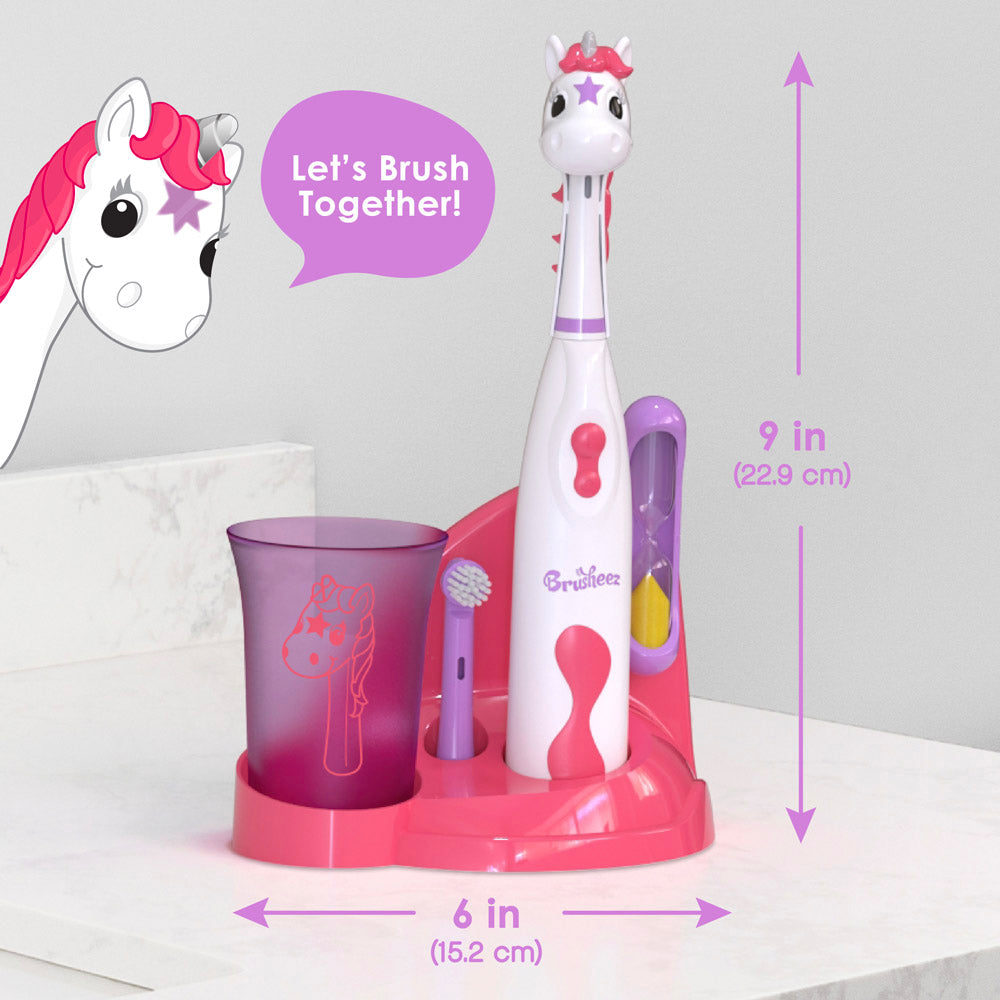
Complete bundle: brush, sand timer, rinse cup, holder; character-themed; best all-in-one gift set for ages 3-7
Subscribe to our newsletter
Occasional updates and new releases — no spam.
4Frida Baby Triple-Angle Toothhugger Toothbrush

Triple-angle bristles clean top, sides, and bottom simultaneously; BPA-free; designed for parent-assisted brushing ages 1-3; no batteries required
How we compared
The four brushes span the price range: about $8 (Frida Toothhugger) to about $70 (Philips Sonicare Bluetooth). Three are electric or battery-powered; one is manual. Age coverage runs from 12 months through 10 years. Each brush is judged against the manufacturer's own target age range rather than against the group as a whole, which keeps the comparison fair.
| Brush | Price | Key Strength | Type | Verdict |
|---|---|---|---|---|
| Oral-B Kids Disney | $35-50 | Music timer + Magic Timer app | Rotating-oscillating, rechargeable | Best overall |
| Philips Sonicare Bluetooth | $35-70 | Sonic + app coaching + KidTimer | Sonic, rechargeable | Best app coaching (3+) |
| Brusheez Electric Set | about $20 | Complete gift bundle | Vibrating, 2 AA batteries | Best value electric |
| Frida Triple-Angle Toothhugger | $8-12 | Triple-angle manual | Manual | Best under 3 |
Compliance matters more here than plaque scores. A brush that a child refuses to use is useless regardless of its clinical claims. The Oral-B's Disney app is the feature parents credit most often for turning brushing from a nightly argument into a routine — the character on screen gives the child a reason to keep going for the full two minutes. That difference matters more than the small gaps in cleaning claims between first and second place.
Oral-B Kids Electric Disney — best for ages 3-8
The rotating-oscillating head moves at 7,600 oscillations per minute. Rotating-oscillating designs are the type clinical studies most consistently place ahead of manual brushing for plaque removal, which is the main reason this handle leads the group. Instead of beeps, the built-in timer plays music — 16 tunes in all, with the song changing after each minute — so the child can hear when the two minutes are up.
The Disney Magic Timer app deserves specific credit. Parents download it free, scan the brush or its packaging to unlock Disney characters, and the app runs a two-minute on-screen timer with those characters while the child brushes. It does not connect to the brush or detect brushing — the timer simply runs on the phone — so there is nothing to pair. In a 2014 survey of 52 children published by the manufacturer, Oral-B reported that about 90% brushed longer with the app.
The handle comes in several Disney character designs, such as Minnie Mouse and Frozen. It is rechargeable: retailer listings put a full charge at up to about 5 days of use, so plan to keep the charger by the sink. Swapping the brush head every 3 months keeps the per-use cost reasonable. At $35-50 depending on character and retailer, this is the brush to pick for any child between 3 and 8.
Philips Sonicare for Kids Bluetooth — best app coaching, ages 3 and up
Sonic bristle movement generates fluid dynamics that clean slightly beyond where bristles make contact. Philips sells it for ages 3 and up, with a compact brush head for ages 3+ and a standard head for ages 7+. The meaningful difference is the Bluetooth app, which streams animated coaching video and highlights the mouth zone the child should be brushing. The KidTimer gradually lengthens brushing time over 90 days until the child reaches the full 2-minute target — a sensible graduated approach.
The app works best when a child can hold their own phone or has a sibling to watch the screen. Parents of school-age children report it lands well; reviews from parents of preschoolers more often describe the screen as a distraction, with the child stopping to watch it instead of brushing. Two power settings — a gentler one for younger children and a stronger one for older kids — let parents back off intensity if gums are tender. Like the Oral-B, it is rechargeable.
The price depends on the version: Philips's own US store lists the standard Sonicare for Kids at about $35, while the Bluetooth-connected model linked here was about $70 on Amazon in October 2026. Cleaning performance is broadly comparable to the Oral-B, so the extra money buys the app coaching and the KidTimer. Parents of 7-10 year olds who can actually follow animated instructions will find it worth the difference.
Brusheez Kids Electric Set — best gift set around $20
Brusheez sells the whole bathroom routine in one box: a battery-powered brush (2 AA batteries), a two-minute sand timer, a character-themed rinse cup, and a counter-stand holder. The brush is a simpler vibrating design than the Oral-B's rotating-oscillating head, so do not expect the same cleaning action.
The sand timer turned out to be the sleeper hit of this comparison. Parents report brushing time improves once a child understands the sand has to fall completely before the brush goes down. The character rinse cup encourages post-brush rinsing, a step young children skip constantly. The complete set approach makes this the obvious birthday or holiday gift — everything a child needs arrives together and looks intentional rather than assembled from a clearance aisle.
The downsides are real: the motor is noticeably louder than both the Oral-B and Philips, which parents of noise-sensitive children cite as the reason they go back to a manual brush. The brush head is also not replaceable via a standard refill — you order the brand-specific head, which runs $8-10 and is sometimes out of stock. At around $20 (prices vary by retailer) the value is strong, but the Oral-B is worth the extra $15-30 if brushing compliance is the primary concern.
Frida Baby Triple-Angle Toothhugger — best for children under 3
The Toothhugger solves a specific problem: a standard manual brush covers one tooth surface at a time, which means the parent assistant needs to approach from multiple angles during the inevitable squirming. The triple-angle head positions three rows of bristles — one on the front face and one on each side — so a single back-and-forth motion cleans three surfaces simultaneously. For a wriggling 18-month-old, that matters more than oscillation speed.
It is the only manual brush here, and the one parents of toddlers most consistently rate as effective, which is respectable given the age and how much parent assistance is still required. The short, fat handle fits comfortably in a parent's hand while also being graspable by a toddler learning to hold their own brush. BPA-free materials, no batteries, nothing to charge. At about $8-12, it's the least expensive brush in this comparison.
The triple-angle design becomes a liability around age 3-4, once a child has enough adult teeth that the wider head struggles to reach molars individually. This brush is purpose-built for the 12-month to 3-year window. Past that, move up to an electric or a standard single-head manual.
Frequently asked questions
At what age should a child switch from manual to electric?▼
Are the Bluetooth and app features actually worth the extra cost?▼
How often should a child's toothbrush be replaced?▼
Is sonic vibration gentler on sensitive gums than rotating heads?▼
Can a 2-year-old use an electric toothbrush?▼
What toothpaste amount should children use?▼
Do kids' toothbrushes need ADA approval?▼
Is the Brusheez brush head actually replaceable?▼
How do I stop my toddler from biting the brush?▼
Are there good brushes for children with sensory sensitivities?▼
Check the details of the products in this article
- Oral-B Kids Electric Disney$35〜$50Reference price
- Philips Sonicare for Kids Bluetooth$69.95Price as of 2026-10-19
- Brusheez Kids Electric Set$16.99Price as of 2026-10-19
- Frida Baby Triple-Angle Toothhugger Toothbrush$8.67Price as of 2026-10-19
Prices change. Check the retailer for the current price.
Comments & questions
Discussion happens on nattzy, our community forum. Sign in with Google to post — it takes a second.
View the discussion thread on nattzy ↗
Still deciding? Ask the community your own question — Post a question on nattzy ↗
Related articles

Best Kids Lunch Box 2026: 5 That Keep Food Safe and Fresh

Best Kids Water Bottles 2026: Leak-Proof and Easy to Clean
Best Travel Toothbrush 2026: 5 Compact Picks

Best Electric Toothbrush 2026: 5 models compared honestly

Best Baby Laundry Detergent 2026: 5 Gentle Formulas
Best Baby Bathtub 2026: 5 Tubs for Year One
