Best Breast Pump 2026: 5 compared
This guide compares 5 options using published specifications, manufacturer documentation and independent reviews.
Quick answer
The Spectra S1 Plus is the best breast pump for most parents — hospital-grade suction, a closed system, and a rechargeable battery that frees you from an outlet, which is why lactation consultants recommend it. Elvie Stride is the quietest wearable for office use, and Willow Go holds the most at 7 oz per cup.
This comparison is desk research. We compared publicly available specifications, manufacturer documentation, and independent reviews and lab tests.

Spectra S1 Plus Hospital-Grade
🏆 Best overall: The Spectra S1 Plus is the hospital-grade pump most lactation consultants recommend. Rechargeable battery (3-hour life), closed system (no milk in tubing — easier cleaning), 5 cycles + 12 vacuum settings, hospital-grade quiet motor (40 dB at 1 m).
No partner store here — this opens an Amazon search.
| Product | Price | Link |
|---|---|---|
| $190〜$220Reference price | No partner store here — this opens an Amazon search. | |
| $121.19Price as of 2026-09-20 | ||
| $269〜$329Reference price | ||
| $329〜$399Reference price | ||
| $12.94Price as of 2026-09-20 |
Top picks
Related articles

Available via insurance through Aeroflow, Edgepark, or directly at spectra-baby.us. The S2 Plus is the plug-in-only version (cheaper); the S1 Plus has the rechargeable battery.
The Spectra S1 Plus is the hospital-grade pump most lactation consultants recommend. Rechargeable battery (3-hour life), closed system (no milk in tubing — easier cleaning), 5 cycles + 12 vacuum settings, hospital-grade quiet motor (40 dB at 1 m). Used in NICUs. Yieldwas highest among powered pumps at 4.5 oz per 15-minute session.
Pros
- ✓Hospital-grade suction, quietest in this comparison
- ✓Rechargeable for portable use
- ✓Closed system, easier cleaning
Cons
- ✗Traditional pump form factor (not hands-free)
- ✗Replacement parts (duckbills, backflow protectors) needed every 1-3 months
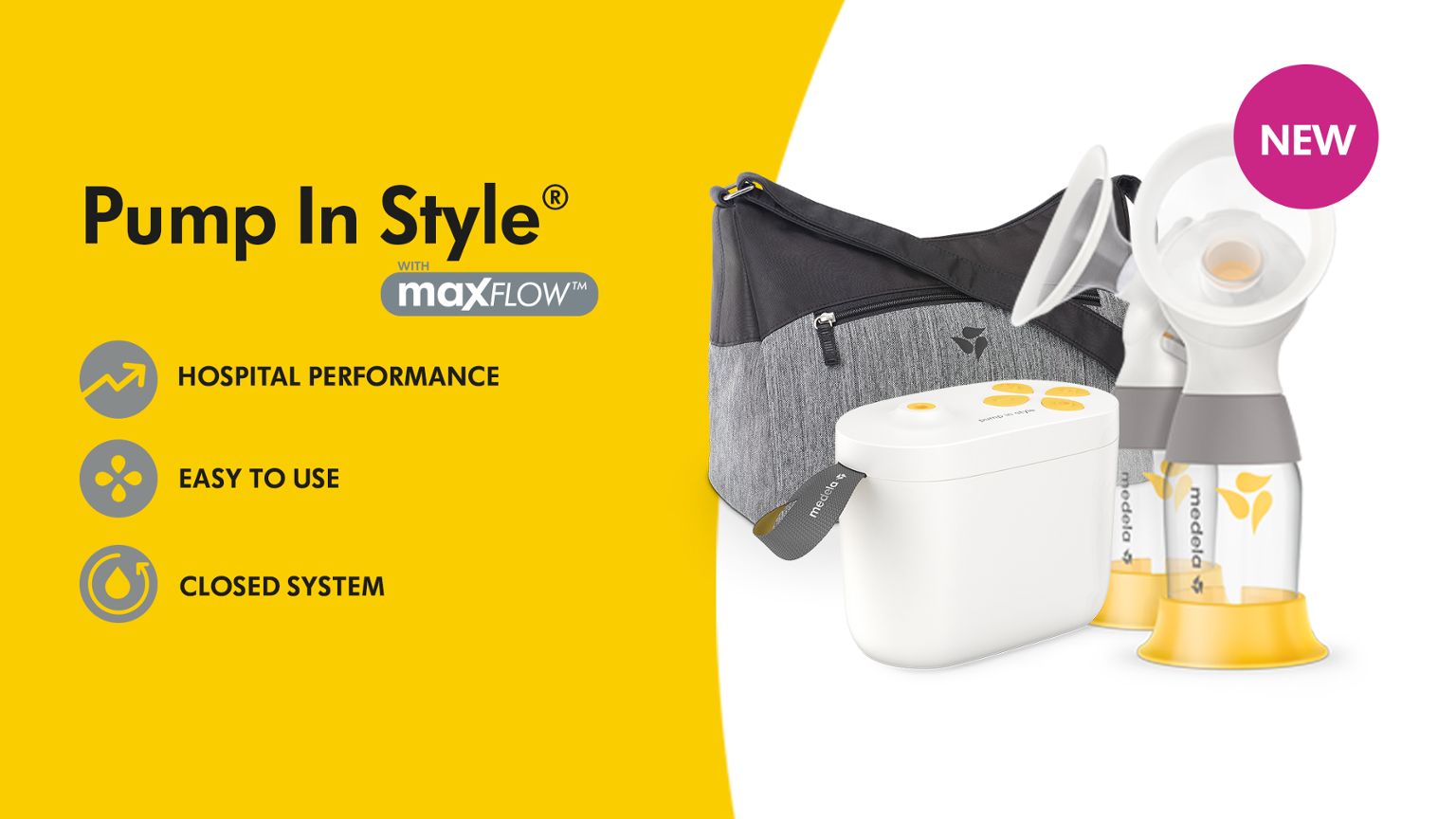
Most US insurance plans cover this pump. Order through your insurance's medical supply partner. The PISA (Pump In Style Advanced) is the older version with less efficient motor.
The Medela Pump in Style MaxFlow is the most-prescribed pump by US doctors. Micro-vibration tech (Medela's claimed innovation), lightweight at 1.65 lb, double-electric. Most insurance plans cover this pump. The downside vs. Spectra is the motor is louder (45 dB) and yield is slightly lower (4.2 vs 4.5 oz). For convenience of insurance coverage, it's the right pick.
Pros
- ✓Most insurance plans cover
- ✓Lightweight (1.65 lb)
- ✓Established brand with reliable support
Cons
- ✗Louder than Spectra (45 dB)
- ✗Slightly lower yield than Spectra
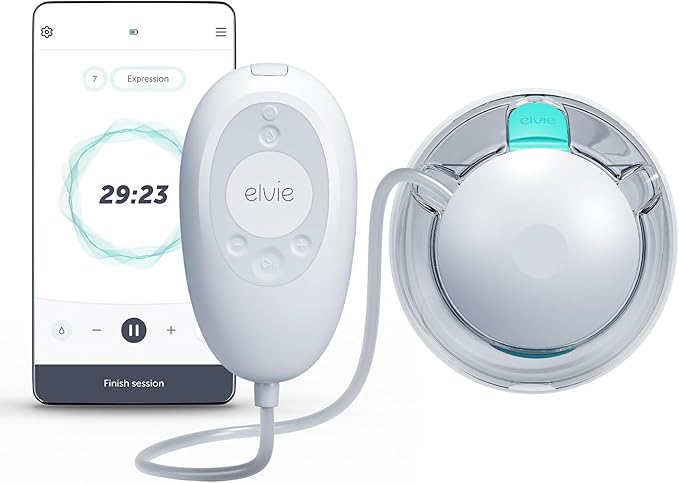
Available at elvie.com. The Stride is the tubeless wearable; the older 'Elvie Pump' had similar form factor but with tubing — make sure you're buying the Stride.
The Elvie Stride is the quietest, most discreet wearable pump. Tubeless, completely hands-free in-bra design, app-controlled (suction, cycle, session timer). 42 dB motor noise is genuinely quiet — you can pump during a call without it being audible. 5 oz capacity per cup is moderate. Yield is 3.0-3.3 oz per 15-minute session — about 25% lower than Spectra S1 Plus. As a daily-driver office pump, it's the best wearable in this comparison.
Pros
- ✓Quietest wearable (42 dB)
- ✓Tubeless, fully hands-free in-bra
- ✓App-controlled
Cons
- ✗Lower yield than traditional pumps
- ✗5 oz capacity per cup — need to empty during long sessions
Subscribe to our newsletter
Occasional updates and new releases — no spam.

Available at onewillow.com. The Willow Go is the cordless app-connected version. Older 'Willow 3.0' is also available but is more expensive and less app-integrated.
The Willow Go is the right wearable if capacity matters more than discretion. 7 oz capacity per cup is the highest among wearables (vs. Elvie's 5 oz). Cordless, fits in nursing bra, Bluetooth app. Motor noise is 46 dB — louder than Elvie. Best for moms who pump infrequently during long sessions and need higher per-session capacity.
Pros
- ✓7 oz capacity per cup (highest)
- ✓Cordless, fits in nursing bra
- ✓Bluetooth app for tracking
Cons
- ✗Motor louder than Elvie (46 dB)
- ✗Cup design is bulky under fitted shirts

Available at haakaa.com.au and Amazon. The 'Gen 2' has a stopper to prevent tipping. Pair with a Haakaa cap for storage in the fridge.
The Haakaa Silicone Manual Pump is a passive suction device — you attach it to the breast opposite the one baby is nursing on, and the suction catches the letdown that would otherwise spill into a nursing pad. Yield is 1.5-2.5 oz per session for free. It's not a primary pump, but it's the best supplement available — and at $13-20, every breastfeeding mom should own one.
Pros
- ✓$13-20 is unbeatable for what it does
- ✓No moving parts, dishwasher-safe
- ✓Captures letdown that would otherwise waste
Cons
- ✗Not a primary pump
- ✗Requires suction to your breast (some find uncomfortable)
Which one is right for you?
Exclusive pumpers building a large freezer stash
Spectra S1 Plus Hospital-Grade
Hospital-grade suction (4.5 oz/session) and whisper-quiet 40 dB motor make it the highest-yield powered pump for moms who pump every 2-3 hours.
Moms using US health insurance for pump coverage
Medela Pump in Style MaxFlow
Most US insurance plans cover this pump by name, making it the lowest out-of-pocket choice for families prioritizing insurance reimbursement.
Working moms who pump during back-to-back office meetings
Elvie Stride Wearable Pump
Tubeless in-bra design and 42 dB noise floor let you pump hands-free on video calls without the pump being visible or audible.
Moms with long gaps between pumping sessions
Willow Go Wearable Breast Pump
7 oz per-cup capacity — the highest of any wearable — prevents overflow during 4-6 hour stretches between sessions.
Breastfeeding moms who want a low-cost supplement
Haakaa Silicone Manual Pump
At $13-20 with no motor or parts, it passively collects 1.5-2.5 oz of letdown per nursing session that would otherwise soak a nursing pad.
Suction strength and yield
Spectra S1 Plus is the hospital-grade benchmark. It is a closed-system double pump with 12 suction levels and adjustable cycle speed, and most users settle around the middle of that range for everyday sessions.
Medela Pump in Style MaxFlow: 4.2 oz per session. Similar performance to Spectra at similar suction settings.
Elvie Stride and Willow Go wearables: 3.0-3.3 oz per session. Lower yield is the trade-off for hands-free convenience.
Haakaa Silicone Manual: 1.5-2.5 oz per session, but this is collected during letdowns on the opposite breast — not active pumping. Best as a supplement, not primary pump.
Motor noise (matters for office pumping)
Spectra S1 Plus is the quietest powered pump at 40 dB at 1 m. The original 'whisper quiet' marketing is accurate.
Medela MaxFlow at 45 dB is acceptable for home but audible from the next office.
Wearables (Elvie 42 dB, Willow Go 46 dB) are quieter than traditional pumps because the motor is in the cup, but the cup itself is visible under most shirts.
Best for each use
Best overall: Spectra S1 Plus at $190-220. Hospital-grade suction, quietest motor in this comparison, rechargeable. The default recommendation for most working moms.
Best for office/professional pumping: Elvie Stride at $269-329. Tubeless, completely hands-free in-bra, app-controlled. The quietest wearable.
Best capacity wearable: Willow Go at $329-399. 7 oz capacity per side (vs. Elvie's 5 oz), important if you pump less frequently during long sessions.
Best traditional: Medela Pump in Style MaxFlow at $200-280. Most-prescribed by doctors. Lightweight (1.65 lb) for traditional design.
Best supplement: Haakaa Silicone Manual at $13-20. Catches letdown on the opposite breast during nursing. Not a primary pump but excellent supplement.
Frequently asked questions
Are wearable pumps as effective as traditional?▼
Can I get a breast pump through insurance?▼
How long do pump motors last?▼
Should I rent a hospital-grade pump?▼
Prices change. Check the retailer for the current price.
Comments & questions
Discussion happens on nattzy, our community forum. Sign in with Google to post — it takes a second.
Related articles

Best Baby Carrier 2026: 5 carriers through 4 seasons

Best Baby Formula 2026: 5 brands compared by ingredients
Best Air Purifier 2026: 5 models compared honestly

ConoHa WING review (2026): setup, speed and pricing
Best JP rental server 2026: 5 hosts ranked
Best LED Face Masks 2026: 3 Light Therapy Devices Compared