Best Probiotic Supplement 2026: 5 Ranked by CFU & Strains
WriterPickly Editorial
Updated 2026-10-10
Most probiotic marketing leads with CFU counts — '50 billion!' — as if quantity alone determines quality. The strain matters more than the number. Lactobacillus acidophilus NCFM and Lactobacillus rhamnosus GG have clinical trial records spanning decades; many proprietary blends do not. Survivability through stomach acid and shelf stability also separate functional products from expensive placebos. These five represent the realistic spectrum from clinical precision to accessible everyday use.
Quick answer
Culturelle is the sensible default: it is built on Lactobacillus rhamnosus GG, the most studied probiotic strain in existence, at 10 billion CFU with no refrigeration needed. Seed DS-01 is the choice when you want measured viability at the point of consumption — 24 strains at 53.6 billion AFU in a nested capsule that survives stomach acid, with strains publicly listed. Garden of Life's Once Daily delivers 30 billion CFU across 14 strains in a shelf-stable capsule; check the label for third-party certifications before buying.
📋How we compared
This comparison is desk research. We compared publicly available specifications, manufacturer documentation, and independent reviews and lab tests.

Best Multi-Strain Daily: 30 billion CFU across 14 Lactobacillus and Bifidobacterium strains in a shelf-stable, once-daily capsule. No refrigeration is needed, so it travels easily; the price sits at the higher end of the category.
Top picks ↓No partner store here — this opens an Amazon search.
Which one is right for you?
Related articles


1★ Best PickA+Best Multi-Strain DailyGarden of Life Dr. Formulated Probiotics Once Daily
30 billion CFU across 14 Lactobacillus and Bifidobacterium strains in a shelf-stable, once-daily capsule. No refrigeration is needed, so it travels easily; the price sits at the higher end of the category. Confirm third-party certifications on the label before buying. For a multi-strain daily probiotic in a single capsule, this is a strong pick.
Pros
- ✓30 billion CFU with 14 Lactobacillus and Bifidobacterium strains in one daily capsule
- ✓Shelf-stable — no refrigeration required, easy to travel with
- ✓Physician-formulated strain selection
Cons
- ✗Price is on the higher end; third-party certifications need to be confirmed on the label
Score breakdown
- CFU count
- 30 billion
- Strains
- 14 (Lactobacillus and Bifidobacterium species)
- Storage
- Room temperature (shelf-stable)
- Certification
- Confirm on the product label before purchase
- Serving
- 1 capsule daily
2ABest Clinical EvidenceCulturelle Digestive Daily Probiotic

Culturelle is built around LGG — the most clinically studied probiotic strain in existence, with 1,000+ published studies on antibiotic-associated diarrhea, traveler's diarrhea, and gut resilience. 10 billion CFU with no refrigeration required. The single-strain design is deliberate: LGG's clinical record is extensive precisely because it's been studied consistently, not diluted across unstudied blend combinations.
Pros
- ✓Lactobacillus rhamnosus GG (LGG) — 1,000+ clinical studies, including robust RCTs on antibiotic-associated diarrhea
- ✓No refrigeration required — room-temperature shelf life
- ✓Widely available at pharmacies globally; lowest friction to purchase and restock
Cons
- ✗Single-strain — not optimized for broad microbiome diversity or specific conditions like IBS-C
Score breakdown
- CFU count
- 10 billion at time of manufacture
- Strains
- 1 (Lactobacillus rhamnosus GG)
- Storage
- Room temperature
- Certification
- Gluten-free, non-GMO
- Serving
- 1 capsule daily
- Notable strains
- LGG — most studied probiotic strain globally
3B+Best Delivery EngineeringSeed DS-01 Daily Synbiotic

Seed's DS-01 stands out for design transparency. 24 strains at 53.6 billion AFU delivered via nested capsule technology that protects bacteria from gastric acid. Strain identities and supporting research are publicly listed. Published viability data at point of consumption, not just manufacture. The premium price is the tradeoff; it is sold on Amazon as a one-time purchase and at Target as well as by subscription.
Pros
- ✓24 strains, 53.6B AFU — viability measured at point of consumption via third-party testing
- ✓2-in-1 nested capsule protects strains through stomach acid to colon delivery
- ✓Publicly listed strain research — each strain named by full taxonomy with supporting clinical references
Cons
- ✗Premium price — high monthly cost relative to conventional probiotics
Score breakdown
- CFU count
- 53.6 billion AFU (active fluorescent units)
- Strains
- 24 (Lactobacillus, Bifidobacterium, Lacticaseibacillus species)
- Storage
- Room temperature (nested capsule protects viability)
- Certification
- CGMP-certified facility testing
- Serving
- 2 capsules daily
- Notable strains
- Lacticaseibacillus rhamnosus SD-LR6, B. longum SD-BB536-JP
Subscribe to our newsletter
Occasional updates and new releases — no spam.
4BBest Japan-Market PickFANCL Naishi Support (Japan)
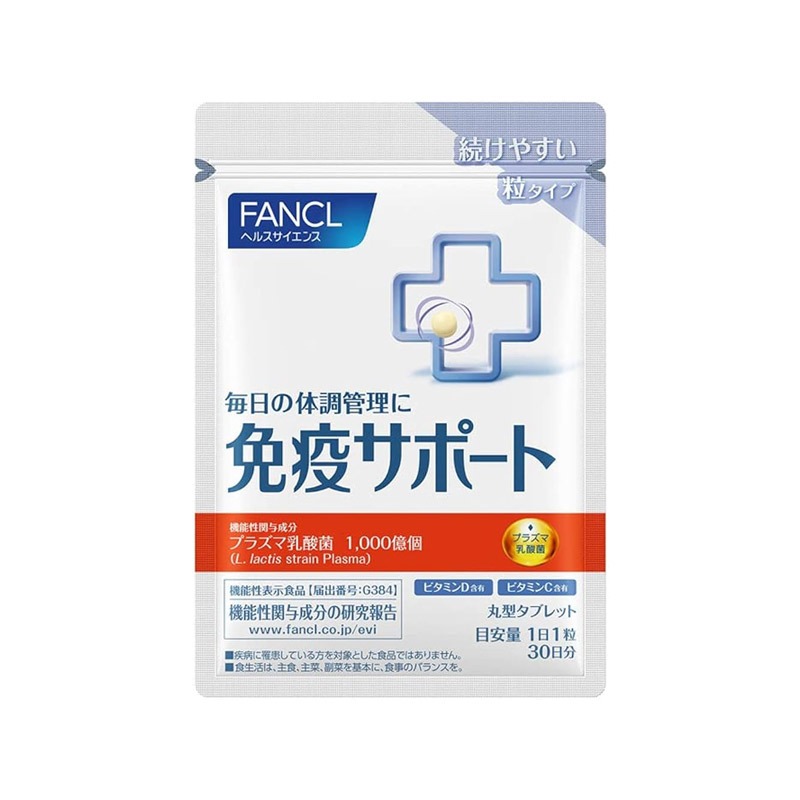
FANCL Naishi Support is a Japanese Food with Function Claims (notification F914) that provides 10 billion Bifidobacterium BB536 and 5 billion B-3 per day, plus N-acetylglucosamine and black ginger, in three tablets. It is aimed at reducing body weight and body fat rather than at general digestive support. Widely available through major online retailers.
Pros
- ✓Bifidobacterium BB536 (10 billion) and B-3 (5 billion) per day — 15 billion in total
- ✓Food with Function Claims in Japan (notification F914)
- ✓Available through major online retailers without prescription
Cons
- ✗Aimed at body weight and body fat rather than general digestive support; international availability limited
Score breakdown
- CFU count
- 15 billion bifidobacteria per day (BB536 10 billion + B-3 5 billion)
- Strains
- Bifidobacterium BB536 and B-3
- Storage
- Room temperature
- Certification
- Food with Function Claims (notification F914)
- Serving
- 3 tablets daily
- Notable strains
- Bifidobacterium BB536, B-3
No partner store here — this opens an Amazon search.
5B-Best for IBS SymptomsAlign Probiotic Supplement
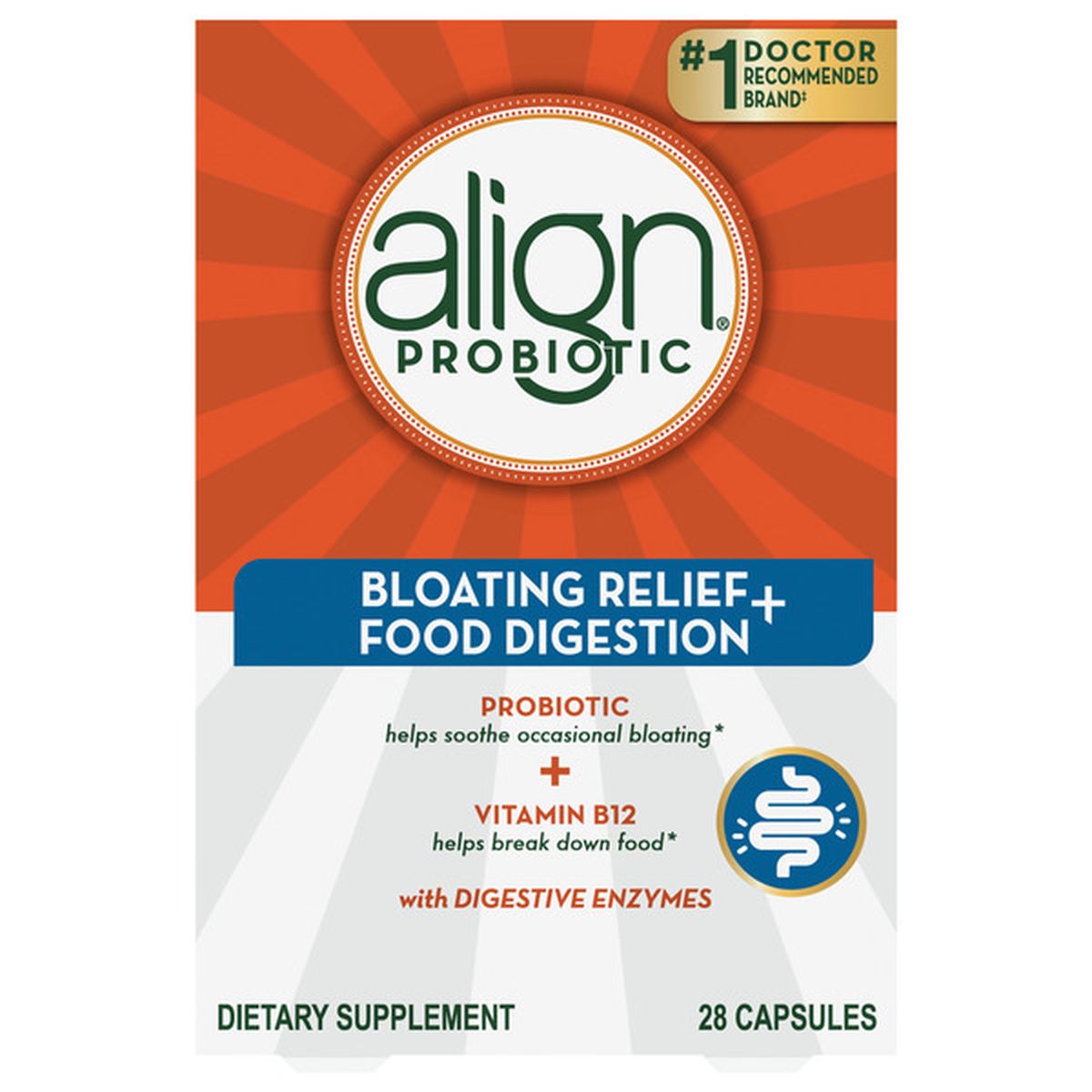
Align contains one strain — Bifidobacterium longum 35624 — with specific RCT evidence for IBS symptom relief: statistically significant reductions in abdominal pain, bloating, and bowel irregularity at 1×10^8 (100 million) CFU daily in the Whorwell 2006 trial; the commercial capsule contains 1 billion CFU. This is strain-specific evidence, not general-wellness extrapolation. The limitation is its narrowness: without IBS-type symptoms, there's little reason to choose Align over broader-spectrum options.
Pros
- ✓B. longum 35624 — strain-specific RCT evidence for IBS bloating, pain, and bowel regularity
- ✓Trial benefit shown at 1×10^8 CFU daily (Whorwell 2006) — a high CFU count was not what produced the result
- ✓No refrigeration, widely available at US pharmacies (CVS, Walgreens, Walmart, Target)
Cons
- ✗Single-strain, IBS-targeted — minimal benefit for general gut health outside of IBS context
Score breakdown
- CFU count
- 1 billion at time of manufacture
- Strains
- 1 (Bifidobacterium longum 35624)
- Storage
- Room temperature
- Certification
- Widely distributed
- Serving
- 1 capsule daily
- Notable strains
- B. longum 35624 — specific IBS RCT evidence
| Product | Storage | Certification | ||||
|---|---|---|---|---|---|---|
| Garden of Life Dr. Formulated Probiotics Once Daily | 30 billion | 14 (Lactobacillus and Bifidobacterium species) | Room temperature (shelf-stable) | Confirm on the product label before purchase | 1 capsule daily | — |
| Culturelle Digestive Daily Probiotic | 10 billion at time of manufacture | 1 (Lactobacillus rhamnosus GG) | Room temperature | Gluten-free, non-GMO | 1 capsule daily | LGG — most studied probiotic strain globally |
| Seed DS-01 Daily Synbiotic | 53.6 billion AFU (active fluorescent units) | 24 (Lactobacillus, Bifidobacterium, Lacticaseibacillus species) | Room temperature (nested capsule protects viability) | CGMP-certified facility testing | 2 capsules daily | Lacticaseibacillus rhamnosus SD-LR6, B. longum SD-BB536-JP |
| FANCL Naishi Support (Japan) | 15 billion bifidobacteria per day (BB536 10 billion + B-3 5 billion) | Bifidobacterium BB536 and B-3 | Room temperature | Food with Function Claims (notification F914) | 3 tablets daily | Bifidobacterium BB536, B-3 |
| Align Probiotic Supplement | 1 billion at time of manufacture | 1 (Bifidobacterium longum 35624) | Room temperature | Widely distributed | 1 capsule daily | B. longum 35624 — specific IBS RCT evidence |
Garden of Life Dr. Formulated Probiotics Once Daily — 30 Billion CFU, 14 Strains, Shelf-Stable
Garden of Life's Dr. Formulated Probiotics Once Daily is the multi-strain, one-capsule-a-day option in this comparison. The formula delivers 30 billion CFU per capsule across 14 strains of Lactobacillus and Bifidobacterium species, formulated in consultation with Dr. David Perlmutter (neurologist and author). Third-party certifications should be confirmed on the label before buying — a worthwhile check given how many probiotic products lack any external verification.
The blend combines Lactobacillus and Bifidobacterium species rather than relying on a single strain. The product is shelf-stable: it is packed in a bottle with a desiccant and does not need refrigeration.
Room-temperature storage is worth noting practically — it makes travel use straightforward. The price is on the higher end of the category. For most buyers who want a multi-strain daily probiotic in a single capsule, this is a strong option. Athletes subject to drug testing should confirm any sport certification on the label rather than assume it.
Culturelle Digestive Daily — Lactobacillus rhamnosus GG, Single-Strain, No Refrigeration Needed
Culturelle's Digestive Daily is built around a single strain: Lactobacillus rhamnosus GG (LGG), the most clinically studied probiotic strain in existence. LGG has over 1,000 published studies examining its effects on antibiotic-associated diarrhea, traveler's diarrhea, and childhood gastrointestinal infections. This depth of clinical evidence for one specific strain is rare in the probiotic market.
The product delivers 10 billion CFU of LGG per capsule, together with inulin as a prebiotic fiber, and can be stored at room temperature — no refrigeration required. This is a practical advantage for daily compliance and travel. LGG is also one of the few strains that has been documented to survive gastric transit in sufficient numbers to colonize the gut temporarily, a step that many strains marketed at much higher CFU counts fail.
The single-strain design is both the product's strength and its limitation. LGG is excellent for digestive resilience and immune support, particularly during and after antibiotic use. It is not optimized for broad-spectrum microbiome diversity or for addressing specific conditions like IBS-C or SIBO. For a reliable, evidence-dense daily digestive support option that travels anywhere, Culturelle is a well-supported choice in the category.
Seed DS-01 Daily Synbiotic — 24 Strains, Nested Capsule Technology, Synbiotic Formulation
Seed takes a science-forward design approach. The DS-01 is a synbiotic — it combines 53.6 billion AFU (active fluorescent units, a viability metric more accurate than standard CFU for certain strains) of 24 probiotic strains with a prebiotic outer capsule made from Indian pomegranate. The 2-in-1 nested capsule design protects the inner probiotic capsule from stomach acid degradation, delivering strains to the colon where they are intended to colonize.
Seed publishes its strain-specific research basis on its website, naming each of the 24 strains by full taxonomic designation and linking the supporting clinical studies. The strains span multiple Lactobacillus, Bifidobacterium, and Lacticaseibacillus species, including strains specifically selected for gut barrier function, immune education, and microbiome resilience. Third-party testing is conducted by a CGMP-certified facility, and the company publishes viability testing results at point of consumption rather than just at manufacture.
Seed sells DS-01 by subscription on its own site, and it is also sold on Amazon as a one-time purchase and at Target, so a subscription is not required. The price per month is high relative to conventional probiotics. What you're paying for is strain-level disclosure and delivery-system engineering that most probiotic brands don't attempt. For people who have tried standard probiotics without noticeable effect and want to understand the science behind what they're buying, DS-01 is a transparent option in the consumer market.
FANCL Naishi Support — Bifidobacterium BB536 and B-3, Food with Function Claims in Japan
FANCL is one of Japan's most trusted supplement brands, established in 1981. Naishi Support is its bifidobacteria product: a Food with Function Claims (notification F914) that provides 10 billion Bifidobacterium BB536 and 5 billion B-3 per day together with N-acetylglucosamine and black ginger. It is aimed at reducing body weight and body fat rather than at general digestive support, which sets it apart from the other products in this comparison.
The FANCL formula is available without refrigeration, comes as tablets taken three per day, and is widely available through major online retailers.
The daily serving provides 15 billion bifidobacteria in total, which is more than Culturelle's 10 billion CFU. For Japan-based buyers whose goal matches the product's body-weight and body-fat positioning, FANCL is the relevant choice here.
Align Probiotic — B. infantis 35624, IBS-Targeted, Single Strain
Align's point of differentiation is narrow and specific: it contains a single patented strain, Bifidobacterium longum 35624 (previously classified as B. infantis 35624), which has been studied in multiple randomized controlled trials for irritable bowel syndrome symptom relief. The key studies show significant reductions in IBS-associated abdominal pain, bloating, and bowel habit irregularity compared to placebo — this is strain-specific clinical evidence, not general probiotic research applied by analogy.
At 1 billion CFU per capsule, the dose appears low relative to high-CFU competitors. The trial evidence for B. longum 35624 adds important context, however. In the dose-ranging trial (Whorwell 2006, 362 women over four weeks), significant IBS symptom relief was seen only at 1×10^8 (100 million) CFU daily, while 1×10^6 and 1×10^10 CFU did not differ from placebo — so the benefit was not shown at the commercial dose itself, and adding more is not validated to improve outcomes.
Align does not require refrigeration and is widely available at US pharmacies and retailers including Walmart and CVS. The limitation: if you don't have IBS or IBS-like symptoms, the targeted strain design makes it less useful as a general gut health supplement compared to broader-spectrum formulations. It is a precise tool for a specific condition, not a general-purpose daily probiotic.
CFU Count vs. Strain Identity: What the Research Shows
The probiotic category is uniquely susceptible to marketing inflation because CFU counts are easy to print on labels and difficult for consumers to verify or contextualize. A 100-billion CFU blend of unstudied proprietary strains delivers less evidence-backed benefit than a 10-billion CFU formula using strains like LGG or BB-12 with published randomized trial data. The relevant question is not 'how many' but 'which strains, and what does the research on those specific strains show.'
Strain identity notation matters. Probiotic strains are identified by genus, species, and strain designation — Lactobacillus rhamnosus GG is not the same strain as Lactobacillus rhamnosus HN001 even though both would appear as 'Lactobacillus rhamnosus' on a simplified label. Clinical research conducted on LGG cannot be assumed to apply to other rhamnosus strains. Products that list only genus and species without strain designations should be viewed skeptically.
Survivability through gastric transit is the other underappreciated factor. Standard capsules expose probiotic bacteria to stomach acid with pH 1.5–3.5, which kills many organisms. Products using enteric coatings, nested capsule systems, or inherently acid-resistant strains deliver meaningfully more viable bacteria to the colon. CFU count at manufacture means little if the organisms don't survive the journey.
Prebiotics, Postbiotics, and the Synbiotic Concept
Prebiotics are non-digestible fibers that selectively feed beneficial gut bacteria — fructooligosaccharides (FOS), inulin, and galactooligosaccharides (GOS) are the most studied. Taking probiotics alongside prebiotics in a synbiotic formulation theoretically improves colonization success by providing fuel for the arriving organisms. Seed's DS-01 and several other products use this approach, though the synbiotic research base is smaller than for probiotics alone.
Postbiotics are often discussed together with the compounds gut bacteria produce when they ferment fiber, such as the short-chain fatty acids butyrate, propionate, and acetate. These compounds have direct effects on gut barrier integrity, immune signaling, and inflammation. Some researchers argue these metabolites are the actual active agents behind probiotic benefits, suggesting that targeting the metabolic output directly (via fermented foods or specific fiber types) may be more reliable than hoping to establish live bacterial colonies.
For most consumers, the practical implication is that dietary fiber intake significantly affects probiotic efficacy. A probiotic supplement taken alongside a low-fiber, highly processed diet has less substrate for colonization and may yield fewer of these metabolites than a lower-dose supplement taken alongside a diet rich in vegetables, legumes, and fermented foods.
Frequently asked questions
What CFU count should I look for in a probiotic?▼
Do probiotics need to be refrigerated?▼
Can probiotics actually help with bloating and IBS?▼
Check the details of the products in this article
- Garden of Life Dr. Formulated Probiotics Once Daily$35〜50Reference price
- Culturelle Digestive Daily Probiotic$17.47Price as of 2026-10-27
- Seed DS-01 Daily Synbiotic$59.99Price as of 2026-10-27
No partner store here — this opens an Amazon search.
- Align Probiotic Supplement$26.99Price as of 2026-10-26
Prices change. Check the retailer for the current price.
Comments & questions
Discussion happens on nattzy, our community forum. Sign in with Google to post — it takes a second.
View the discussion thread on nattzy ↗
Still deciding? Ask the community your own question — Post a question on nattzy ↗
Related articles
Best Pre-Workout Supplements 2026: Real Doses Compared

Best Creatine Supplements 2026: 5 Ranked by Purity

Best Magnesium Supplements 2026: 4 Picks by Bioavailability
Best Dog Anxiety Supplement 2026: 5 Calming Chews

Best Dog Joint Supplements 2026: 5 for Efficacy

Best Medicare Supplement Insurance 2026: 5 Plan G Carriers