Best Almond Butter 2026: 5 Jars Ranked
Almond butter is one of those products where the ingredient list tells most of the story. The best jars have one item: almonds. Everything added after that — palm oil, sugar, salt, emulsifiers — exists to improve shelf life, texture, or to compensate for cheaper processing. These five cover the full range from single-ingredient raw to convenient no-stir, each with a specific use case.
Quick answer
The best almond butter for most people is Justin's Classic: two ingredients, no stirring required, and a texture that spreads straight from the jar. If you want the smoothest, mildest paste for baking and sauces, Barney Butter blanches the almonds before grinding to remove the skins. Wild Friends is the pick if you specifically want to avoid palm oil — it stays creamy through stone-grinding instead.
We assessed each product on flavor profile, sourcing transparency, value per serving, packaging integrity, and how well it performed across common use cases. Documented certifications and verified user reviews were cross-checked against marketing claims.
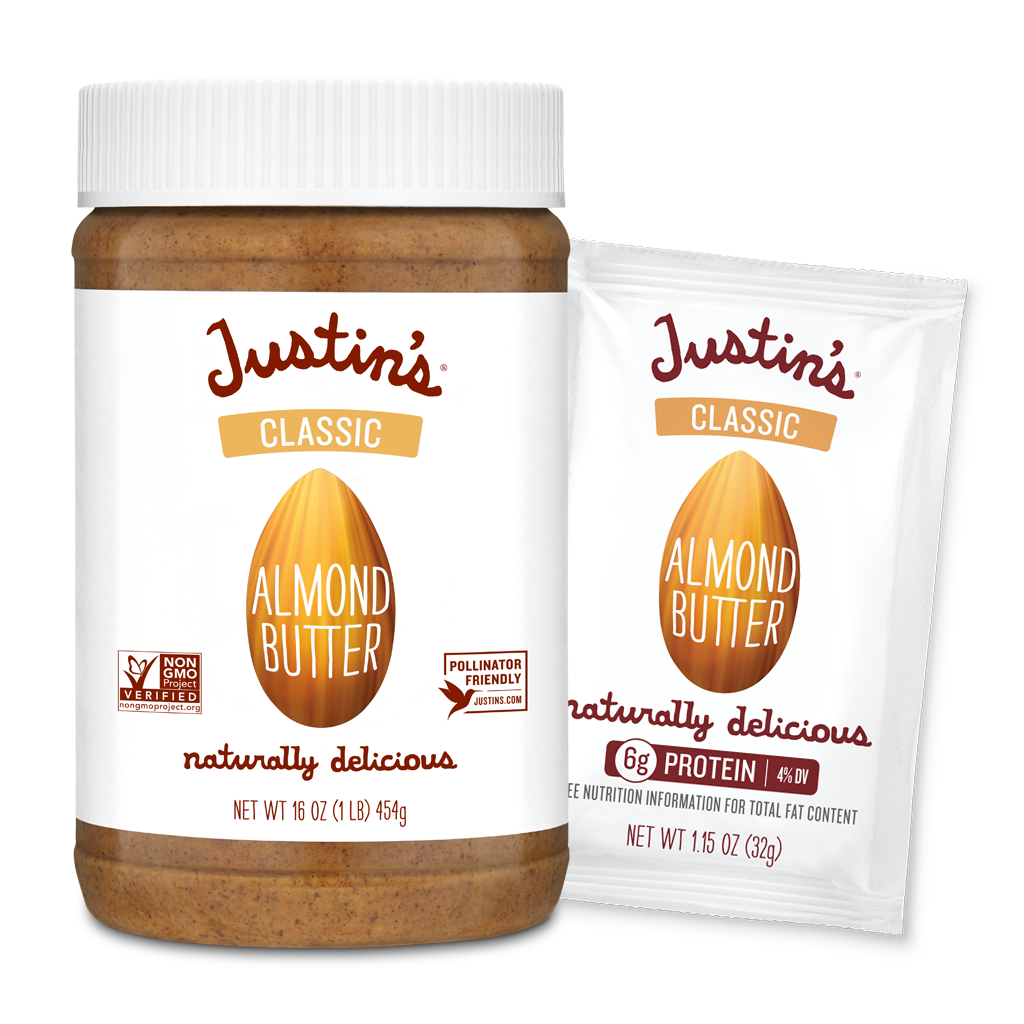
Justin's Classic Almond Butter
Best Overall: Justin's earns its bestseller status by threading the needle between natural and convenient. Two ingredients — dry-roasted almonds and a small amount of palm oil — give it the no-stir consistency most people want without the long list of additives found in supermarket brands.
Top picks ↓| Product | Price | Link |
|---|---|---|
| $12.99Reference price | ||
| $13.99Reference price | ||
| $15.50Reference price | ||
| $21.28Reference price | ||
| $9.99Reference price |
| Product | Serving size | Calories | Protein | Total fat | Sugars | Fiber | Sodium | Certifications |
|---|---|---|---|---|---|---|---|---|
| Justin's Classic Almond Butter | 2 tbsp (32 g) | 220 kcal | 6 g | 19 g | 1 g | 3 g | 10 mg | Non-GMO Project Verified, Gluten-Free, Kosher |
| Barney Butter Bare Almond Butter | 2 tbsp (32 g) | 190 kcal | 7 g | 17 g | 2 g | 4 g | 0 mg | Non-GMO, Gluten-Free, Vegan, Paleo/Keto, peanut-free (peanut-free facility), no added sugar or salt |
| Wild Friends Classic Creamy Almond Butter | 2 tbsp (32 g) | 190 kcal | 7 g | 17 g | 2 g | 3 g | 90 mg | Non-GMO Project Verified, Certified Gluten-Free, Kosher, Vegan, Dairy-Free, Palm Oil Free, Certified B Corp |
| Artisana Organics Raw Almond Butter | 2 tbsp (32 g) | 190 kcal | 7 g | 16 g | 1 g | 4 g | 0 mg | USDA Organic, Non-GMO Project Verified, Certified Raw, Vegan, Gluten-Free, Kosher; No Sugar Added, No Palm Oil |
| MaraNatha No-Stir Creamy Almond Butter | 2 tbsp (32 g) | 200 kcal | 7 g | 17 g | 3 g | 3 g | 65 mg | Non-GMO Project Verified, Gluten-Free Certified (GFCO), Kosher (OU) |
Top picks
Related articles
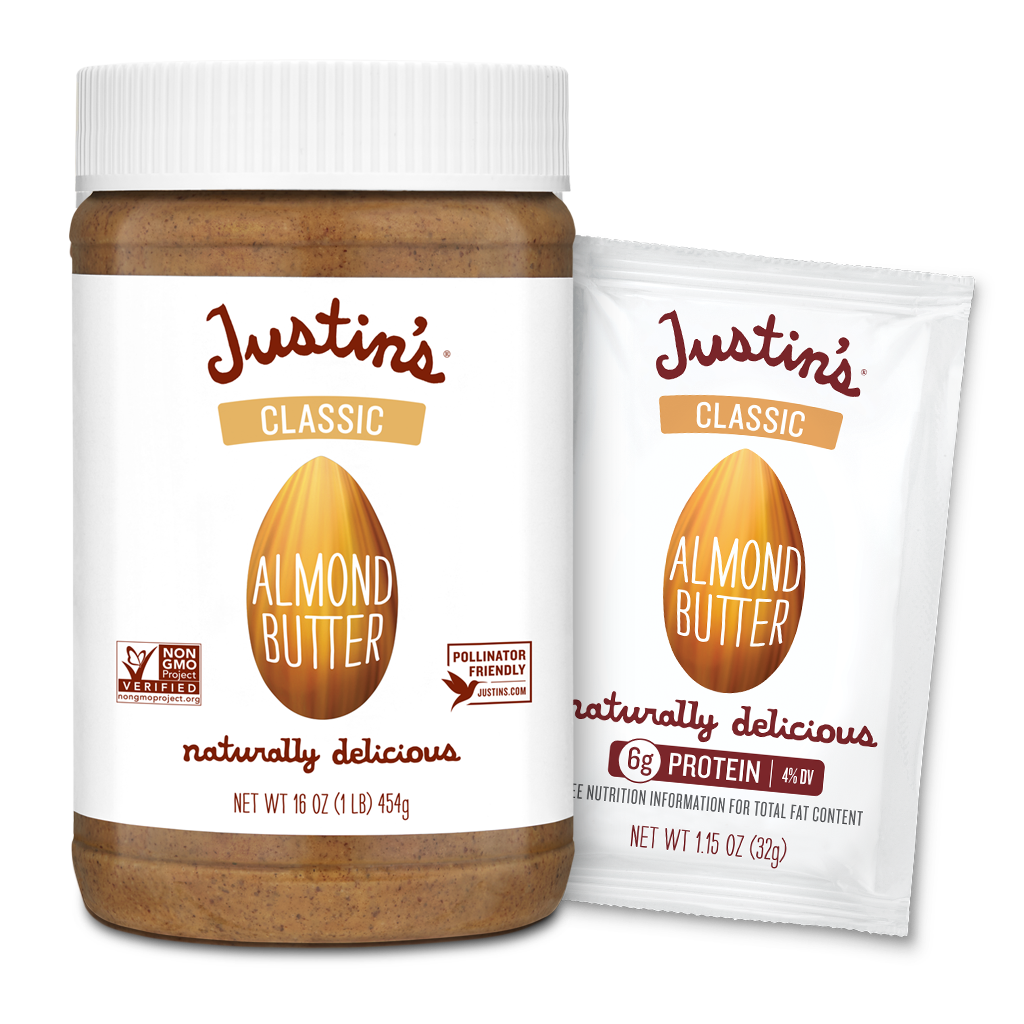

Justin's earns its bestseller status by threading the needle between natural and convenient. Two ingredients — dry-roasted almonds and a small amount of palm oil — give it the no-stir consistency most people want without the long list of additives found in supermarket brands. The roast flavor is well-balanced: nutty without being too intense. Available in squeeze packs, which is genuinely useful for pre-workout portability or travel.
Pros
- ✓Two ingredients — dry-roasted almonds and palm oil
- ✓Creamy texture without stirring
- ✓Widely available at mainstream grocery prices
Cons
- ✗Contains palm oil — sustainability concern for some
- ✗Less intense almond flavor than raw options
Score breakdown
| Serving size | 2 tbsp (32 g) |
| Calories | 220 kcal |
| Protein | 6 g |
| Total fat | 19 g |
| Sugars | 1 g |
| Fiber | 3 g |
| Sodium | 10 mg |
| Certifications | Non-GMO Project Verified, Gluten-Free, Kosher |
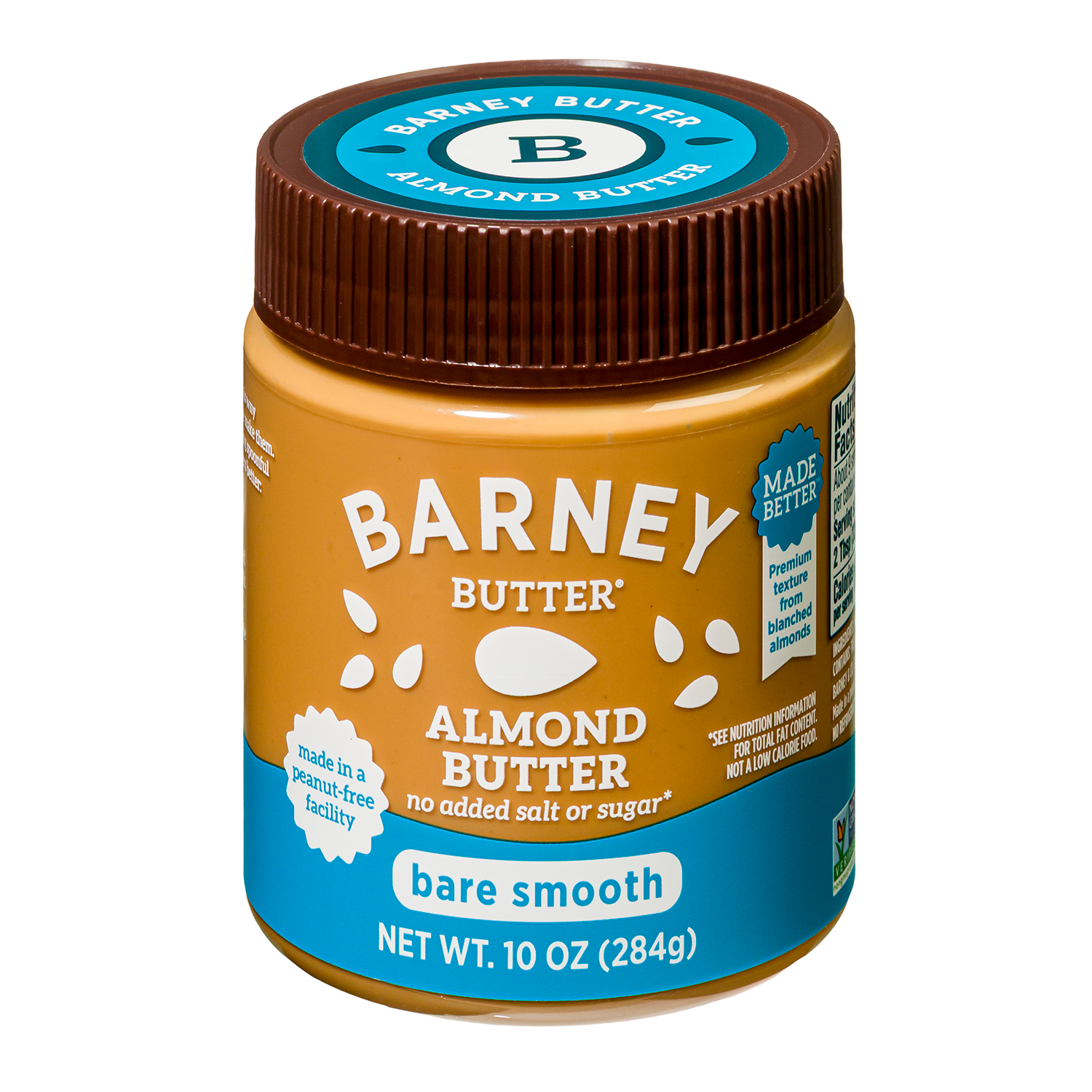
Barney's blanching approach is distinctive — removing the almond skin before grinding produces a noticeably smoother, milder paste than skin-on almond butters. The single ingredient is blanched almonds, full stop. The flavor is cleaner and less intense than skin-on varieties, making it more versatile in recipes where you want almond flavor without the slight bitterness from the skins. Requires minimal stirring.
Pros
- ✓Blanched almonds produce noticeably smoother texture
- ✓Single ingredient — nothing else
- ✓Mild flavor works in both sweet and savory dishes
Cons
- ✗Oil separation requires stirring
- ✗Less available in mainstream stores
Score breakdown
| Serving size | 2 tbsp (32 g) |
| Calories | 190 kcal |
| Protein | 7 g |
| Total fat | 17 g |
| Sugars | 2 g |
| Fiber | 4 g |
| Sodium | 0 mg |
| Certifications | Non-GMO, Gluten-Free, Vegan, Paleo/Keto, peanut-free (peanut-free facility), no added sugar or salt |
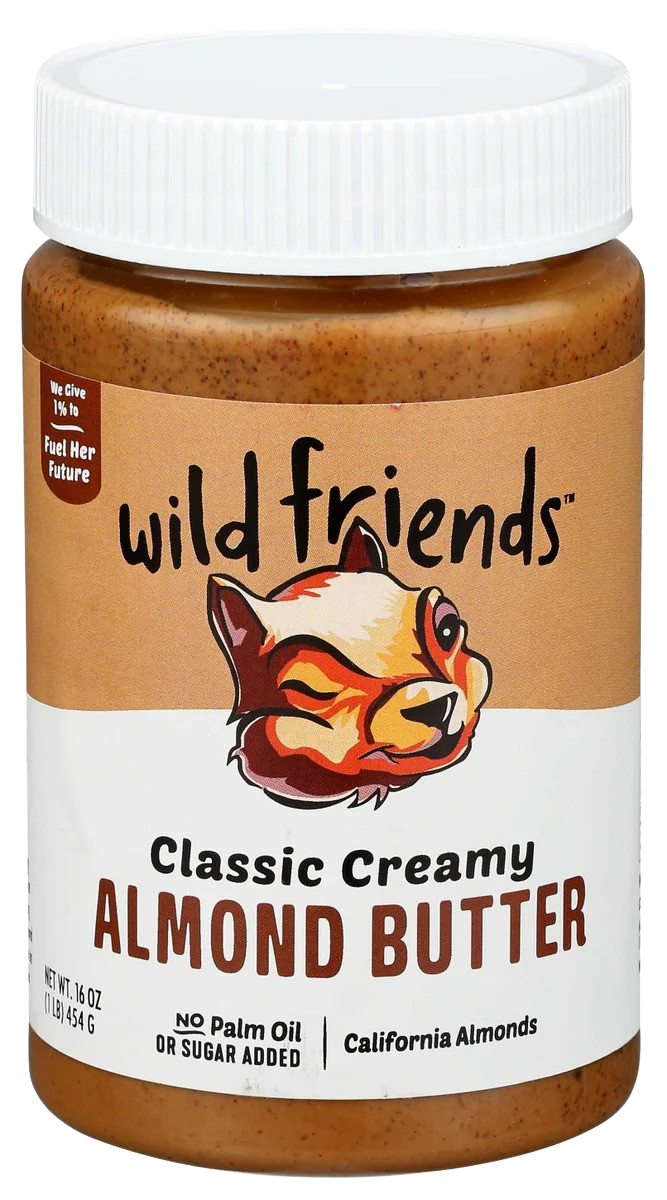
Wild Friends avoids palm oil — the texture stays creamy through stone-grinding rather than emulsification. The result is lighter than standard jar butters with a slight natural sweetness. The Oregon-based brand sources non-GMO almonds and keeps the ingredient list to almonds, sunflower oil, and sea salt. If palm oil sourcing is a concern, this is the cleaner alternative to Justin's at a similar price point.
Pros
- ✓No palm oil — stone-ground for natural creaminess
- ✓Certified organic
- ✓Clean ingredient list without emulsifiers
Cons
- ✗Premium price point
- ✗Slightly grainy texture vs. Justin's
Score breakdown
| Serving size | 2 tbsp (32 g) |
| Calories | 190 kcal |
| Protein | 7 g |
| Total fat | 17 g |
| Sugars | 2 g |
| Fiber | 3 g |
| Sodium | 90 mg |
| Certifications | Non-GMO Project Verified, Certified Gluten-Free, Kosher, Vegan, Dairy-Free, Palm Oil Free, Certified B Corp |
Subscribe to our newsletter
Occasional updates and new releases — no spam.

The key distinction here is raw — the almonds are not roasted before grinding, which preserves a higher nutrient density and produces a distinctly different flavor profile. Raw almond butter has an almost sweet, grassy character compared to the toasted nuttiness of roasted versions. Single ingredient, certified organic, thicker consistency that needs stirring. For people prioritizing raw food nutrition, this is the standout option.
Pros
- ✓Raw almonds preserve maximum nutrient density
- ✓Certified organic and non-GMO
- ✓Intense, complex almond flavor
Cons
- ✗Requires thorough stirring
- ✗Higher price than mass-market options
Score breakdown
| Serving size | 2 tbsp (32 g) |
| Calories | 190 kcal |
| Protein | 7 g |
| Total fat | 16 g |
| Sugars | 1 g |
| Fiber | 4 g |
| Sodium | 0 mg |
| Certifications | USDA Organic, Non-GMO Project Verified, Certified Raw, Vegan, Gluten-Free, Kosher; No Sugar Added, No Palm Oil |
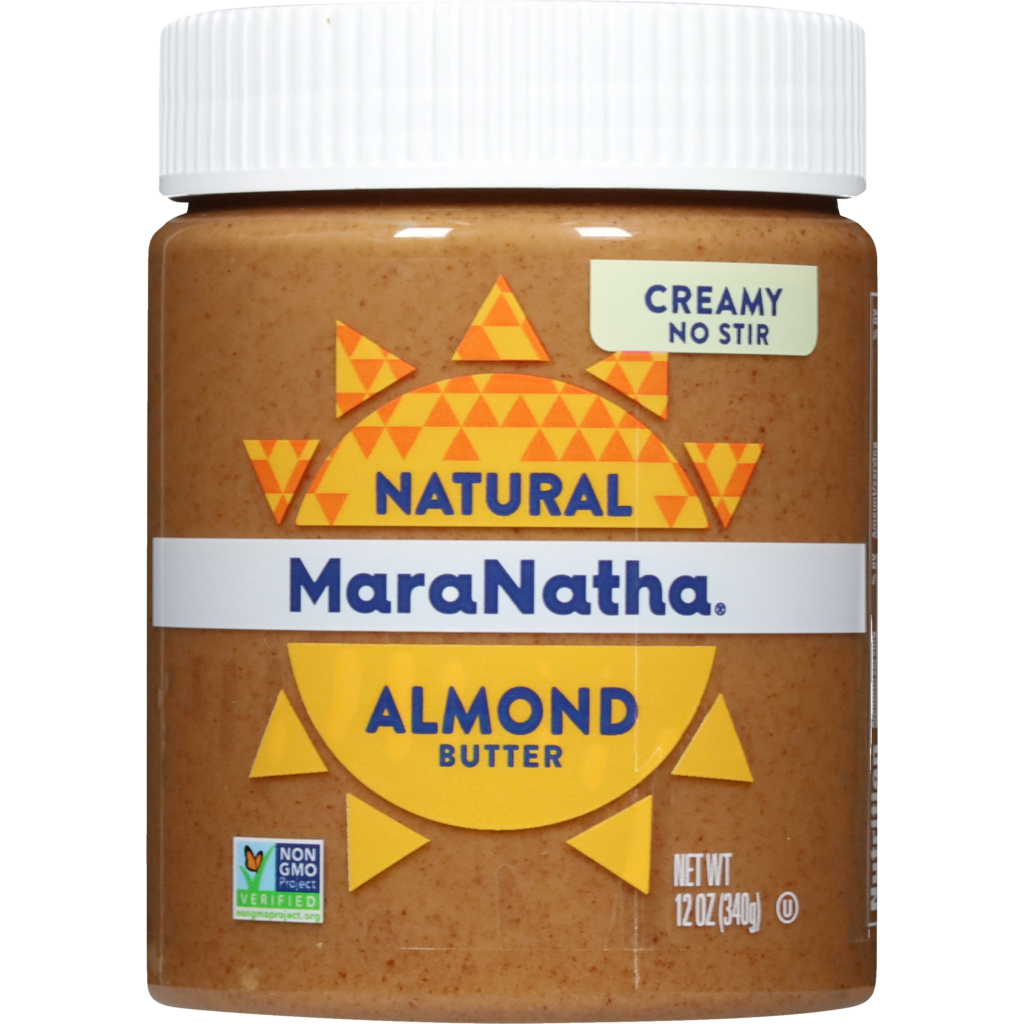
MaraNatha's emulsification formula prevents oil separation permanently — open the jar, use it, close it. This is the practical daily-driver for households where natural almond butters with their oil separation get abandoned in the back of the pantry. The flavor is solid: mild roasted almond with light salt and a touch of sugar. Not for purists, but for consistent, hassle-free daily use, it performs exactly as advertised.
Pros
- ✓Permanently emulsified — zero stirring required
- ✓Consistent texture from first to last spoonful
- ✓Mainstream availability and price
Cons
- ✗Added oils and salt in the formula
- ✗Less pure ingredient profile than natural options
Score breakdown
| Serving size | 2 tbsp (32 g) |
| Calories | 200 kcal |
| Protein | 7 g |
| Total fat | 17 g |
| Sugars | 3 g |
| Fiber | 3 g |
| Sodium | 65 mg |
| Certifications | Non-GMO Project Verified, Gluten-Free Certified (GFCO), Kosher (OU) |
Which one is right for you?
For busy everyday spreaders
Justin's Classic Almond Butter
Ideal for busy households wanting a creamy, no-stir spread with a clean two-ingredient list.
For smooth-texture recipe cooks
Barney Butter Bare Almond Butter
Best for those who prefer a smoother, milder paste that blends easily into sweet and savory recipes.
For palm-oil-free shoppers
Wild Friends Classic Creamy Almond Butter
Great for shoppers avoiding palm oil who want a clean, stone-ground, organic jar.
For raw-food enthusiasts
Artisana Organics Raw Almond Butter
Perfect for raw-food fans seeking an intense, complex flavor with maximum nutrient density.
For zero-fuss daily use
MaraNatha No-Stir Creamy Almond Butter
Suited to anyone wanting a consistent, hassle-free spread that needs no stirring at all.
How to Choose Almond Butter: Natural vs. No-Stir and Everything Between
Almond butter buying decisions come down to ingredient philosophy, texture preference, and how much you care about convenience versus purity.
Bottom line
Justin's is the practical anchor — the two-ingredient formula threads the convenience-versus-purity needle perfectly for daily use. Barney Bare is the choice when texture matters most. Artisana is the answer for raw food protocols. For households that just want to open a jar and spread without thinking, MaraNatha delivers that experience reliably.
Frequently asked questions
Is almond butter healthier than peanut butter?▼
Why does almond butter separate?▼
How much almond butter per day is healthy?▼
What's the best almond butter for baking?▼
Does almond butter need to be refrigerated?▼
Prices change. Check the retailer for the current price.
Comments & questions
Discussion happens on nattzy, our community forum. Sign in with Google to post — it takes a second.
Related articles

Best Coffee Makers 2026: Breville vs Moccamaster vs OXO
Food
Best Toaster 2026: 5 Compared
Best Toaster 2026: 5 Compared

ConoHa WING review (2026): setup, speed and pricing
Best JP rental server 2026: 5 hosts ranked
Best LED Face Masks 2026: 3 Light Therapy Devices Compared
Best Robot Vacuums 2026: 5 Models Compared Honestly