Best Vietnamese Coffee 2026: 5 Compared
Vietnamese coffee (ca phe) is brewed using a phin — a small metal drip filter that sits directly on the cup. The grind, water temp, and ratio matter far more than which brewer you choose.
Quick answer
Nguyen Coffee Supply's starter kit is the easiest entry: a stainless phin, a ceramic cup and a sample of direct-sourced Vietnamese single-origin beans in one order, with an arabica-forward profile lighter than traditional robusta blends. Trung Nguyen Legend is the most representative traditional cup, pre-ground to phin fineness with robusta body that stands up to condensed milk, Cafe du Monde adds chicory, Longevity condensed milk is the essential ingredient, and a plain stainless phin brews identically to premium versions.
Each product was evaluated on grind consistency for phin brewing, flavour authenticity to the ca phe sua da tradition, sourcing transparency, value per serving, and packaging integrity after opening.
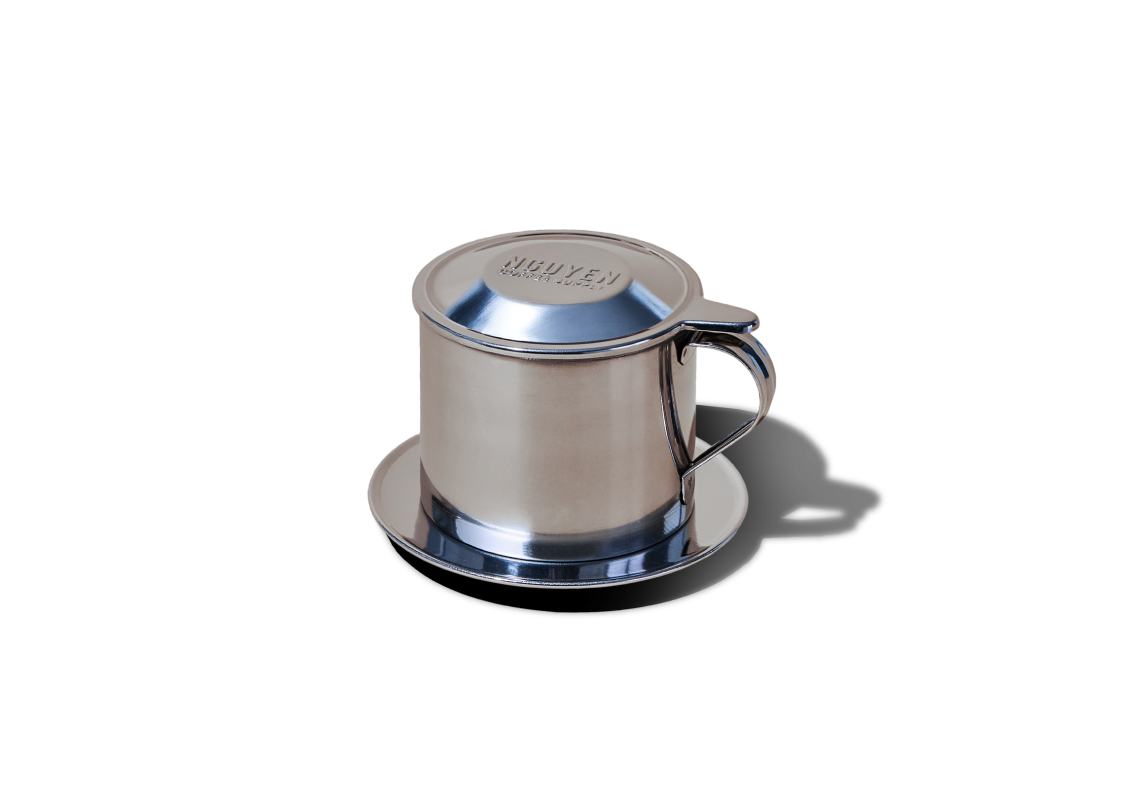
Nguyen Coffee Supply Phin Filter Kit
Best Starter Kit: Stainless phin filter, ceramic cup, and Vietnamese single-origin coffee sample in one kit — everything needed to brew ca phe sua da at home without sourcing parts separately. Nguyen's direct-sourced, arabica-forward beans offer a cleaner, lighter profile than traditional robusta-dominant blends.
Top picks ↓| Product | Price | Link |
|---|---|---|
| $15.30Reference price | ||
| $12.85Reference price | ||
| $9.95Reference price | ||
| $46.99Price as of 2026-09-24 | ||
| $12.99Reference price |
| Product | Material | Capacity | Dimensions | Pieces | Filter type | Brew time | Bean type | Form | Origin | Roast | Net weight | Type | Ingredients | Packaging |
|---|---|---|---|---|---|---|---|---|---|---|---|---|---|---|
| Nguyen Coffee Supply Phin Filter Kit | Stainless steel | 4 oz (118 ml) chamber | 3.25 in (8.3 cm) filter-plate diameter | 4-piece (lid, brewing chamber, gravity filter insert, base plate) | Gravity filter (no screw-down press) | ~5 minutes | — | — | — | — | — | — | — | — |
| Trung Nguyen Legend Ground Coffee | — | — | — | — | — | — | Robusta & Arabica blend | Ground (pre-ground) | Vietnam (Buon Ma Thuot, Dak Lak) | — | — | — | — | — |
| Cafe Du Monde Coffee with Chicory | — | — | — | — | — | — | — | Ground | — | Dark roast | 15 oz (425 g) | — | — | — |
| Longevity Brand Sweetened Condensed Milk | — | — | — | — | — | — | — | — | Vietnam (brand by FrieslandCampina; US/Canada distribution by Sun Hing Foods) | — | 14 oz (397 g) | Full-cream sweetened condensed milk (whole milk) | Whole milk, sugar | Canned |
| Stainless Steel Phin Coffee Filter Set | Stainless steel | 6.7 oz (~198 ml) | 4 in W x 3 in D x 5 in H (10 x 7.6 x 12.7 cm) | 4-piece (brewing chamber, filter plate, screw-down press, lid) | Screw-down press filter | — | — | — | — | — | — | — | — | — |
Top picks
Related articles


Stainless phin + ceramic cup + Vietnamese single-origin coffee sample. $15-25. Best starting kit for first-time phin brewers — includes everything needed for ca phe sua da. Nguyen sources direct from Vietnamese farmers, arabica-forward profile. Good gift option.
Stainless phin filter, ceramic cup, and Vietnamese single-origin coffee sample in one kit — everything needed to brew ca phe sua da at home without sourcing parts separately. Nguyen's direct-sourced, arabica-forward beans offer a cleaner, lighter profile than traditional robusta-dominant blends. The coffee sample is small; you will need to order more once you confirm the method suits you.
Pros
- ✓Complete kit — phin, cup, and coffee in one order
- ✓Direct-sourced Vietnamese single-origin coffee
- ✓Ceramic cup included — brew-direct convenience
Cons
- ✗Coffee sample small — needs follow-up order quickly
Score breakdown
| Material | Stainless steel |
| Capacity | 4 oz (118 ml) chamber |
| Dimensions | 3.25 in (8.3 cm) filter-plate diameter |
| Pieces | 4-piece (lid, brewing chamber, gravity filter insert, base plate) |
| Filter type | Gravity filter (no screw-down press) |
| Brew time | ~5 minutes |

Trung Nguyen Legend Ground Coffee
Robusta-arabica blend, pre-ground for phin, 500g. $15-20. Most representative traditional Vietnamese coffee — robusta body and caffeine with arabica aroma. Correct for authentic ca phe sua da. Pre-ground to proper phin grind.
Vietnam's most internationally recognized coffee brand — robusta-arabica blend pre-ground to the correct phin grind for authentic ca phe sua da. High caffeine, chocolatey body, and the robusta intensity that balances sweetened condensed milk without being overwhelmed by it. The most representative traditional cup for first-time Vietnamese coffee drinkers.
Pros
- ✓Pre-ground to correct phin grind — ready to brew
- ✓Robusta-dominant body handles condensed milk perfectly
- ✓Most representative traditional Vietnamese flavour
Cons
- ✗Pre-ground oxidizes faster than whole bean — buy in 500g rather than bulk
Score breakdown
| Bean type | Robusta & Arabica blend |
| Form | Ground (pre-ground) |
| Origin | Vietnam (Buon Ma Thuot, Dak Lak) |
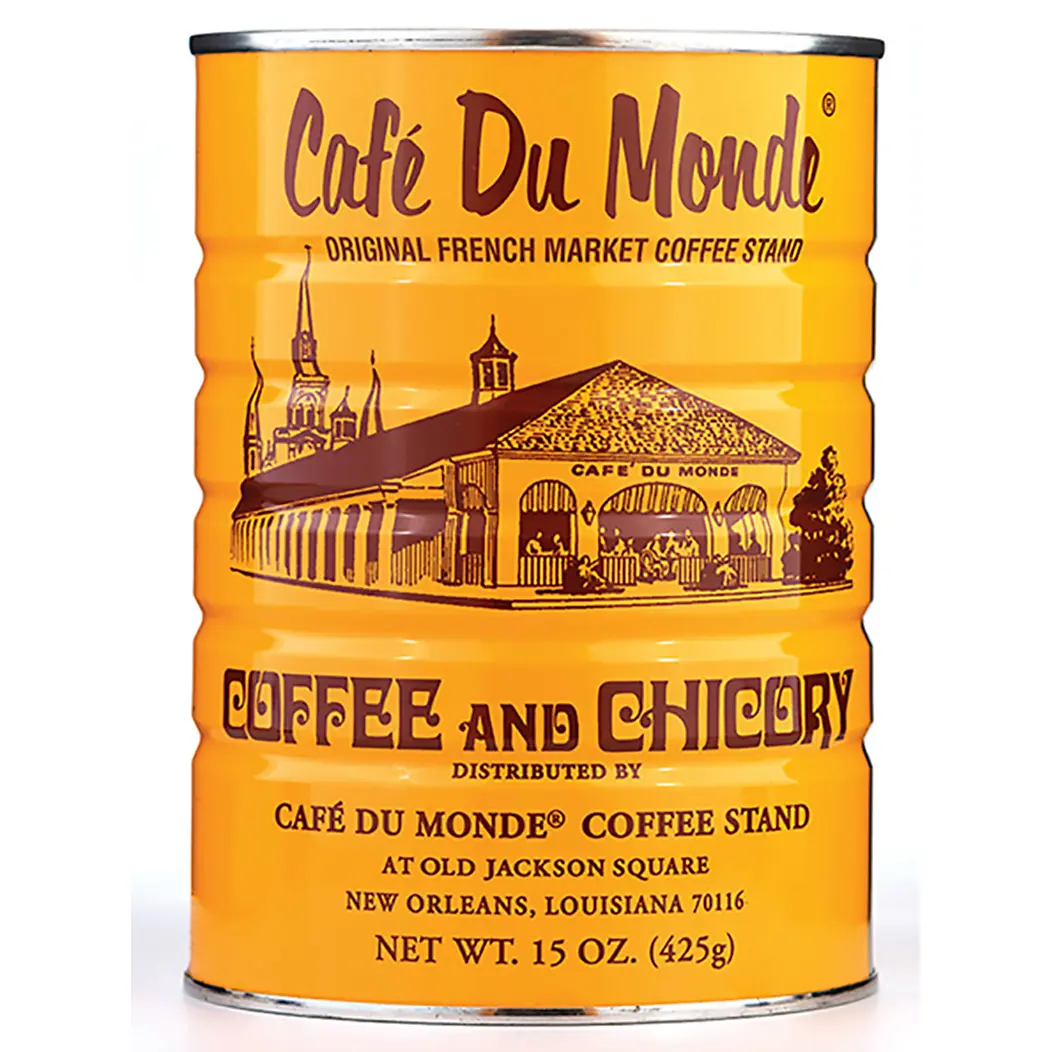
Coffee + chicory blend, pre-ground, 15 oz can. $10-14. Vietnamese-American tradition — chicory adds woody bitterness that pairs well with condensed milk. Slightly coarser than ideal phin grind but works. Different flavor from pure Vietnamese coffee.
Classic New Orleans coffee-and-chicory blend in a 15 oz can — the Vietnamese-American tradition where chicory's woody bitterness pairs exceptionally well with sweetened condensed milk. Slightly coarser than ideal phin grind, so brew time extends 7–10 minutes; use 20% less grounds to compensate. Distinct from Vietnamese coffee brewed in Vietnam but represents an authentic diaspora preparation.
Pros
- ✓Chicory adds woody bitterness that pairs well with condensed milk
- ✓Large 15 oz can — good value per serving
- ✓Widely available in US grocery stores
Cons
- ✗Slightly coarser than ideal phin grind — extends brew time to 7–10 min
Score breakdown
| Roast | Dark roast |
| Form | Ground |
| Net weight | 15 oz (425 g) |
Subscribe to our newsletter
Occasional updates and new releases — no spam.
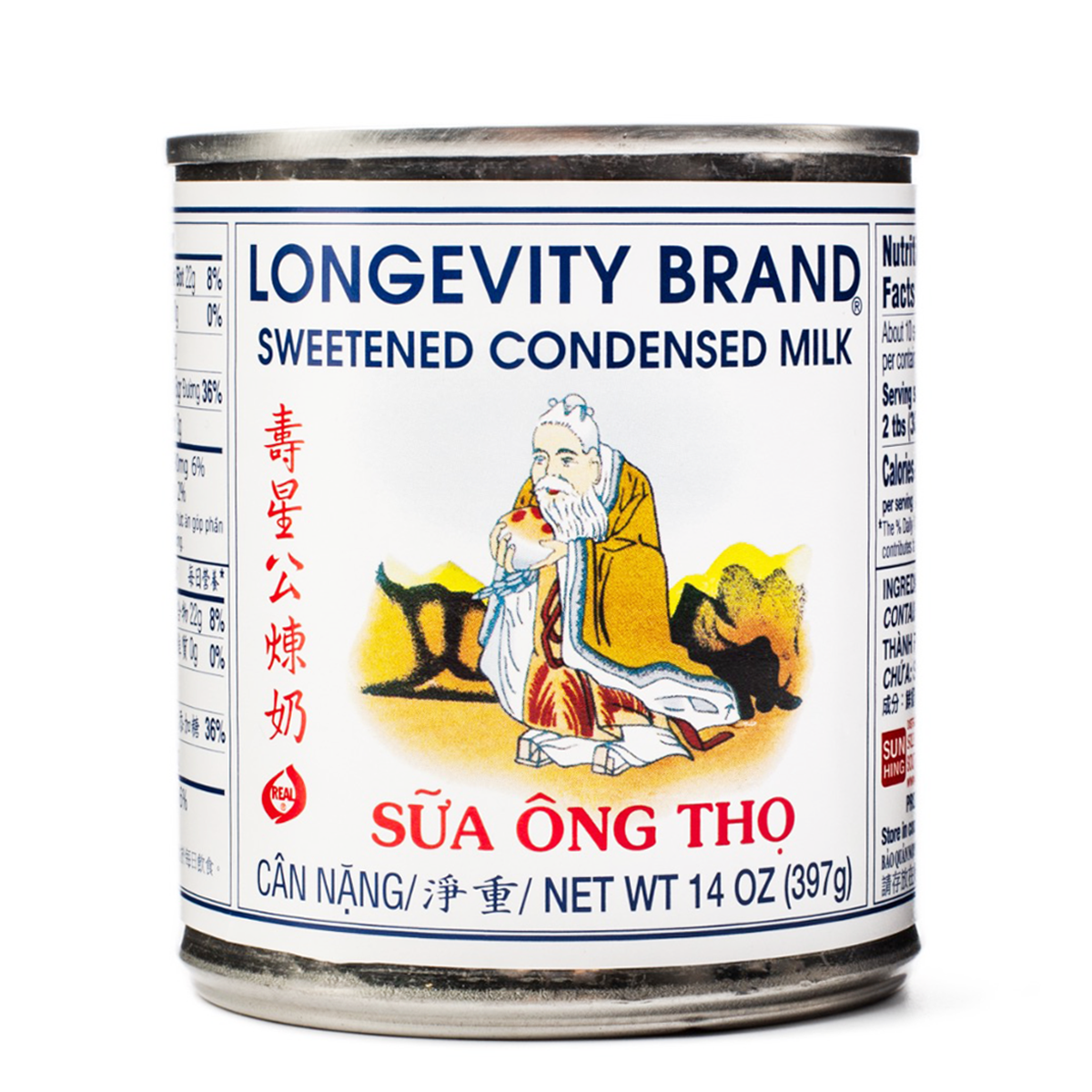
Longevity Brand Sweetened Condensed Milk
Sweetened condensed milk, standard Vietnamese brand. $3-5 per can. Essential for ca phe sua da — traditional Ong Tho brand used in Vietnam. 2-3 tablespoons per cup. The correct ingredient for authentic preparation.
Traditional Vietnamese sweetened condensed milk (Ong Tho brand) — the essential ingredient for ca phe sua da. Slightly different sweetness profile from Nestle or Eagle Brand due to milk fat ratio. Add 2–3 tablespoons to the glass before phin brewing, let coffee drip directly onto it, stir, and pour over ice. Non-negotiable for an authentic cup.
Pros
- ✓Traditional Ong Tho brand used in Vietnam
- ✓Correct sweetness-to-fat ratio for ca phe sua da
- ✓Works as both sweetener and creamer in one
Cons
- ✗Once opened, oxidizes within a week — transfer to airtight container
Score breakdown
| Type | Full-cream sweetened condensed milk (whole milk) |
| Net weight | 14 oz (397 g) |
| Ingredients | Whole milk, sugar |
| Packaging | Canned |
| Origin | Vietnam (brand by FrieslandCampina; US/Canada distribution by Sun Hing Foods) |
Stainless steel phin filter set (multiple sizes). $5-12. Basic phin for home use — look for snug press plate fit. Brews identically to expensive versions. 4 oz size for one cup, 8 oz for larger cup or two cups simultaneously.
Standard stainless steel phin filter for Vietnamese drip coffee — brews identically to expensive premium versions when the press plate fit is snug and perforations are uniform. The 4 oz size is correct for one concentrated cup; 8 oz for two cups or a longer brew. Quality $10 phin vs $25 phin: the brewing physics are the same, the main differentiator is press-plate fit precision.
Pros
- ✓Brews identically to expensive phins when press plate fits snugly
- ✓4 oz and 8 oz sizes for one or two cups
- ✓Dishwasher-safe stainless steel
Cons
- ✗Press plate fit varies by unit — inspect before committing to a specific listing
Score breakdown
| Material | Stainless steel |
| Capacity | 6.7 oz (~198 ml) |
| Dimensions | 4 in W x 3 in D x 5 in H (10 x 7.6 x 12.7 cm) |
| Pieces | 4-piece (brewing chamber, filter plate, screw-down press, lid) |
| Filter type | Screw-down press filter |
Which one is right for you?
For first-time Vietnamese coffee brewers
Nguyen Coffee Supply Phin Filter Kit
One order covers phin, cup, and coffee — nothing to source separately before your first brew.
For authentic traditional ca phe sua da
Trung Nguyen Legend Ground Coffee
The robusta-dominant blend and correct pre-ground fineness make this the most representative cup of what Vietnamese coffee tastes like in Vietnam.
For Vietnamese-American diaspora flavour
Cafe Du Monde Coffee with Chicory
Chicory's woody bitterness pairs distinctively with condensed milk and reflects the authentic Vietnamese-American preparation tradition.
For brewers who already have a phin
Stainless Steel Phin Coffee Filter Set
A quality $10–13 stainless phin brews identically to expensive versions — focus spend on the coffee instead.
For anyone completing a ca phe sua da setup
Longevity Brand Sweetened Condensed Milk
The Ong Tho brand condensed milk is the non-negotiable ingredient — no substitution produces the same sweetness and creaminess balance.
How the phin filter works and why the brew rate matters
Phin mechanics: a phin consists of four parts — a perforated base plate, a brewing chamber, a gravity press plate, and a lid. Coffee grounds go in the chamber, the press plate is set on top (gravity-only, not compressed), and hot water fills the chamber. Water drips through the coffee and perforated base at roughly 4-6 minutes for a 4 oz extraction. The slow drip rate produces full extraction without bitterness — the contact time is long enough for complete flavor development but the perforated plate creates natural resistance that prevents over-extraction. This is why phin coffee is intensely flavored without the astringency of over-extracted drip coffee.
Grind size matters significantly: Vietnamese coffee uses a medium-fine grind, finer than drip but coarser than espresso. Too fine and the phin clogs, extending extraction to 10+ minutes and producing bitter over-extracted coffee. Too coarse and water runs through too fast, producing weak under-extracted coffee. Traditional Vietnamese coffee (Trung Nguyen, Vinacafe) is pre-ground to the correct consistency for phin brewing. If grinding at home, target 600-700 microns — slightly finer than standard drip.
The condensed milk proportion: ca phe sua da is typically 1 part condensed milk to 3-4 parts brewed coffee. Longevity Brand (Ong Tho) sweetened condensed milk is the most common Vietnamese brand — it has a slightly different sweetness profile from Nestle or Eagle Brand due to the milk fat ratio. Add the condensed milk to the glass before brewing, let the phin drip directly onto it, stir, then pour over ice. Alternatively, brew directly into ice for a faster chill (though this dilutes more). The condensed milk-first method preserves more concentrated flavor.
Trung Nguyen Legend and traditional Vietnamese ground coffee
Trung Nguyen Legend ($15-20 for 500g) is Vietnam's most internationally recognized coffee brand — their blends combine robusta and arabica at varying ratios. Legend blend is their flagship: robusta-dominant (for body and caffeine) with arabica (for aroma). Robusta-dominant blends are intentional in Vietnamese coffee culture — robusta has roughly double the caffeine of arabica, more body, and lower acidity, which makes it well-suited to the condensed milk preparation. The intensely flavored robusta concentrate balances the sweetness of condensed milk without being overwhelmed by it.
Trung Nguyen G7 3-in-1 instant ($12-18 for 18 packets) deserves mention not as a substitute for phin coffee but as the authentic Vietnamese instant format — it combines coffee, creamer, and sugar pre-measured for the traditional ca phe sua da taste profile without equipment. G7 instant is not a compromise product in Vietnam; it's a distinct category consumed separately from phin coffee. For travelers or those without access to a phin, G7 produces a recognizably Vietnamese coffee flavor.
Regional flavor differences: Vietnamese coffee from the Central Highlands (Buon Ma Thuot region) is considered premium — the high elevation and volcanic soil produce denser beans. Trung Nguyen sources from this region. Single-origin Vietnamese robusta from Buon Ma Thuot is increasingly available internationally. The typical Vietnamese coffee flavor profile: earthy, chocolatey, low-acid, full-bodied. This differs significantly from Ethiopian arabica (floral, bright) or Colombian arabica (balanced, fruity).
Cafe Du Monde and the chicory blend variation
Cafe Du Monde Coffee with Chicory ($10-14 for 15 oz) occupies a specific position in Vietnamese-American coffee culture. Chicory root is roasted and ground alongside coffee — it was originally used to extend coffee supplies during shortages but became a flavor tradition in New Orleans and, through migration, in Vietnamese-American communities. Chicory adds a woody, slightly bitter note that pairs well with condensed milk. Cafe Du Monde is not identical to Vietnamese coffee from Vietnam but it represents a distinct Vietnamese-American interpretation of ca phe.
Using Cafe Du Monde in a phin: Cafe Du Monde is pre-ground for drip brewing, which runs slightly coarser than ideal phin grind. The phin will work with it but brew time extends to 7-10 minutes. Use about 20% less grounds than with traditional Vietnamese coffee to compensate for the longer extraction. The chicory content means the coffee tastes different from pure Trung Nguyen — earthier and more bitter, which some people prefer with condensed milk.
Choosing between styles: pure Vietnamese robusta (Trung Nguyen) produces a chocolate-earthy concentrate with high caffeine. Chicory blend (Cafe Du Monde) produces a more bitter, woody flavor that's familiar to Vietnamese-American palates. Both work well in ca phe sua da. For first-time phin brewers, Trung Nguyen Legend is the more representative starting point — it's what ca phe tastes like in Vietnam. Cafe Du Monde is a regional variation rather than the traditional preparation.
Phin filter selection: stainless steel options and sizing
Phin sizes: phins are sized by the cup volume they brew — most common are 4 oz (for one small cup) and 8 oz (for one large cup or two small). A 4 oz phin uses 3-4 tablespoons of coffee and 4 oz water. Vietnamese coffee is served in small volumes because the concentration is high — 4 oz of phin-brewed coffee over condensed milk and ice produces a full-sized drink. 8 oz phins are useful if you want a longer phin session or are making two cups simultaneously.
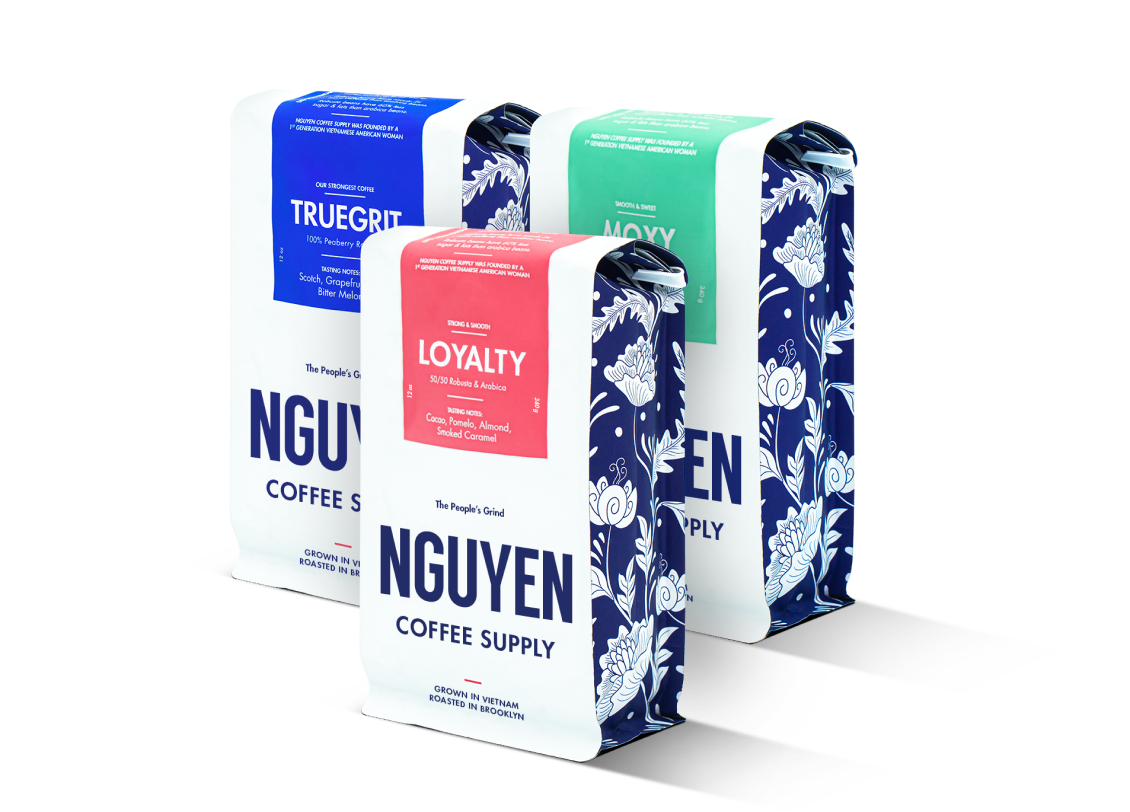
Nguyen Coffee Supply phin kit ($15-25) includes a stainless steel phin, a ceramic cup, and a selection of their own Vietnamese single-origin coffee. Their coffee is sourced directly from Vietnamese farmers and leans toward arabica-forward or arabica-robusta blends with cleaner flavor profiles than traditional Trung Nguyen. Nguyen Coffee's sourcing focuses on specialty-grade Vietnamese coffee — same phin method, lighter roast, different flavor profile.
Generic stainless phin filters ($5-12): most Vietnamese grocery stores and Amazon carry stainless steel phin sets. Quality varies — look for phins where the press plate fits snugly without wobbling (loose plates allow water to channel around coffee rather than through it) and the perforation pattern is uniform. The base perforations should be fine enough that medium-ground coffee doesn't pass through. A quality $10 stainless phin brews identically to a $25 phin — the brewing physics are the same. The main differentiator is press plate fit and build durability.
Frequently asked questions
What's the difference between ca phe sua da and ca phe sua nong?▼
Can I use a phin filter with regular coffee?▼
How much condensed milk should I use?▼
Prices change. Check the retailer for the current price.
Comments & questions
Discussion happens on nattzy, our community forum. Sign in with Google to post — it takes a second.