Best Dark Chocolate 2026: 5 Bars Ranked
Dark chocolate has graduated from health-food curiosity to a genuine pantry staple. The problem is the range is enormous: a $2 store bar and a $12 craft bar can both claim "85% cacao" on the label, but taste completely different. What separates them is cacao origin, roast, and whether the maker is cutting corners with vanillin or lecithin. These five earned their spots through actual flavor, not marketing.
Quick answer
For most buyers, Lindt Excellence 90% is the pick — four ingredients and the most reliable mass-market bar for a sustained, intense bitter finish. Ghirardelli's Midnight Reverie at 86% is the approachable budget bar and the better one for baking, Green & Black's 85% uses Fairtrade organic cacao with a fruitier profile, Theo is bean-to-bar from a Seattle roaster, and Alter Eco is the vegan pick.
We assessed each product on flavor profile, sourcing transparency, value per serving, packaging integrity, and how well it performed across common use cases. Documented certifications and verified user reviews were cross-checked against marketing claims.

Lindt Excellence 90% Cocoa Bar
Best Overall: The 90% bar from Lindt remains the gold standard for mass-market dark chocolate. The ingredient list is four items: cocoa mass, cocoa butter, sugar, bourbon vanilla.
Top picks ↓| Product | Price | Link |
|---|---|---|
| $4.99Reference price | ||
| $4.29Reference price | ||
| $4.49Reference price | ||
| $5.99Reference price | ||
| $3.99Reference price |
| Product | Cocoa percentage | Serving size | Calories | Sugars | Total fat | Certifications |
|---|---|---|---|---|---|---|
| Lindt Excellence 90% Cocoa Bar | 90% | 30 g (3 squares) | 200 kcal | 2 g | 16 g | — |
| Ghirardelli Intense Dark Midnight Reverie 86% | 86% | 32 g (3 squares) | 180 kcal | 4 g | 18 g | — |
| Green & Black's Organic Dark 85% | 85% | 40 g (12 pieces / 1.4 oz) | 250 kcal | 8 g | 20 g | USDA Organic (CCOF), Fairtrade |
| Theo Chocolate Organic 85% Dark Bar | 85% | 28 g (1/3 bar) | 180 kcal | 4 g | 13 g | USDA Organic, Fair Trade, Non-GMO |
| Alter Eco Deep Dark Blackout 85% | 85% | 30 g (4 sections) | 190 kcal | 4 g | 17 g | USDA Organic, Fair Trade (Fair for Life), Non-GMO |
Top picks
Related articles


The 90% bar from Lindt remains the gold standard for mass-market dark chocolate. The ingredient list is four items: cocoa mass, cocoa butter, sugar, bourbon vanilla. No lecithin. No vanillin. The melt is slow and even, revealing a sustained bitter finish that doesn't turn astringent. It's the bar you buy when you need something reliably good without hunting down a specialty shop.
Pros
- ✓4-ingredient simplicity — no filler
- ✓Available everywhere at everyday prices
- ✓Consistent quality batch to batch
Cons
- ✗90% intensity — not for casual chocolate eaters
- ✗Slight bitterness on the finish
Score breakdown
| Cocoa percentage | 90% |
| Serving size | 30 g (3 squares) |
| Calories | 200 kcal |
| Sugars | 2 g |
| Total fat | 16 g |
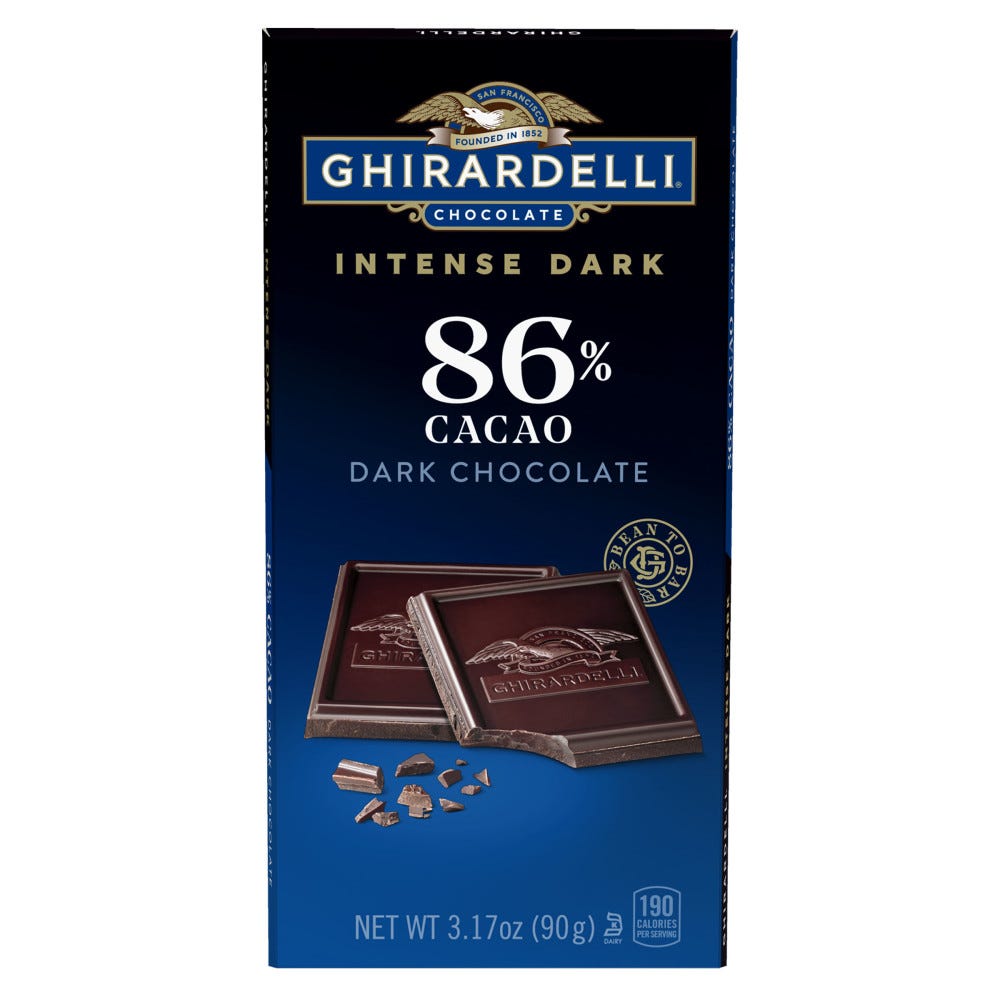
Ghirardelli Intense Dark Midnight Reverie 86%
At 86%, Midnight Reverie sits in a useful sweet spot — dark enough to satisfy serious cocoa cravings, approachable enough for people new to high-percentage chocolate. Ghirardelli sources blended cacao, so don't expect single-origin complexity, but the execution is clean and the bar melts well in baking applications. Widely available at grocery stores, which matters when you want it tonight.
Pros
- ✓86% hits the dark-but-approachable sweet spot
- ✓Smooth texture for the cocoa percentage
- ✓Widely available at competitive prices
Cons
- ✗Less complex than single-origin bars
- ✗Smaller bar size than Lindt
Score breakdown
| Cocoa percentage | 86% |
| Serving size | 32 g (3 squares) |
| Calories | 180 kcal |
| Sugars | 4 g |
| Total fat | 18 g |
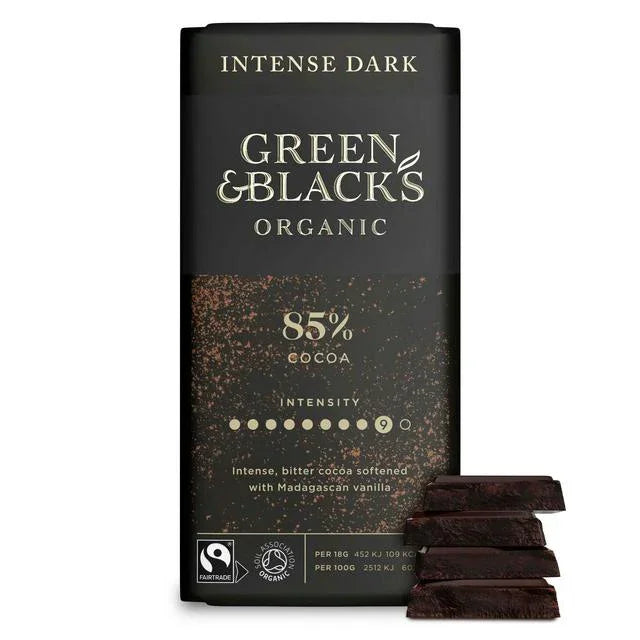
Green & Black's built its reputation on ethical sourcing before that was a selling point. The 85% bar uses Fairtrade-certified organic cacao with a distinctly fruity profile — dried raisin and a hint of cherry come through clearly on the back end. The texture is slightly softer than Lindt, which makes it more approachable for people who find very dark chocolate chalky. B-Corp certified.
Pros
- ✓Fairtrade certified at mainstream pricing
- ✓Mild flavor works for 85% newcomers
- ✓Organic without premium pricing
Cons
- ✗Less intense than Lindt 90%
- ✗Sourcing less transparent than bean-to-bar
Score breakdown
| Cocoa percentage | 85% |
| Serving size | 40 g (12 pieces / 1.4 oz) |
| Calories | 250 kcal |
| Sugars | 8 g |
| Total fat | 20 g |
| Certifications | USDA Organic (CCOF), Fairtrade |
Subscribe to our newsletter
Occasional updates and new releases — no spam.
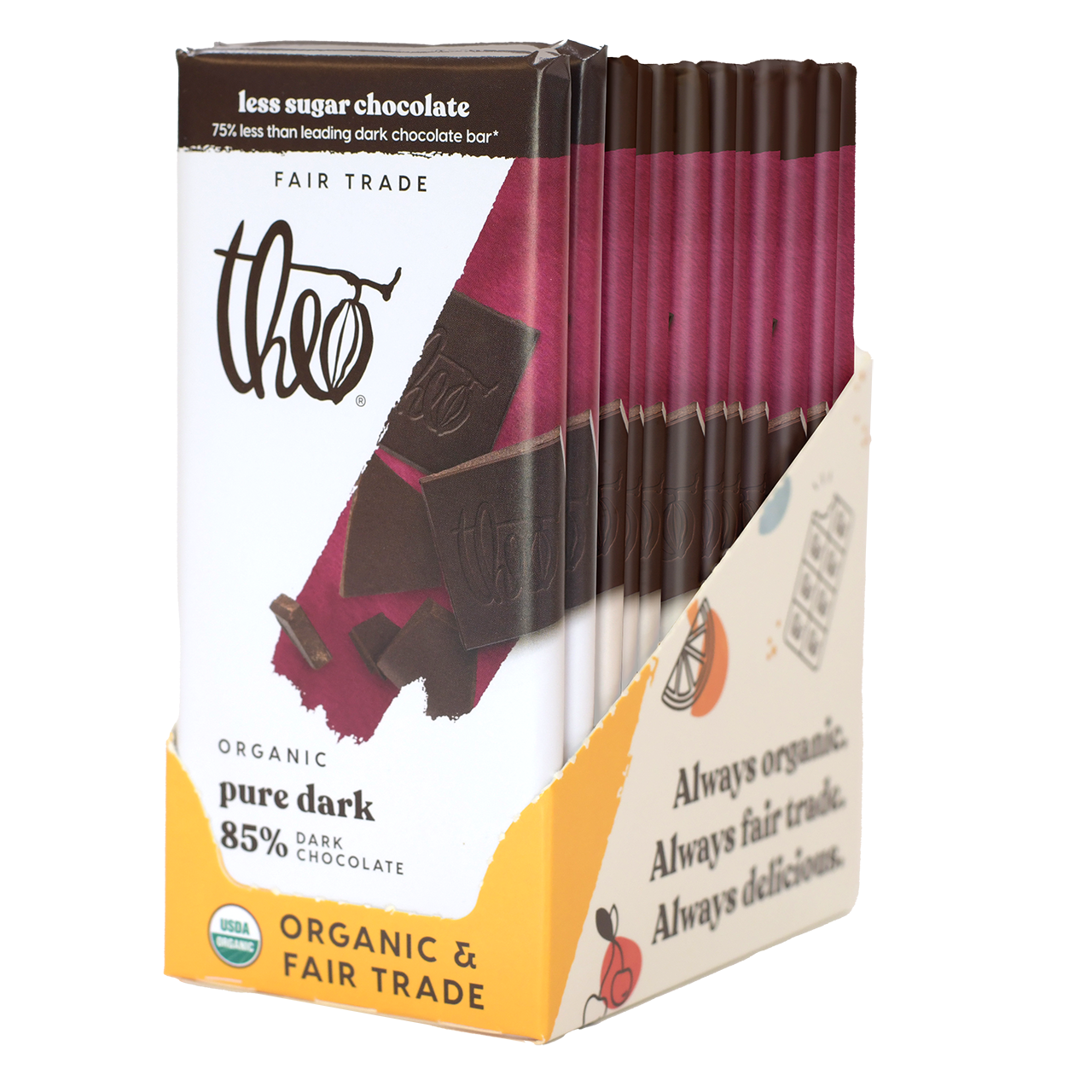
Theo operates a small-batch roaster in Seattle and does the whole process in-house — from bean selection to final bar. Their 85% uses Congo cacao certified fair-trade at origin, which is rare. The flavor profile shows genuine roasting skill: you get walnut and dried cherry without any harsh or burnt edges. If you care about the supply chain as much as the taste, Theo is the answer.
Pros
- ✓Full bean-to-bar transparency on sourcing
- ✓Noticeably more complex flavor profile
- ✓Fair Trade Direct certified
Cons
- ✗3–4x the price of Lindt
- ✗Limited availability outside specialty stores
Score breakdown
| Cocoa percentage | 85% |
| Serving size | 28 g (1/3 bar) |
| Calories | 180 kcal |
| Sugars | 4 g |
| Total fat | 13 g |
| Certifications | USDA Organic, Fair Trade, Non-GMO |
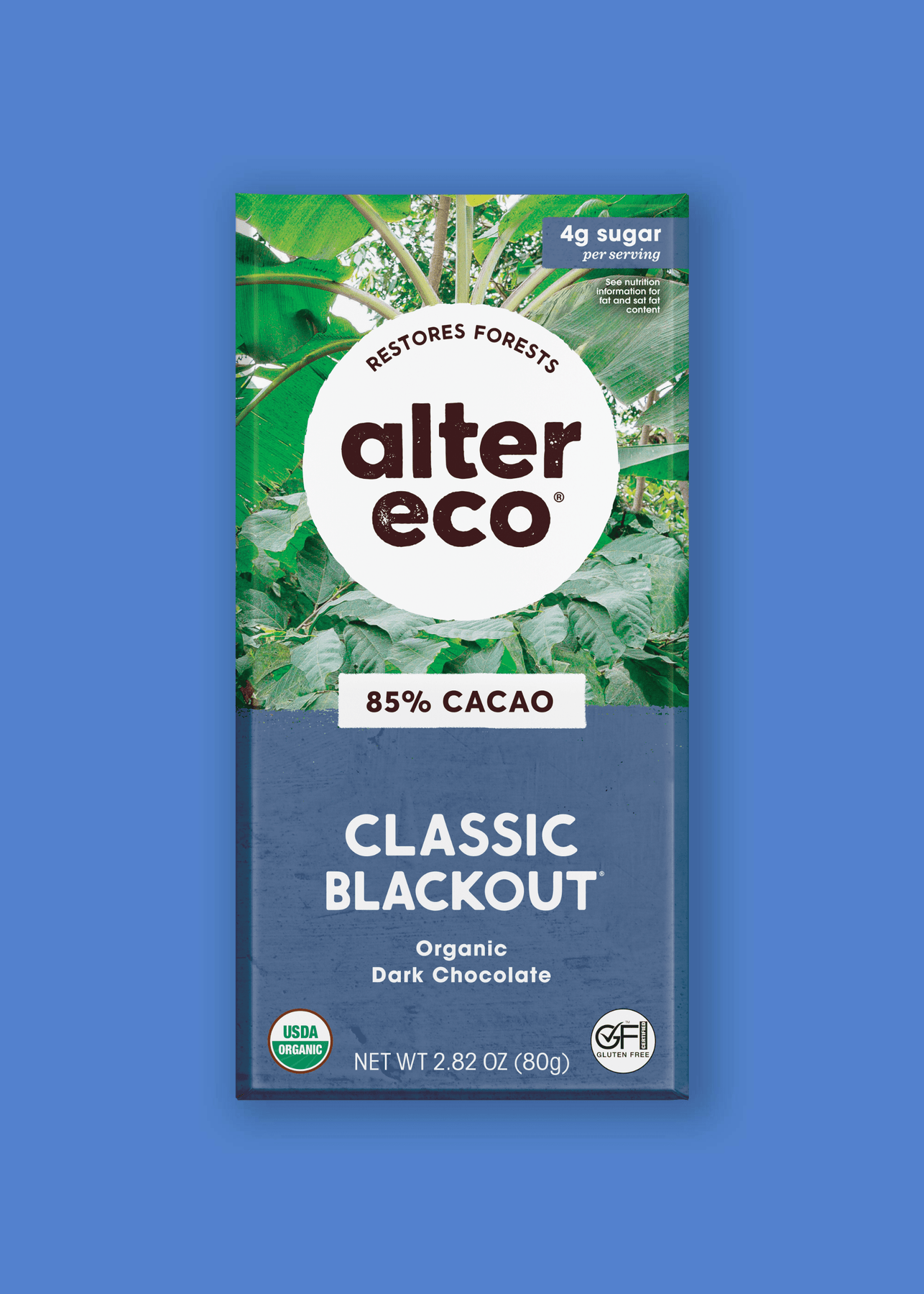
Alter Eco hits three marks that rarely overlap: genuinely vegan (no dairy cross-contamination), fully organic, and Fairtrade. The packaging is compostable, which is a real differentiator. The chocolate itself has a deep, earthy cocoa character that works better as an ingredient in baking than eaten by the square — though purists will enjoy the intensity. Sustainably sourced from Ecuador and Peru.
Pros
- ✓Certified vegan with no dairy cross-contamination
- ✓Fully organic and Fairtrade
- ✓Accessible price for ethical sourcing
Cons
- ✗85% — less extreme than 90%+ options
- ✗Slightly waxy texture vs. single-origin
Score breakdown
| Cocoa percentage | 85% |
| Serving size | 30 g (4 sections) |
| Calories | 190 kcal |
| Sugars | 4 g |
| Total fat | 17 g |
| Certifications | USDA Organic, Fair Trade (Fair for Life), Non-GMO |
Which one is right for you?
For purists who want maximum cocoa intensity
Lindt Excellence 90% Cocoa Bar
Best for experienced dark-chocolate fans who want a reliable, four-ingredient bar with a sustained, intense bitter finish.
For everyday snacking on a budget
Ghirardelli Intense Dark Midnight Reverie 86%
Ideal for newcomers to high-percentage chocolate and for baking, balancing dark cocoa depth with smooth approachability.
For ethical sourcing without the premium
Green & Black's Organic Dark 85%
Great for those wanting Fairtrade organic cacao with a fruity, softer profile that's gentle on 85% beginners.
For buyers who care about the full supply chain
Theo Chocolate Organic 85% Dark Bar
Perfect for those who value bean-to-bar transparency and a complex walnut-and-cherry flavor from traceable cacao.
For vegan and eco-conscious chocolate lovers
Alter Eco Deep Dark Blackout 85%
Best for vegan, eco-conscious buyers wanting fully organic, Fairtrade chocolate that also shines in baking.
How to Read a Dark Chocolate Label
Most dark chocolate disappointments come from buying on cacao percentage alone. The number tells you the cocoa solids ratio — it says nothing about quality, origin, or what they filled the rest with.
Bottom line
The Lindt 90% is the practical anchor — consistent, widely available, and genuinely excellent for the price. When you want something with a story behind it, Theo or Green & Black's offer craft-level quality with traceable sourcing. For everyday baking, Ghirardelli's 86% performs flawlessly at a fraction of the price.
Frequently asked questions
How much dark chocolate is healthy per day?▼
What's the difference between 70%, 85%, and 90% dark chocolate?▼
Does dark chocolate contain caffeine?▼
What's the best way to store dark chocolate?▼
Is expensive chocolate worth it?▼
Should I worry about heavy metals like lead and cadmium in dark chocolate?▼
Is single-origin dark chocolate actually better than a blend, or just more expensive?▼
Who should skip dark chocolate, and does 'sugar-free' dark chocolate help?▼
Prices change. Check the retailer for the current price.
Comments & questions
Discussion happens on nattzy, our community forum. Sign in with Google to post — it takes a second.
Related articles

Best Coffee Makers 2026: Breville vs Moccamaster vs OXO
Food
Best Toaster 2026: 5 Compared
Best Toaster 2026: 5 Compared

ConoHa WING review (2026): setup, speed and pricing
Best JP rental server 2026: 5 hosts ranked
Best LED Face Masks 2026: 3 Light Therapy Devices Compared
Best Robot Vacuums 2026: 5 Models Compared Honestly