Best Cat Scratching Posts of 2026: 5 Ranked
WriterPickly Editorial
Updated 2026-05-19
Cats scratch furniture not out of spite — they need to stretch, mark territory, and shed dead claw sheaths.
Quick answer
The SmartCat Ultimate is the post to buy if your cat has ignored every post so far — its height lets a cat fully extend, which is the stretch they actually want. PetFusion Ambush combines scratching with play, Way Basics Eco Post suits non-toxic homes, Frisco 21-inch is under $30 for a kitten or a first post, and Amazon Basics Cat Condo adds a hideout.
📋How we compared
This comparison is desk research. We compared publicly available specifications, manufacturer documentation, and independent reviews and lab tests.
This button opens Amazon search results, not a specific product page.
This button opens Amazon search results, not a specific product page.
Related articles


1★ Best PickSmartCat Ultimate Scratching Post

32-inch solid wood and sisal post; vet-recommended furniture alternative; weighted base holds firm on hardwood; available on Amazon with frequent sales to ~$29
2PetFusion Ambush Interactive Feather Cat Toy & Scratcher

Motorized 360° feather wand built into corrugated cardboard lounge; reversible scratch surface; replacement inserts ~$12; best value when your cat needs both play and scratch stimulation
This button opens Amazon search results, not a specific product page.
3Way Basics Cat Scratching Post

Upcycled zBoard paperboard with zero formaldehyde or VOCs; flat-pack assembly under 5 minutes; ships carbon-neutral; good choice for chemically-sensitive households
Subscribe to our newsletter
Occasional updates and new releases — no spam.
4Frisco 21-Inch Cat Scratching Post
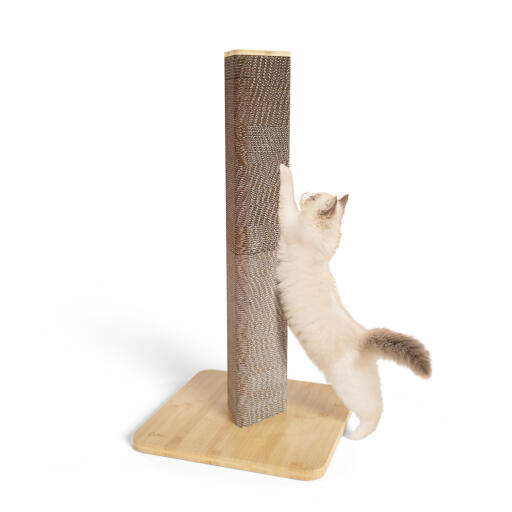
Ships fully assembled; wide weighted base; best price in this comparison at $22–$32; ideal starter post for kittens but too short for most adult cats
This button opens Amazon search results, not a specific product page.
5Amazon Basics Cat Condo Scratcher
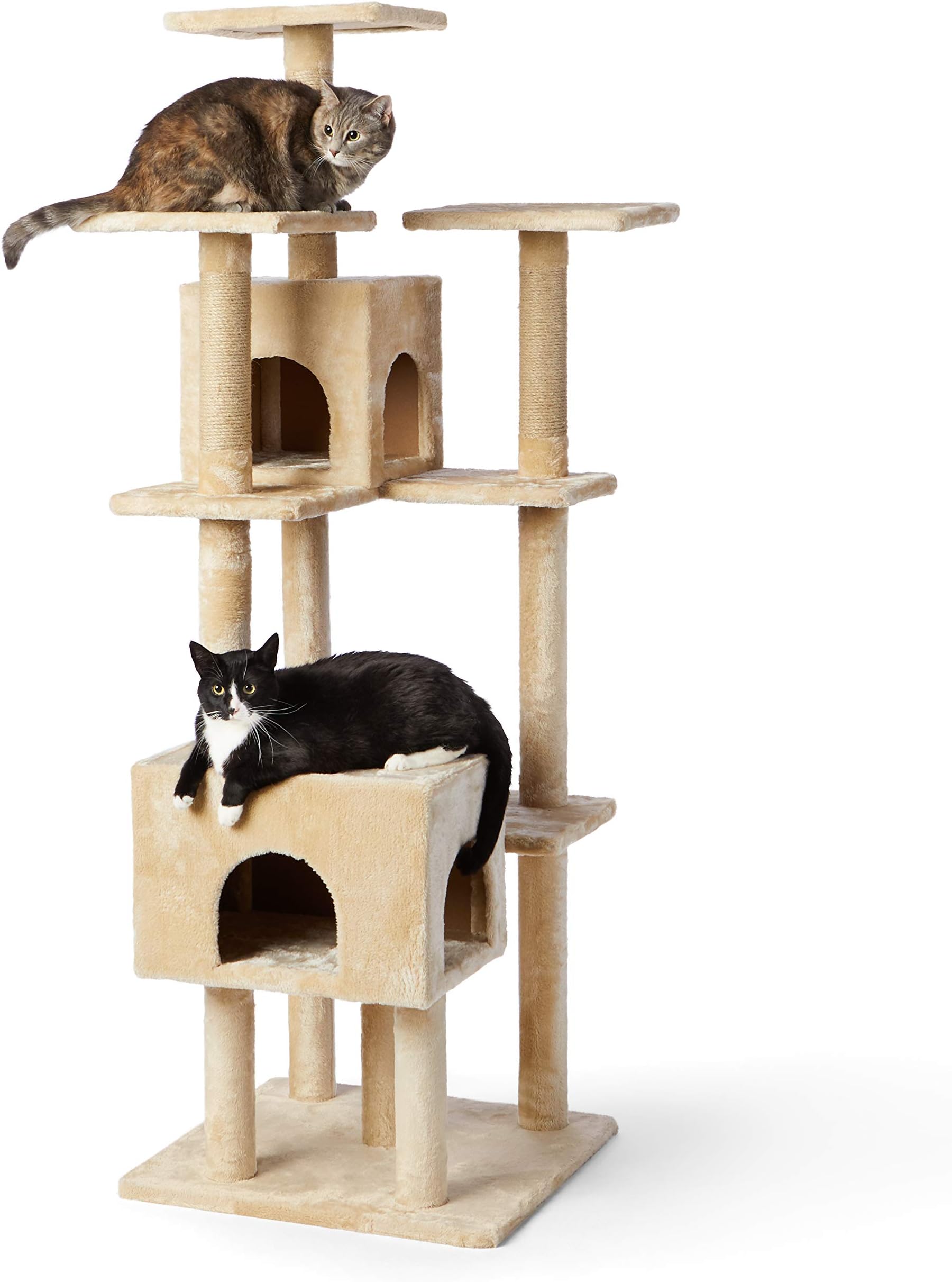
Two-level condo with sisal posts, plush perches, and dangling toy; ~20 minutes assembly; best value for owners who want scratcher plus a dedicated cat territory under $55
How We Compared Them
This comparison covers five posts spanning $22–$75 and four distinct design types: tall sisal pole, cardboard lounge with motorized toy, eco paperboard tower, short budget post, and a multi-level condo. Catnip is left out of the picture — a post that needs catnip to get used is not a useful scratching post.
| Post | Price | Key Strength | Rating | Verdict |
|---|---|---|---|---|
| SmartCat Ultimate | $29–$40 | 32-inch height | 9/10 | Best overall |
| PetFusion Ambush | $50–$75 | Built-in motorized toy | 8.5/10 | Best for enrichment |
| Way Basics Eco | $30–$45 | Non-toxic upcycled materials | 8/10 | Best for eco-buyers |
| Frisco 21-inch | $22–$32 | Fully assembled, lowest price | 7/10 | Best budget starter |
| Amazon Basics Condo | $35–$55 | Dual-level territory + scratcher | 7.5/10 | Best multi-function |
Height matters more than anything else. Cats need to scratch at full extension — shoulders elevated, spine long. A 21-inch post falls short for an adult domestic shorthair standing 16 inches at the shoulder. The 32-inch SmartCat is the only post here tall enough for a full-extension stretch, which is what owner reports keep coming back to.
SmartCat Ultimate — Best for Cats That Ignore Every Post You've Bought
The SmartCat Ultimate is 32 inches tall — roughly the height a medium-sized cat needs to fully stretch its spine. The base is a 16 x 16-inch square filled with enough weight to prevent tipping even when a 12-pound tabby grabs the top and hangs. Owners report it staying put on hardwood floors even under that load.
The sisal rope is wound tightly around a solid wood post. Owners consistently report no fraying at the contact points and no loosening at the bottom wrap — the glue-and-staple construction holds. SmartCat has been making this post since 1992 and the design hasn't changed because it works.
At $29–$40, it's not the cheapest option here. The base is carpeted in neutral beige, which some owners find dated-looking. And if your cat prefers horizontal scratching — many do — this vertical-only design won't convert them. But for cats that scratch chair legs and sofa arms, owners frequently report the SmartCat redirecting that behavior within a week.
PetFusion Ambush — Best When Your Cat Needs Scratching and Play at Once
The PetFusion Ambush combines a corrugated cardboard scratcher lounge with a motorized feather wand that rotates 360° through a hole in the top. The motor runs on batteries and has three speed settings. On the medium setting, owners consistently report far longer engaged play than a standard wand toy produces — the motor keeps going long after a human would have stopped.
The cardboard scratching surface is the real value. It's reversible, so when one side is shredded you flip it. The replacement inserts are sold separately at about $12 each and fit the existing frame. Over a six-week window the total cost is lower than it looks — owners report getting several weeks out of each side of an insert before the surface is shallow enough to flip.
The motor is the weak point. Owners report units developing an audible grinding sound at the highest speed after a few weeks of daily use — still working, but no longer quiet. At $50–$75 it's the most expensive product here. It earns its price if your cat has destructive energy to burn; it's overkill if your cat is calm and just needs a scratch surface.
Way Basics Eco Post — Best for Non-Toxic Homes
Way Basics builds this post from zBoard — a proprietary paperboard made from 100% recycled materials, with no formaldehyde, no VOCs, and no added adhesives. For households with small children, allergy-sensitive adults, or owners who think about off-gassing from new furniture, that matters.
The post arrives flat in a slim box and assembles in four steps with no tools. Once built it stands about 28 inches tall, and owners report no perceptible wobble with a 13-pound cat on it. The material looks fragile but is compressed to enough density to feel solid.
Cats scratch zBoard differently than sisal. The surface shreds into long cardboard strips, which some cats love but creates cleanup. The post itself is not replaceable — when it's worn through you buy a new one. That's not ideal for the environment. At $30–$45 it costs more than the Frisco budget post while being less durable long-term.
Frisco 21-Inch — Best Under $30 for a Kitten or First Post
The Frisco 21-inch post arrives fully assembled — no hardware, no instructions, no frustration. Open the box, place it down. At $22–$32 depending on retailer, it's the cheapest post in this comparison by a meaningful margin.
The sisal wrapping is dense and the weighted base is wide enough for the post's height; owners report no tipping with a full-grown cat on it. The problem is the height. At 21 inches, the post is adequate for kittens under a year old. A fully grown cat stretching to 16–18 inches standing cannot get a complete stretch — the top of the post is at nose level, not above the head.
Buy this for a kitten's first post or as a second scratch point in a room where full-height posts look out of place. Don't expect an adult cat that currently scratches furniture to switch to this — owners of adult cats consistently report the taller SmartCat winning out over the Frisco.
Amazon Basics Cat Condo — Best When You Want a Scratcher and a Hideout
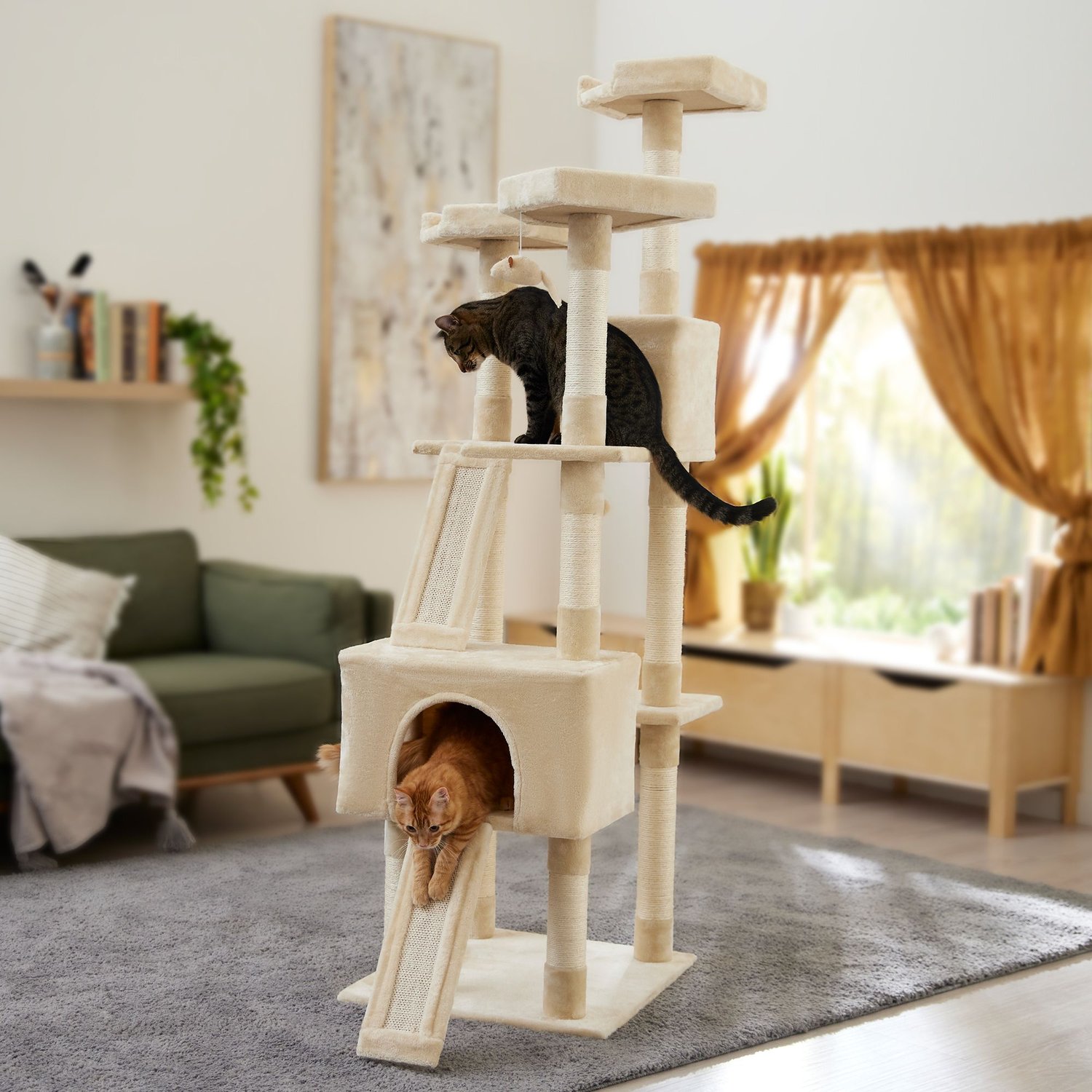
The Amazon Basics Condo is not a scratching post — it's a two-level cat tree with sisal-wrapped vertical posts, a plush lower perch, a top observation platform, and a dangling spring toy. It gives a single cat a dedicated vertical territory for $35–$55, which is cheaper than most dedicated cat trees.
Assembly runs well under half an hour with the included hardware, by owner accounts. The condo stands 20 inches tall, which puts the top perch at a height most cats can jump to from the floor. The sisal coverage is about 14 inches on the main post — more than the Frisco, less than the SmartCat. Owner reports split on how it actually gets used: some cats work the post, others treat it purely as a perch.
The plush fabric on the perches is the standard short-pile polyester found on most budget cat furniture — it pills after a few weeks and collects hair. The base isn't weighted separately, so owners with larger cats report a brief wobble when the cat jumps down from the top platform. At this price point that's acceptable, but a 14-pound Maine Coon would need something heavier.
Frequently asked questions
How tall should a cat scratching post be?▼
Why does my cat scratch furniture instead of the post I bought?▼
Sisal vs. cardboard — which is better?▼
Is it okay to use catnip to attract a cat to a new scratching post?▼
How often should I replace a sisal scratching post?▼
Can I have multiple cats share one scratching post?▼
What's the difference between a scratching post and a cat tree?▼
My cat only scratches horizontally. Which post should I get?▼
Is the PetFusion Ambush a scratcher or a toy?▼
Which post is best for a large or Maine Coon-sized cat?▼
Check the details of the products in this article
- SmartCat Ultimate Scratching Post$79.99Price as of 2026-10-27
- PetFusion Ambush Interactive Feather Cat Toy & Scratcher$50〜$75Reference price
This button opens Amazon search results, not a specific product page.
- Way Basics Cat Scratching Post$30〜$45Reference price
- Frisco 21-Inch Cat Scratching Post$22〜$32Reference price
This button opens Amazon search results, not a specific product page.
- Amazon Basics Cat Condo Scratcher$29.99Price as of 2026-10-27
Prices change. Check the retailer for the current price.
Comments & questions
Discussion happens on nattzy, our community forum. Sign in with Google to post — it takes a second.
View the discussion thread on nattzy ↗
Still deciding? Ask the community your own question — Post a question on nattzy ↗