Best Senior Cat Food 2026: 5 Formulas for Cats 7 and Older
WriterPickly Editorial
Updated 2026-06-12
Senior cat food is a category where marketing runs well ahead of science. The words '7+' or '11+' on a bag are meaningful only if the formula underneath them actually addresses what changes as cats age: declining kidney filtration, lower metabolic rate, reduced ability to absorb protein, and joint stiffness that makes climbing harder. These five formulas address those changes in measurably different ways — some through phosphorus restriction, some through elevated protein despite lower calories, some through targeted joint supplements.
Quick answer
Hill's Science Diet 11+ is the strongest all-round senior formula, built on reduced phosphorus, controlled sodium, and easily digested chicken protein, with decades of feeding trial data behind it and a 7-lb bag at $29. Royal Canin Aging 12+ engineers kibble shape for dental sensitivity in very old cats, Purina Pro Plan Senior 7+ offers the best protein value at $24 with live probiotics and glucosamine, IAMS Proactive Senior is the cheapest, and Wellness Complete Senior drops corn, wheat, and soy.
📋How we compared
Formulas were evaluated on protein quality and source, phosphorus content relative to kidney health recommendations, caloric density for senior weight management, presence of joint support ingredients (glucosamine, EPA/DHA), and price per pound. Veterinary nutritional guidance from WSAVA and AAFCO standards informed evaluation criteria.

Best overall 11+: Hill's Science Diet 11+ is formulated around the specific metabolic shifts that happen in the last phase of a cat's life: reduced phosphorus, controlled sodium, and easy-to-digest protein from chicken as the first ingredient. The formula has decades of feeding trial data behind it and is recommended by a high percentage of veterinary nutritionists.
Top picks ↓Related articles
1★ Best PickABest overall 11+Hills Science Diet Senior Cat
Hill's Science Diet 11+ is formulated around the specific metabolic shifts that happen in the last phase of a cat's life: reduced phosphorus, controlled sodium, and easy-to-digest protein from chicken as the first ingredient. The formula has decades of feeding trial data behind it and is recommended by a high percentage of veterinary nutritionists. The 7-lb bag at $29 works out to a reasonable per-meal cost. Palatability tends to be good even for picky senior cats, likely because of the fat content and kibble texture.
Pros
- ✓Extensively research-backed
- ✓Reduced phosphorus for kidney support
- ✓High palatability
Cons
- ✗Contains some corn ingredients
- ✗Price per pound higher than grocery brands
- Life stage
- 11+
- Protein (min)
- 32.5%
- Format
- Dry
- Price
- $29/7lb
2ABest for cats 12+Royal Canin Aging 12

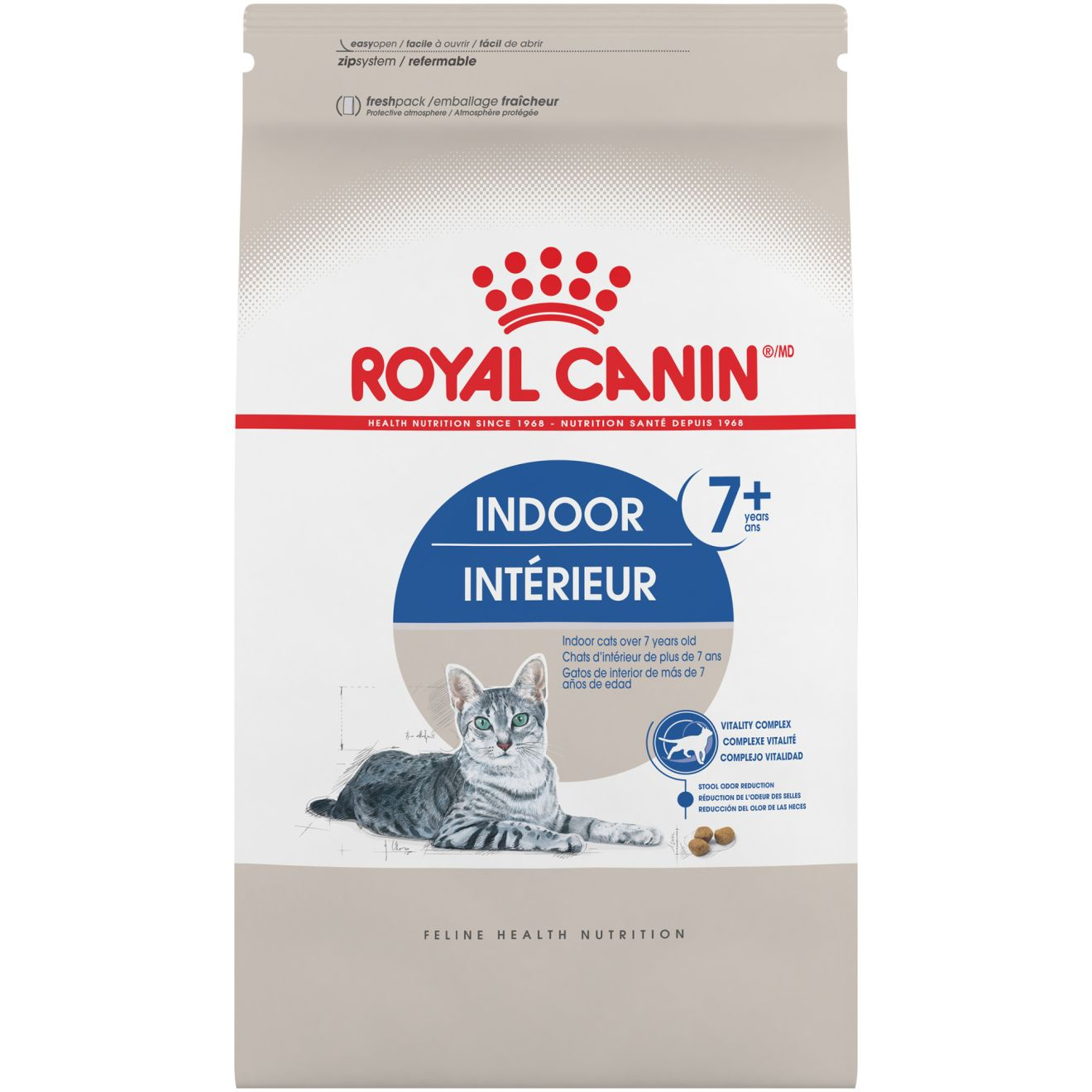
Royal Canin's Aging 12+ is the most specialized formula in this group — designed specifically for cats in their final life stage where declining appetite, reduced digestion, and tooth sensitivity are practical daily challenges. The kibble shape is engineered for easier chewing by cats with dental issues. Protein levels are elevated specifically to compensate for reduced absorption efficiency. This is the formula a geriatric care vet is most likely to recommend for a 13-year-old cat showing weight loss.
Pros
- ✓Kibble designed for dental sensitivity
- ✓Elevated protein for muscle maintenance
- ✓Tailored for very old cats
Cons
- ✗Most expensive at $35/7lb
- ✗Ingredient list includes several additives
- Life stage
- 12+
- Protein (min)
- 34%
- Format
- Dry
- Price
- $35/7lb
3A-Best for early seniorsPurina Pro Plan Senior 7

Pro Plan Senior 7+ uses real chicken as the first ingredient and a high overall protein content that holds up well against significantly more expensive competitors. The formula includes live probiotics for digestive health and glucosamine/EPA for joint support. At $24 for 7 lb it's the best price-per-gram of protein in this comparison. Works well for the 7-10 age range before more specialized late-senior formulas become relevant.
Pros
- ✓Real chicken as first ingredient
- ✓Live probiotics included
- ✓Best value protein quality
Cons
- ✗Less targeted for 11+ needs
- ✗Contains some artificial additives
- Life stage
- 7+
- Protein (min)
- 40%
- Format
- Dry
- Price
- $24/7lb
Subscribe to our newsletter
Occasional updates and new releases — no spam.
4B+Best budget pickIams Proactive Senior Cat
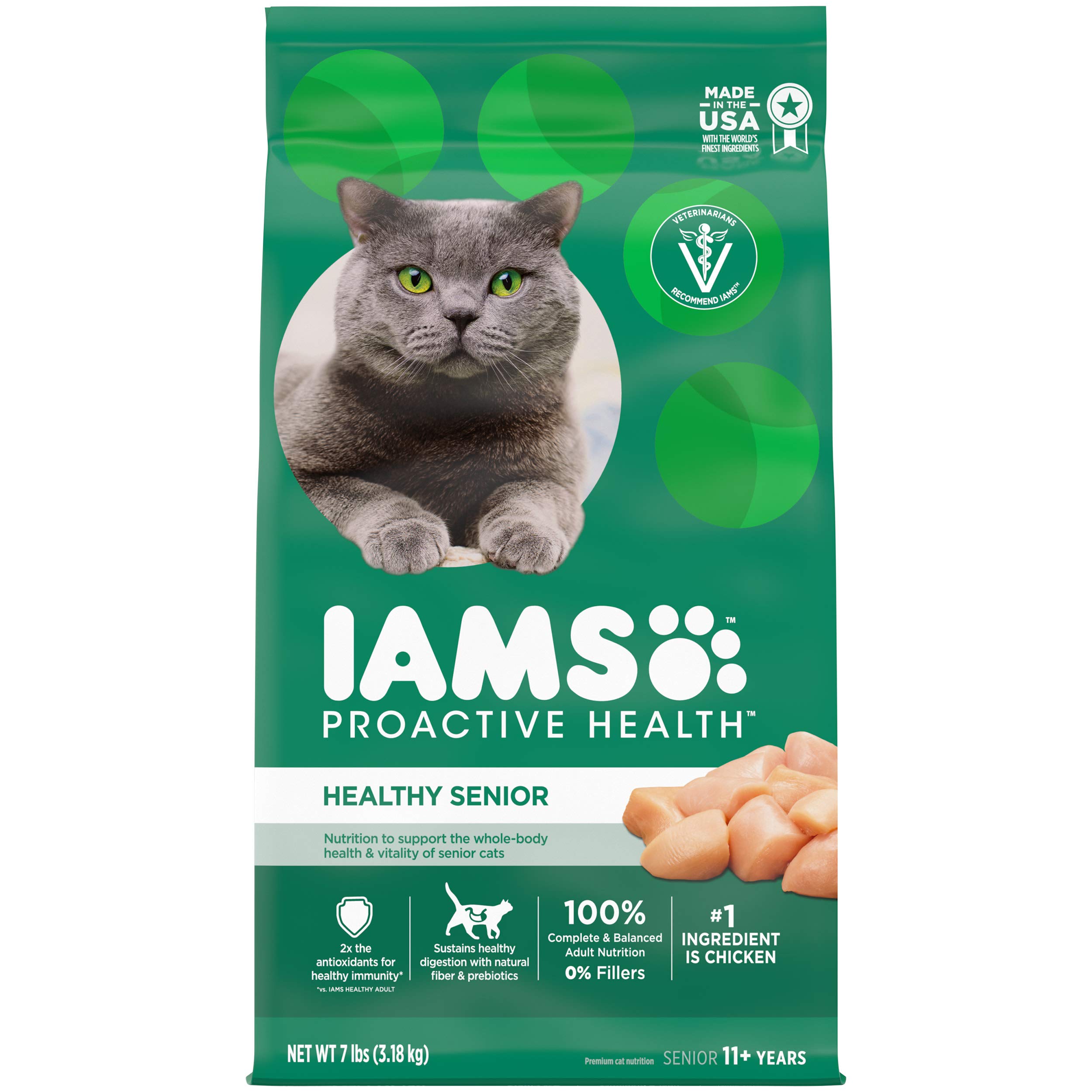
IAMS Proactive Senior delivers a solid macronutrient profile at the lowest price in this group. Chicken is the first ingredient, and the protein-to-fat ratio is appropriate for a cat in reduced-activity senior years. It won't match Hill's or Royal Canin for specialized senior support ingredients, but for owners managing costs or feeding a cat that transitioned easily and isn't showing specific health markers, it's a legitimate choice with a long track record.
Pros
- ✓Most affordable option
- ✓Chicken as first ingredient
- ✓Widely available
Cons
- ✗Less targeted senior nutrition
- ✗Contains corn meal and by-product meal
- Life stage
- 7+
- Protein (min)
- 32%
- Format
- Dry
- Price
- $20/7lb
5A-Best clean ingredient listWellness Complete Senior Cat

Wellness Complete Senior stands out for what it leaves out: no corn, wheat, soy, artificial colors, flavors, or preservatives. Deboned turkey is the first ingredient, and the ingredient list is shorter and cleaner than any other pick here. The 11-lb bag at $32 makes it the best value per pound. Cats with food sensitivities or owners who prioritize minimal-processing formulas will find this the most appealing option. The lower carbohydrate content also suits cats prone to blood sugar issues.
Pros
- ✓No corn, wheat, or soy
- ✓Clean ingredient list
- ✓Best value per pound
Cons
- ✗Less kidney-specific phosphorus restriction than Hill's or Royal Canin
- ✗Smaller brand with fewer research studies
- Life stage
- Senior
- Protein (min)
- 34%
- Format
- Dry
- Price
- $32/11lb
| Product | Format | |||
|---|---|---|---|---|
| Hills Science Diet Senior Cat | 11+ | 32.5% | Dry | $29/7lb |
| Royal Canin Aging 12 | 12+ | 34% | Dry | $35/7lb |
| Purina Pro Plan Senior 7 | 7+ | 40% | Dry | $24/7lb |
| Iams Proactive Senior Cat | 7+ | 32% | Dry | $20/7lb |
| Wellness Complete Senior Cat | Senior | 34% | Dry | $32/11lb |
How to Choose Senior Cat Food: What Changes After 7 and After 12
Not all senior formulas are created equal. Early senior (7-10 years) and late senior (11+) cats have genuinely different nutritional needs that the best formulas account for separately.
Protein: More Than You'd Expect
The instinct to cut protein in senior cats is often wrong. Older cats have a reduced ability to digest and absorb protein, which means they actually need more high-quality protein to maintain muscle mass, not less. Look for named meat sources (chicken, salmon, turkey) as the first ingredient. Protein from plant sources — corn gluten meal, soy — is less bioavailable for cats at any age.
Phosphorus and Kidney Health
Chronic kidney disease is the leading cause of death in cats over 10. Phosphorus restriction is the primary dietary intervention proven to slow progression. Over-the-counter senior foods can reduce phosphorus moderately but not to the levels of prescription kidney diets. If your cat has diagnosed CKD, prescription food is the appropriate choice. For prevention in healthy seniors, lower-phosphorus senior formulas provide meaningful benefit.
Caloric Density and Weight Management
Metabolism slows with age, and indoor-only senior cats are prone to obesity. Many senior formulas reduce fat and caloric density to match lower activity levels. However, very old cats (15+) often trend the opposite way — losing weight despite eating — at which point higher-calorie, more palatable food becomes the priority. Match the formula to your specific cat's weight trajectory.
Joint Support Ingredients
Glucosamine and chondroitin appear in several senior formulas. The levels in food are typically lower than what's used in clinical joint supplement studies, so treating them as primary joint therapy is optimistic. They provide some benefit as a baseline. Omega-3 fatty acids (EPA and DHA) have stronger evidence for joint inflammation reduction — look for fish oil as a listed ingredient rather than just generic 'omega-3s.'
Bottom line
Hill's Science Diet 11+ is the most rigorously science-backed option for cats entering late senior status. Royal Canin Aging 12+ is the most specialized for the oldest cats. Purina Pro Plan Senior 7+ hits the sweet spot of high protein quality and manageable price for the 7-10 age range. IAMS Proactive is the budget option that still gets the macros right. Wellness Complete offers the cleanest ingredient list if additives and fillers are a priority for you.
Frequently asked questions
When should I switch my cat to senior food?▼
Is wet food better for senior cats than dry?▼
Can I feed my senior cat regular adult cat food?▼
How much should I feed my senior cat per day?▼
What ingredients should I avoid in senior cat food?▼
Check the details of the products in this article
- Hills Science Diet Senior Cat$22.99Price as of 2026-10-19
- Purina Pro Plan Senior 7$27.08Price as of 2026-10-19
- Iams Proactive Senior Cat$16.97Price as of 2026-10-19
- Wellness Complete Senior Cat$22.79Price as of 2026-10-19
Prices change. Check the retailer for the current price.
Comments & questions
Discussion happens on nattzy, our community forum. Sign in with Google to post — it takes a second.
View the discussion thread on nattzy ↗
Still deciding? Ask the community your own question — Post a question on nattzy ↗