Best Puppy Food 2026: 5 Brands by Vets & Owners
Puppy nutrition sets the foundation for a dog's lifetime health, which makes the decision feel enormous — and the market makes it more confusing than it needs to be. Marketing claims about 'holistic' and 'natural' ingredients tell you little about actual nutritional quality. What matters is whether the food meets AAFCO standards for puppy growth, whether the protein sources are digestible, and whether DHA levels support brain development during the critical first year. These five were chosen because they have the research behind them to justify the recommendation.
Quick answer
Purina Pro Plan Puppy is the default recommendation and the one with the most published research behind it — real chicken first, DHA from fish oil, AAFCO growth standards met, and digestibility data Purina publishes itself. Hill's Science Diet is the close alternative with decades of feeding trials and better cost per serving at roughly $30 for 15.5 lb, plus a large-breed formula with appropriate calcium-to-phosphorus ratios. Royal Canin only earns its premium if your breed has a specific formula worth the tailoring.
Foods were assessed on AAFCO compliance for puppy growth, protein source quality and digestibility, DHA content, ingredient transparency, veterinarian recommendation frequency, and real-world owner reports on stool quality, palatability, and coat condition over 6+ weeks of feeding.

Royal Canin Size Health Nutrition Puppy Food
Best for Purebreds: Royal Canin is the choice when you have a specific breed that benefits from a tailored formula. Royal Canin publishes breed-specific puppy formulas (Labrador, Golden Retriever, German Shepherd, French Bulldog, and many others) that account for breed-specific growth curves, jaw shape, and nutritional tendencies.
Top picks ↓| Product | Price | Link |
|---|---|---|
| $109.99Price as of 2026-09-18 | ||
| $23.99Price as of 2026-09-18 | ||
| $34.44Price as of 2026-09-18 | ||
| $74.28Price as of 2026-09-18 | ||
| $55.23Price as of 2026-09-18 |
Top picks
Related articles
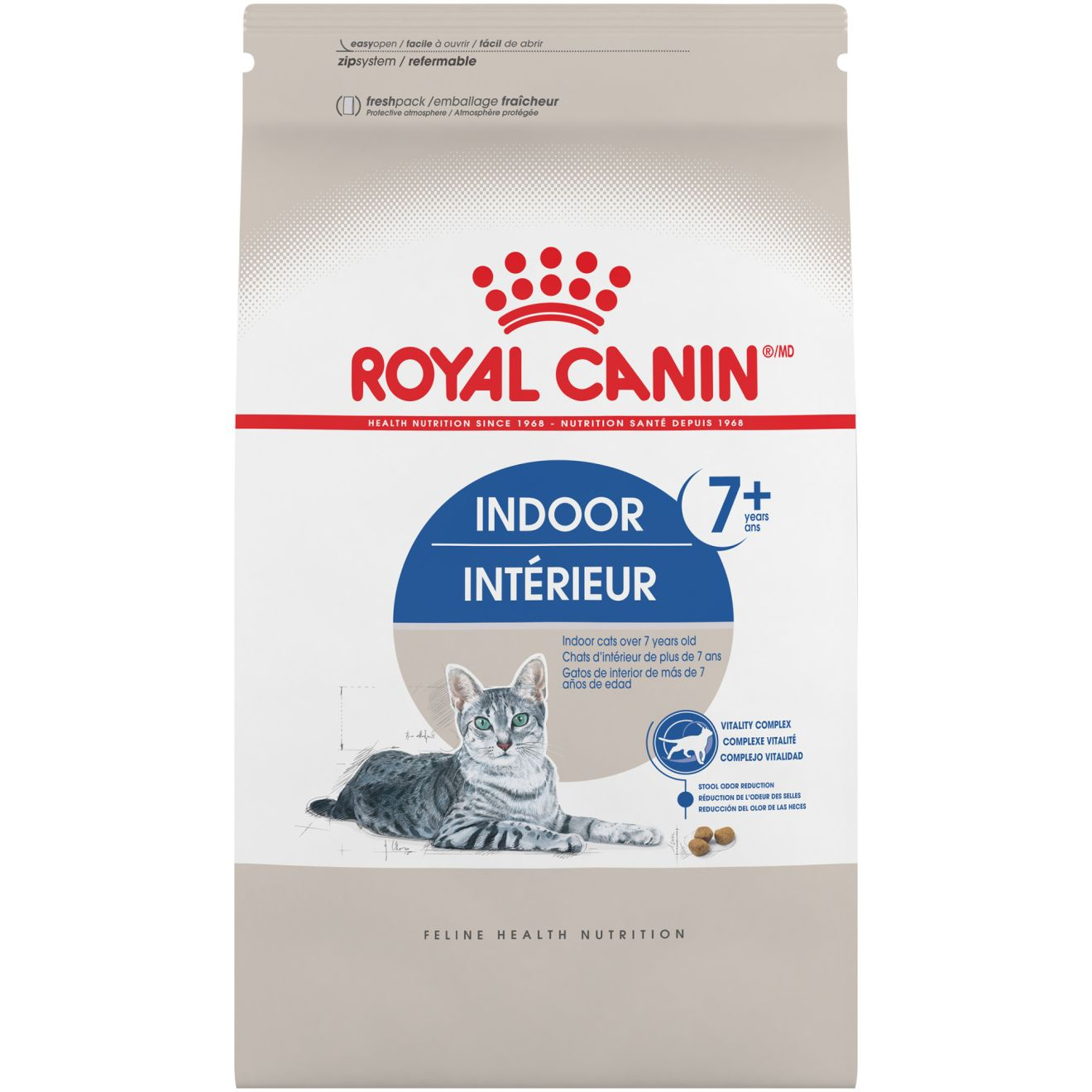
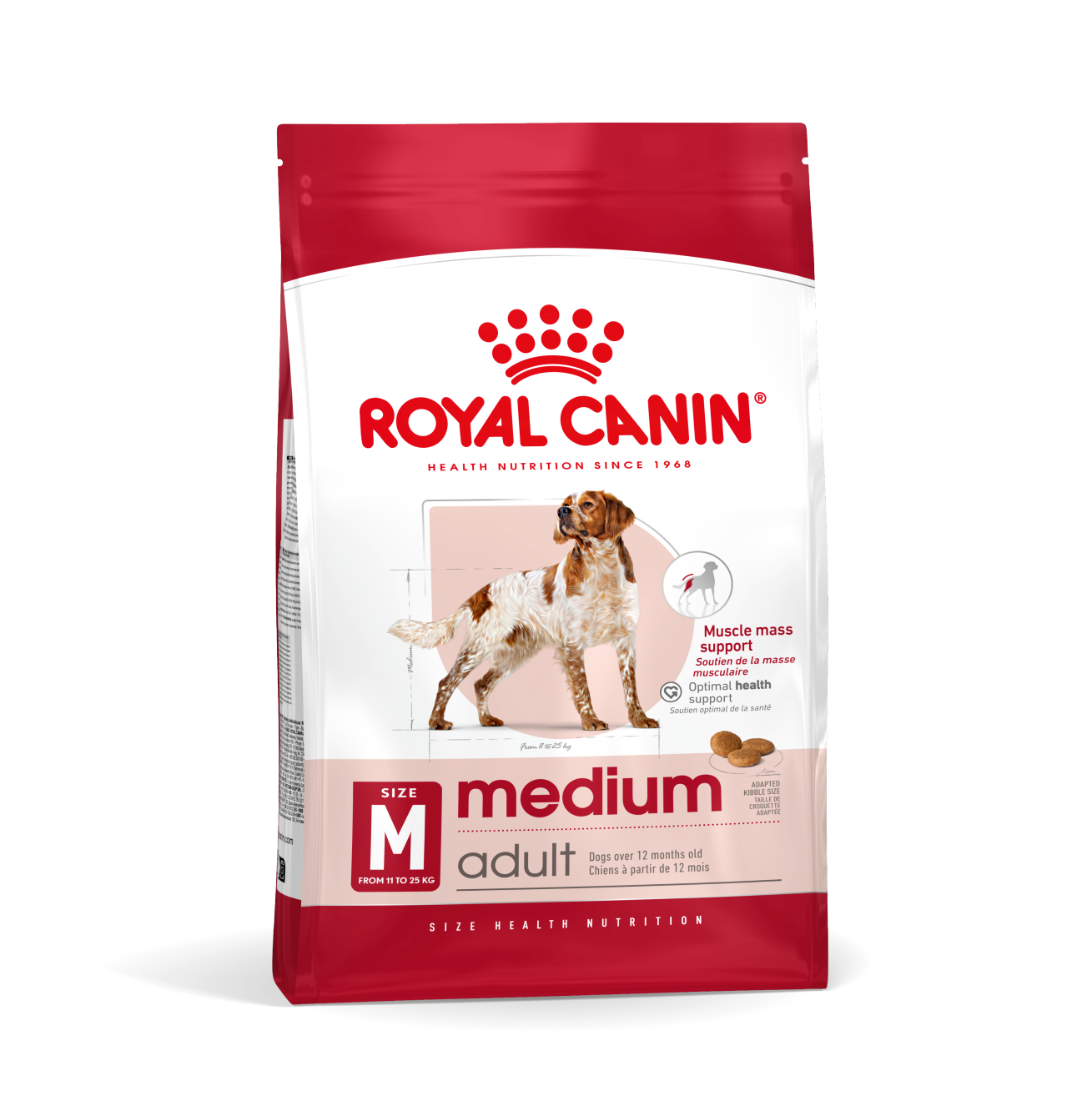
Royal Canin Size Health Nutrition Puppy Food
Royal Canin is the choice when you have a specific breed that benefits from a tailored formula. Royal Canin publishes breed-specific puppy formulas (Labrador, Golden Retriever, German Shepherd, French Bulldog, and many others) that account for breed-specific growth curves, jaw shape, and nutritional tendencies. The breed-specific kibble shapes are genuinely different — French Bulldog kibble is designed for their brachycephalic jaw. For mixed-breed puppies, the standard Royal Canin Puppy formula is solid but less differentiated from competitors. At $22 for 5.5lb it's the most expensive per-pound option here.
Pros
- ✓Breed-specific formulas for many popular breeds
- ✓Kibble shapes designed for specific jaw types
- ✓Strong digestibility and palatability data
Cons
- ✗Most expensive per-pound on this list
- ✗Less differentiated for mixed-breed puppies

Hill's Science Diet is the other name that comes up consistently when veterinarians recommend puppy foods, and for good reason: Hill's employs veterinary nutritionists and has decades of feeding trials behind their formulas. The puppy formula has good protein quality (chicken), adequate DHA, and is AAFCO-complete. At $30 for 15.5lb, the cost per serving is among the best on this list. The large breed puppy formula has carefully controlled calcium-phosphorus ratios specifically for big dog development. Reliable and widely available.
Pros
- ✓Decades of feeding trial data behind the formula
- ✓Excellent cost per serving at $30/15.5lb
- ✓Large breed formula available with appropriate Ca:P ratios
Cons
- ✗Less protein-dense than premium alternatives
- ✗Formula revisions have occasionally divided longtime users
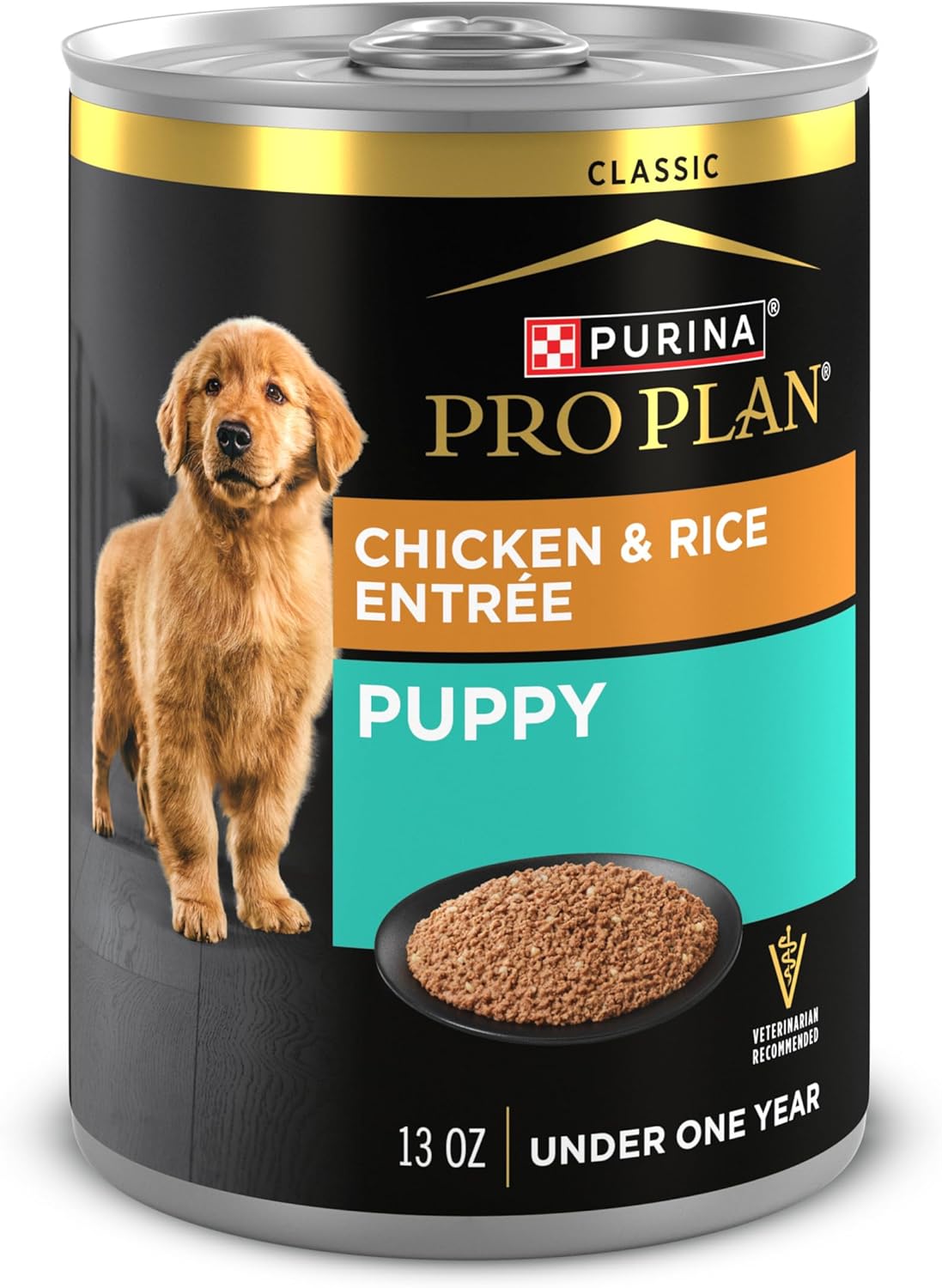
Purina Pro Plan Puppy has more published research behind it than any other food on this list — Purina operates its own research facilities and publishes digestibility and palatability data. The first ingredient is real chicken, DHA from fish oil is listed, and the formula meets AAFCO standards for puppy growth. Real-world feeding reports show good stool consistency and coat quality at 4–6 weeks. At $20 for 6lb, it's competitively priced for the quality tier. The most recommended puppy food by veterinarians surveyed by pet nutrition researchers.
Pros
- ✓Most research-backed formula on this list
- ✓Real chicken first ingredient with DHA from fish oil
- ✓Consistently recommended by veterinary nutritionists
Cons
- ✗Contains some artificial additives
- ✗Not the most 'premium' appearance vs. boutique brands
Subscribe to our newsletter
Occasional updates and new releases — no spam.
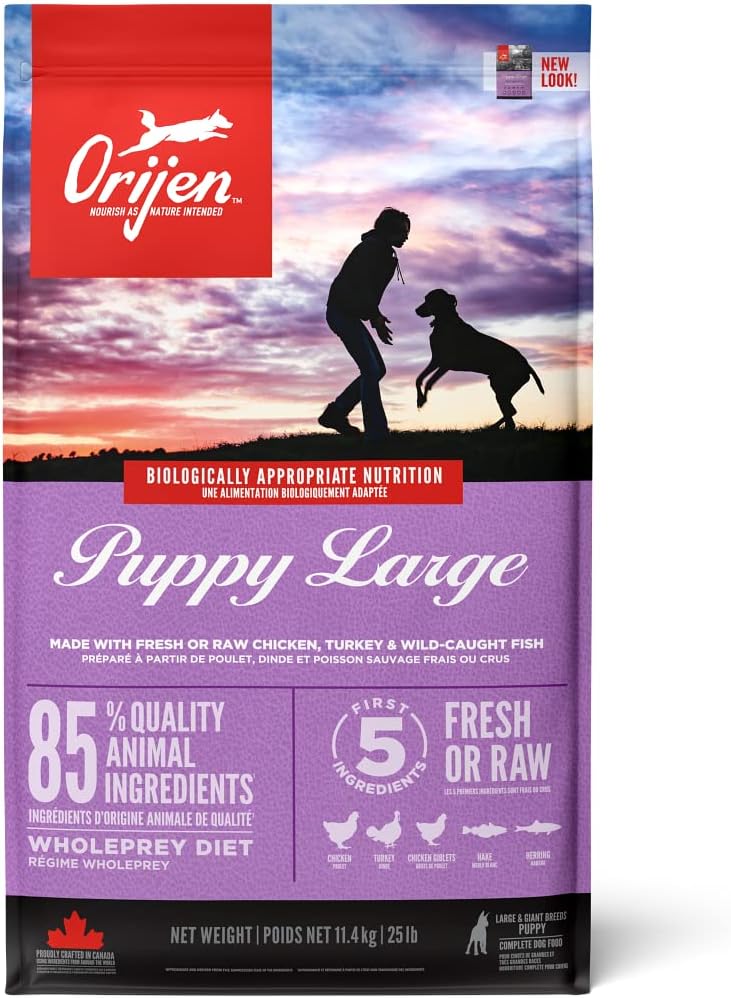
ORIJEN Puppy is for owners who want the highest protein density available in a kibble — 38% protein from multiple animal sources (chicken, turkey, fish, eggs). The ingredient list is predominantly animal proteins with minimal plant fillers. The philosophy is a 'biologically appropriate' diet mirroring what dogs' ancestors ate. At $79 for 25lb it's expensive, but the cost per serving is more competitive than the upfront price suggests. The high protein density can cause loose stools during transition; a slow 14-day transition is essential. Not appropriate for large breed puppies without the specific large breed formula.
Pros
- ✓Highest protein density on this list at 38%
- ✓Multiple animal protein sources — no single dependency
- ✓Limited plant fillers
Cons
- ✗Highest price on this list
- ✗Slow transition required to avoid digestive upset

Blue Buffalo Life Protection Puppy
Blue Buffalo Life Protection Puppy is the brand most pet store employees recommend to customers asking for a 'natural' puppy food without the ORIJEN price tag. The formula includes LifeSource Bits — a blend of antioxidants, vitamins, and minerals cold-formed to preserve potency. Real chicken is the first ingredient, and DHA is included for brain development. At $29 for 15lb it's reasonably priced. The weak point is that Blue Buffalo has faced more quality control issues than Purina or Hill's — including a class-action lawsuit over ingredient claims. Still a competent choice for owners who want something beyond grocery-store quality.
Pros
- ✓Accessible price for a premium-positioned brand
- ✓LifeSource Bits provide an identifiable vitamin/mineral boost
- ✓DHA included for puppy brain development
Cons
- ✗More quality control incidents than top competitors
- ✗LifeSource Bits marketing exceeds the scientific support
How to Choose the Best Puppy Food
The pet food market is heavily marketed and lightly regulated beyond minimum standards. AAFCO (Association of American Feed Control Officials) nutritional profiles are the baseline to check first — if a food isn't AAFCO-complete for 'growth' or 'all life stages,' it shouldn't be fed to a puppy long-term. Beyond that, digestibility, protein quality, and DHA content determine how well the food translates to actual growth.
Bottom line
Purina Pro Plan is the science-backed recommendation most vets give — it has the research to support it, and the digestibility is genuinely above average. Royal Canin is the better choice when you have a purebred dog with breed-specific formulations available. ORIJEN is for owners who prioritize maximum protein density and are willing to pay significantly more. Hill's Science Diet is the safe middle ground widely recommended by veterinarians for straightforward puppy nutrition.
Frequently asked questions
When should I switch from puppy food to adult food?▼
Is grain-free puppy food better?▼
How much should I feed my puppy?▼
What should I do if my puppy has loose stools on a new food?▼
Should I feed wet food or dry food to my puppy?▼
Prices change. Check the retailer for the current price.
Comments & questions
Discussion happens on nattzy, our community forum. Sign in with Google to post — it takes a second.