Best Grain-Free Dog Food 2026: 5 Formulas Ranked
WriterPickly Editorial
Updated 2026-06-12
Grain-free dog food is one of the most debated topics in pet nutrition — and most of the debate generates more heat than light. The decision to feed grain-free should come from your dog's specific dietary needs, not marketing. Some dogs with genuine grain sensitivities genuinely benefit; most dogs don't need it and do fine on foods with grains. If you've decided grain-free is right for your dog, these five represent the strongest options at different price points and protein profiles, evaluated on what actually matters: ingredient quality, digestibility, and whether the protein claims hold up to scrutiny.
Quick answer
For most dogs, Taste of the Wild Pacific Stream is the pick — solid ingredient quality at a price that does not require rethinking the budget, which is why it has led grain-free recommendations for a decade. Choose Merrick Grain-Free for chicken, beef, salmon, duck, and bison variety; CANIDAE PURE for limited-ingredient formulas of seven or fewer ingredients; and ORIJEN Original for 38% crude protein from 85% animal ingredients.
📋How we compared
Foods were evaluated on protein source quality and percentage, grain-replacement ingredient choices (legume load vs. vegetable carbohydrates), DCM risk profile, digestibility evidence, palatability reports, brand quality control history, and value per serving.
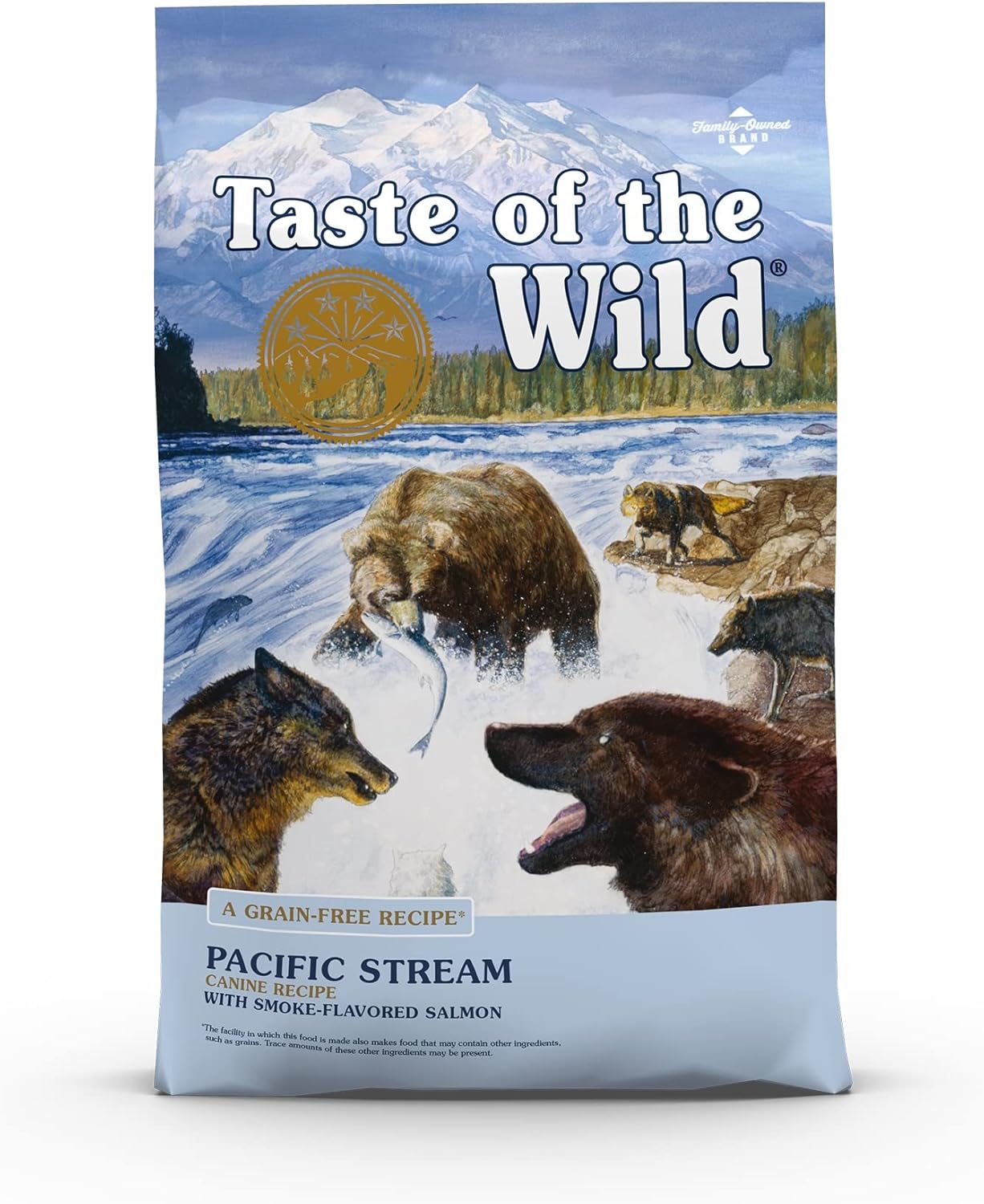
Best Overall: Taste of the Wild Pacific Stream has been the go-to grain-free recommendation for over a decade because it delivers solid ingredient quality at a price that doesn't require justification. Smoked salmon is the first ingredient, the formula is free of corn, wheat, and soy, and the digestibility is above the category average.
Top picks ↓Related articles
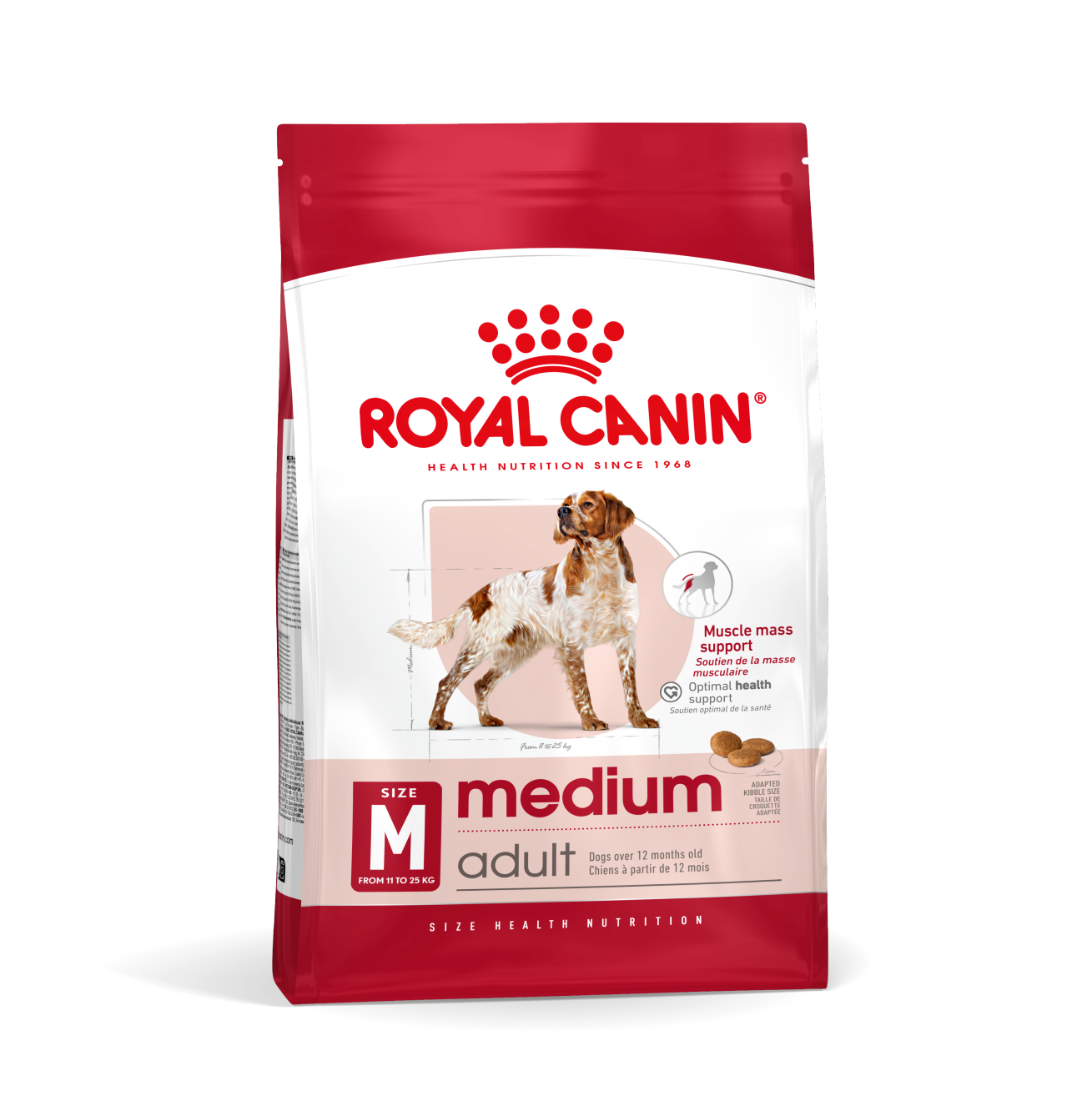

1★ Best PickA+Best OverallTaste Of Wild Pacific Stream
Taste of the Wild Pacific Stream has been the go-to grain-free recommendation for over a decade because it delivers solid ingredient quality at a price that doesn't require justification. Smoked salmon is the first ingredient, the formula is free of corn, wheat, and soy, and the digestibility is above the category average. The protein percentage sits at 25% — lower than ORIJEN but appropriate for most adult dogs. At $50 for 28lb, the cost per day is among the best on this list. Limited legume load compared to many grain-free alternatives.
Pros
- ✓Smoked salmon first ingredient — genuine protein source
- ✓Best price-to-quality ratio on this list
- ✓Lower legume load than many grain-free alternatives
Cons
- ✗Lower protein percentage than premium alternatives
- ✗Some batches have had palatability variation reports
2ABest for Flavor VarietyMerrick Grain Free Chicken

Merrick's Grain-Free line offers more flavor options than most competitors — chicken, beef, salmon, duck, bison — which is useful for dogs who lose interest in a single protein or owners managing allergies through rotation. Deboned chicken is the first ingredient in the chicken formula, with sweet potato providing the primary carbohydrate source rather than heavy legumes. Protein sits at 30%. At $60 for 22lb it's mid-range pricing. Merrick has a solid quality control record and is consistently available across retailers.
Pros
- ✓Widest flavor variety for rotation feeding
- ✓Sweet potato primary carbohydrate — lower legume concern
- ✓30% protein is competitive for the price
Cons
- ✗Higher price per pound than Taste of the Wild
- ✗Some protein sources use pea protein in addition to meat
3ABest Limited IngredientCanidae Pure Grain Free

CANIDAE PURE is built specifically for dogs with food sensitivities — limited ingredient formulas with 7 or fewer ingredients make it easy to identify what your dog is eating and rule out allergens. The salmon, sweet potato, and pea formula uses a single protein source for allergy management. Protein sits at 30%. At $55 for 24lb it's reasonably priced for a limited ingredient formula. The ingredient restraint is the differentiator; if you're managing a dog with multiple sensitivities, CANIDAE PURE makes the elimination diet process significantly simpler.
Pros
- ✓7 or fewer ingredients — best for elimination diet protocols
- ✓Multiple single-protein options for allergen management
- ✓Solid digestibility for sensitive stomachs
Cons
- ✗Less protein variety than Merrick
- ✗Limited ingredient approach means fewer micronutrients from whole foods
Subscribe to our newsletter
Occasional updates and new releases — no spam.
4ABest High-Protein FormulaOrijen Original Dry

ORIJEN Original is the most protein-dense option on this list at 38% crude protein from 85% animal ingredients — chicken, turkey, fish, eggs. The philosophy is 'biologically appropriate' feeding that mirrors ancestral canine diets. Grain-free with limited legumes (peas appear but not in the top 4 ingredients). At $90 for 25lb it's the most expensive kibble here, but the cost per day for a medium dog is around $3–$4, which is competitive relative to the protein content. Not all dogs need 38% protein; active, working, and high-energy dogs benefit most.
Pros
- ✓38% protein from 85% animal ingredients — highest on this list
- ✓Multiple protein sources with limited legume inclusion
- ✓Best option for highly active or working dogs
Cons
- ✗Most expensive option at $90/25lb
- ✗High protein can cause issues in dogs with kidney concerns
5B+Best Mid-Range PickWellness Core Grain Free

Wellness CORE Grain-Free sits comfortably in the quality middle: 34% protein from deboned turkey and chicken, grain-free with a moderate legume load, and DHA from salmon oil for coat and brain health. At $65 for 26lb it's priced between Taste of the Wild and ORIJEN. The formula is AAFCO-complete for all life stages, making it appropriate for households feeding both puppies and adults from the same bag. Wellness has a strong brand track record with fewer recall issues than some competitors.
Pros
- ✓All life stages formula — works for multi-dog households
- ✓DHA from salmon oil for coat and cognitive health
- ✓Solid brand track record for quality control
Cons
- ✗Higher price per pound than Taste of the Wild
- ✗Moderate legume load vs. lower-legume options
How to Choose Grain-Free Dog Food
Grain-free is a category descriptor, not a quality guarantee. A grain-free food can still be heavily padded with potato starch, peas, or legumes — carbohydrate fillers that replace grains without adding nutritional value. Evaluate grain-free foods the same way you'd evaluate any kibble: protein source and percentage, named ingredients in the first few positions, and digestibility evidence.
The FDA DCM Investigation
The FDA investigated a potential association between grain-free diets high in legumes (peas, lentils, chickpeas) and dilated cardiomyopathy (DCM) in dogs. The investigation is ongoing and causation hasn't been established, but the correlation prompted most veterinary cardiologists to suggest caution with legume-heavy grain-free formulas. Foods that replace grains with heavy legume loads (peas in the top 3–4 ingredients) carry more uncertainty than those using sweet potato or limited legumes.
Protein Quality and Sources
The point of grain-free feeding for most advocates is higher animal protein. Verify this is actually happening: look at the protein percentage and whether named meats are the primary ingredient. Some grain-free foods shift carbohydrates from grain to legumes without meaningfully increasing meat-based protein.
Novel Proteins for Allergies
For dogs with food allergies, grain-free combined with a novel protein (salmon, bison, venison, duck) addresses both grain and common protein allergens simultaneously. Taste of the Wild and CANIDAE PURE both offer multiple novel protein options. Identifying your dog's specific allergen requires an elimination diet under veterinary guidance — random formula switching doesn't diagnose allergies.
Price vs. Ingredient Quality
Grain-free doesn't mean premium, and premium price doesn't guarantee superior nutrition. Taste of the Wild delivers strong ingredient quality at mid-range pricing. ORIJEN is genuinely superior on protein density but costs significantly more. Merrick and Wellness CORE sit in the quality middle with reasonable price-per-pound ratios.
Bottom line
Taste of the Wild Pacific Stream is the recommendation for most dogs switching to grain-free — it has the best price-to-quality ratio on this list, uses salmon as the primary protein, and has a strong track record. For dogs with multiple sensitivities requiring a limited ingredient diet, CANIDAE PURE is the right choice. ORIJEN is for owners who've decided maximum protein density is the priority and are prepared to pay for it. Wellness CORE is the mid-range pick with solid nutritional fundamentals.
Frequently asked questions
Should my dog be on grain-free food?▼
What's the DCM concern with grain-free dog food?▼
Does grain-free dog food have more protein?▼
How do I know if my dog has a grain allergy?▼
Is raw food better than grain-free kibble?▼
Check the details of the products in this article
- Taste Of Wild Pacific Stream$50Reference price
- Merrick Grain Free Chicken$60Reference price
- Canidae Pure Grain Free$35.99Price as of 2026-10-19
- Orijen Original Dry$75.99Price as of 2026-10-19
- Wellness Core Grain Free$79.98Price as of 2026-10-19
Prices change. Check the retailer for the current price.
Comments & questions
Discussion happens on nattzy, our community forum. Sign in with Google to post — it takes a second.
Still deciding? Ask the community your own question — Post a question on nattzy ↗

:max_bytes(150000):strip_icc()/yeti-boomer-8-stainless-steel-043d6f3284764377bbdc7d33e6395b1f.jpg)

