Best Dog Bowls of 2026: 5 Picks for Every Budget
WriterPickly Editorial
Updated 2026-05-19
YETI Boomer 8, Outward Hound Fun Feeder Slo Bowl, PetSafe Simply Feed, Loving Pets stainless and Neater Feeder Deluxe — compared on material, capacity, slow-feed design and spill containment.
Quick answer
For most dogs, the YETI Boomer 8 is the pick — a premium everyday stainless bowl built to outlast the plastic ones. Fast eaters need the Outward Hound Fun Feeder Slo-Bowl to slow them down and reduce bloat risk, the PetSafe Healthy Pet Simply Feed is the automatic feeder for scheduled portions, Loving Pets' Bella Bowl is the stainless value, and the Neater Feeder Deluxe catches spills at a raised height.
📋How we compared
Bowls are compared on material and finish, base design and slip resistance, dishwasher safety, and the chipping, rusting and biofilm complaints that recur in owner reviews, alongside value per year of expected use.
Related articles

1★ Best PickYETI Boomer 8 Dog Bowl
:max_bytes(150000):strip_icc()/yeti-boomer-8-stainless-steel-043d6f3284764377bbdc7d33e6395b1f.jpg)
Available direct at YETI.com and Amazon US; YETI's limited lifetime warranty covers manufacturer defects — register at yeti.com after purchase for warranty tracking.
2Outward Hound Fun Feeder Slo-Bowl
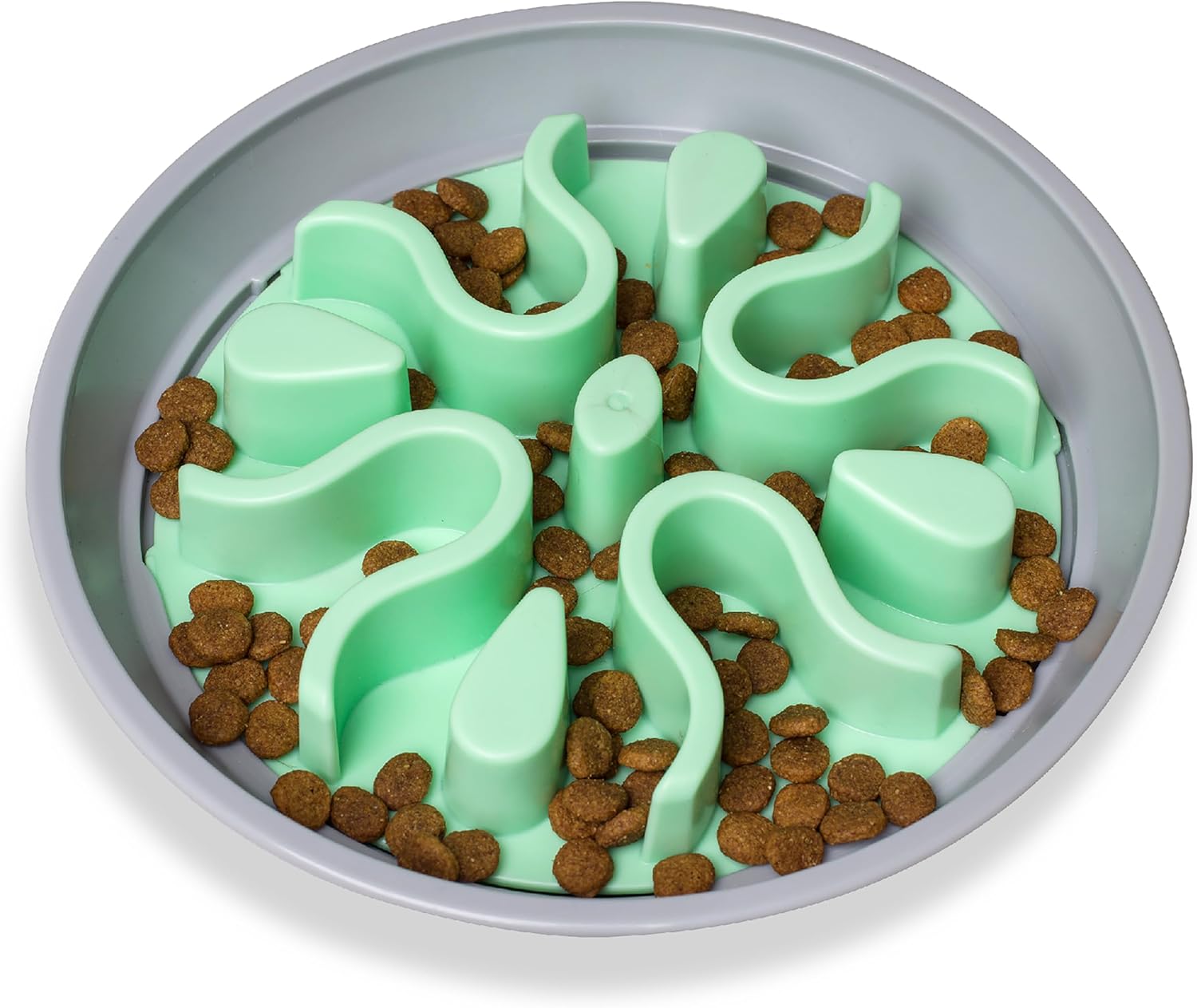
Sold on Amazon and Chewy in multiple sizes and ridge patterns; the medium 'Fun' pattern is the best starting point for most dogs.
3PetSafe Healthy Pet Simply Feed
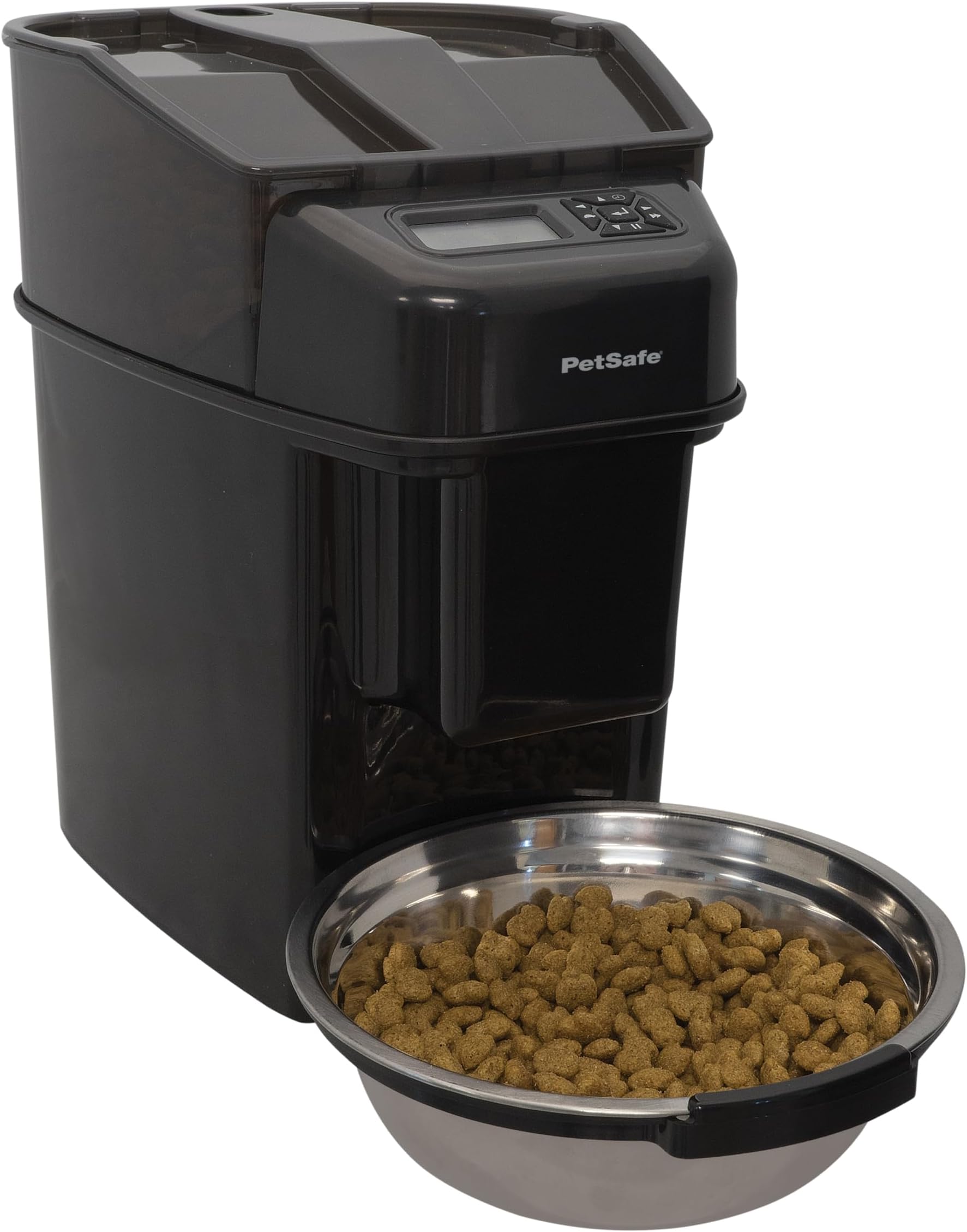
Sold at Chewy, Amazon, and PetSafe.net; the non-Wi-Fi model (reviewed here) is ~$155; the Smart Feed Wi-Fi version is ~$200 and includes app control.
Subscribe to our newsletter
Occasional updates and new releases — no spam.
4Loving Pets Bella Bowl Stainless Steel

Available on Amazon in five sizes (1.5 to 9 cups); multi-pack purchases bring per-bowl cost below $12 — the best price-per-unit for a stainless upgrade.
5Neater Feeder Deluxe Elevated Dog Bowl

Sold at Neater Feeder's own site and Amazon; two size options (small and large) — the large version fits medium/large dogs and has a 17cm elevation.
How We Compared These 5 Bowls
The five bowls in this comparison cover every meaningful use case: premium everyday use (YETI Boomer 8, ~$55), slow feeding to prevent bloat (Outward Hound Slo-Bowl, ~$13), automated portion control (PetSafe Simply Feed, ~$155), no-frills stainless durability (Loving Pets Bella Bowl, ~$15), and elevated mess-free feeding (Neater Feeder Deluxe, ~$45). Below is a quick summary before the individual picks.
| Bowl | Price | Key Strength | Rating | Verdict |
|---|---|---|---|---|
| YETI Boomer 8 | ~$55 | Built to last a decade | 4.9/5 | Best premium pick |
| Outward Hound Slo-Bowl | ~$13 | Slows eating by 10x | 4.7/5 | Best for fast eaters |
| PetSafe Simply Feed | ~$155 | 12-meal scheduling | 4.5/5 | Best auto-feeder |
| Loving Pets Bella Bowl | ~$15 | 18/10 steel at budget cost | 4.4/5 | Best value |
| Neater Feeder Deluxe | ~$45 | Spill-catching lower tray | 4.3/5 | Best for messy drinkers |
YETI Boomer 8 — Best Premium Everyday Bowl
The YETI Boomer 8 is made from the same 18/8 stainless steel YETI uses on its Rambler tumblers — the grade specified for food-service equipment, chosen for corrosion resistance rather than for marketing. YETI lists it as dishwasher-safe, and the moulded silicone ring on the base is the detail owners most often credit with keeping it from drifting across tile during an enthusiastic meal. Long-term owner reports rarely mention rust or scratching from metal utensils.
Capacity is 8 cups — generous for a large dog, but slightly excessive for small breeds. The bowl weighs 560g empty, which means even a strong dog nudging it mid-meal gets nothing for the effort. The interior taper means food collects at the center rather than getting trapped at a lip, which matters if your dog leaves a ring of kibble behind.
At $55, this is the most expensive basic bowl in the group. There is no slow-feeder pattern, no scheduling feature, and nothing you could not replicate at $15 with the Loving Pets bowl if your priority is stainless steel hygiene rather than brand durability guarantees. YETI's limited lifetime warranty is what you are paying for — and the bowl does feel built to outlast the dog.
The hygiene case for stainless is structural rather than dramatic. A mirror-finish interior does not develop the micro-scratches that plastic bowls accumulate, and those scratches are where biofilm settles in and survives a wash cycle. That is the whole reason to spend more on the material. The wear owners do report is cosmetic — scuffing on the outer base from being dragged across concrete during outdoor use.
Outward Hound Fun Feeder Slo-Bowl — Best for Fast Eaters and Bloat Prevention
Canine gastric dilatation-volvulus (bloat) kills dogs, and speed-eating is a significant risk factor. Outward Hound's stated claim for the Fun Feeder maze pattern is that it slows eating by up to 10x, and owner reports describe meals that used to vanish in well under a minute stretching to several minutes. The effect shrinks once a dog learns to work the pattern, but reports agree it does not disappear.
The bowl is BPA-free plastic in a range of ridge configurations (the 'Fun' and 'Mini' patterns differ in ridge depth); the medium-size 'Fun' pattern is the mainstream choice. Cleaning requires care — a bottle brush or narrow-tipped scrub brush gets into the maze grooves where wet kibble can dry into a cement-like paste if left overnight. It is top-rack dishwasher-safe, and the recurring long-term complaint in owner reviews is minor discoloration at the center ridges rather than cracking or warping.
The $13 price point makes this a no-brainer purchase if you have a speed-eater. It will not last as long as stainless — plastic eventually scratches and those scratches harbor bacteria — but at this price you can replace it annually and still spend less than a single YETI bowl over five years. One real limitation: cats and small dogs can get frustrated or give up with the deepest maze patterns. Start with the shallower ridge option if your dog is a first-time slow-feeder user.
PetSafe Healthy Pet Simply Feed — Best Automatic Feeder
Automatic feeders solve a specific problem: consistent meal timing when you work long hours or travel. The PetSafe Simply Feed schedules up to 12 meals per day in portions ranging from 1/8 cup to 4 cups — precise enough for prescription-diet dogs that need exactly 1/3 cup three times daily. The 24-cup hopper holds roughly a 3-day supply for a 25kg dog eating 4 cups per day.
Setup is a matter of setting the clock and entering portion sizes — no app, no account, no pairing. The dial-and-button interface is less polished than app-connected feeders, but it works without a Wi-Fi dependency — a real advantage when the router reboots or the app company's servers go down. A Slow Feed mode dispenses each portion over about 3 minutes, which provides a modest slow-feed effect for dogs prone to gulping from the tray.
At $155 this is the most expensive item in this comparison, and the value calculation changes depending on use case. If you need reliable scheduled feeding, it justifies the price. If you just want a backup bowl, it does not. The stainless steel tray inserts are removable and dishwasher-safe, which is the critical hygiene point that separates this from cheaper plastic-tray competitors. One practical issue owners flag repeatedly: the hopper lid does not seal against humidity, so kibble left in the unit for several days in a humid climate starts to soften.
Loving Pets Bella Bowl — Best Value Stainless Steel
At $10–$15, the Loving Pets Bella Bowl uses 18/10 stainless steel — a higher grade (10% nickel) than typical budget bowls, which adds corrosion resistance. The rubber base ring is molded into a groove rather than glued on, which means it does not peel off the way the adhesive bases on cheaper bowls do after a few months of dishwasher cycling.
Available in 1.5, 3, 4.5, 6, and 9 cup sizes, there is a practical fit for every dog size. Owner reports describe the bowls staying scratch-free and keeping their non-skid bases through repeated dishwasher cycles — the moulded-in groove is why the rubber does not lift. Rust complaints are rare even on the larger sizes that sit out longest between washes.
The honest limitation: this is a plain bowl with no differentiated features. No slow-feed pattern, no elevated frame, no scheduled dispensing. If your dog eats at a normal pace, does not tip bowls, and you want to spend the least amount of money on the most hygienic option, the Loving Pets bowl is the answer. Many veterinary practices stock it as a recommendation precisely because of the uncomplicated design and dishwasher-safe construction.
Neater Feeder Deluxe — Best for Messy Drinkers and Joint-Conscious Owners
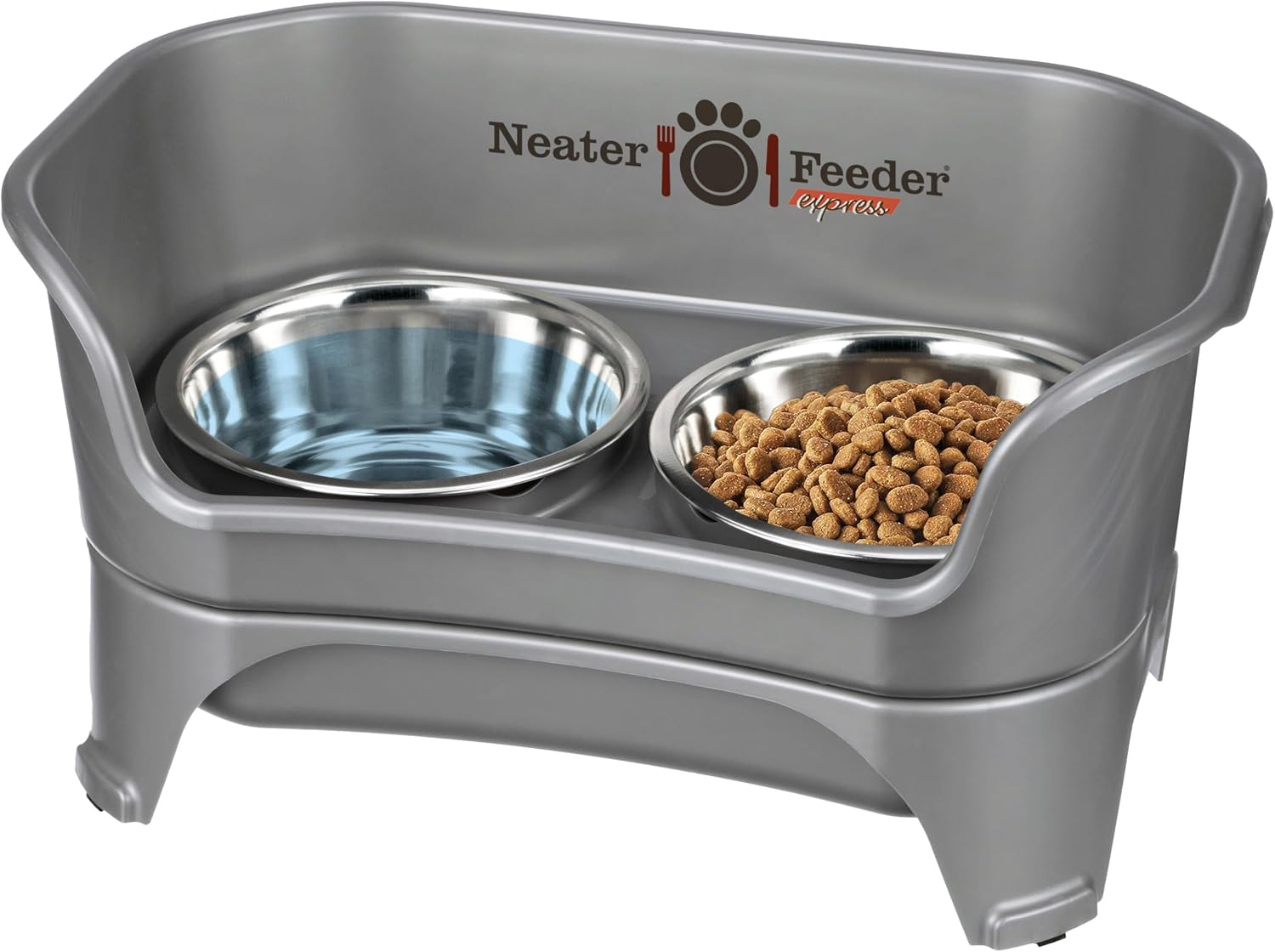
The Neater Feeder Deluxe solves a specific frustration: the permanent wet circle on your kitchen floor from a dog that splashes water while drinking. The design uses two tiers — a raised frame that holds two stainless steel inserts, and a lower reservoir tray that catches overflow.
Elevation height is approximately 10cm on the small-dog version and 17cm on the large-dog version. That height places the bowl at chest level for medium dogs, which veterinary orthopedic literature associates with reduced neck and shoulder strain during eating — relevant for older dogs or breeds with joint issues like Labradors, German Shepherds, and large mixed breeds.
The frame is polypropylene, which is lighter than the YETI or stainless competitors, and it can flex slightly under an aggressive eater. The stainless inserts are the actual food contact surface, so the plastic flexing is not a hygiene concern. At $45–$65 depending on size, it occupies a mid-price point that only makes sense if the mess-prevention feature matters to you. If your dog drinks neatly, you are paying a premium for a problem you do not have.
Frequently asked questions
What is the best dog bowl material — stainless steel, ceramic, or plastic?▼
Do slow feeders actually prevent bloat?▼
How often should I wash my dog's bowl?▼
Is an elevated dog bowl better for large dogs?▼
Can I use a human stainless steel bowl for my dog?▼
What size bowl does my dog need?▼
Are automatic feeders safe to use long-term?▼
Is the YETI Boomer worth $55 when a $15 stainless bowl exists?▼
My dog flips their bowl — what stops that?▼
How do I transition a dog from a regular bowl to a slow feeder?▼
Check the details of the products in this article
- YETI Boomer 8 Dog Bowl$60Price as of 2026-10-19
- Outward Hound Fun Feeder Slo-Bowl$12.74Price as of 2026-10-19
- PetSafe Healthy Pet Simply Feed$83.99Price as of 2026-10-19
- Loving Pets Bella Bowl Stainless Steel$10〜$25Reference price
- Neater Feeder Deluxe Elevated Dog Bowl$77.99Price as of 2026-10-19
Prices change. Check the retailer for the current price.
Comments & questions
Discussion happens on nattzy, our community forum. Sign in with Google to post — it takes a second.
View the discussion thread on nattzy ↗
Still deciding? Ask the community your own question — Post a question on nattzy ↗