Best Retinol Serum 2026: 3 Picks From Starter to 1%
WriterPickly Editorial
Updated 2026-10-10
Retinol is the most evidence-backed OTC anti-aging ingredient in skincare — and also the one many users give up on in the first few weeks, usually because the starting concentration is too high or they don't account for the 6-week 'retinol uglies' that come before the results. The products in this list solve the starting problem differently, and which approach fits depends on your skin's current barrier condition.
Quick answer
Beginners are best served by Neutrogena Rapid Wrinkle Repair, a stabilized-retinol serum at $19–$25 that is easy to find and forgiving in the first months. RoC Retinol Correxion's single-dose night capsules use encapsulated retinol for people irritation drove away, and Paula's Choice Clinical 1% Retinol Treatment (about $65, no BHA) is the higher-strength step once your skin has adapted.
📋How we compared
Compared on retinoid type and approximate concentration, irritation profile and skin adaptation curve, formulation pH and delivery system, packaging for retinoid stability, price per mL, and suitability for first-time versus experienced retinoid users based on long-term dermatology-community review data.
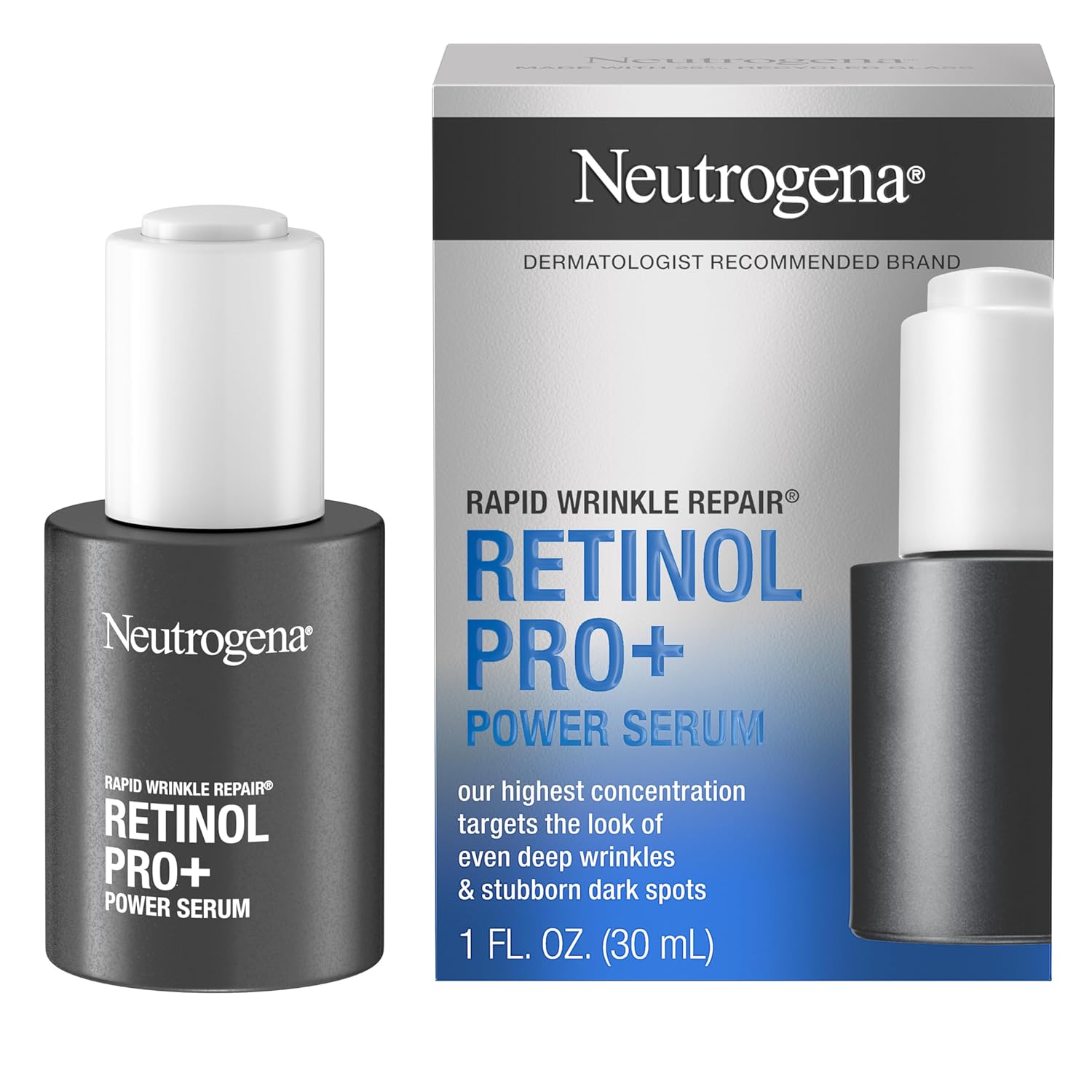
Best Starter: Neutrogena Rapid Wrinkle Repair is the recommended first retinol in this comparison — the stabilized retinol in a hyaluronic acid and glycerin base is formulated specifically for the beginner ramp-up phase, and the texture is comfortable enough on dry skin that users are more likely to maintain daily application through the 6-week tolerance-building period. At $19-$25 it's widely accessible in pharmacies across the US, Canada, Europe, and Southeast Asia.
Top picks ↓- 2
 RoC Retinol Correxion Line Smoothing Night Serum CapsulesB+Best Microencapsulated Retinol$25.98Price as of 2026-10-19
- 3
 Paula's Choice Clinical 1% Retinol TreatmentBBest Higher-Strength Option$48.75Price as of 2026-10-19
Which one is right for you?
Related articles


1★ Best PickABest StarterNeutrogena Rapid Wrinkle Repair Retinol Serum
Neutrogena Rapid Wrinkle Repair is the recommended first retinol in this comparison — the stabilized retinol in a hyaluronic acid and glycerin base is formulated specifically for the beginner ramp-up phase, and the texture is comfortable enough on dry skin that users are more likely to maintain daily application through the 6-week tolerance-building period. At $19-$25 it's widely accessible in pharmacies across the US, Canada, Europe, and Southeast Asia. The honest weakness: retinol concentration is undisclosed, placing it likely at 0.1-0.3% — appropriate for beginners, insufficient for experienced retinol users wanting stronger progressive results.
Pros
- ✓Available in pharmacies across most global markets
- ✓Stabilized retinol in HA + glycerin base — comfortable texture for dry skin
- ✓$19-$25 price makes tolerance testing accessible
- ✓Consistent clinical studies backing efficacy for fine lines at 12 weeks
Cons
- ✗Retinol concentration undisclosed — efficacy ceiling is unclear
- ✗Not strong enough for established retinol users
Score breakdown
- Retinoid Type
- Stabilized retinol
- Concentration
- Undisclosed (est. 0.1–0.3%)
- Price
- $19–$25
2B+Best Microencapsulated RetinolRoC Retinol Correxion Line Smoothing Night Serum Capsules
RoC Retinol Correxion Line Smoothing Night Serum Capsules pack the serum into single-use capsules, and RoC says the retinol is encapsulated for gradual release — the aim is to soften the flaking and redness of the first weeks, which makes this a pick for users who have previously abandoned retinol due to irritation. RoC has sold stabilized retinol since 1995, but the 'patented' technology and most clinical claims come from the brand itself. The base is mainly silicones and soybean oil rather than a rich cream, so dry skin may still need a moisturizer on top. The honest weakness: the gentler release curve means visible results take longer to appear than unencapsulated products at higher stated concentrations — if you want fast visible change and have established tolerance, an unencapsulated 0.5-1% product will produce faster surface results.
Pros
- ✓Encapsulated retinol (per RoC) designed for a gentler start
- ✓Single-dose capsules keep the amount per application consistent
- ✓Silicone-based serum layers easily under a moisturizer
- ✓Stabilized retinol on the market since 1995
Cons
- ✗Slower visible results than unencapsulated high-concentration products
- ✗Not widely available in Japan
Score breakdown
- Retinoid Type
- Encapsulated retinol (per RoC)
- Concentration
- Undisclosed
- Price
- ~$22 (30 capsules)
3BBest Higher-Strength OptionPaula's Choice Clinical 1% Retinol Treatment
Paula's Choice Clinical 1% Retinol Treatment is a cream-textured 30 mL treatment that pairs 1% retinol with peptides, vitamin C and licorice extract. It contains no salicylic acid (BHA); the willow bark extract on the label is a plant extract, not an exfoliating acid, so it doesn't double as a pore-clearing BHA. At a $65 list price (often discounted to $50–$65), this is premium-channel pricing. 1% is a high cosmetic concentration — allowed in the US, but above the EU's new 0.3% cap for newly launched products. The honest weakness: 1% retinol is a heavy skin load. Using this without prior retinol experience will almost certainly cause 4-6 weeks of purging, peeling, and sensitivity — establish retinol tolerance with a weaker product first.
Pros
- ✓1% retinol — among the highest concentrations sold as a cosmetic in the US
- ✓Adds peptides, vitamin C and licorice extract alongside the retinol
- ✓Cream texture works as a single night-time step
- ✓Paula's Choice transparency on ingredient percentages and formulation rationale
Cons
- ✗$65 list price — overkill for retinol beginners
- ✗High skin load requires prior retinol tolerance before starting
Score breakdown
- Retinoid Type
- Retinol
- Concentration
- 1%
- Price
- $65 (list)
Subscribe to our newsletter
Occasional updates and new releases — no spam.
| Product | Retinoid Type | ||
|---|---|---|---|
| Neutrogena Rapid Wrinkle Repair Retinol Serum | Stabilized retinol | Undisclosed (est. 0.1–0.3%) | $19–$25 |
| RoC Retinol Correxion Line Smoothing Night Serum Capsules | Encapsulated retinol (per RoC) | Undisclosed | ~$22 (30 capsules) |
| Paula's Choice Clinical 1% Retinol Treatment | Retinol | 1% | $65 (list) |
How we compared
Retinol, retinal (retinaldehyde), and retinyl esters are all forms of vitamin A, but they're not interchangeable in terms of potency or irritation. Retinol converts to retinoic acid (the active form) via a two-step enzymatic process in the skin; retinal needs only one step and is generally considered stronger at the same concentration (the large multipliers quoted in some ads come from brand marketing, not independent trials); retinyl esters (retinyl palmitate, retinyl acetate) need an extra step and are significantly milder. Cosmetics can only use these precursor forms — retinoic acid (tretinoin) is a prescription drug in the US and the EU, and in Japan topical tretinoin is not an approved drug at all. What this means practically: a 0.1% retinol product and a 0.3% retinol product are not in the same efficacy tier, and a product marketing '2% retinol' should be evaluated on whether that 2% is retinol, retinyl ester, or a blend.
We assessed each product on the retinoid type, the approximate concentration (where disclosed — many brands bury the retinoid in the ingredient list without stating the percentage), the delivery mechanism (microencapsulation extends stability and slows release for less concentrated irritation spikes), the formulation context (retinol in a rich moisturizing base is tolerated better than retinol in a thin serum on dry skin), and the price relative to both the concentration and the track record of clinical study.
What changed in 2026
One notable shift in recent years is the mainstreaming of bakuchiol, either on its own or blended with retinol. Bakuchiol is a plant compound from the seeds of Psoralea corylifolia (babchi). It does not bind retinoid receptors; it is described as a functional analogue because it produces gene-expression changes similar to retinol's, usually with less irritation. The main controlled trial is a single 12-week study of 44 people (Dhaliwal et al., British Journal of Dermatology, 2019) comparing 0.5% bakuchiol twice daily with 0.5% retinol once daily; it found similar improvement in wrinkles and pigmentation, with less stinging and scaling in the bakuchiol group. Its safety in pregnancy has not been established. Several brands now sell bakuchiol + retinol combinations, and we've noted where bakuchiol is a relevant stepping stone.
Regulation differs by market more than many articles suggest. In the US, the FDA sets no concentration limit for retinol in cosmetics, which is why 1% products are sold freely. The EU is the market with a cap: under Regulation (EU) 2024/996, face, hand and rinse-off products may contain at most 0.3% retinol equivalent (body lotions 0.05%) and must carry a vitamin A warning. Non-compliant products cannot be newly placed on the EU market from 1 November 2025, and existing stock has a transition period that ends in 2027 — so a 1% product such as Paula's Choice Clinical 1% can no longer be newly launched there. Prescription tretinoin remains a separate, stronger category.
Where each fits
Neutrogena Rapid Wrinkle Repair ($19–$25 globally) is the mass-market pick for budget-conscious beginners. The stabilized retinol + hyaluronic acid formula is designed to minimize the ramp-up irritation phase, and the glycerin-rich moisturizing base is particularly well-suited to dry skin types who experience the most flaking and discomfort in the first month of retinol use. Available in most pharmacies worldwide. Honest weakness: the retinol concentration isn't disclosed — the formulation is likely in the 0.1-0.3% range based on observed efficacy timeline, which means it's appropriate for beginners but won't be sufficient for experienced users who've built tolerance.
RoC Retinol Correxion Line Smoothing Night Serum Capsules (about $22 for 30 capsules) are the pick for people who have tried and abandoned retinol before due to irritation. Each single-use capsule holds a pre-measured dose, and RoC says its retinol is encapsulated to release gradually, which is meant to soften the flaking and redness of the first 4-6 weeks. RoC has sold stabilized retinol since 1995, so the brand has a long track record, but the 'patented' technology and most of the clinical claims come from RoC itself. The capsule serum is built mainly on silicones and soybean oil rather than a rich cream, so dry skin may still want a moisturizer on top. Honest weakness: the gentler approach means visible results take longer than with high-concentration unencapsulated products, and the product is hard to find in Japan.
Paula's Choice Clinical 1% Retinol Treatment ($65 list price, often sold for $50–$65; 30 mL) sits at the high-concentration end of cosmetic retinol. It is a cream-textured treatment that pairs 1% retinol with peptides, vitamin C and licorice extract. It does not contain salicylic acid (BHA) — the willow bark extract in the formula is a plant extract, not an exfoliating acid — so it won't replace a separate BHA product for clogged pores. This is the pick for experienced retinol users who want a stronger step than a drugstore product. Note that 1% is above the EU's new 0.3% retinol-equivalent cap for newly launched products. Honest weakness: 1% retinol is a significant skin load for anyone without established retinol tolerance — starting here without prior retinol experience is likely to produce substantial irritation, and at this price it's expensive for a product that may cause 4-6 weeks of purging and sensitivity.
Verdict
For first-time retinoid users, Neutrogena Rapid Wrinkle Repair is the recommendation — it is inexpensive, easy to find and comfortable on dry skin. Apply it every third night for the first month, move to every other night once the skin stops flaking, and wear sunscreen daily. If irritation has made you quit retinol before, RoC's single-dose night capsules are the alternative designed for a gentler start.
For users who have established retinol tolerance and want a stronger cosmetic option, Paula's Choice Clinical 1% Retinol Treatment is the recommendation, while RoC Retinol Correxion remains the steadier choice for dry and normal skin. Neither replicates prescription tretinoin 0.025%–0.1%. Tretinoin is prescription-only in the US and the EU; in Japan topical tretinoin is not an approved drug, and some dermatology clinics prescribe it only as an unapproved, self-paid medicine. If you want to go beyond cosmetic retinol, ask a dermatologist rather than buying tretinoin over the counter abroad.
Frequently asked questions
What is the 'retinol uglies' and how long does it last?▼
Can I use retinol while pregnant or breastfeeding?▼
How does OTC retinol compare to prescription tretinoin?▼
Check the details of the products in this article
- Neutrogena Rapid Wrinkle Repair Retinol Serum$20.01Price as of 2026-10-19
- RoC Retinol Correxion Line Smoothing Night Serum Capsules$25.98Price as of 2026-10-19
- Paula's Choice Clinical 1% Retinol Treatment$48.75Price as of 2026-10-19
Prices change. Check the retailer for the current price.
Comments & questions
Discussion happens on nattzy, our community forum. Sign in with Google to post — it takes a second.
View the discussion thread on nattzy ↗
Still deciding? Ask the community your own question — Post a question on nattzy ↗
Related articles

Best Sunscreen 2026: 5 SPF46+ picks compared honestly

Best Lip Balm 2026: 4 Picks From Overnight Mask to Budget

Best Hand Cream 2026: 5 Formulas Ranked

Best Body Lotion 2026: 5 Picks from Vaseline to Kiehl's

Best Eye Patches 2026: 5 Under-Eye Treatments

Best Clay Masks 2026: 5 Pore-Cleansing Masks Ranked