Fitness
Best Pec Deck Machines 2026: 5 Chest Fly Machines Compared
WriterPickly Editorial
Updated 2026-11-24
A pec deck machine guides both arms through a fixed arc, so the chest does the work of a fly without any dumbbells to balance. On most home models the same arms also train the rear delts when you change the grip or turn to face the pad.
Quick answer
For most home gyms that already own weight plates, the Mikolo Chest Fly Machine, PEC Fly and Reverse Delt Machine is the pick: its listing gives the numbers a buyer needs before ordering — 6 arm positions, a 400 lb capacity, 14-gauge 50 × 50 mm steel, and 68.5 × 46 × 64.4 in — at a mid-range price, with band pegs as well. The Titan Fitness Plate-Loaded PEC Fly and Reverse Delt Machine costs more but uses thicker 12-gauge steel, has bolt-down holes, and lists the smallest frame. The GOIMU CF01-PRO is close to a twin of the Mikolo and states that it takes 1 in and 2 in plates. The Body-Solid Pro Clubline S2PECX is a 235 lb weight-stack machine for a shared or commercial room, at several times the price and 422 lb. The VEVOR is the cheapest, but its listing gives no dimensions and no plate load.
📋How we compared
Machines were compared on the specs their Amazon US listings state — resistance type, listed capacity, arm and seat adjustment, frame steel, plate fit, and dimensions — checked on November 24, 2026. Extra weight went to whether a listing gives the numbers a buyer needs before ordering (dimensions, capacity, and adjustment steps) and to the price band relative to the others. Pickly did not test these machines; where a listing does not give a value, the table shows “Not stated”.
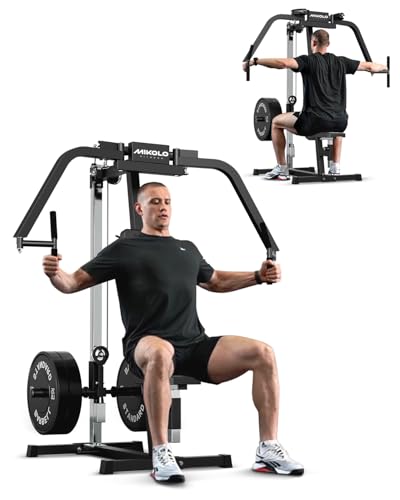
Mikolo Chest Fly Machine, PEC Fly and Reverse Delt Machine (400 lb)
Best Overall: The Mikolo is the top pick because its listing gives a home buyer the full set of numbers at a mid-range price: dual overhead cams with independent arms, 6 adjustable arm positions, a 10-degree backrest, 14-gauge 50 × 50 mm steel, a 400 lb capacity, and dimensions of 68.5 × 46 × 64.4 in. The title also names band pegs, which the near-identical GOIMU listing does not mention.
Top picks ↓- 1Mikolo Chest Fly Machine, PEC Fly and Reverse Delt Machine (400 lb)A+Best Overall$237.99Price as of 2026-11-27
- 2
 Titan Fitness Plate-Loaded PEC Fly and Reverse Delt MachineAThicker Steel, Bolt-Down$569.99Price as of 2026-11-27
- 3
 Body-Solid Pro Clubline Series 2 PEC Fly (S2PECX/2)A-Weight-Stack Commercial$2502Price as of 2026-11-27
- 4
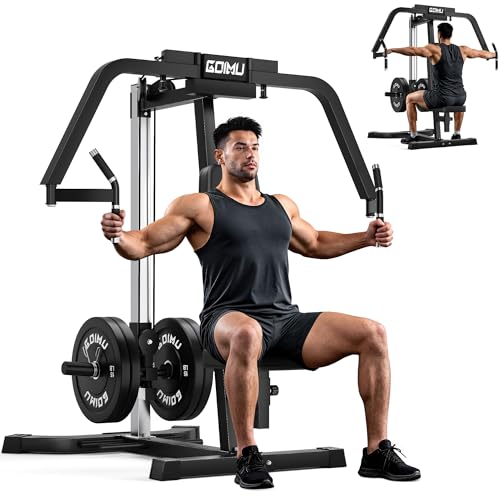 GOIMU CF01-PRO Chest Fly, PEC Fly and Reverse Delt MachineA-States 1 in and 2 in Plates$229.99Price as of 2026-11-27
Which one is right for you?
Related articles

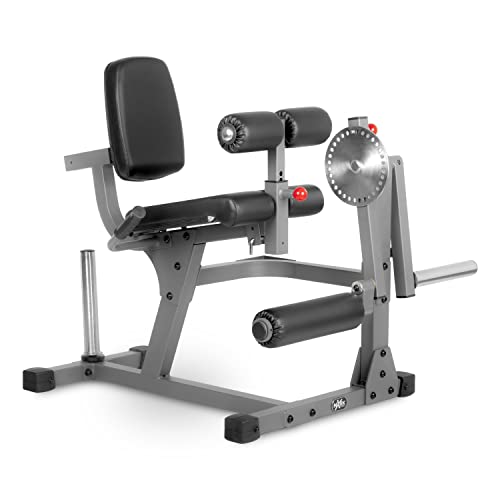
1★ Best PickA+Best OverallMikolo Chest Fly Machine, PEC Fly and Reverse Delt Machine (400 lb)
Plate-loaded pec fly + reverse delt, dual overhead cams, 6 arm positions, 10-degree backrest, band pegs, 14-gauge 50 × 50 mm steel, 400 lb capacity, 68.5 × 46 × 64.4 in (listing figures). Suited to home gyms that already own plates and want the full set of numbers before ordering.
The Mikolo is the top pick because its listing gives a home buyer the full set of numbers at a mid-range price: dual overhead cams with independent arms, 6 adjustable arm positions, a 10-degree backrest, 14-gauge 50 × 50 mm steel, a 400 lb capacity, and dimensions of 68.5 × 46 × 64.4 in. The title also names band pegs, which the near-identical GOIMU listing does not mention. The trade-offs are gaps in the listing: it does not state the plate hole size, the machine weight, or any bolt-down points, and its “13.5 square feet” does not match its own dimensions (about 21.9 sq ft). It is not a good fit for anyone who owns 1 in plates and wants that compatibility in writing — the GOIMU states it — or for a floor area smaller than 68.5 × 46 in plus arm swing.
Pros
- ✓6 adjustable arm positions on independent arms (listing)
- ✓400 lb capacity with 14-gauge 50 × 50 mm steel
- ✓Dimensions stated: 68.5 × 46 × 64.4 in
- ✓Band pegs named in the listing title
Cons
- ✗Plate hole size not stated in the listing
- ✗“13.5 square feet” does not match the listed dimensions
- ✗No machine weight or bolt-down points stated
Specifications
- Resistance type
- Plate-loaded (band pegs)
- Listed capacity
- 400 lb
- Arm and seat adjustment
- 6 arm positions; adjustable seat
- Frame steel
- 50 × 50 mm, 14-gauge
- Plate fit
- Not stated
- Dimensions
- 68.5 × 46 × 64.4 in (L × W × H)
- Resistance type
- Plate-loaded (band pegs)
- Listed capacity
- 400 lb
- Arm and seat adjustment
- 6 arm positions; adjustable seat
- Frame steel
- 50 × 50 mm, 14-gauge
- Plate fit
- Not stated
- Dimensions
- 68.5 × 46 × 64.4 in (L × W × H)
2AThicker Steel, Bolt-DownTitan Fitness Plate-Loaded PEC Fly and Reverse Delt Machine
Plate-loaded on 10 in Olympic sleeves rated to 400 lb, 12-gauge 2 × 2 in steel, 360-degree swivel handles, bolt-down holes, 109 lb, 65 H × 32 L × 28 W in (listing figures). Suited to buyers who can anchor it and want the thicker steel in a small frame.
The Titan is the choice when build and anchoring matter more than price. Titan lists 2 × 2 in 12-gauge steel, aluminum pulleys, fiberglass nylon cables, and rubber feet with bolt-down holes for concrete anchors, and it describes the pec and rear delt grips more clearly than any other listing here: 360-degree swivel handles, top grip for rear delts, bottom handle for the chest. The 10 in sleeves are rated for up to 400 lb of Olympic plates. At 109 lb and 65 H × 32 L × 28 W in it has the smallest listed frame, which is also why anchoring is worth doing. It costs noticeably more than the Mikolo and GOIMU. It is not a good fit if you cannot drill your floor, if you own 1 in plates (the listing mentions Olympic plates), or if you want a stated number of arm positions.
Pros
- ✓2 × 2 in 12-gauge steel (listing)
- ✓Bolt-down holes for concrete anchors
- ✓Smallest listed frame: 32 × 28 in, 109 lb
- ✓360-degree swivel handles with separate pec and rear delt grips
Cons
- ✗Priced well above the Mikolo and GOIMU
- ✗Number of arm positions not stated
- ✗1 in plate compatibility not mentioned
Specifications
- Resistance type
- Plate-loaded
- Listed capacity
- 400 lb (Olympic plates)
- Arm and seat adjustment
- Independent arm range (steps not stated); adjustable seat
- Frame steel
- 2 × 2 in, 12-gauge
- Plate fit
- Olympic; 10 in sleeves
- Dimensions
- 32 L × 28 W × 65 H in; 109 lb
- Resistance type
- Plate-loaded
- Listed capacity
- 400 lb (Olympic plates)
- Arm and seat adjustment
- Independent arm range (steps not stated); adjustable seat
- Frame steel
- 2 × 2 in, 12-gauge
- Plate fit
- Olympic; 10 in sleeves
- Dimensions
- 32 L × 28 W × 65 H in; 109 lb
3A-Weight-Stack CommercialBody-Solid Pro Clubline Series 2 PEC Fly (S2PECX/2)
Selectorized pec fly + rear delt with a 235 lb weight stack, 5-position seat, 12-gauge 2 × 3 in steel, full commercial rating, 58 × 58 × 72 in, 422 lb (listing figures). Suited to shared or commercial rooms; priced several times above the plate-loaded machines.
The Body-Solid Pro Clubline S2PECX is a different class of machine. It carries a 235 lb weight stack, so the load changes with a pin and no plates are needed, and the listing gives a full commercial rating, 2 × 3 in 12-gauge steel, sealed bearings, a variable-resistance cam, contoured arm pads, and a 5-position seat. It is also the one listing here with warranty terms: lifetime on frame, welds, weight plates, and guide rods, 3 years on pulleys, bushings, bearings, and hardware, and 1 year on cables, upholstery, and grips. The costs are a price several times above every other machine in this table, 422 lb to deliver and place, and a 58 × 58 × 72 in frame. It is not a good fit for a single user who already owns plates, for an upstairs room where 422 lb is a concern, or for a budget set by the plate-loaded machines.
Pros
- ✓235 lb weight stack: pin changes, no plates needed
- ✓Full commercial rating with 12-gauge 2 × 3 in steel (listing)
- ✓Warranty terms stated, with lifetime on the frame
Cons
- ✗Priced several times above the other four
- ✗422 lb and 58 × 58 × 72 in
Specifications
- Resistance type
- Weight stack (selectorized)
- Listed capacity
- 235 lb stack
- Arm and seat adjustment
- 5-position seat
- Frame steel
- 2 × 3 in, 12-gauge
- Plate fit
- No plates needed
- Dimensions
- 58 × 58 × 72 in; 422 lb
- Resistance type
- Weight stack (selectorized)
- Listed capacity
- 235 lb stack
- Arm and seat adjustment
- 5-position seat
- Frame steel
- 2 × 3 in, 12-gauge
- Plate fit
- No plates needed
- Dimensions
- 58 × 58 × 72 in; 422 lb
Subscribe to our newsletter
Occasional updates and new releases — no spam.
4A-States 1 in and 2 in PlatesGOIMU CF01-PRO Chest Fly, PEC Fly and Reverse Delt Machine
Plate-loaded pec fly + reverse delt, 6 arm positions, 10-degree backrest, 14-gauge 50 × 50 mm steel, 400 lb capacity, fits 1 in and 2 in plates, 68.5 × 46 × 64.4 in (listing figures). Suited to buyers who own 1 in plates and want that compatibility stated.
The GOIMU CF01-PRO matches the Mikolo on nearly every listed figure: dual overhead cams, 6 adjustable arm positions, lengthened arms, an adjustable seat, a 10-degree backrest, 14-gauge 50 × 50 mm steel, a 400 lb capacity, and 68.5 × 46 × 64.4 in. Its advantage on paper is one sentence the Mikolo listing lacks — it fits 1 in and 2 in weight plates — and a slightly lower price. It ranks below the Mikolo because its listing does not mention band pegs and otherwise offers nothing the Mikolo does not. Like the Mikolo, it repeats a “13.5 square feet” figure that does not match its dimensions and states no machine weight or bolt-down points. It is not a good fit for anyone who wants to add band resistance on listed pegs, or who needs a smaller frame than 68.5 × 46 in.
Pros
- ✓Fits 1 in and 2 in plates (listing)
- ✓6 adjustable arm positions and a 400 lb capacity
- ✓Priced slightly below the Mikolo
Cons
- ✗Band pegs not mentioned in the listing
- ✗“13.5 square feet” does not match the listed dimensions
- ✗No machine weight or bolt-down points stated
Specifications
- Resistance type
- Plate-loaded
- Listed capacity
- 400 lb
- Arm and seat adjustment
- 6 arm positions; adjustable seat
- Frame steel
- 50 × 50 mm, 14-gauge
- Plate fit
- 1 in and 2 in
- Dimensions
- 68.5 × 46 × 64.4 in (L × W × H)
- Resistance type
- Plate-loaded
- Listed capacity
- 400 lb
- Arm and seat adjustment
- 6 arm positions; adjustable seat
- Frame steel
- 50 × 50 mm, 14-gauge
- Plate fit
- 1 in and 2 in
- Dimensions
- 68.5 × 46 × 64.4 in (L × W × H)
5BLowest PriceVEVOR Chest Fly Machine (1 & 2-Inch Plates)

Plate-loaded for 1 in and 2 in plates, 6-position seat from 40 to 50 cm, 5 cm seat cushion, 2 × 2 in tubing 1.5 mm thick; 450 lb is the seat capacity. Dimensions and plate load are not stated. Suited to a tight budget when you can return it if it does not fit.
The VEVOR is the cheapest machine in this comparison, and its listing is specific where the others are vague about the seat: 6 positions at 25 mm per step, a height of 40 to 50 cm, and a 5 cm cushion with non-slip leather. It also states compatibility with 1 in and 2 in plates. What it leaves out is why it ranks last. The listing gives no dimensions, no machine weight, no plate load, and no count of arm positions, and the 450 lb in the title is the capacity of the seat, not of the plate posts. The tubing is 2 × 2 in carbon steel 1.5 mm thick, thinner than the 14-gauge and 12-gauge steel listed for the others. It is not a good fit for anyone who has to plan floor space from confirmed figures, who expects to load it heavily, or who cannot easily return a large boxed machine.
Pros
- ✓Cheapest of the five
- ✓Fits 1 in and 2 in plates (listing)
- ✓Seat range stated: 40 to 50 cm in 6 positions
Cons
- ✗No dimensions or machine weight in the listing
- ✗450 lb is the seat capacity; plate load not stated
- ✗1.5 mm tubing, the thinnest listed here
Specifications
- Resistance type
- Plate-loaded
- Listed capacity
- Seat 450 lb; plate load not stated
- Arm and seat adjustment
- 6-position seat, 40–50 cm; arm positions not stated
- Frame steel
- 2 × 2 in, 1.5 mm
- Plate fit
- 1 in and 2 in
- Dimensions
- Not stated
- Resistance type
- Plate-loaded
- Listed capacity
- Seat 450 lb; plate load not stated
- Arm and seat adjustment
- 6-position seat, 40–50 cm; arm positions not stated
- Frame steel
- 2 × 2 in, 1.5 mm
- Plate fit
- 1 in and 2 in
- Dimensions
- Not stated
Side-by-side on the same scale
| Product | Resistance type | |||||
|---|---|---|---|---|---|---|
| Mikolo Chest Fly Machine, PEC Fly and Reverse Delt Machine (400 lb) | Plate-loaded (band pegs) | 400 lb | 6 arm positions; adjustable seat | 50 × 50 mm, 14-gauge | Not stated | 68.5 × 46 × 64.4 in (L × W × H) |
| Titan Fitness Plate-Loaded PEC Fly and Reverse Delt Machine | Plate-loaded | 400 lb (Olympic plates) | Independent arm range (steps not stated); adjustable seat | 2 × 2 in, 12-gauge | Olympic; 10 in sleeves | 32 L × 28 W × 65 H in; 109 lb |
| Body-Solid Pro Clubline Series 2 PEC Fly (S2PECX/2) | Weight stack (selectorized) | 235 lb stack | 5-position seat | 2 × 3 in, 12-gauge | No plates needed | 58 × 58 × 72 in; 422 lb |
| GOIMU CF01-PRO Chest Fly, PEC Fly and Reverse Delt Machine | Plate-loaded | 400 lb | 6 arm positions; adjustable seat | 50 × 50 mm, 14-gauge | 1 in and 2 in | 68.5 × 46 × 64.4 in (L × W × H) |
| VEVOR Chest Fly Machine (1 & 2-Inch Plates) | Plate-loaded | Seat 450 lb; plate load not stated | 6-position seat, 40–50 cm; arm positions not stated | 2 × 2 in, 1.5 mm | 1 in and 2 in | Not stated |
How to read this table: values come from each product's Amazon US listing (the maker's or seller's own feature text), checked on November 24, 2026. “Not stated” means the listing does not give the value. Two things to know before comparing rows. First, the Mikolo and GOIMU listings give 68.5 × 46 × 64.4 in and also say the machine occupies 13.5 square feet; those two figures do not agree (68.5 × 46 in is about 21.9 sq ft), so this table uses the dimensions. Second, VEVOR's 450 lb is the capacity of the seat, not a plate load, and the Body-Solid's 235 lb is a built-in weight stack; neither can be compared directly with the 400 lb figures on the plate-loaded machines. Pickly did not test these products.
Table checked 2026-11-24
Plate-loaded or weight stack: the first decision
Resistance type decides almost everything else: price, machine weight, floor space, and how fast you change loads. Four of the five machines here are plate-loaded. You slide your own weight plates onto posts or sleeves, and overhead cams and cables carry that load to the arms. The Body-Solid Pro Clubline S2PECX is selectorized: it carries its own 235 lb weight stack, and you change the load by moving a pin.
Plate-loaded suits a home gym that already owns plates. The machines are light and inexpensive by comparison — Titan lists 109 lb for its frame — and the plates you use on a barbell do double duty. The costs are slower load changes (walk to the plate rack, lift, slide on, and repeat on the other side) and the fact that drop sets, where you cut the load quickly between sets, are clumsy.
A weight stack suits a shared or commercial room. Changing the load takes a second and no plates are needed, and the Body-Solid listing gives a full commercial rating, 2 × 3 in 12-gauge steel, and sealed bearings. The costs are large: the listing gives 422 lb and 58 × 58 × 72 in, and the price is several times that of any plate-loaded machine in this comparison. The stack also sets a ceiling at 235 lb, although with the cam's leverage unpublished that figure cannot be set against plates on another machine.
A plain rule: if you do not own plates and do not plan to, the plate-loaded machines cost more than their listing suggests, because the plates are a separate purchase. If you do own them, a stack is mostly paying for convenience that one person training at home may not need.
Pec fly and reverse delt on one machine: how the switch works
A pec fly brings the arms together in front of the chest. A reverse fly (reverse delt) moves them apart and back, which loads the rear deltoids and upper back. On a combined machine the same pivoting arms do both; what changes is which way you face and where the arms start. Typically you sit with your back against the pad for the chest fly and face the pad for the reverse fly.
The listings describe the switch differently. Titan is the most specific: 360-degree swivel handles with two grips — the top grip for rear delts and shoulders, the bottom handle for the pec squeeze — plus independent range-of-motion adjustments. Mikolo and GOIMU describe swiveling, articulating arms with 6 adjustable positions, and say the arms were lengthened in this version to allow deeper reverse fly movements. Body-Solid describes a dual-function design for chest flys and rear delt flys. VEVOR names the rear deltoid among its uses but does not describe how the arms are set for it.
Independent arms matter for both movements. Titan, Mikolo, and GOIMU all describe dual overhead cams that let each arm move on its own, so you can train one side at a time or both together. Single-arm work helps when one side is weaker, and it means each arm can be set to its own start position if one shoulder is stiffer than the other. The listings do not say how far apart the settings are.
If the reverse fly is the main reason you are buying, read the listing photos as well as the text. Check that the pad lets you sit facing it and that the handles are within reach when the arms are set forward. Mikolo and GOIMU list a backrest inclined at 10 degrees, which they describe as aimed at the upper chest; neither says how that angle works when you face the pad.
Arm start positions and seat height: the two adjustments that set the fit
The arm start position sets how far behind your shoulders the handles sit at the beginning of a chest fly. Too far back, and the shoulder is stretched under load before the chest can do its work; too far forward, and the range of motion is short. A machine with more start positions lets more people find a setting between those two.
By the listings: Mikolo and GOIMU give 6 adjustable positions on the swiveling arms. Titan gives independent range-of-motion adjustments without a number of steps. Body-Solid calls its machine 5-position and lists a 5-position seat adjustment, with a variable-resistance cam and contoured arm pads meant to line the pivot point up with the body. VEVOR's 6 positions belong to the seat (25 mm per step, 40 to 50 cm high); its listing gives no count for the arms.
Seat height decides whether the handles travel at chest level. As a general guide, set the seat so that your upper arms are about level with the floor, or slightly below shoulder height, during a chest fly; a seat set too low lifts the elbows above the shoulders. All five listings state an adjustable seat. VEVOR is the one that prints a range, 40 to 50 cm, which helps if you are much shorter or taller than average: measure a chair at home and compare. The others say “adjustable” without a range, and Mikolo and GOIMU do not give the number of seat positions.
If two people of different heights will share the machine, expect to reset both the seat and the arms every session. A pin that changes in seconds matters more in that case than one extra position. None of the five listings describes its adjustment hardware in enough detail to compare, so look closely at the photos or ask the seller.
Footprint: the listed frame is not the room you need
The listed length and width describe the machine at rest. A pec deck's arms swing outward and backward, and on a plate-loaded machine you also have to stand beside the plate posts to load them. No listing here states the width with the arms fully open, so treat every figure below as a minimum.
Mikolo and GOIMU list the same dimensions: 68.5 × 46 × 64.4 in (L × W × H). Both also say the machine occupies 13.5 square feet, but 68.5 × 46 in works out to about 21.9 sq ft. The two figures do not agree and neither listing explains the smaller one, so plan from the dimensions. Titan lists 65 in high × 32 in long × 28 in wide — about 6.2 sq ft of floor, by far the smallest listed frame. Since the arms have to reach around a seated person, that reads as the base of the frame and not the span of the arms, though the listing does not say so. Body-Solid lists 58 × 58 × 72 in, about 23.4 sq ft, and is the tallest of the five. VEVOR's listing says “compact” and gives no dimensions at all.
For a working area, mark the listed length and width on the floor with tape. Then add room behind and beside the seat for the arms, room at the plate posts to hold a plate at arm's length, and a path to get on and off. A 45 lb Olympic plate can be about 17.7 in (450 mm) across, so the loading side needs at least that much plus your own body.
Ceiling height is rarely the limit — the tallest machine here is 72 in — but check for sloped ceilings, garage door tracks, and shelves at the spot where the overhead cams will sit. Weight is the other half of the question. At 422 lb before anyone sits on it, the Body-Solid is a delivery and floor-loading decision as much as a training one, while Titan's 109 lb frame is light enough to reposition within a room once the plates are off. The Mikolo, GOIMU, and VEVOR listings do not state a machine weight.
Plate hole size, sleeve length, and what the capacity figures mean
Weight plates come with two hole sizes: 1 in (standard) and 2 in (Olympic). A 2 in plate on a 1 in post sits loose and off-center, and a 1 in plate does not go onto a 2 in sleeve at all. GOIMU and VEVOR both state that they take 1 in and 2 in plates. Titan describes 10 in loadable sleeves for Olympic weight plates. Mikolo's listing does not state the plate hole size. On paper the machine is the GOIMU's twin, but if you own 1 in plates, confirm with the seller before ordering or choose a listing that says so in writing.
Sleeve length limits how much fits, whatever the rating. Titan gives 10 in. Plate thickness varies by brand, so measure yours: at roughly 1.5 in per 45 lb iron plate, about six fit on a 10 in sleeve; at roughly 3 in per 45 lb bumper plate, about three. The other three plate-loaded listings give no sleeve or post length.
Read the capacity figures for what they are. Mikolo says its machine supports up to 400 lb and GOIMU gives a 400 lb weight capacity; Titan says its sleeves fit up to 400 lb of Olympic plates. VEVOR's 450 lb is a different kind of number: the listing says the seat has a 450 lb weight capacity. That is how much the seat holds, not how many plates the posts take, and the listing gives no plate load figure. A larger number in a product title does not make it the higher-capacity machine.
Do not expect to use anything close to 400 lb. A fly is a long-lever movement with the arms nearly straight, and working loads are a small fraction of what the same person presses. On these machines the plates hang from a cam and cable system whose leverage no maker here publishes, so 50 lb of plates on one machine is not the same effort as 50 lb on another, or as 50 lb on the Body-Solid's stack. Start light and judge progress on the same machine over time. Mikolo's listing title also names band pegs, which let you add resistance bands if you own few plates.
The five machines side by side
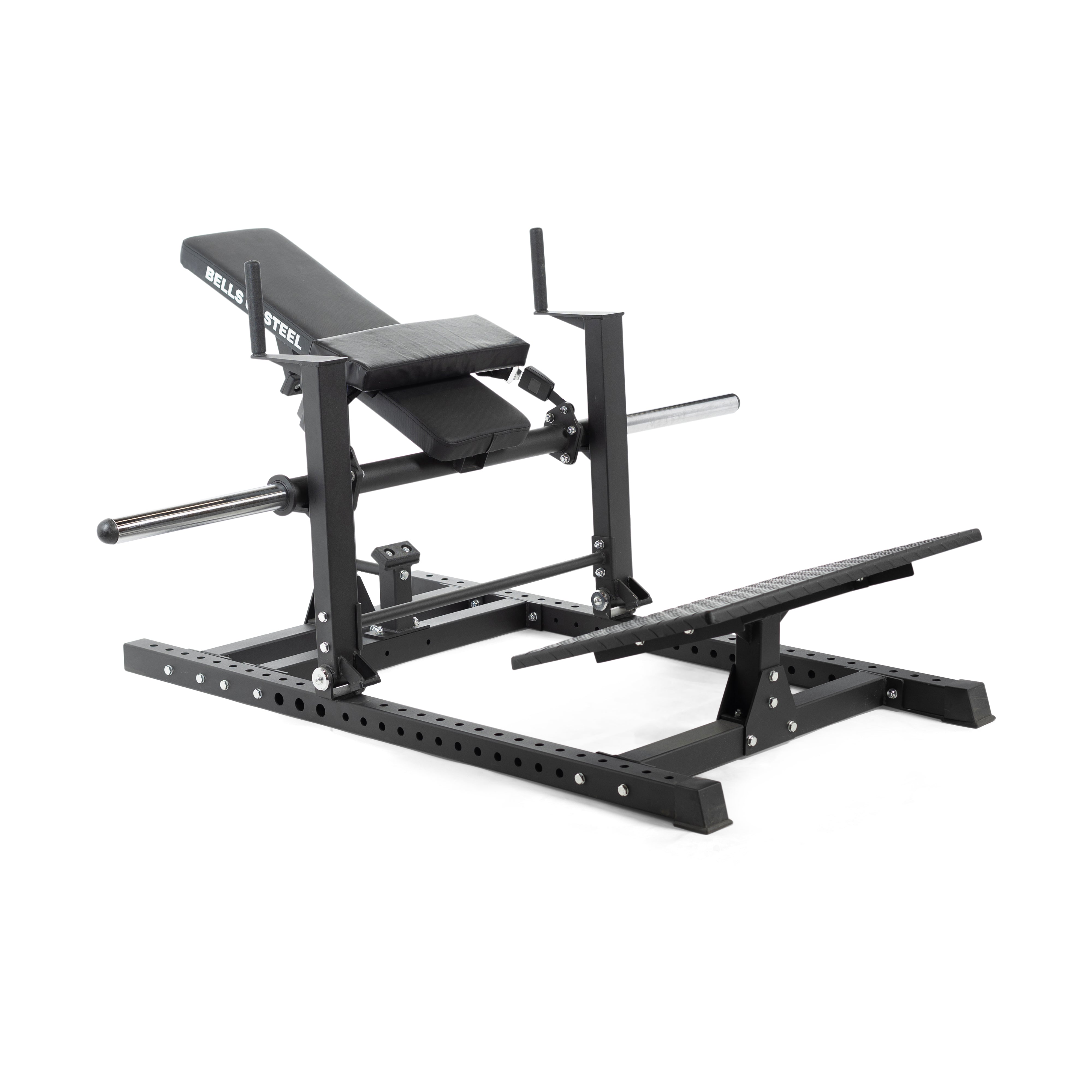
Mikolo Chest Fly Machine, PEC Fly and Reverse Delt Machine: plate-loaded, with dual overhead resistance cams, independent arms with 6 adjustable positions, arms lengthened in this version, a backrest set at 10 degrees, an adjustable seat, and band pegs. The frame is 50 × 50 mm 14-gauge steel, the listing gives a 400 lb capacity, and the dimensions are 68.5 × 46 × 64.4 in. Not stated: plate hole size, machine weight, the number of seat positions, and any bolt-down points.
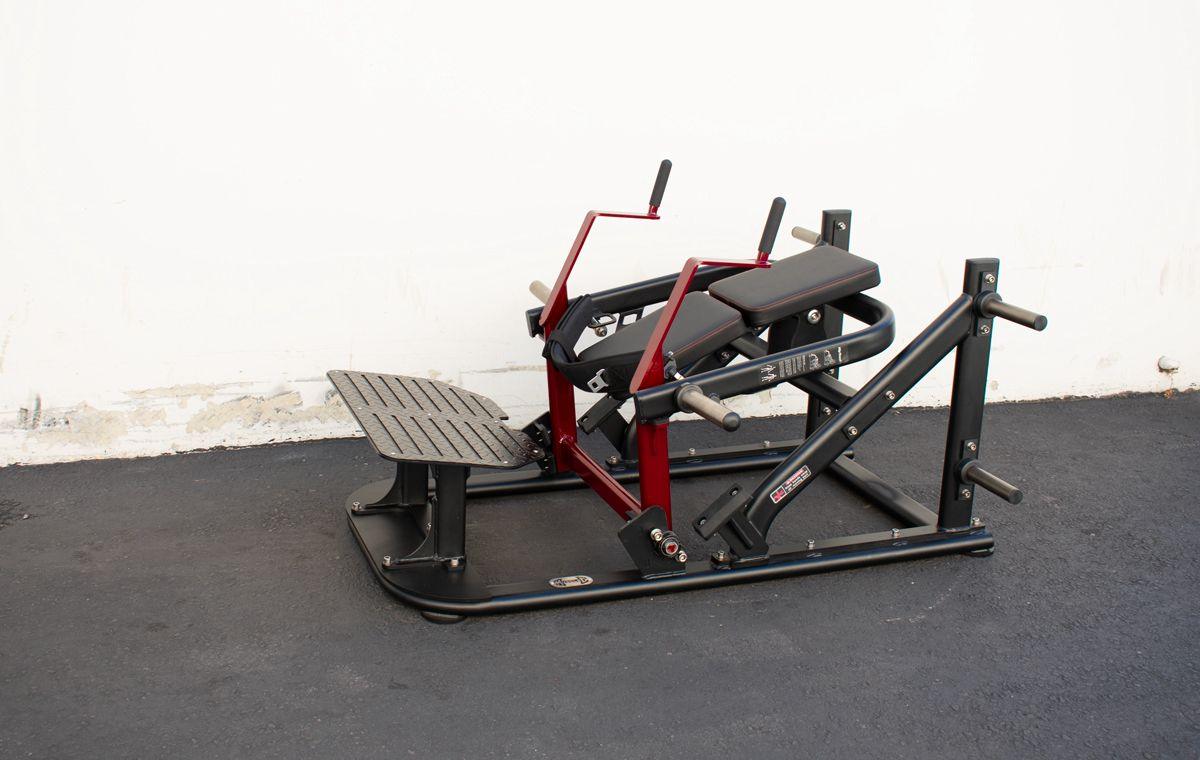
Titan Fitness Plate-Loaded PEC Fly and Reverse Delt Machine: plate-loaded on 10 in sleeves rated for up to 400 lb of Olympic plates. It has dual overhead cams, independent range-of-motion adjustments, 360-degree swivel handles with separate grips for pec and rear delt work, and an adjustable seat. The frame is 2 × 2 in 12-gauge steel with aluminum pulleys, fiberglass nylon cables, and rubber feet with bolt-down holes for concrete anchors. Titan lists 109 lb and 65 H × 32 L × 28 W in. It costs noticeably more than the Mikolo and GOIMU. Not stated: the number of arm positions, and compatibility with 1 in plates.
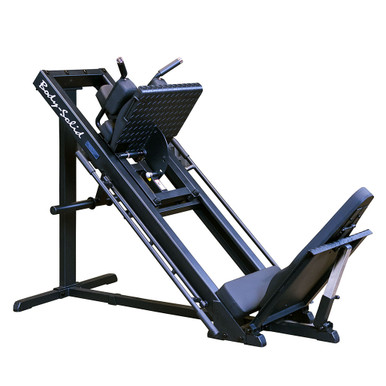
Body-Solid Pro Clubline Series 2 PEC Fly (S2PECX/2): selectorized, with a 235 lb weight stack, a 5-position seat, a variable-resistance cam, contoured arm pads, 2 × 3 in 12-gauge steel, and sealed bearings. The listing gives 58 × 58 × 72 in, 422 lb, and a full commercial rating, with a lifetime warranty on frame, welds, weight plates, and guide rods, 3 years on pulleys, bushings, bearings, and hardware, and 1 year on cables, upholstery, and grips. It sits in a price band of its own, several times above the rest.
GOIMU CF01-PRO Chest Fly, PEC Fly and Reverse Delt Machine: the listing reads almost line for line like the Mikolo's — dual overhead cams, 6 adjustable arm positions, lengthened arms, an adjustable seat, a 10-degree backrest, 50 × 50 mm 14-gauge steel, a 400 lb capacity, and 68.5 × 46 × 64.4 in. Two differences on paper: GOIMU states that it fits 1 in and 2 in plates, and its listing does not mention band pegs. It is priced slightly below the Mikolo.
VEVOR Chest Fly Machine (1 & 2-Inch Plates): plate-loaded for 1 in and 2 in plates, with a 6-position seat (25 mm per step, 40 to 50 cm high), a 5 cm seat cushion with non-slip leather, and fully welded 2 × 2 in carbon steel tubing 1.5 mm thick. The seat is rated for 450 lb. It is the cheapest of the five. Not stated: dimensions, machine weight, plate load, and the number of arm positions.
Steel gauge, floor anchoring, and stability
Steel gauge runs backwards: a lower number is thicker. As a rough guide, 12-gauge sheet steel is about 2.7 mm thick and 14-gauge about 1.9 mm. Titan (2 × 2 in) and Body-Solid (2 × 3 in) list 12-gauge; Mikolo and GOIMU list 14-gauge 50 × 50 mm tubing; VEVOR lists 2 × 2 in carbon steel tubing 1.5 mm thick, which is thinner than nominal 14-gauge. Thicker walls do not guarantee a steadier machine, because base width and geometry count as well, but wall thickness is the one stiffness clue a listing gives.
A pec deck is top-heavy when loaded: the plates hang high, and the user pulls the arms forward or pushes them back. Titan addresses this directly by listing rubber feet with bolt-down holes for concrete anchors. That matters precisely because its frame is light (109 lb) and its base small (32 × 28 in). If you cannot drill the floor — a rented flat, a finished floor, a slab you are not allowed to drill — a light, narrow frame is a weaker choice for heavy reverse flys. The Mikolo, GOIMU, and VEVOR listings do not mention bolt-down points. The Body-Solid relies on its own 422 lb.
Whatever you buy, put it on a level, hard surface or a firm rubber mat, load both sides evenly when you use both arms, and look over the cable ends and pulleys from time to time. Titan lists aluminum pulleys and fiberglass nylon cables and Body-Solid lists sealed bearings; the other three do not name their cable or pulley materials. Cables are wear parts: the Body-Solid listing covers them for 1 year, against a lifetime on the frame. The other four listings Pickly read state no warranty terms, so read the current listing before you buy.
Who should not buy a pec deck, and common buying mistakes
A pec deck does one job well: it lets you load a fly without balancing anything. If you already have a cable crossover or a functional trainer with two adjustable pulleys, you can do chest flys and reverse flys there at any height, and a pec deck mostly duplicates it. Spend the floor space on something else.
If you own an adjustable bench and dumbbells and train chest once or twice a week, dumbbell flys and bent-over reverse flys cover the same muscles. The machine's advantages are a fixed path, tension that does not fall away at the top of the movement the way a dumbbell's does, and the ease of working close to failure without a spotter. Those matter most to people doing a lot of isolation volume. For a general strength routine they are a small gain for a large frame that does one thing.
Skip it as well if you do not own plates and are not buying the stack machine; if your room cannot leave roughly 6 × 4 ft permanently clear, plus the swing of the arms (none of these folds); if you have a shoulder problem that flys aggravate, in which case have it assessed by a professional before buying equipment for it; or if you have not yet bought a rack, bar, and bench, which cover far more exercises for the floor they take.
Common mistakes among those who do buy: reading 450 lb in a title as a plate capacity; planning from “13.5 square feet” in place of the listed dimensions; ordering for 1 in plates without a listing that states 1 in compatibility; forgetting that a light frame wants anchoring; and choosing on price alone. The VEVOR is the cheapest of the five, and it is not the top pick because its listing leaves out the two numbers a buyer needs before ordering — the machine's dimensions and its plate load — and gives the thinnest tube wall here. It may suit you well; the listing simply does not let you check that before it arrives.
Frequently asked questions
Is a pec deck machine worth buying for a home gym?▼
Plate-loaded or weight-stack pec deck: which suits a home gym?▼
Can I use 1-inch standard plates on these machines?▼
How much space does a pec deck machine need?▼
Does a 400 lb capacity mean I can do flys with 400 lb?▼
Why is the cheapest machine, the VEVOR, not the top pick?▼
Do I need to bolt a pec deck to the floor?▼
Check the details of the products in this article
- Mikolo Chest Fly Machine, PEC Fly and Reverse Delt Machine (400 lb)$237.99Price as of 2026-11-27
- Titan Fitness Plate-Loaded PEC Fly and Reverse Delt Machine$569.99Price as of 2026-11-27
- Body-Solid Pro Clubline Series 2 PEC Fly (S2PECX/2)$2502Price as of 2026-11-27
- GOIMU CF01-PRO Chest Fly, PEC Fly and Reverse Delt Machine$229.99Price as of 2026-11-27
- VEVOR Chest Fly Machine (1 & 2-Inch Plates)$249.90Price as of 2026-11-27
Prices change. Check the retailer for the current price.
Comments & questions
Discussion happens on nattzy, our community forum. Sign in with Google to post — it takes a second.
Still deciding? Ask the community your own question — Post a question on nattzy ↗