Best Packing Cubes of 2026: 5 Sets Compared
This guide compares 5 options using published specifications, manufacturer documentation and independent reviews.
Quick answer
Eagle Creek's Pack-It Original is the packing cube set to buy for durability: 70D ripstop nylon, more than twice the denier of the ultralight competition, YKK zippers that draw very few failure reports, and a mesh top panel so you can see contents without opening. Peak Design's cubes are the premium pick, with a compression strap and 30D nylon at 68 g for the large, CALPAK Compression Cubes suit overpackers, and the Veken 6-Set is the budget option at $25-$35.
This comparison is desk research. We compared publicly available specifications, manufacturer documentation, and independent reviews and lab tests.

Eagle Creek Pack-It Original Cubes
No partner store here — this opens an Amazon search.
| Product | Price | Link |
|---|---|---|
| $45〜$65Reference price | No partner store here — this opens an Amazon search. | |
| $70〜$100Reference price | No partner store here — this opens an Amazon search. | |
| $50〜$70Reference price | No partner store here — this opens an Amazon search. | |
| $25〜$35Reference price | No partner store here — this opens an Amazon search. | |
| $55〜$75Reference price | No partner store here — this opens an Amazon search. |
Top picks
Related articles

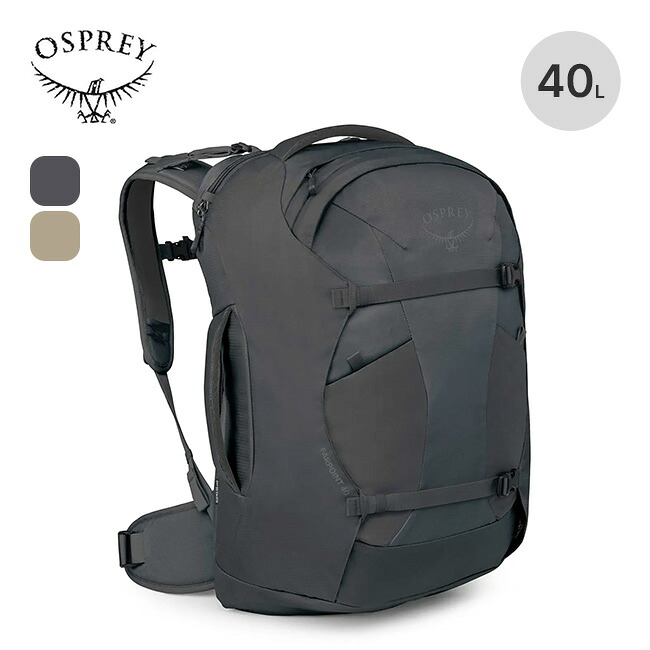
Backed by Eagle Creek's no-questions lifetime warranty; 3-piece S/M/L set in 70D ripstop nylon. Ships from eaglecreek.com and major retailers.

Ultralight 30D nylon with compression strap; S/M/L sizes sold individually or as a bundle at peakdesign.com. Integrates with Peak Design Travel system.
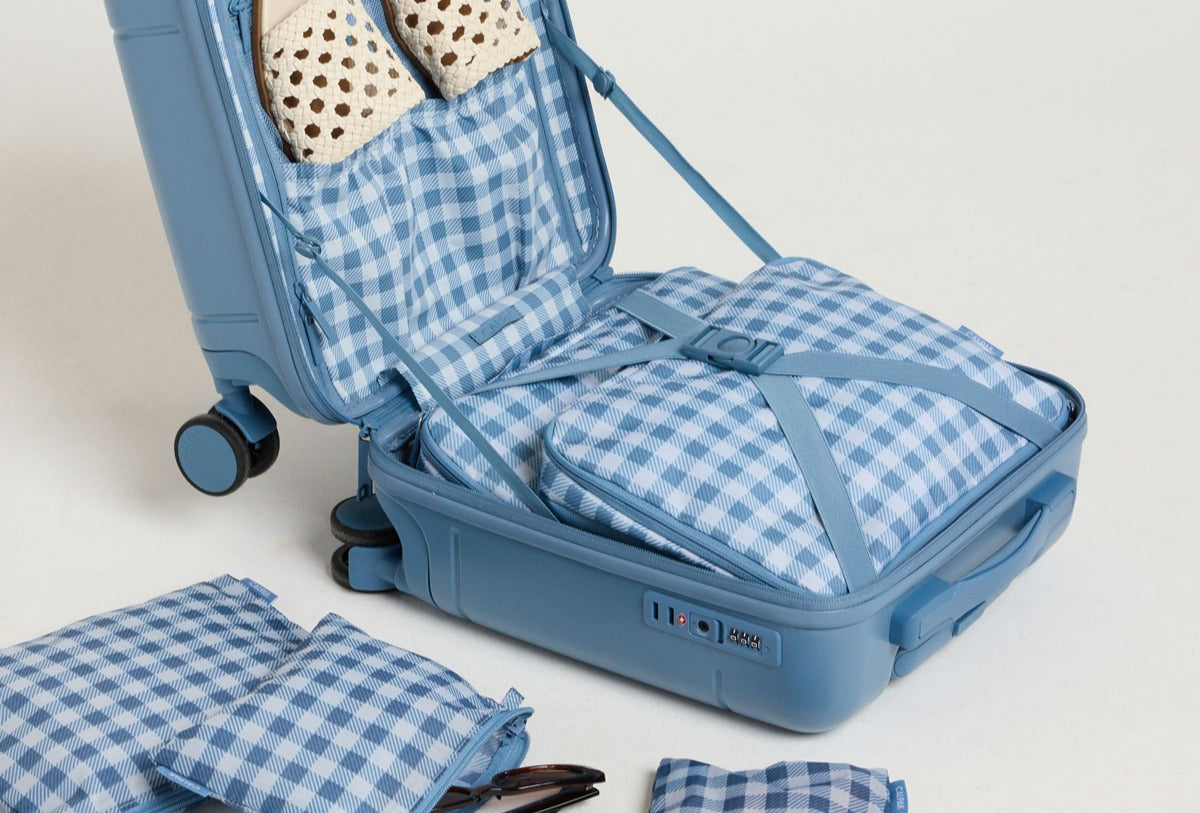
5-piece double-zipper compression set; up to 38% volume reduction; fashion-forward colorways coordinated with CALPAK luggage. Available at calpaktravel.com.
Subscribe to our newsletter
Occasional updates and new releases — no spam.
:max_bytes(150000):strip_icc()/veken-6-set-packing-cubes-for-suitcases-11c4ea1168e849c1ac1503b89393c2ef.jpg)
Amazon bestseller 6-piece set (XL/L/M/S + shoe bag + laundry bag) in machine-washable nylon mesh; under $35 in most colorways.

Slim-profile 3-piece set precision-sized for Tortuga Setout and Outbreaker backpacks; lightest set here at a listed 110 g total. Available at tortugabackpacks.com.
How we compared
Packing cubes live or die on three things: compression ratio, zipper durability, and how well they use dead space inside a bag. A cube that saves 20% volume but weighs 400 g empty is a bad trade. One that zips beautifully for 10 trips then splits on trip 11 is worse.
Each set here is compared on the same terms: published fabric denier and empty weight, the compression mechanism the maker documents, and the pattern of long-term owner reports on zippers, seams, and warranty handling.
| Product | Price | Key Strength | Rating | Verdict | |---|---|---|---|---| | Eagle Creek Pack-It Original | $30–$55 | Durability + warranty | 4.5/5 | Best all-rounder | | Peak Design Packing Cubes | $69–$99 | Compression + integration | 4.7/5 | Best premium | | CALPAK Compression Cubes | $58–$70 | Volume reduction | 4.3/5 | Best for overpacking | | Veken 6-Set | $25–$35 | Value per piece | 4.1/5 | Best budget pick | | Tortuga Setout Cubes | $39–$55 | Backpack fit precision | 4.4/5 | Best for backpackers |
Eagle Creek Pack-It Original — Best All-Rounder
Eagle Creek has been making these cubes since 2005, and the Pack-It Original ($30–$55 for the 3-piece S/M/L set) still outperforms newer entrants on raw durability. The ripstop nylon is 70D — noticeably thicker than the 30D fabric on Peak Design and Tortuga — and the YKK zippers draw very few failure complaints in long-term owner reviews.
The mesh top panel on each cube is the signature feature. You can see what's inside without opening — which sounds trivial until you're digging through a dark overhead bin at 6 AM. Eagle Creek's Pack-It grid system means cubes stack predictably inside a roller bag, with the handles oriented consistently for easy extraction.
Volume compression is minimal — maybe 8–10% with a firm pack. The Original cubes don't have a compression zipper, so what you stuff in is roughly what you get. For travelers who fold rather than roll, the flat profile is actually ideal.
The lifetime warranty matters more than it sounds. Owners report Eagle Creek honors it on cubes wrecked by baggage handling, issuing a replacement after a photo submission. The tradeoff: the 3-piece set is heavier than competitors at 185 g empty, and at $50 for the full set, it's not cheap. The color range is also conservative; if matching your luggage aesthetic matters, CALPAK wins that.
Peak Design Packing Cubes — Best Premium Option
Peak Design sells the most expensive cubes in this comparison at $69 for a single large or $99 for the small/medium/large bundle. That price reflects 30D ultralight nylon (the cubes weigh 68 g for the large, compared to 95 g for Eagle Creek's equivalent), a compression strap across the main panel, and a design that integrates with Peak Design's travel backpack ecosystem via anchor loops.
The compression strap is the differentiator, and the space it frees is real: owners packing a 45L backpack report that swapping three standard cubes for three Peak Design cubes leaves enough room for a camera bag insert.
Across months of gear-heavy photography trips, owners report the 30D nylon holding up without abrasion damage and the zippers staying smooth after heavy open/close use. Peak Design's lifetime warranty covers manufacturing defects but explicitly excludes "normal wear," which is a weaker guarantee than Eagle Creek's no-questions policy.
At $99 for a set, you're paying a 80% premium over Eagle Creek for roughly 28% better compression. Whether that trade makes sense depends entirely on how weight-obsessed you are. The cubes are also designed with photographers and gear-focused travelers in mind — if you're packing mostly clothes, the compression benefit is real but the anchor integration is irrelevant.
CALPAK Compression Cubes — Best for Overpacking
CALPAK's 5-piece compression set ($58–$70) targets a specific traveler: someone who chronically overpacks and needs maximum volume reduction without moving to hard-sided luggage. The double-zipper compression system — one zipper to close the main compartment, a second zipper that cinches the cube flat — delivers the highest volume reduction of any set here — roughly a third.
The 5-piece configuration (2 large, 2 medium, 1 small) covers most trip lengths more completely than the 3-piece sets from Eagle Creek and Peak Design. Owners report fitting a 7-day trip into a single 21-inch carry-on using only the two large CALPAK cubes compressed — something uncompressed alternatives do not manage.
CALPAK's design language is deliberately aesthetic. The cubes come in fashion-forward colors (sage, dusty rose, navy, cream) and are clearly designed to coordinate with CALPAK's luggage line. That attention to looks costs something in function: the fabric is a lighter water-resistant ripstop, and owners describe it as less durable than Eagle Creek's under repeated stress. Minor fraying at the corner seams of the large cube is the most common long-term complaint.
The compression zippers require two hands and a firm pull — not ideal when you're repacking at an airport gate. And CALPAK's warranty is one year, compared to Eagle Creek's lifetime coverage. For occasional travelers who want to squeeze a week's wardrobe into carry-on size, these are excellent. For road warriors doing 50+ trips a year, the durability questions add up.
Veken 6-Set Packing Cubes — Best Budget Pick
At $25–$35 for a 6-piece set that includes an XL, L, M, S, shoe bag, and laundry bag, Veken's Amazon bestseller set redefines the value floor for packing cubes. The shoe bag alone — a zippered compartment sold separately for around $12 elsewhere — makes the math work even if the other cubes are merely adequate.
The nylon mesh construction is lighter than woven fabric alternatives. The large cube weighs 58 g empty — 37 g lighter than the comparable Eagle Creek. For ultralight travelers counting grams, that's meaningful across a full set. The mesh also means you can see contents without opening, which is the one feature where Veken matches the more expensive options.
Machine washability is a genuine perk. Owners report running the full set through a cold delicate cycle after muddy trips with no damage — a casual cleaning approach Eagle Creek and Peak Design cubes don't tolerate as well.
The zippers are where the value compromise shows. Sticky zipper pulls that need both hands to operate are a recurring theme in owner reviews. The set also ships in 20+ colors, which is great, but the color coding between sizes is inconsistent — in a dim bag it is easy to grab the wrong size until the slight shape differences become familiar. No warranty information is clearly stated, which matters when you're deciding between this and a $50 Eagle Creek set for the long term.
Tortuga Setout Packing Cubes — Best for Backpack Travelers
Tortuga designed these cubes ($39–$55 for the 3-piece set) to the exact internal dimensions of their Setout and Outbreaker backpacks. The large cube measures 32 x 22 x 8 cm — sized to occupy the full width of a Setout 45L's main compartment with zero wasted gap space. If you travel with a Tortuga bag, this precision fit is genuinely satisfying: the cubes slide in and out cleanly, with no shifting in transit.
The 20D ripstop nylon is the lightest fabric in this comparison. The 3-piece set totals 110 g — 75 g lighter than Eagle Creek's 3-piece. For backpackers doing multi-week trips where base weight matters, that adds up. The slim profile (8 cm depth versus Eagle Creek's 10 cm on the medium) also stacks more efficiently in a panel-loading bag.
Tortuga's cubes work in any bag, not just Tortuga packs — but the sizing logic shows its limits outside the target use case. The large cube fits cleanly in 45L backpacks but sits awkwardly in a 21-inch roller's main compartment, leaving dead space at the sides. The set covers 3 sizes (S/M/L) with no shoe bag or laundry bag included at the $39–$55 price point.
Compression is minimal — Tortuga uses a single zipper with no secondary compression panel. Volume reduction is minimal at an estimated 6–8%, similar to Eagle Creek. The brand offers a 1-year warranty, shorter than Eagle Creek's lifetime coverage. These cubes shine specifically for carry-on backpack travel; for checked luggage or roller bags, the fit advantage disappears.
Which Packing Cubes Should You Actually Buy?
Across the five sets in this comparison, the Eagle Creek Pack-It Originals are the pick for everyday use. The combination of durability, lifetime warranty, and the mesh visibility panel covers 90% of travel scenarios without overthinking. They cost more than Veken but less than Peak Design, and they'll last long enough that cost-per-trip drops below $1 within 2 years of regular use.
Buy Peak Design if you travel with a camera system or obsess over packing efficiency in a backpack — the 28% compression is real, and the weight savings matter if you're counting grams. Buy CALPAK if you consistently struggle to close your suitcase and need the maximum compression assist. Buy Veken if you travel 3–4 times a year and want to see whether packing cubes improve your system before committing to a premium set. And buy Tortuga specifically if you own a Tortuga backpack — the dimension engineering is too precise to ignore.
Frequently asked questions
Do packing cubes actually save space in a suitcase?▼
Are packing cubes worth it for a carry-on-only traveler?▼
How many packing cubes do I need for a 7-day trip?▼
Can I wash packing cubes in a washing machine?▼
What size packing cubes fit in a 21-inch carry-on?▼
Peak Design cubes vs Eagle Creek — which is better?▼
Are there packing cubes that work specifically with Tortuga backpacks?▼
What's the difference between compression packing cubes and regular ones?▼
Do packing cubes help with wrinkled clothes?▼
Are packing cubes allowed as carry-on?▼
Prices change. Check the retailer for the current price.
Comments & questions
Discussion happens on nattzy, our community forum. Sign in with Google to post — it takes a second.


