Best Luggage 2026: 5 Carry-On Picks Compared
Five carry-on suitcases from $75 to $295, covering the range from budget polycarbonate spinners to precision-machined aluminum options that cost more than some flights. Carry-on compliance and weight distribution matter more than total capacity.
Quick answer
For most travelers, the Samsonite Omni PC 20-inch at around $110 is the pick — proven polycarbonate shell durability in a carry-on-compliant spinner that simply works. The Away Carry-On uses Hinomoto wheels and a compression interior for a better ownership experience, Travelpro's Platinum Elite is built for 200+ travel days a year, the Rimowa Essential is the 5.5 lb aluminum luxury pick, and AmazonBasics covers the basics at $75.
We assessed each option on coverage breadth, real-traveler review consistency, value vs alternatives, customer service responsiveness, and limitations buried in fine print.

Away The Carry-On
Best Ownership Experience: The Away Carry-On is the bag frequent travelers reach for when ownership experience matters as much as raw function. Hinomoto spinner wheels — the same Japanese supplier used by several premium luggage brands — track noticeably smoother than the budget alternatives, and the difference becomes obvious on long terminal walks.
Top picks ↓| Product | Price | Link |
|---|---|---|
| $245〜$395Reference price | ||
| $69.99〜$89.75Reference price | ||
| — | ||
| $760〜$900Reference price | ||
| $84.47〜$89.75Reference price |
| Product | Dimensions | Capacity | Item weight | Shell | Wheels | Warranty | Carry on compliant |
|---|---|---|---|---|---|---|---|
| Away The Carry-On | 21.7 × 14.4 × 9 in (55.1 × 36.6 × 22.9 cm) | 41 L | 7.5 lb (3.4 kg) | hardside polycarbonate | spinner (4) | Limited lifetime (LifetimeCare): complimentary repairs for life; free repairs + up to 1 replacement in first 5 years | Yes (cabin size for most major airlines) |
| Samsonite Omni PC 20" Hardside Spinner | 22 × 15 × 9.5 in overall (packing 19 × 14.5 × 9.5 in) | — | 6.81 lb | hardside polycarbonate | spinner (4) | 10-year limited (defects in materials/workmanship) | Borderline: marketed as carry-on, but 22 × 15 × 9.5 in overall exceeds the strict 22 × 14 × 9 in limit of some airlines |
| Travelpro Platinum Elite 21" Softside Spinner | 21 × 14 × 9 in case (23.5 × 14.5 × 9 in overall incl. wheels/handles) | — | 7.8 lb | softside | spinner (8 wheels / 4 dual MagnaTrac) | Built for a Lifetime limited warranty + Trusted Companion airline-damage repair coverage | Yes (sizer-bin tested for overhead bins on most major US airlines) |
| Rimowa Essential 20" Carry-On | 55 × 39 × 23 cm (21.7 × 15.4 × 9.1 in) | 36 L | 3.2 kg (7.1 lb) | hardside polycarbonate | spinner (4 dual multiwheel) | Lifetime guarantee | Yes (cabin size) |
| Amazon Basics Hardside Spinner 20" | 20 × 14 × 9 in (incl. wheels; overall ~21.5 × 14.8 × 9.5 in) | 36 L | 6.6 lb | hardside (ABS plastic) | spinner (4 double) | 3-year limited | Yes (carry-on/cabin size for most major airlines) |
Top picks
Related articles


Premium polycarbonate pick at $295 — Hinomoto spinner wheels, clean interior with compression system and laundry bag, TSA combination lock that captures both zipper sliders. Heavier than the Rimowa at 7.4 lbs. Worth the price for frequent travelers who value the ownership experience; hard to justify for 2-3 trips per year.
The Away Carry-On is the bag frequent travelers reach for when ownership experience matters as much as raw function. Hinomoto spinner wheels — the same Japanese supplier used by several premium luggage brands — track noticeably smoother than the budget alternatives, and the difference becomes obvious on long terminal walks. The interior includes a compression system and a washable laundry bag, and the integrated TSA combination lock captures both zipper sliders to defeat the pen-attack method of carry-on theft. At 7.4 lbs the polycarbonate shell is on the heavier side, but it absorbs gate-check abuse by flexing rather than cracking. Worth the $295 if you fly often; hard to justify against the Samsonite if you don't.
Pros
- ✓Hinomoto spinner wheels track smoothly over long terminal walks
- ✓Integrated TSA lock captures both zipper sliders against pen attacks
- ✓Compression system and washable laundry bag included inside
- ✓Polycarbonate shell flexes under impact rather than cracking
Cons
- ✗7.4 lbs empty is heavier than Samsonite or Rimowa equivalents
- ✗$295 hard to justify functionally against budget alternatives
| Dimensions | 21.7 × 14.4 × 9 in (55.1 × 36.6 × 22.9 cm) |
| Capacity | 41 L |
| Item weight | 7.5 lb (3.4 kg) |
| Shell | hardside polycarbonate |
| Wheels | spinner (4) |
| Warranty | Limited lifetime (LifetimeCare): complimentary repairs for life; free repairs + up to 1 replacement in first 5 years |
| Carry on compliant | Yes (cabin size for most major airlines) |

Best value recommendation at $110 — Samsonite's Macro-Tex polycarbonate shell has decades of proven durability. Multi-directional spinners, TSA lock, basic packing system. Not as refined as the Away or Travelpro, but the shell performance at this price is hard to beat. The pragmatic choice.
The Samsonite Omni PC at around $110 is the pragmatic recommendation when you want a hardshell carry-on that just works. Samsonite's polycarbonate shell durability is demonstrated across decades of product and millions of units, and the Macro-Tex shell pattern resists scratching better than smooth polycarbonate surfaces. Multi-directional spinners track adequately, an integrated TSA combination lock secures the zippers, and a basic packing system organizes the interior. At 6.7 lbs it's lighter than the Away while costing roughly a third as much. The spinner quality doesn't match the Travelpro or Rimowa, and the interior is functional rather than designed — but for the price, the shell performance is hard to beat.
Pros
- ✓Macro-Tex polycarbonate shell resists scratching better than smooth shells
- ✓Decades of proven Samsonite durability at this price point
- ✓6.7 lbs empty leaves room before international weight limits
- ✓Multi-directional spinners and integrated TSA lock included
Cons
- ✗Spinner wheel feel is noticeably less premium than Hinomoto units
- ✗Interior is functional with limited organizational depth
| Dimensions | 22 × 15 × 9.5 in overall (packing 19 × 14.5 × 9.5 in) |
| Item weight | 6.81 lb |
| Shell | hardside polycarbonate |
| Wheels | spinner (4) |
| Warranty | 10-year limited (defects in materials/workmanship) |
| Carry on compliant | Borderline: marketed as carry-on, but 22 × 15 × 9.5 in overall exceeds the strict 22 × 14 × 9 in limit of some airlines |
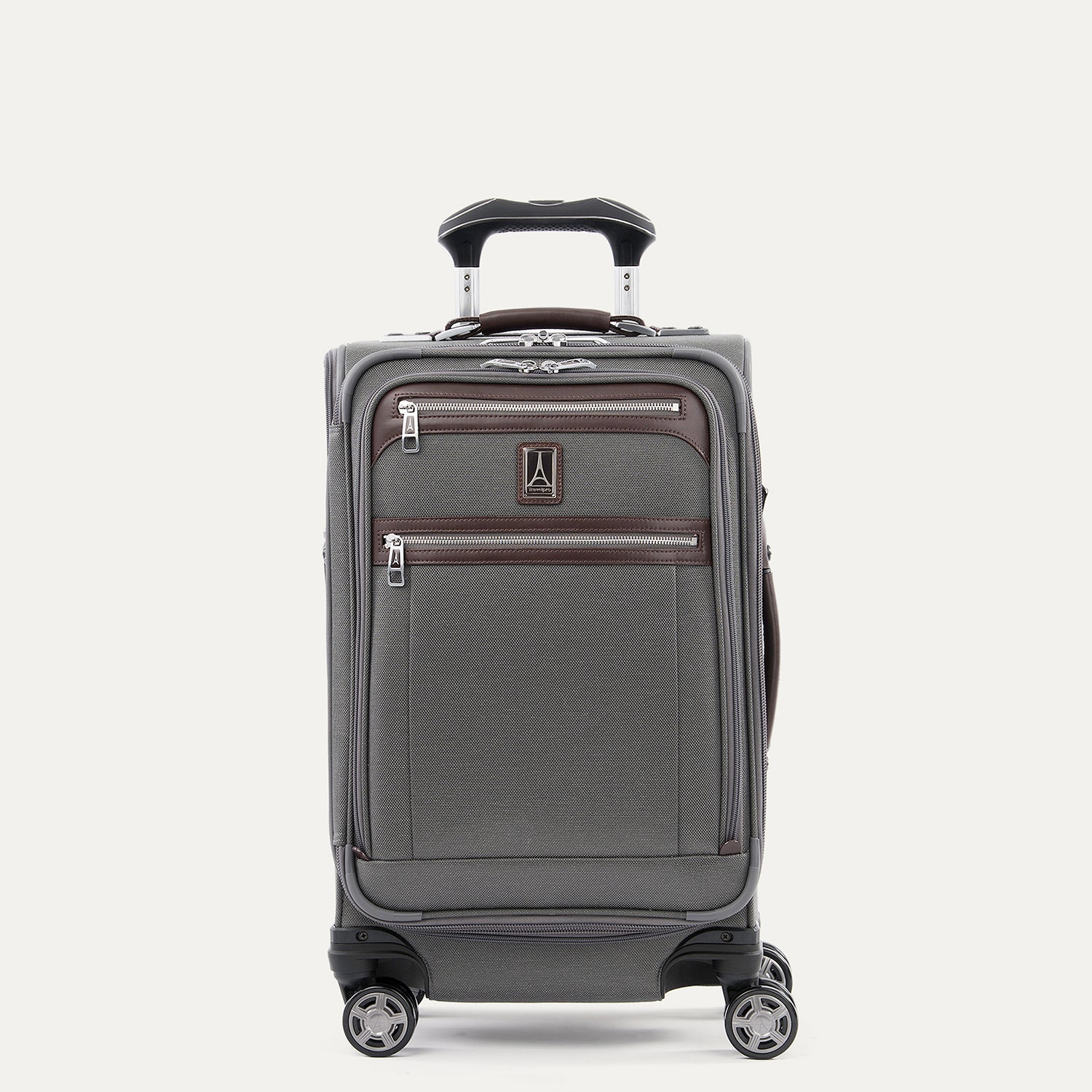
Professional frequent-flyer pick at $250 — Duraguard spinner system, PowerScope extension handle with multiple stops, self-repairing YKK zippers, 10-year warranty. Softshell exterior. The bag flight attendants actually use, built for 200+ travel days per year. Higher price than Samsonite for noticeably better wheel and handle quality.
The Travelpro Platinum Elite is the bag flight attendants actually use, and the price reflects construction built for 200+ travel days per year. The Duraguard-coated spinner system, PowerScope extension handle with multiple stops, and self-repairing YKK zippers are the components that fail first on cheaper bags — Travelpro engineers them as wear parts and backs them with a 10-year warranty. Unlike the other picks here, the exterior is softshell rather than hardshell, which means it's more forgiving when an overhead bin runs tight but offers less impact protection for fragile contents. At $250 it costs more than the Samsonite without the brand recognition outside the travel community, but for high-volume travelers the wheel and handle quality earn the premium.
Pros
- ✓Duraguard-coated spinners built for daily flight crew workloads
- ✓PowerScope handle with multiple stops and 10-year warranty
- ✓Self-repairing YKK zippers handle thousands of cycles
- ✓Softshell exterior squeezes into tight overhead bins
Cons
- ✗Softshell offers less protection for fragile contents than hardshell
- ✗Limited brand recognition outside the travel community
| Dimensions | 21 × 14 × 9 in case (23.5 × 14.5 × 9 in overall incl. wheels/handles) |
| Item weight | 7.8 lb |
| Shell | softside |
| Wheels | spinner (8 wheels / 4 dual MagnaTrac) |
| Warranty | Built for a Lifetime limited warranty + Trusted Companion airline-damage repair coverage |
| Carry on compliant | Yes (sizer-bin tested for overhead bins on most major US airlines) |
Subscribe to our newsletter
Occasional updates and new releases — no spam.
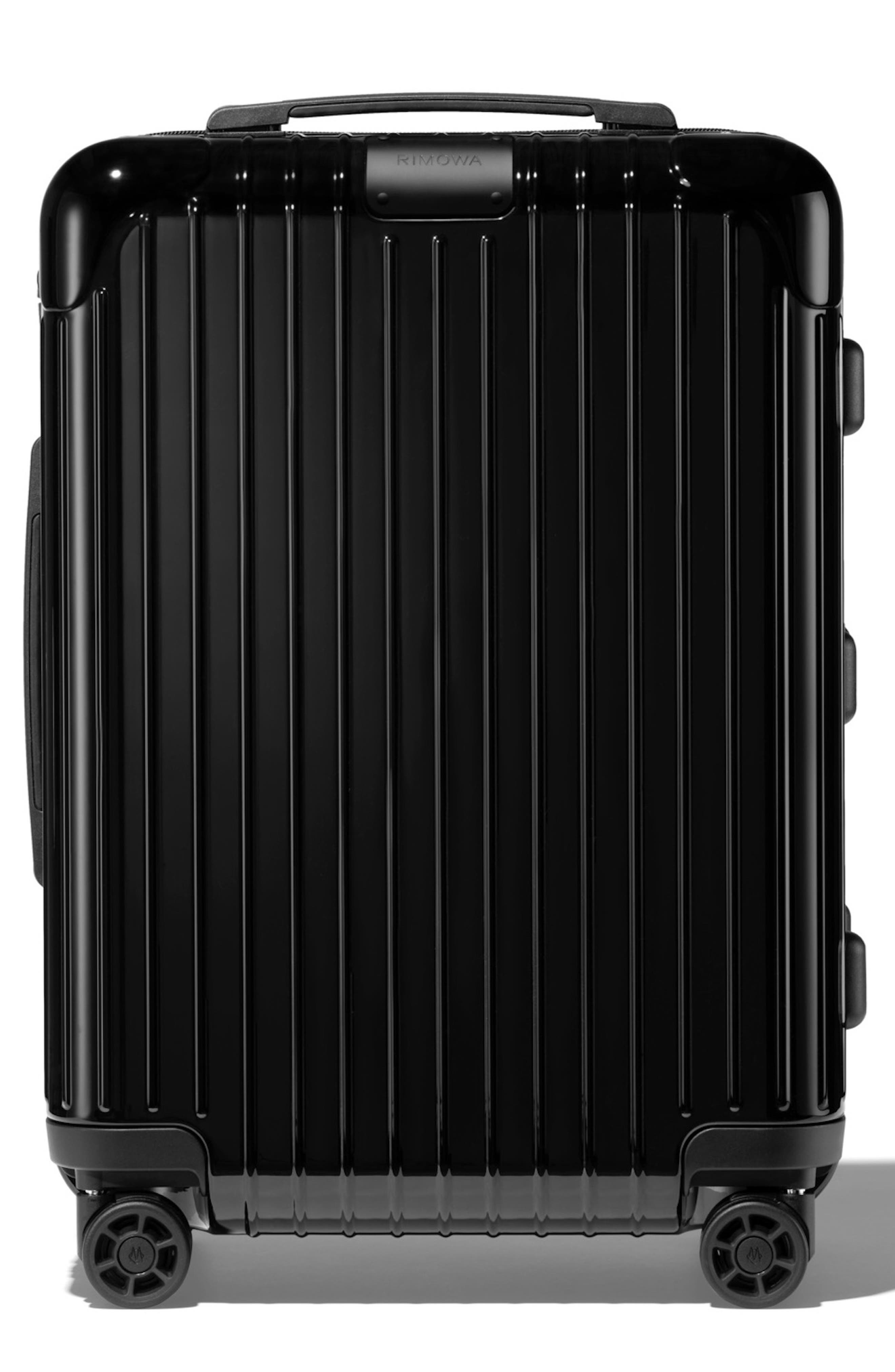
Luxury minimalist pick at $700 — lightest in this comparison at 5.5 lbs, best TSA lock mechanism, polycarbonate construction with the ribbed aesthetic Rimowa is known for. 10-year warranty Rimowa honors. Impossible to justify on function alone vs Samsonite; justified only if aesthetics and brand identity are part of the purchase decision.
The Rimowa Essential is the carry-on you buy when you've already decided what you want to spend and you want the best-executed version of the category. At 5.5 lbs it's the lightest bag in this comparison despite the premium price — the ribbed polycarbonate construction mimics the aluminum aesthetic Rimowa is known for while keeping weight down. The TSA lock mechanism is the best-engineered of any bag here, and Rimowa's 10-year warranty is actually honored across global service centers. The honest reality: at roughly $700 it's functionally impossible to justify against a $110 Samsonite unless aesthetics and brand identity matter to you. The ribbed grooves also catch grime, and the price tag turns it into the bag you worry about.
Pros
- ✓5.5 lbs — lightest bag in this comparison despite premium price
- ✓Best-executed TSA lock mechanism with smooth reset process
- ✓10-year warranty Rimowa actually honors at global service centers
- ✓Polycarbonate ribbed shell maintains appearance through extended use
Cons
- ✗$700 impossible to justify against Samsonite on function alone
- ✗Ribbed grooves catch grime that's hard to clean out
| Dimensions | 55 × 39 × 23 cm (21.7 × 15.4 × 9.1 in) |
| Capacity | 36 L |
| Item weight | 3.2 kg (7.1 lb) |
| Shell | hardside polycarbonate |
| Wheels | spinner (4 dual multiwheel) |
| Warranty | Lifetime guarantee |
| Carry on compliant | Yes (cabin size) |

Budget baseline at $75 — passes most airline size limits, dual spinner wheels, integrated TSA lock, polycarbonate shell. Works for 5-10 trips per year. Wheel quality degrades within a year of regular use; shell is thinner polycarbonate than premium alternatives; no interior organization features. Right for occasional travelers who treat luggage as a commodity.
The AmazonBasics Hardside Spinner at around $75 covers the basics without pretending to be more. The 20 × 13.5 × 8.5 inch external dimensions comply with most major airline carry-on limits including the more restrictive Spirit and Frontier gauges, dual spinner wheels handle smooth airport floors, and an integrated TSA combination lock prevents opportunistic access. The polycarbonate shell is thinner than the premium options, which means it dents more easily under impact, and the wheel quality typically degrades within a year of weekly use. For someone who treats luggage as a commodity and travels 5-10 times per year, replacing the bag every few years at this price still costs less than a single Away purchase.
Pros
- ✓Sub-$75 price clears the budget bar for occasional travelers
- ✓Compact 20 × 13.5 × 8.5 inch external size meets Spirit/Frontier limits
- ✓Integrated TSA lock and dual spinners cover the basics
- ✓Affordable to replace if damaged in transit
Cons
- ✗Wheel quality degrades within a year of weekly use
- ✗Shell is thinner polycarbonate and dents more easily
| Dimensions | 20 × 14 × 9 in (incl. wheels; overall ~21.5 × 14.8 × 9.5 in) |
| Capacity | 36 L |
| Item weight | 6.6 lb |
| Shell | hardside (ABS plastic) |
| Wheels | spinner (4 double) |
| Warranty | 3-year limited |
| Carry on compliant | Yes (carry-on/cabin size for most major airlines) |
Which one is right for you?
For frequent travelers who care about the bag
Away The Carry-On
Hinomoto spinners, compression interior, and laundry bag make daily use noticeably more pleasant.
For pragmatic travelers wanting durability
Samsonite Omni PC 20" Hardside Spinner
Macro-Tex polycarbonate shell delivers Samsonite's decades of proven durability at roughly $110.
For 100+ flights per year
Travelpro Platinum Elite 21" Softside Spinner
Duraguard spinners and self-repairing zippers are engineered for flight crew workloads with a 10-year warranty.
For luxury-minded buyers
Rimowa Essential 20" Carry-On
Lightest bag here at 5.5 lbs with best-executed TSA lock — buy it for the experience, not the spec sheet.
For 5-10 trips per year on a budget
Amazon Basics Hardside Spinner 20"
Sub-$75 price and compact 20-inch external size clear airline limits without locking up real money.
Hardshell vs softshell: what actually matters for carry-on luggage
Hardshell carry-ons dominate the category for good reason: they protect fragile contents better, repel rain, and compress to a predictable volume that passes size gauges consistently. A softshell bag with external pockets may offer more total volume, but it compresses unpredictably when stuffed — the same bag that measured 22 inches empty can measure 23 inches packed, which fails American Airlines' overhead bin gauge at certain regional airports. Hardshells eliminate that uncertainty. The trade-off is packing flexibility: a hardshell's rigid shell means you commit to the clamshell's volume; you can't tuck overflow items into exterior pockets.
Within hardshell carry-ons, the material choice matters. Polycarbonate (Away, Samsonite Omni PC, AmazonBasics) is the dominant material: light, impact-resistant, and flex-durable. The shell absorbs impacts by flexing rather than cracking, which means a polycarbonate bag survives gate check abuse better than aluminum. Aluminum (Rimowa Essential is actually polycarbonate, but the brand's aluminum Classic line is the reference) is stiffer and heavier — it dents rather than flexes, which means surface damage is cosmetic rather than structural, but the weight penalty is real. The Rimowa Essential uses polycarbonate with a ribbed design that mimics the aluminum aesthetic while keeping weight down.
The practical hierarchy for most travelers: polycarbonate hardshell is the correct material for carry-on use. It's lighter than aluminum and more durable under the kind of abuse carry-on bags receive — tight overhead bins, gate staff compressing bags to fit, occasional drops on hard floors.
Spinner wheels: where cheap luggage fails first
The spinner wheel assembly is the component that distinguishes a $75 suitcase from a $295 one more than any other single factor. Cheap spinner wheels use a single-bearing plastic axle that develops lateral play after 6-12 months of regular use. When a wheel develops play, the bag doesn't track straight — it lists to one side, which means you're steering it rather than guiding it. On a long terminal walk this is the difference between arriving fresh and arriving tired.
Quality spinner wheels use a dual-bearing assembly with a low-profile wheel housing that keeps the wheel close to the bag body. This matters because a wider wheel housing means the bag sits wider on the conveyor belt and is more likely to tip off angled surfaces. The Travelpro Platinum Elite uses Duraguard coating on its wheels and a precision spinner mechanism that the brand has developed through its flight crew market — the standard for this category is set by what flight attendants use daily, and Travelpro's position in that market is genuine, not marketing.
The Away carry-on uses a Hinomoto spinner wheel — a Japanese manufacturer used by several premium luggage brands. The consistency of the wheel action is noticeably different from budget alternatives. The Samsonite Omni PC uses a multi-directional spinner that tracks well but doesn't have the premium feel of the Hinomoto units. The AmazonBasics spinner uses a basic dual-wheel assembly that works adequately for occasional use but shows wear quickly under heavy rotation.
TSA locks: built-in vs. separate, and why it matters
TSA-approved locks allow TSA agents to open your bag without breaking the lock — they carry master keys for TSA-approved locks. Non-TSA locks will be cut off if TSA needs to inspect your bag. All five bags in this comparison include integrated TSA-approved combination locks, which is the correct approach for carry-on luggage: an integrated lock secures the zipper pulls or shell closure in a way that a clip-on padlock cannot match, and there's nothing to lose.
The quality distinction between integrated TSA locks is the combination reset mechanism. Cheap locks require an awkward paper-clip procedure to reset the combination. Away's combination lock uses a straightforward reset process that takes under 30 seconds with the included instructions. The Rimowa Essential's TSA lock is similarly well-executed. The Samsonite Omni PC uses a standard TSA-approved lock that functions correctly but has a smaller dial that some travelers find harder to operate with cold fingers.
One frequently overlooked point: TSA locks do not prevent theft by determined bad actors — they prevent casual opportunistic access. The real value of a good integrated lock is that it keeps the zipper sliders secured together so they can't be pulled open with a pen, which is how most carry-on theft actually occurs. The Away and Rimowa locks address this directly with a design that captures both sliders in the lock housing.
Airline carry-on size rules: what the measurements actually mean
The published carry-on size limit for most major US carriers is 22 × 14 × 9 inches (56 × 36 × 23 cm) including wheels and handles. Most carry-on suitcases are measured without wheels and handles to reach their published dimensions — a bag listed as '20 inches' will typically measure 22-22.5 inches to the top of the extended handle. The handles and wheels add roughly 2-3 inches to the height and 1-2 inches to the depth. What matters is the overall external dimension when the bag is loaded onto the size gauge at the gate.
The most restrictive US domestic carriers for carry-on size enforcement are Spirit and Frontier, which have more aggressively enforced their personal item limits in recent years. If you regularly fly Spirit or Frontier, the AmazonBasics bag at 20 × 13.5 × 8.5 inches (51 × 34 × 22 cm) and the Samsonite Omni PC at 21.5 × 15 × 10 inches are your most reliable options for compliance — the Away at 22.4 × 14.7 × 9.6 inches including wheels pushes the limit on some gauge configurations.
International business: most European full-service carriers (Lufthansa, British Airways, Air France) use similar size limits to US majors. Budget European carriers are more restrictive. Ryanair's cabin bag policy allows 55 × 40 × 20 cm — the 20 cm depth dimension rules out most suitcases in this comparison, which run 22-24 cm in depth. If your itinerary includes Ryanair, you need to check the checked baggage option or use their priority boarding cabin bag allowance, not the free cabin bag.
Weight: the hidden cost of premium carry-ons
Carry-on weight limits are enforced inconsistently but matter on routes where they are enforced. Most US domestic carriers don't enforce a carry-on weight limit. Many international carriers do — Air Canada enforces a 10 kg (22 lb) limit, and several Asian carriers enforce 7 kg (15 lb) limits. A heavy empty suitcase reduces what you can pack without exceeding these limits.
The weight spread across the five bags in this comparison is significant. The Away The Carry-On at 7.4 lbs (3.4 kg) empty is toward the heavy end for a polycarbonate carry-on. The Samsonite Omni PC at 6.7 lbs (3.0 kg) is lighter. The Travelpro Platinum Elite at 6.8 lbs (3.1 kg) is similar to the Samsonite. The Rimowa Essential at 5.5 lbs (2.5 kg) is the lightest bag in this comparison despite its premium price, which is part of what you're paying for. The AmazonBasics at 6.7 lbs (3.0 kg) is average for the budget category.
For travelers flying routes with enforced weight limits, the Rimowa's weight advantage translates directly to packing capacity: 1 kg lighter empty means 1 kg more clothes, toiletries, or gear before hitting a 7 kg limit. For most US domestic travelers, the weight difference is academic unless you're checking in at airports with weight enforcement.
Where each fits
If you want the best-designed all-around polycarbonate carry-on at a premium price, Away The Carry-On at around $295 is the standard recommendation for people who value aesthetics and build quality together. The Hinomoto spinner wheels, clean exterior lines, interior compression system, and laundry bag are thoughtfully designed features that add up to a genuinely pleasant bag to own. The honest limitation: $295 is a serious investment for a bag that's functionally similar to bags costing half as much; the added weight compared to budget options is real; and Away's customer service reputation has had inconsistent reviews.
If you want the best value hardshell carry-on that holds up to regular use, the Samsonite Omni PC at around $110 is the pragmatic recommendation. Samsonite's track record on polycarbonate shell durability is demonstrated over decades of product and millions of units. The Macro-Tex shell pattern resists scratching better than smooth polycarbonate. TSA lock, multi-directional spinners, packing system included. The honest limitation: spinner quality doesn't match the Travelpro or Rimowa; interior organization is basic; the finish is functional rather than designed.
If you fly regularly and want the carry-on that flight attendants actually use, the Travelpro Platinum Elite at around $250 is the professional pick. The Duraguard spinner system, PowerScope handle with handle stops, self-repairing zippers, and 10-year warranty reflect a bag built for 200+ travel days per year, not 10. The honest limitation: softshell exterior despite the 'elite' name means it doesn't protect fragile items as well as hardshell options; more expensive than Samsonite without the brand recognition outside the travel community.
If you want the premium minimalist option and can absorb the price, the Rimowa Essential at around $700 is the luxury pick. The lightest bag in this comparison at 5.5 lbs, the best TSA lock mechanism, polycarbonate construction that maintains its appearance through extended use, and a 10-year warranty that Rimowa actually honors. The honest limitation: $700 is functionally impossible to justify against a $110 Samsonite unless aesthetics and brand identity matter to you; the ribbed design that Rimowa is known for catches grime in the grooves; the price means it becomes the bag you worry about.
If you want a functional hardshell carry-on without spending more than necessary, the AmazonBasics Hardside Spinner at around $75 is the budget pick. 20 × 13.5 × 8.5 inch external dimensions that comply with most airline limits, dual spinner wheels, integrated TSA lock, lightweight polycarbonate shell. The honest limitation: wheel quality shows wear within a year of regular use; TSA lock mechanism is basic; the shell is thinner polycarbonate that dents more easily than premium alternatives; interior is a basic clamshell without organization features.
Verdict
For most travelers doing 5-15 trips per year, the Samsonite Omni PC at $110 represents the right balance of durability, weight, and price. Samsonite's polycarbonate shell has a 30-year track record, the spinner system works reliably, and the price means you can replace it without significant loss if it's damaged in transit.
The Away is the right pick if you care about the ownership experience — the attention to detail in the design, the spinner wheels, and the interior are meaningfully better than budget alternatives, and for frequent travelers who look at their bag every week, the aesthetic matters. The Travelpro is the right pick if you fly more than 100 days per year and want a bag that's built for that workload. The Rimowa is for people who have decided what they want to spend and want the best version of the category. The AmazonBasics works for 5-10 trips per year by someone who treats luggage as a commodity.
Frequently asked questions
What is the standard carry-on size limit for US domestic flights?▼
Is a spinner or two-wheel luggage better for carry-on?▼
Do TSA-approved locks actually prevent theft?▼
How many outfits fit in a 20-inch carry-on?▼
Is Away luggage worth the price compared to Samsonite?▼
Prices change. Check the retailer for the current price.
Comments & questions
Discussion happens on nattzy, our community forum. Sign in with Google to post — it takes a second.