Fitness
Pickleball for Beginners 2026: Rules, Gear, Your First Game
WriterPickly Editorial
Updated 2026-11-14
Pickleball takes about ten minutes to understand and a few games to enjoy. This guide covers the court, the serve, scoring, the one rule that trips everyone up, and what to buy before your first game.
Quick answer
Pickleball is played on a 20 x 44 ft court with a paddle and a perforated plastic ball. Serve underhand diagonally, let the serve and the return each bounce once, and stay out of the 7-foot non-volley zone (the kitchen) when you hit a ball out of the air. Games go to 11, win by 2, and only the serving side scores. Your first purchase should be a $40–50 starter set, not a $200 paddle.
📋How we compared
Rules follow the standard USA Pickleball rulebook for recreational play. Paddle picks come from our paddle comparison, which assessed core and face material, power-to-control balance, sweet spot size, durability and price. Prices are approximate US prices and change often.
Key takeaways
- The court and the equipment in one minute — A pickleball court is 20 feet wide and 44 feet long for both singles and doubles — the sam…
- How a point starts: the serve — You serve underhand, with the paddle contacting the ball below your waist, and the ball ha…
- The two-bounce rule — This is the rule that changes how the game feels compared with tennis.
Contents
Related articles

The court and the equipment in one minute
A pickleball court is 20 feet wide and 44 feet long for both singles and doubles — the same size as a doubles badminton court. The net is 36 inches high at the posts and 34 inches in the middle. On each side of the net there is a 7-foot zone called the non-volley zone, or the kitchen, and the area behind it is split into a left and right service court.
You need a paddle, a ball and shoes with lateral grip. The paddle is solid, not strung, and most adult paddles weigh between 7.3 and 8.5 oz. The ball is a hollow plastic ball: outdoor balls have 40 small holes and are harder, indoor balls have 26 larger holes and are softer. A ball marked as approved by USA Pickleball is what tournaments use, and it is the version worth buying for practice too.
How a point starts: the serve
You serve underhand, with the paddle contacting the ball below your waist, and the ball has to land in the diagonally opposite service court beyond the kitchen line. You get one attempt — there is no second serve — and a serve that touches the net but still lands in the correct court is played on.
In doubles the serving team rotates: the first server on a side serves until their team loses a rally, then their partner serves, then the serve passes to the other side. The very first service sequence of a game is the exception — only one player serves before the serve switches, which is why the opening score is called as 0-0-2.
The two-bounce rule
This is the rule that changes how the game feels compared with tennis. After the serve, the receiving side must let the ball bounce before hitting it. Then the serving side must also let the return bounce before hitting it. Only after those two bounces can either side volley, which means hitting the ball out of the air.
The practical effect: nobody can rush the net straight off the serve. Rallies start from the baseline and the net is earned, which is why beginners can hold a rally after one or two sessions.
The kitchen: where beginners lose most points
You cannot volley while standing in the kitchen or on its line. If your momentum carries you into it after a volley, that is a fault as well. You can step into the kitchen to hit a ball that has already bounced, and you can stand in it for as long as you like when no volley is involved.
Most beginner faults come from stepping on the line while reaching for a ball in the air. The easy fix is to take one step back before you volley and let the ball come to you.
Scoring: only the serving side scores
Games are played to 11 points and must be won by 2. Only the serving side can score. If you win a rally while receiving, you do not get a point — you win the serve instead, which is called a side-out.
In doubles you say three numbers before every serve: your side's score, the other side's score, and 1 or 2 for which server you are. A score of 4-2-1 means your side has 4, the other side has 2, and you are the first server. Say it out loud every time; most scoring arguments at a first session come from skipping the call. The pickleball rules guide goes through serving order, kitchen faults and scoring in more detail, with court dimensions in feet and metres.
What to buy first, and what to wait on
The cheapest sensible start is a set with two paddles and balls, around $40–50. You will find out within two or three sessions what you want to change — more spin, a lighter paddle, a bigger sweet spot — and that is information a $200 paddle bought blind cannot give you.
Tennis and racquetball players can skip the starter set and go straight to a graphite-face paddle around $100, which feels familiar. Wait until you have played for about six months before spending $150 or more. At that point you know whether you hit hard from the baseline or play soft at the kitchen, and that decides which paddle is worth the money.
Shoes matter more than most people expect. Court shoes with lateral support fit the game better than running shoes for the side-to-side movement the game needs, and they are worth buying before a second paddle.
A first-week plan that works
Spend the first session on three things only: a deep underhand serve into the correct court, a return that lands deep, and getting the two-bounce rule right without thinking. Play to 11 with a friend and count the score aloud.
In the second and third sessions, practise the soft shot that lands in the opponent's kitchen, usually called a dink, and the third-shot drop — a soft shot that lands in the kitchen after the serve and return. These two shots are what separates a rally of three hits from a rally of fifteen.
Where to buy
- Franklin Sports X-40 Pickleball Paddle Set (2 Paddles + 4 Balls)Beginner SetPR
Two-player set: two paddles with a textured fiberglass face over a polypropylene core (16 × 8 in, 7.7–8.2 oz) plus four X-40 outdoor balls that Franklin lists as USA Pickleball approved.
Fiberglass composite set with 2 paddles and 4 X-40 balls, about $40–50. Best first purchase; you will outgrow the paddle within a few months of regular play.
This button opens Amazon search results, not a specific product page.
- Head Extreme Tour Pickleball PaddleBest for Tennis PlayersPR
Graphite face over an 11 mm polymer honeycomb core, about 7.6 oz, with a 4 1/8 in grip and a diamond 16 × 7 7/8 in shape.
Graphite face, 7.6 oz, polymer honeycomb core, about $100. Best entry point for tennis players moving to pickleball; less spin than carbon-face paddles.
This button opens Amazon search results, not a specific product page.
- Paddletek Tempest Wave Pro Pickleball PaddleMid-Range All-RounderPR
Current Tempest Wave Pro-C: raw carbon fiber face on a 14.3 mm polymer core, 7.8–8.2 oz, 5.25 in handle, standard 16 × 8 in shape. Older listings have a fiberglass face, so check the version.
Textured fiberglass face, 14mm polymer core, 7.6–8.0 oz, about $150. A step up for players with several months of experience.
This button opens Amazon search results, not a specific product page.
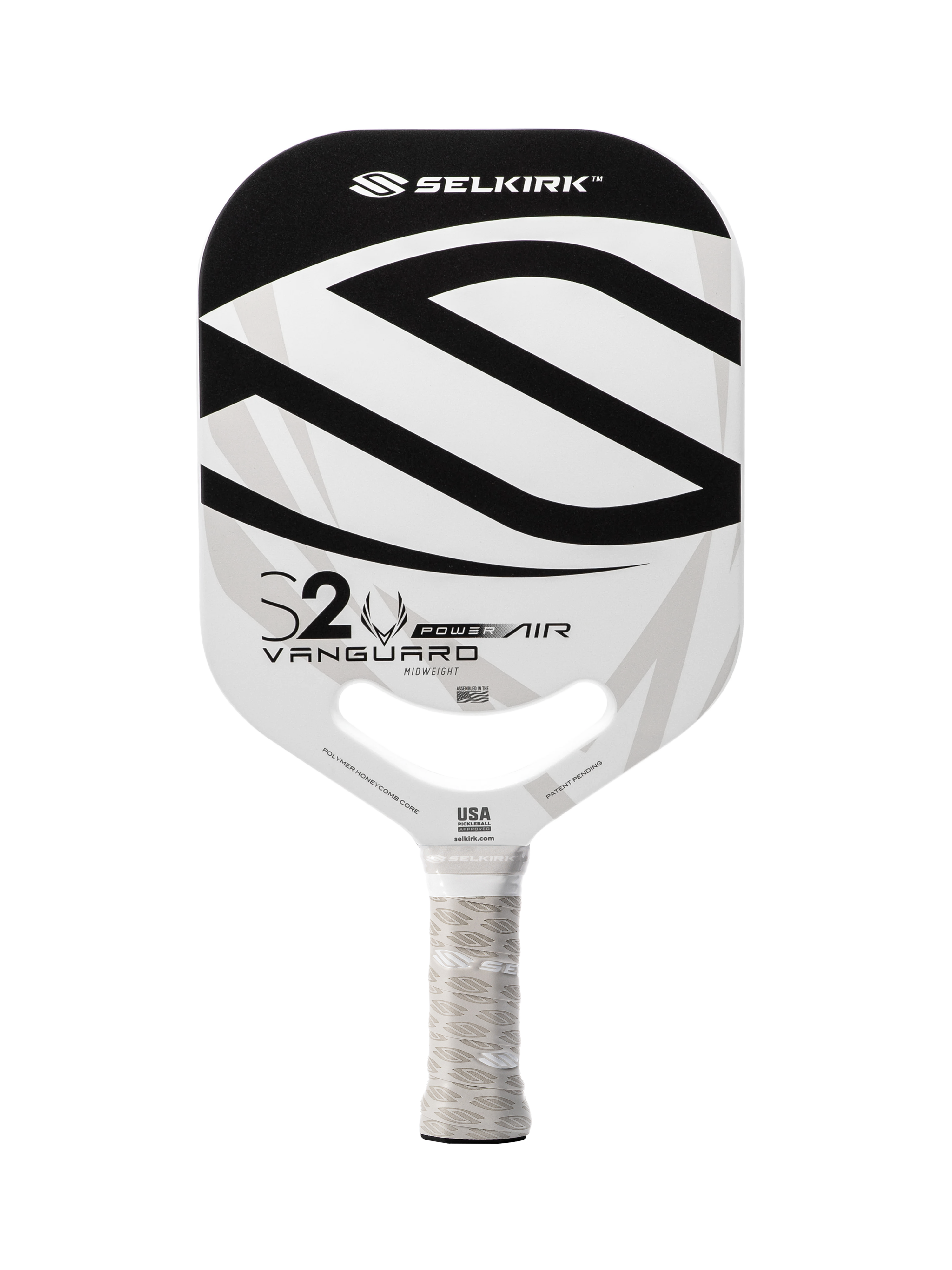
- Selkirk Vanguard Power Air Pickleball PaddlePremium Competition PaddlePR
Hybrid fiberglass-and-carbon face over a 13 mm polymer honeycomb core, 7.7–8.1 oz, with an open Air Dynamic Throat. Sold in Epic, Invikta and S2 shapes.
Aero-Tec carbon face, 16mm polymer core, 7.4–7.6 oz, about $220. A long-term upgrade; beginners will not feel most of the difference.
This button opens Amazon search results, not a specific product page.
Frequently asked questions
Is pickleball easy to learn?▼
What size is a pickleball court?▼
What is the kitchen in pickleball?▼
Do I need to buy an expensive paddle to start?▼
Can I play pickleball with a tennis racket?▼
What is the difference between indoor and outdoor pickleballs?▼
Prices change. Check the retailer for the current price.
Comments & questions
Discussion happens on nattzy, our community forum. Sign in with Google to post — it takes a second.
Still deciding? Ask the community your own question — Post a question on nattzy ↗