Best Travel Cameras 2026: 5 Compared for Every Trip
Whether you're navigating cobblestone alleys with a daypack or shooting surf in the rain, the right camera changes how you document a trip. This guide compares 5 options using published specifications, manufacturer documentation and independent reviews.
Quick answer
For image quality the Fujifilm X-M5 leads: a 26MP X-Trans sensor and 20 film simulations in one of the smallest APS-C bodies, producing straight-out-of-camera JPEGs that make editing optional, plus 6.2K open-gate video. Sony's ZV-E10 II adds a front-tilting screen and class-leading subject tracking for vloggers, the Ricoh GR IIIx puts a fixed 40mm-equivalent f/2.8 lens in a pocket, the Sony RX100 VII carries a 24-200mm zoom, and the Olympus TG-7 is waterproof to 15m.
This comparison is desk research. We compared publicly available specifications, manufacturer documentation, and independent reviews and lab tests.

Sony ZV-E10 II Mirrorless Camera
Best for Vloggers: The ZV-E10 II is Sony's most creator-focused APS-C body, built around a front-tilting LCD and the company's best real-time subject-tracking AF — face detection holds even when subjects are partially obscured. The 26MP sensor with 4K 60p video output makes it equally strong for stills and video, and the E-mount lens ecosystem means you can drop a 16mm f/2.8 on it and have a genuinely pocket-friendly wide option.
Top picks ↓| Product | Price | Link |
|---|---|---|
| $800〜800Reference price | ||
| $699〜699Reference price | ||
| $1246.95Price as of 2026-09-18 | ||
| $1461.50Price as of 2026-09-18 | ||
| $549Price as of 2026-09-18 |
Top picks
Related articles


The ZV-E10 II is Sony's most creator-focused APS-C body, built around a front-tilting LCD and the company's best real-time subject-tracking AF — face detection holds even when subjects are partially obscured. The 26MP sensor with 4K 60p video output makes it equally strong for stills and video, and the E-mount lens ecosystem means you can drop a 16mm f/2.8 on it and have a genuinely pocket-friendly wide option.
Pros
- ✓Class-leading subject-tracking AF
- ✓Front-facing flip screen for self-shooting
- ✓Full E-mount lens ecosystem
Cons
- ✗No in-body image stabilization
- ✗No weather sealing

The X-M5 squeezes Fujifilm's 26MP X-Trans sensor and 20 film simulation modes into one of the smallest APS-C bodies on the market, and the JPEGs it produces straight from the camera are among the best in class — warm skin tones, accurate greens, and that Fujifilm rendering that makes post-processing feel optional. The 6.2K open-gate video is a genuine surprise at this price, and the compact body with 18-55mm kit zoom is an unbeatable travel kit under $900.
Pros
- ✓Best-in-class JPEG output with film simulations
- ✓6.2K open-gate video
- ✓Compact body, competitive price
Cons
- ✗No in-body image stabilization
- ✗Rear-only tilting screen, no front-facing mode

The GR IIIx pairs a 26MP APS-C sensor with a fixed 40mm-equivalent f/2.8 lens in a body smaller than most smartphones — and the rendering is unmistakably Ricoh, with rich shadow detail and a snap-focus mode that lets you shoot from the hip at a preset distance without looking through the viewfinder. The sensor-shift image stabilization corrects up to 4 stops, making 1/30s handheld shots reliably sharp in dim light.
Pros
- ✓Genuinely pocketable APS-C image quality
- ✓Snap-focus mode for discreet shooting
- ✓4-stop sensor-shift stabilization
Cons
- ✗Fixed lens limits versatility
- ✗No touchscreen
Subscribe to our newsletter
Occasional updates and new releases — no spam.
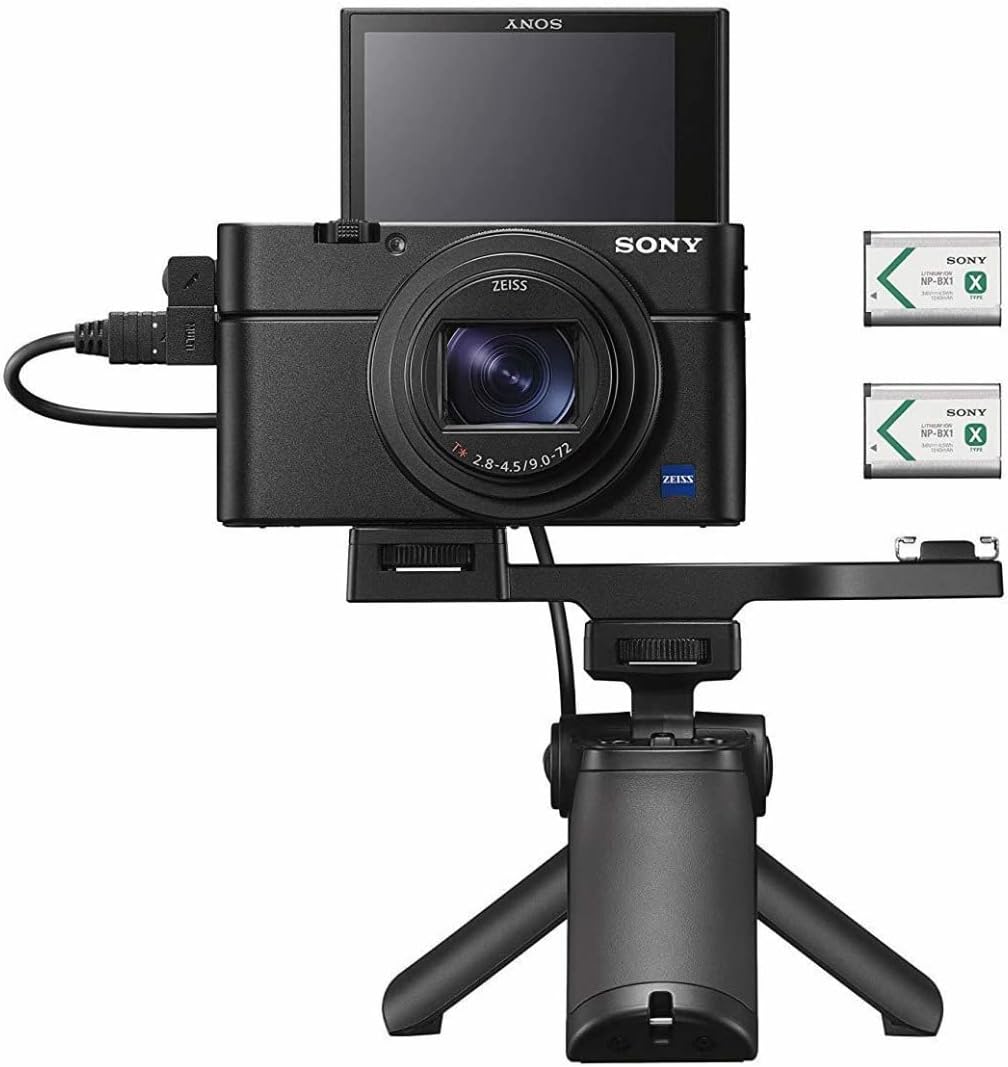
The RX100 VII packs a 24-200mm f/2.8-4.5 Zeiss-branded zoom into a body that fits in a shirt pocket, and the 1-inch 20MP sensor delivers better dynamic range than you'd expect from such a small package. The pop-up OLED EVF, 4K 30p video with S-Log3, and best-in-class continuous AF make this the camera journalists and travel reporters reach for when carrying two cameras isn't an option.
Pros
- ✓24-200mm zoom range in a shirt-pocket body
- ✓Pop-up OLED viewfinder
- ✓Excellent 4K with S-Log3 profile
Cons
- ✗Expensive relative to sensor size
- ✗Battery life is short at ~260 shots

The TG-7 is built for the trips where bringing a camera at all feels risky — waterproof to 15m, freeze-proof to -10°C, shockproof from 2.1m, and crushproof to 100kgf. The 12MP 1/2.3-inch sensor won't match APS-C in low light, but the 4x optical zoom, dedicated macro mode, and GPS tagging are genuinely useful features that no other camera on this list offers. At $400, it's the only camera here you can take snorkeling without a housing.
Pros
- ✓Waterproof to 15m, no housing needed
- ✓GPS and altitude sensor built in
- ✓Dedicated macro mode with 1cm close-focus distance
Cons
- ✗Small sensor limits low-light performance
- ✗4x zoom range is modest compared to alternatives
What to look for in a travel camera
Travel photography punishes bulk and rewards versatility. Before committing to a sensor size or mount system, it's worth thinking through how you actually shoot on the road — and where you're going.
How these five cameras stack up on a real trip
Each camera here carves out a clear niche. The Sony ZV-E10 II is the pick for creators who want AF reliability and lens room to grow. The Fujifilm X-M5 delivers the best still-image output of the group with its film simulation modes and 26MP sensor, at a price that undercuts the competition. The Ricoh GR IIIx is the cult choice for street photographers who want nothing in their pocket but everything in their frames — its 40mm-equivalent f/2.8 lens produces images that punch far above its size. The Sony RX100 VII remains the gold standard for one-camera-does-everything zoom range, especially for travel journalists who need 200mm reach and 4K in a coat pocket. The OM System TG-7 is the only option for anyone going near water, snow, or rough terrain without a second thought.
Price gaps are meaningful here. The TG-7 at $400 is a true budget entry, while the RX100 VII at $1,298 commands a premium that only makes sense if you need that 24-200mm zoom in a pocketable form. The sweet spot for most travelers is the $699-$800 range where the X-M5 and ZV-E10 II compete directly.
Bottom line
If you want one camera for all trips, the Fujifilm X-M5 is the most satisfying overall package — 26MP stills, exceptional JPEGs straight from the camera, and a compact body that doesn't sacrifice image quality to get there. For vloggers and content creators, the Sony ZV-E10 II's subject-tracking AF and front-facing screen make it the easier daily driver. Adventure travelers should skip the others entirely and get the TG-7; nothing else here survives a dive into the sea.
The RX100 VII is still worth its high price if you refuse to carry anything larger than a shirt pocket but won't compromise on zoom range. And the GR IIIx remains one of the most pleasurable cameras ever made for street and documentary work — its fixed lens is a feature, not a limitation, once you commit to the focal length.
Frequently asked questions
Which travel camera has the best autofocus in 2026?▼
Is a fixed-lens camera good enough for travel?▼
What's the best travel camera under $800?▼
Can the OM System TG-7 replace a dedicated underwater camera?▼
Do any of these cameras have in-body image stabilization (IBIS)?▼
Prices change. Check the retailer for the current price.
Comments & questions
Discussion happens on nattzy, our community forum. Sign in with Google to post — it takes a second.


