Best Travel Power Strips 2026: Surge, USB-C & Global Use
WriterPickly Editorial
Updated 2026-05-19
Belkin vs Anker vs Addtam vs Monster vs NTONPOWER — surge joules, USB-C watts, and the travel verdict.
Quick answer
The Belkin Mini Surge is the default travel strip: three grounded outlets, two USB-A ports and 918 joules of surge protection in a 113 g unit whose plug rotates 90 degrees to clear crowded outlet rows. The Anker 321 is the only strip here with 30W USB-C Power Delivery, enough for a MacBook Air, the Addtam Flat Plug gives six outlets for $16-22, the Monster Mini pairs 540 joules with wall mounting, and the NTONPOWER International builds in adapters.
📋How we compared
This comparison is desk research. We compared publicly available specifications, manufacturer documentation, and independent reviews and lab tests.
Related articles


1★ Best PickBelkin Mini Surge Protector 3-Outlet
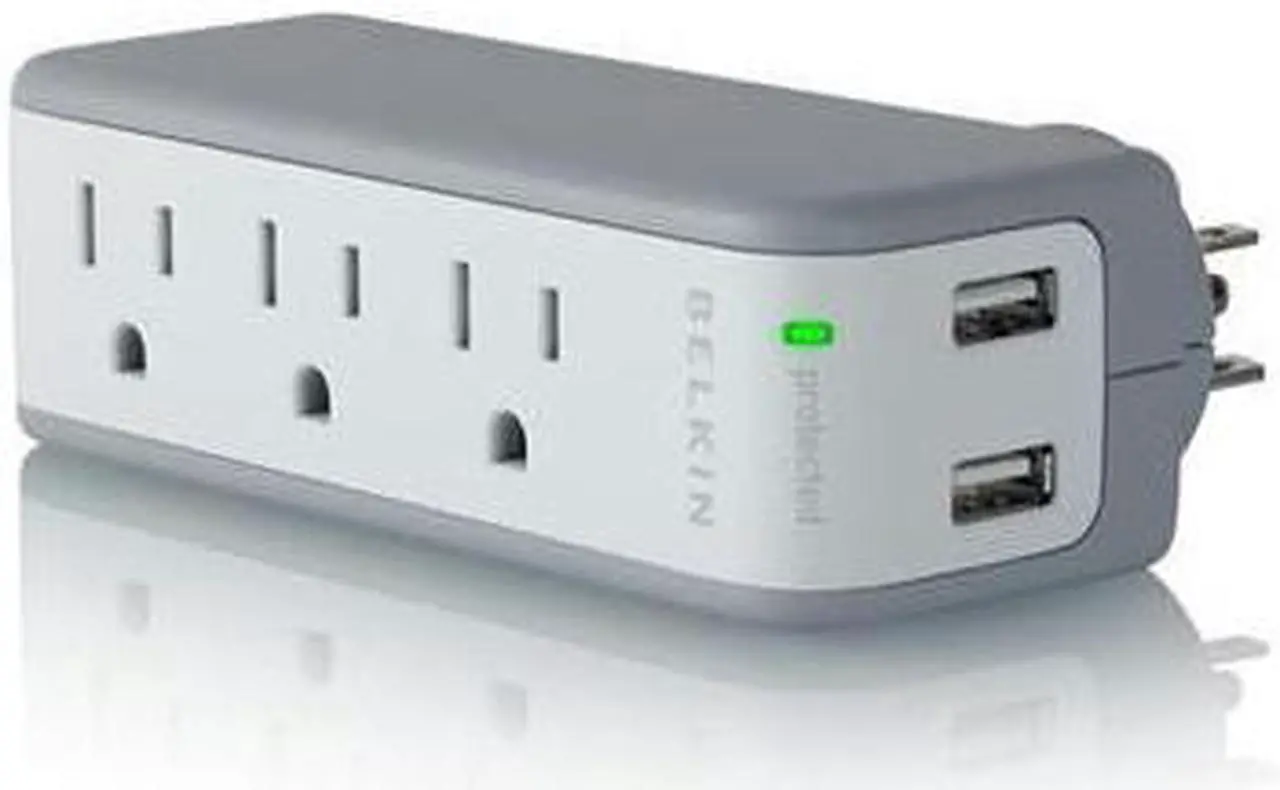
Best surge protection at 918 joules, rotating plug, compact 113g — the safest bet for laptop travelers in any country
2Anker 321 Power Strip (PowerExtend)

Only strip here with 30W USB-C PD — charges MacBook Air directly without a brick; flat plug and 5-ft braided cord
3Addtam Flat Plug Power Strip

Six AC outlets plus 3 USB-A for $16–22 — highest outlet count per dollar, flat plug, braided cord; no surge protection
Subscribe to our newsletter
Occasional updates and new releases — no spam.
4Monster Mini PowerCenter Travel

540-joule surge plus wall-mount slot — frees up desk surface in tight hotel rooms; rotating plug, 2.4A USB-A
5NTONPOWER International Travel Power Strip

Built-in UK/EU/AU/US adapters, dual-voltage 100–240V, 4 AC + 2 USB-C + 2 USB-A — no separate adapter needed for multi-country trips
What we looked for — and how the 5 strips compare
A travel power strip has to do three things: add outlets where hotels fall short (most give you one desk outlet, one lamp outlet), survive voltage swings in developing-country grids, and not weigh more than 200g. Surge protection matters for laptops and cameras — a single spike can cost $1,500+ in equipment. USB-C with Power Delivery matters because modern MacBooks and iPads only fast-charge over USB-C, not USB-A.
| Strip | Price | Key strength | Surge (joules) | Verdict |
|---|---|---|---|---|
| Belkin Mini Surge | $20–28 | Swivel plug + surge | 918 | Best overall |
| Anker 321 | $30–40 | 30W USB-C PD | None | Best for USB-C laptops |
| Addtam Flat Plug | $16–22 | 6 outlets | None | Best budget/outlet count |
| Monster Mini | $18–26 | Wall-mount + surge | 540 | Best compact + surge |
| NTONPOWER International | $30–42 | Built-in adapters | None | Best for international trips |
Two strips include surge protection: the Belkin at 918 joules (the highest here) and the Monster at 540 joules. The other three — Anker, Addtam, and NTONPOWER — are pure power strips. If you're traveling with a laptop in Southeast Asia or Latin America, choose one of the surge options. In stable-grid countries like Germany, Japan, and the US, unprotected strips carry low practical risk, but the cost difference is small enough that surge protection is still worth it.
Belkin Mini Surge — best overall travel strip
The Belkin Mini Surge costs $22–28 and has been the default recommendation in travel communities for years — deservedly. Three grounded AC outlets, two USB-A ports (2.1A combined, so expect slower charging when both are loaded), and 918 joules of surge protection in a unit that weighs 113g. The rotating plug is the standout feature: it swings 90° so you can use it in cramped outlet rows without blocking adjacent sockets.
Owners describe the Belkin running warm but never hot through long laptop-plus-phone-plus-tablet sessions. The UL listing is legitimate, and it is what backs the surge rating. It is also a known quantity at security: power strips are permitted in carry-on by both TSA and EU aviation security.
The gap: no USB-C. If you have a MacBook, iPad Pro, or any USB-C-only phone (recent Pixels, iPhones), you'll need a USB-C adapter or a separate charger — the Belkin only handles USB-A at 2.1A total. For a trip where the laptop charges via its own brick plugged into an AC outlet, this is fine. If you want to leave the brick at home and charge via USB-C PD, the Anker 321 is the right choice instead.
Anker 321 — best for USB-C laptop charging
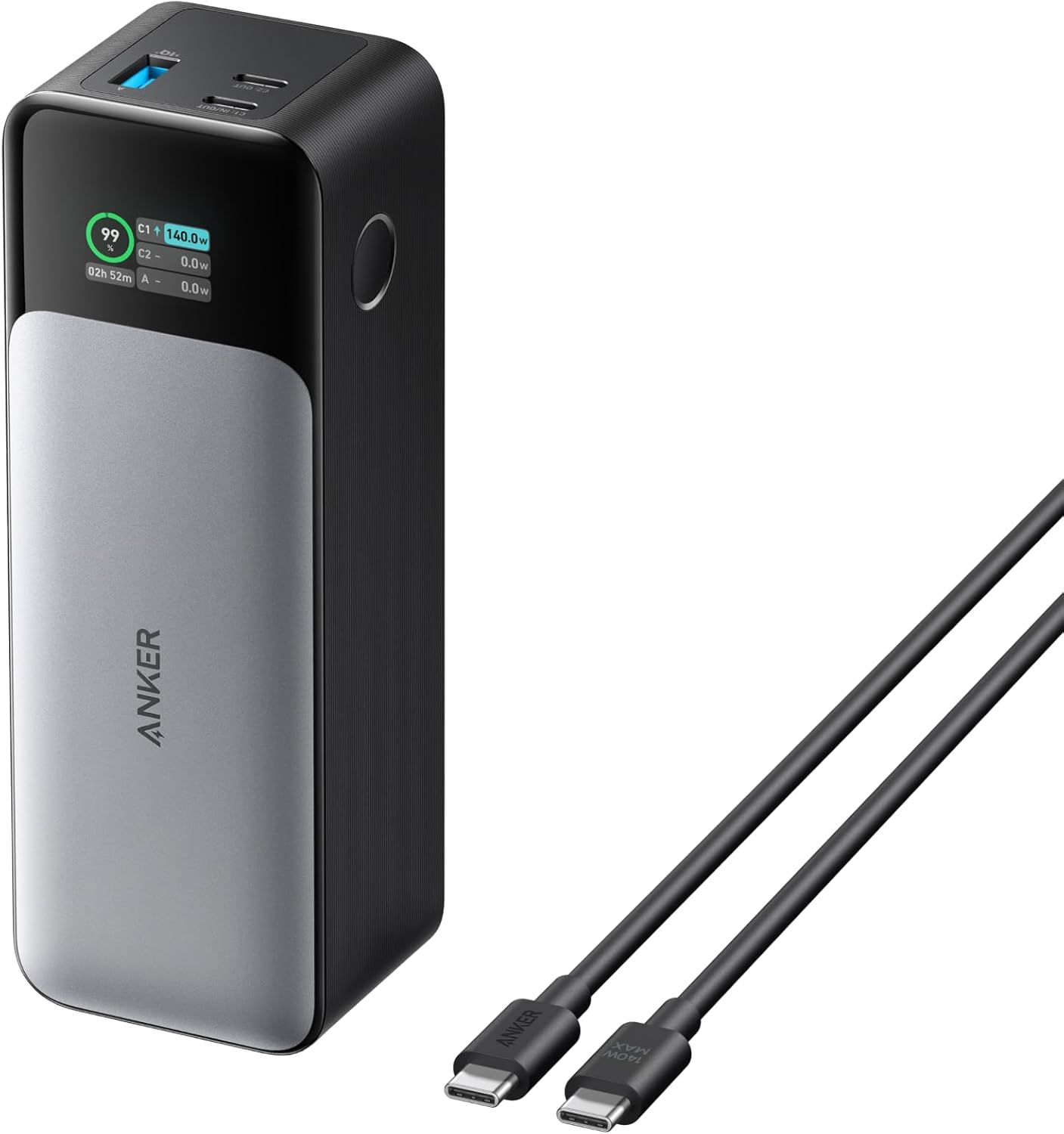
The Anker 321 at $30–40 is the only strip here that outputs 30W USB-C Power Delivery — enough to charge a MacBook Air (which requires a minimum of 30W to charge at all, and 45W+ for fast charge during use). Each USB-C port delivers 30W individually. The USB-A port tops out at 12W. Three grounded AC outlets round out the spec.
The flat plug is genuinely flat — 9mm thin — and the 5-foot braided cord is longer than average (most competitors ship 4-foot or shorter). Combined with a plug adapter, the flat plug sits flush against a wall socket without the wobble a thicker plug creates. Rattles and discoloration are largely absent from long-term owner reviews.
The missing feature is surge protection. For a $30–40 strip aimed at laptop travelers, omitting surge protection is a real tradeoff. On a stable grid — a German hotel, say — that risk is small. In a guesthouse where the lights visibly flicker, the Belkin is the safer strip. If you travel exclusively in stable-grid countries and need USB-C laptop charging, the Anker 321 is the right pick. If your itinerary includes Southeast Asia, India, or Latin America, pair it mentally with awareness that one spike could damage connected gear.
Addtam Flat Plug — best budget pick for outlet count
The Addtam delivers six AC outlets and three USB-A ports for $16–22 — the highest outlet count here by a wide margin. The flat plug is ultra-thin and the 5-foot braided cord looks noticeably better-quality than the price suggests. This is the strip for the hotel room where four people each want two outlets and budget is the constraint.
Three USB-A ports at shared 3.1A (roughly 5W each under full load) means slow charging for all three devices simultaneously. Phones will charge overnight fine. A tablet will take 3–4 hours. There is no USB-C and no surge protection. Under full load it runs warmer than the Belkin — within safe range, but noticeable to the touch in a hot room.
For families, road trips with multiple people, or any scenario where raw outlet count outweighs surge protection and USB-C, the Addtam earns its price. It is not the strip for a $2,000 laptop on a monsoon-season trip through Vietnam, but for the beach vacation where everyone just needs a phone charger and a hairdryer outlet, it does the job at minimum cost.
Monster Mini PowerCenter — best compact surge strip with wall-mount
Monster's Mini PowerCenter at $18–26 offers 540 joules of surge protection in a package almost identical in size to the Belkin. Three AC outlets, two USB-A ports at 2.4A total, rotating plug. The differentiating feature is the wall-mount design: a slot on the back lets you hang it on a hotel-room hook or nail — useful in rooms where the power outlet is inconveniently placed near the floor.
The 540-joule surge rating is lower than the Belkin's 918 joules, which matters in practice. Surge protection is a one-time sacrifice — when a major spike hits, the MOV components absorb it and degrade or fail to protect. Higher joules means more absorbed spikes before the protection fails silently. For occasional travel, 540 joules is adequate. For extended travel in volatile-grid regions, the Belkin's 918-joule cushion is the better choice.
USB-C is absent here too. Two USB-A ports at 2.4A means roughly 12W shared between both — faster than the Addtam's setup but still USB-A limited. For a travel kit where the laptop charges via AC adapter (the brick) and phones are USB-A compatible, the Monster works cleanly. The wall-mount feature earns genuine utility points for hotel-room ergonomics.
NTONPOWER International — best for true multi-country travel
The NTONPOWER at $30–42 is the only strip here with built-in plug adapters for UK, EU, AU, and US outlets — no separate travel adapter required. Four AC outlets, two USB-C ports (18W each), and two USB-A ports (2.4A each). Dual-voltage at 100–240V means it handles every country's grid without a step-down transformer.
The USB-C output at 18W is phone-speed PD — enough for fast-charging an iPhone or Android flagship, but not enough for a laptop (MacBook Air needs 30W minimum to charge; most USB-C laptops need 45W+ for in-use charging). Plug the laptop into one of the four AC outlets via its original charger brick and use the USB ports for phones and earbuds.
Surges are the uncovered risk. NTONPOWER offers no surge protection, which is a meaningful gap for a product designed for developing-country travel where grid stability is lower. The price premium over the Addtam ($14–20 more) pays for the built-in adapter convenience — if you're a frequent multi-country traveler who hates managing a separate adapter, that premium is worth it. If you travel to one region at a time and own a good universal adapter already, the Addtam at half the price covers the same outlet count.
Frequently asked questions
Do I need surge protection in a hotel?▼
Which strips can actually charge a MacBook?▼
Can I bring a travel power strip on a plane?▼
Will these strips work in Europe (220V)?▼
What does the joule rating mean for surge protection?▼
Are these strips safe to use with hair dryers and curling irons?▼
How heavy are these strips? Will they add noticeable weight to a carry-on?▼
Can two USB-A devices charge simultaneously at full speed?▼
Is the NTONPOWER's built-in adapter as reliable as a dedicated travel adapter?▼
What's the best pick for a family vacation?▼
Check the details of the products in this article
- Belkin Mini Surge Protector 3-Outlet$20〜$28Reference price
- Anker 321 Power Strip (PowerExtend)$30〜$40Reference price
- Addtam Flat Plug Power Strip$18〜$25Reference price
- Monster Mini PowerCenter Travel$22〜$30Reference price
- NTONPOWER International Travel Power Strip$30〜$40Reference price
Prices change. Check the retailer for the current price.
Comments & questions
Discussion happens on nattzy, our community forum. Sign in with Google to post — it takes a second.
View the discussion thread on nattzy ↗
Still deciding? Ask the community your own question — Post a question on nattzy ↗
Related articles

Best Travel Mug 2026: 5 for Heat & Leak Resistance

Best Travel Coffee Maker 2026: 5 in Hotel Rooms
Best Travel Compression Socks 2026: 5 compared

Best Travel Clothesline 2026: 5 for One-Bag Trips

Best Travel Locks 2026: 5 TSA-Approved Options Compared

Best Travel Umbrella 2026: Windproof, Compact & Rain Ready