Best Satellite Communicators 2026: 5 for Travel
A satellite communicator isn't pessimism — it's what lets you go further knowing there's a line back to help if something goes wrong. The difference between a PLB (personal locator beacon) and a satellite communicator is two-way messaging: a PLB calls for help and goes silent; a communicator lets you have a conversation. These five were evaluated for the situations that actually occur: checking in with family, changing plans on the fly, and activating SOS in a genuine emergency with no cell coverage.
Quick answer
The Garmin inReach Mini 2 is the strongest all-round satellite communicator: 100 g of true global Iridium coverage including polar regions, two-way messaging through the Garmin Explore app, and two-way SOS via GEOS. The SPOT Gen4 is the $150 budget option but sends one-way only, Somewear is the lightest at 47 g by leaning on your phone, the Bivy Stick opens Iridium coverage from $5 a month, and Zoleo offers the most SMS-like messaging experience.
Devices were assessed on satellite network coverage and reliability, two-way messaging capability, SOS communication quality, hardware durability, battery life, subscription cost structure, and ease of use in emergency scenarios.

Garmin inReach Mini 2 Satellite Communicator
Best Overall: The inReach Mini 2 is 100g of genuine satellite coverage across the entire planet. Iridium network means no dead zones — it's worked in Patagonia, northern Norway, and the Alaska interior where everything else fails.
Top picks ↓| Product | Price | Link |
|---|---|---|
| $350〜350Reference price | ||
| $149.95Price as of 2026-09-18 | ||
| $159Price as of 2026-09-18 | ||
| $5〜$199Reference price | ||
| $184Price as of 2026-09-18 |
Top picks
Related articles


The inReach Mini 2 is 100g of genuine satellite coverage across the entire planet. Iridium network means no dead zones — it's worked in Patagonia, northern Norway, and the Alaska interior where everything else fails. Two-way messaging syncs through the Garmin Explore app to phone contacts. SOS connects to GEOS International with two-way emergency communication. The UI has improved from the original Mini: navigation is faster and the button layout is more intuitive. At $350 plus subscription, it's the most expensive option here, but the coverage reliability justifies it for serious travelers.
Pros
- ✓True global Iridium coverage including polar regions
- ✓Two-way SOS communication with GEOS
- ✓Best battery life in active use mode
Cons
- ✗Most expensive device on this list
- ✗Monthly subscription adds $15–$65 depending on plan

The SPOT Gen4 does one thing that matters and skips everything that costs: it sends your GPS location to emergency services and pre-selected contacts, tracks your route, and triggers SOS. What it doesn't do is receive replies — SPOT messaging is one-way only, which is the critical limitation. For solo hikers who mainly want family check-in pings and a SOS button, it's adequate. For anyone who might need to coordinate mid-trip or communicate after an SOS, the one-way limitation is a real gap. Globalstar coverage is slightly less global than Iridium.
Pros
- ✓Lowest hardware cost at $150
- ✓Simple — hard to operate incorrectly
- ✓Proven reliability for check-in messaging
Cons
- ✗One-way messaging only — cannot receive replies
- ✗Globalstar network has regional coverage gaps
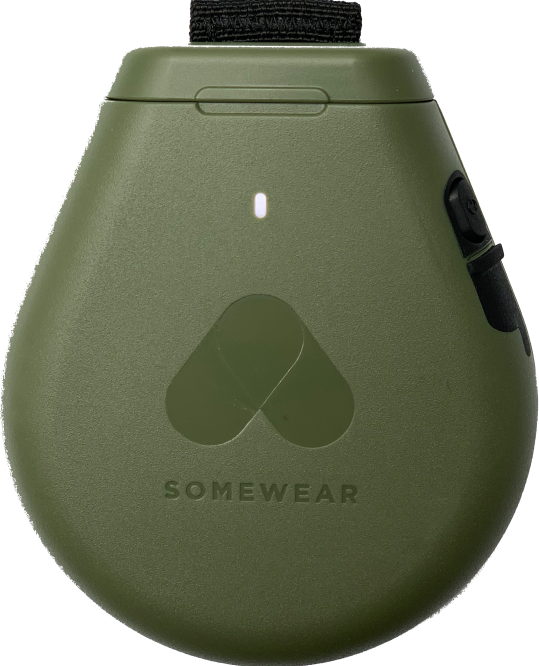
Somewear pairs with your smartphone and turns it into a satellite-connected device — you use your phone's interface rather than the device's own screen. The hardware is 47g, making it the lightest option here. Iridium network gives it the same global coverage as Garmin. The catch is dependency on your phone: if the phone battery dies, so does your messaging capability. Two-way messaging works, and the SOS function is full-featured. At $199 with plans from $25/month, it's priced between SPOT and Garmin.
Pros
- ✓Lightest device at 47g
- ✓Iridium network — true global coverage
- ✓Uses phone interface — familiar UX
Cons
- ✗Requires phone to operate — single point of failure
- ✗Smaller user community than Garmin
Subscribe to our newsletter
Occasional updates and new releases — no spam.

Bivy Stick is a Iridium-based device that pairs with the Bivy app for two-way messaging, SOS, and tracking. The distinguishing feature is price: at $199 hardware and plans starting at $5/month for minimal use, it's the most affordable entry into Iridium coverage. The trade-off is that the messaging speed is slightly slower than Garmin on two-way exchanges and the device feels less polished. For travelers who want global coverage at the lowest ongoing cost, Bivy Stick is the value play.
Pros
- ✓Lowest monthly subscription starting at $5
- ✓Iridium coverage — same network as Garmin
- ✓Good app interface for messaging
Cons
- ✗Slower message delivery than Garmin inReach
- ✗Less mature ecosystem than Garmin

Zoleo focuses on making satellite messaging feel less like a 1990s pager and more like modern texting. The app integration is smooth, messages arrive faster than most competitors, and the device itself can work standalone (without the phone app) for basic messaging and SOS. Iridium network ensures global coverage. At $199 hardware and $20/month for the base plan, it's competitive with Garmin on subscription pricing. The SOS function includes two-way emergency communication. A strong choice for travelers who message frequently rather than just check in occasionally.
Pros
- ✓Best messaging interface — closest to regular SMS
- ✓Works standalone without phone for basic use
- ✓Competitive subscription pricing vs. Garmin
Cons
- ✗Battery life shorter than Garmin Mini 2
- ✗Slightly bulkier form factor
How to Choose a Satellite Communicator
The hardware matters less than the satellite network behind it. Coverage, subscription cost, and two-way messaging reliability separate useful devices from expensive paperweights. A device that only sends tracking pings doesn't help much when you need to communicate a location change or request assistance that falls short of a full emergency.
Bottom line
The Garmin inReach Mini 2 is the benchmark — global coverage, two-way messaging, and the most mature ecosystem of any device here. For travelers on a hardware budget who accept one-way messaging, the SPOT Gen4 covers most solo travel check-in needs at $150. Zoleo is the best alternative for people who want two-way messaging at a lower monthly subscription than Garmin. Somewear and Bivy Stick target the ultralight crowd who want satellite capability without significant weight.
Frequently asked questions
Do I need a satellite communicator or a PLB?▼
What satellite network is best for international travel?▼
Can I send messages from a satellite communicator to regular phones?▼
How long do satellite communicator batteries last?▼
Are satellite communicator subscriptions worth it?▼
Prices change. Check the retailer for the current price.
Comments & questions
Discussion happens on nattzy, our community forum. Sign in with Google to post — it takes a second.