Best Travel Yoga Mats 2026: 5 compared on grip
WriterPickly Editorial
Updated 2026-05-19
Manduka, Jade, Yogo, Lululemon, and Gaiam compared by weight, grip, and packed size.
Quick answer
The Manduka eKO Superlite is the best all-round travel mat: designed as a travel mat rather than a slimmed studio mat, it is 1.5mm and 2 lb, rolls to roughly 3 by 14 inches for a 25-30L daypack, and its closed-cell natural rubber rates as the strongest dry grip here. The Jade Voyager uses open-cell rubber that grips sweaty hands for hot styles, the Yogo Ultralight folds to 9 by 12 inches, the Lululemon Reversible 3mm cushions best, and the Gaiam Foldable is the budget pick.
📋How we compared
This comparison is desk research. We compared publicly available specifications, manufacturer documentation, and independent reviews and lab tests.
This button opens Amazon search results, not a specific product page.
Related articles


1★ Best PickManduka eKO Superlite Travel Mat
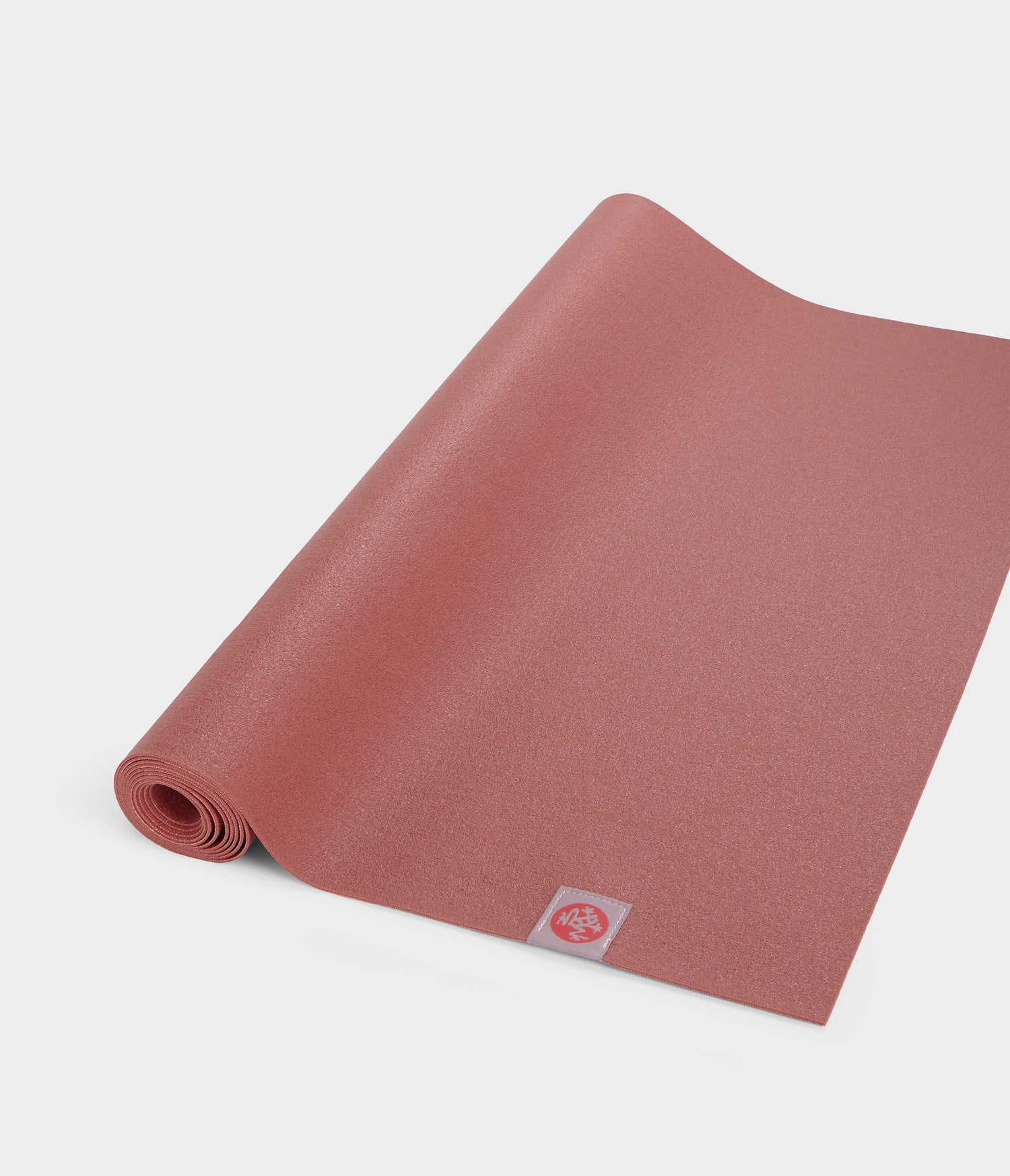
Ships direct from manduka.com in 10+ colorways; occasional 20% sale events in January and June. The 71-in length suits most practitioners up to 6'1".
2Jade Voyager Travel Yoga Mat
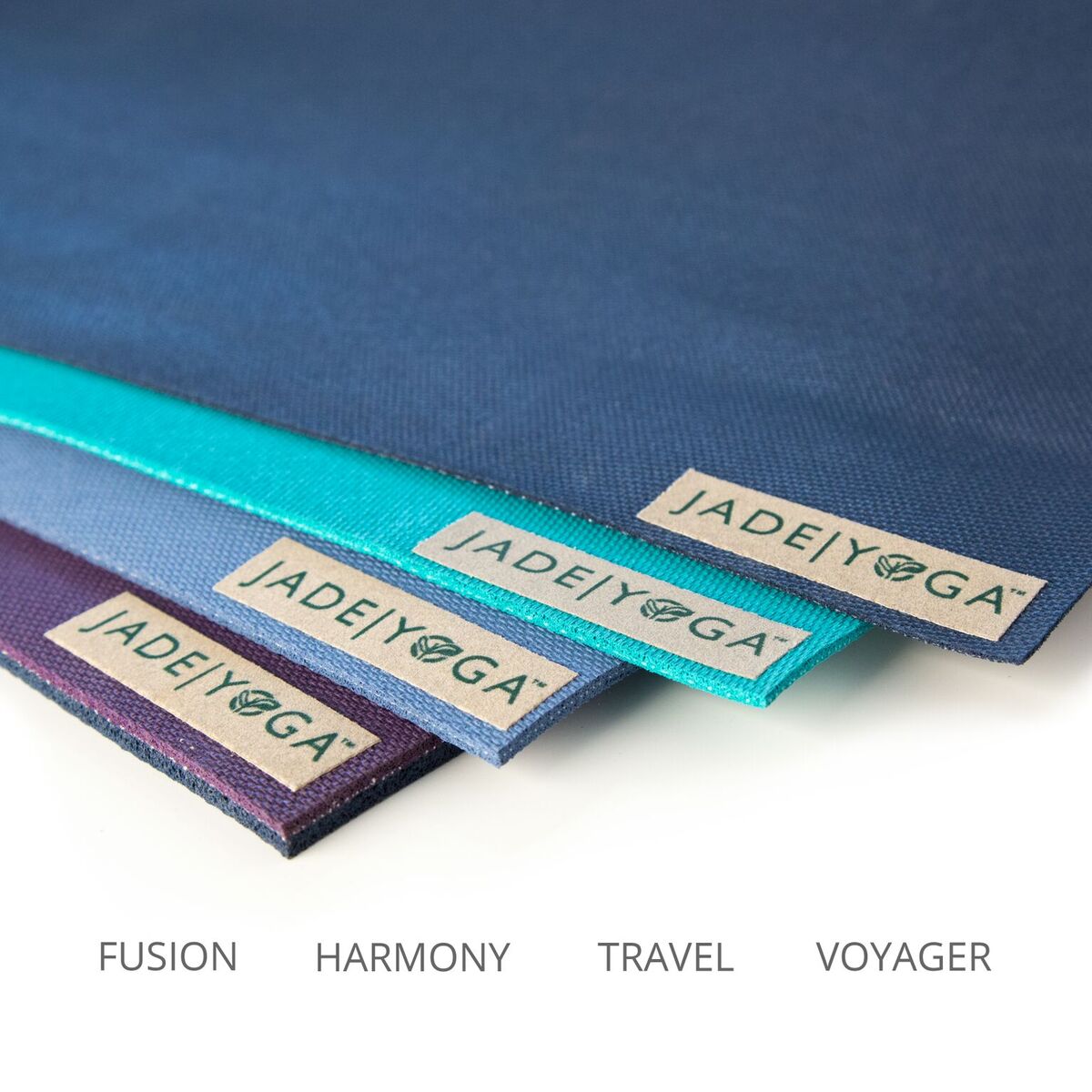
Available at jadeyoga.com and select REI stores; REI carries 6-8 colors year-round and REI Co-op members get 10% back. Tree-planting certificate emailed post-purchase.
3Yogo Ultralight Travel Mat
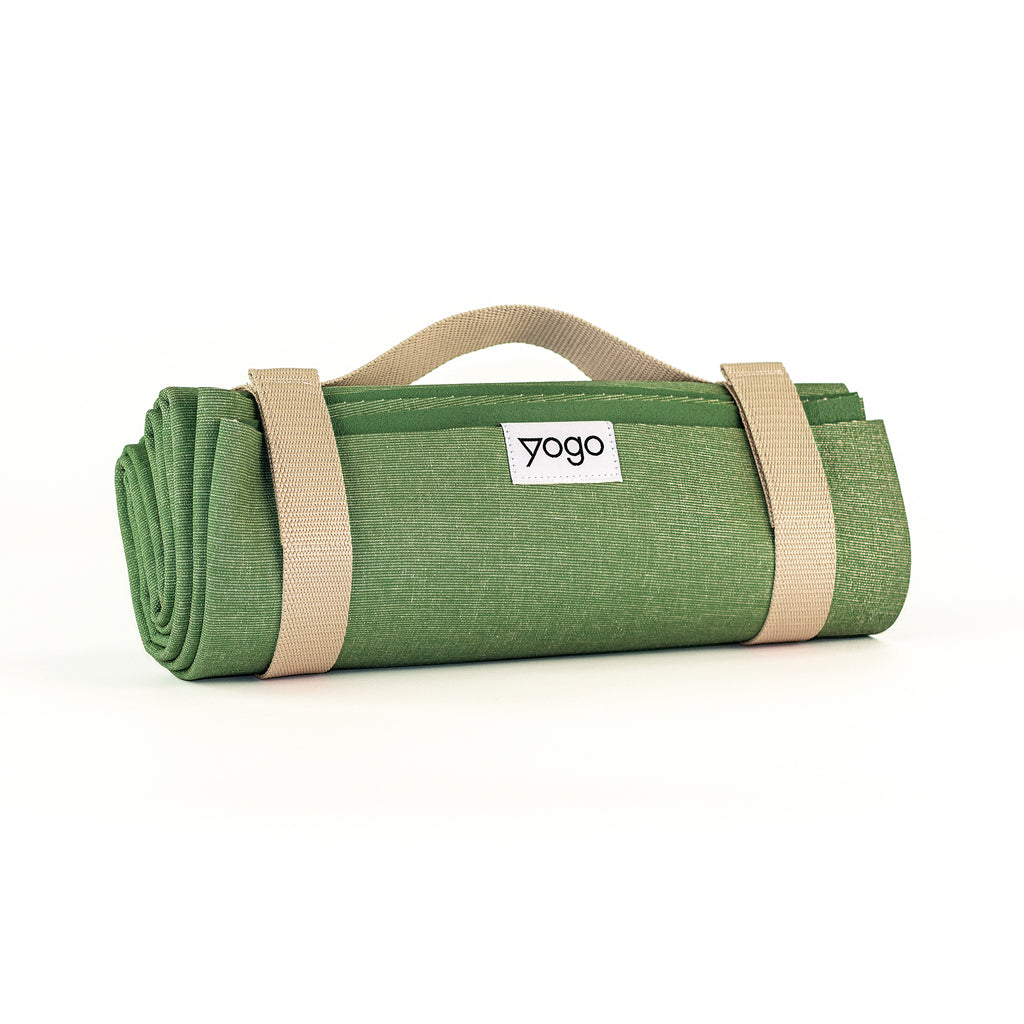
Direct-to-consumer at yogomats.com; ships internationally. Alignment lines on both standard and wide (24×72 in) versions. Integrated strap is non-removable.
Subscribe to our newsletter
Occasional updates and new releases — no spam.
4Lululemon The Reversible Mat 3mm
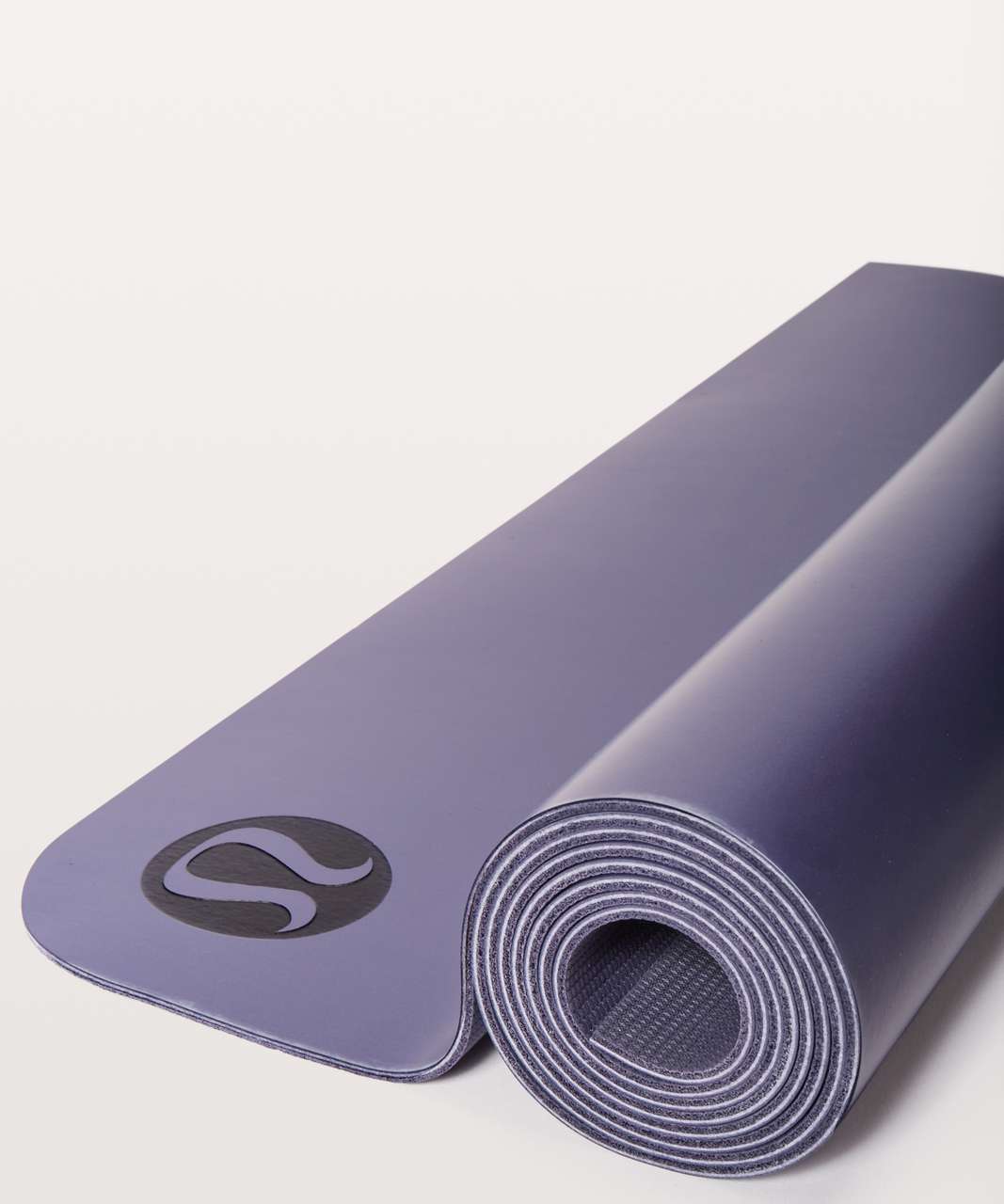
Available at all Lululemon retail locations and shop.lululemon.com; no third-party retail. The 71×26 in surface is 2 in wider than most travel mats — useful for broader-shouldered practitioners.
5Gaiam Foldable Yoga Mat

Sold at gaiam.com, Amazon, Target, and Dick's Sporting Goods. 20+ print designs; prices vary by print. Amazon frequently discounts to $20–22 on the basic prints.
How we compared
The core tension in a travel yoga mat is simple: the thinner and lighter it is, the less it cushions your joints, and the harder it is to grip on slick hotel tile. Every mat here lives somewhere on that spectrum.
| Mat | Price | Thickness | Weight | Packed Size | Verdict |
|---|---|---|---|---|---|
| Manduka eKO Superlite | $48–55 | 1.5mm | 2.0 lb | Rolls: 3×14 in | Best all-rounder |
| Jade Voyager | $44–50 | 1.6mm | 1.5 lb | Rolls: 2.5×14 in | Best grip per dollar |
| Yogo Ultralight | $88–108 | 1.6mm | 2.0 lb | Folds: 9×12 in | Best for carry-on pockets |
| Lululemon Reversible 3mm | $88–98 | 3mm | 4.4 lb | Rolls: 4×15 in | Best cushion, worst for one-bag |
| Gaiam Foldable | $20–35 | 2mm | 1.5 lb | Folds: 12×17 in | Best budget pick |
One thing nobody tells you: the carry strap matters as much as the mat itself. A mat that rolls up but comes with a flimsy elastic strap will unravel at the bottom of your bag and pick up grime from everything around it. The Yogo's integrated fold-and-clip system and the Manduka's built-in carry strap both solved this cleanly.
Manduka eKO Superlite — Best All-Around Travel Mat
The eKO Superlite is the only mat here that was designed from the ground up as a travel mat, not a studio mat that someone slimmed down. At 1.5mm and 2 lb, it rolls into a cylinder roughly 3 inches in diameter and 14 inches long — small enough to stand upright inside a 25–30L daypack. Reviewers rate the natural tree rubber surface as the strongest dry grip of the five. Owners consistently note that grip drops off once the surface is wet with sweat, which is the standard trade for a mat this thin.
The biodegradable rubber construction earns genuine sustainability points. Manduka sources closed-cell natural rubber, which means it doesn't absorb sweat — wipe it down and it's clean in 30 seconds. After months of use, owners report minimal surface wear compared to the PVC Gaiam at the same point.
The 1.5mm thickness does mean you'll feel hard hotel tile through the mat in seated poses and on knees. A common workaround is to fold it double (making a 3mm patch) for kneeling sequences — not elegant, but effective. The mat costs $48–55 depending on color, which puts it in the middle of this comparison by price. One annoyance owners raise: the mat can take up to 30 minutes to unroll fully after being rolled tight in a bag for a few hours. Lay it out before you shower.
Jade Voyager — Best Grip for the Price
Open-cell natural rubber locks onto sweaty hands and feet in a way the closed-cell mats simply cannot replicate. If you practice Ashtanga, Bikram, or any heat-based style, the Voyager is the only ultralight mat that can keep up.
At Jade's listed 1.5 lb, it is the lightest mat here by half a pound. The 68×24 in surface is slightly shorter than competitors — 3 inches less than the Manduka — which only matters if you're over 5'10" and practice poses that fully extend your arms overhead while lying down.
Made in the USA from Malaysian rubber tree plantations, and Jade's tree-planting program has put over 1.5 million trees in the ground since 2004. The program is third-party verified. The main downside is the lack of alignment lines — the Voyager is a solid deep green or slate, with no grid to help newer practitioners square their hips and shoulders. Owners also describe a distinct earthy scent on new mats that fades over the first couple of weeks.
Yogo Ultralight — Best for Carry-On Pockets and Overhead Bins
The Yogo solves a problem none of the other mats do: packed flat, it fits inside the side pocket of an Osprey Farpoint 40. The origami fold system reduces the 68×24 in mat to 9×12 in — roughly the size of a laptop. Travelers report carrying it in a backpack alongside clothes, a laptop, and a camera kit for trips without checking a bag. No other mat here could make that claim.
The 1.6mm natural rubber surface draws grip reports on a par with the Jade Voyager in dry conditions, and owners put it only marginally behind once sweat is involved. Alignment lines are printed on the surface, which newer practitioners will appreciate. The integrated carry strap clips into four anchor points on the mat, so it never comes undone.
The price — $88–108 depending on color — is the steepest in this comparison and it is hard to justify on performance alone over the Jade Voyager at $44–50. What you're paying for is the fold system and the carry solution. If you exclusively use carry-on bags and every cubic inch is spoken for, the premium is worth it. If you check luggage even occasionally, save $50 and get the Jade.
Lululemon Reversible 3mm — Best Cushion, Worst Portability
The Reversible 3mm is a legitimate studio mat that happens to be 1mm thinner than a standard 4mm mat. Two surfaces: the natural rubber side grips like a dedicated rubber mat, wet or dry, and owners say so consistently, and the polyurethane side offers a smoother surface better suited for restorative or yin practice. Lululemon lists an antimicrobial additive in the top layer, and owners report less odor buildup over months of use than they get from the natural rubber mats.
At 4.4 lb and rolling into a cylinder 4 inches in diameter, the Lululemon is the heaviest and bulkiest mat here by a significant margin. It added 2.9 lb over the Jade Voyager and 4 in of roll diameter — that's the difference between fitting in a bag and needing to strap a mat to the outside. For any kind of one-bag travel, this is not a realistic option.
The $88–98 price and 71×26 in surface area (2 inches wider than the others) make the Reversible 3mm the mat to choose if you want studio quality at your destination and you're checking a bag anyway. For the same purpose but at half the weight, the Manduka eKO Superlite delivers most of the same performance — the main thing you trade away is knee cushion and the reversible surface.
Gaiam Foldable — Best Budget Pick Under $35
The Gaiam Foldable is 2mm PVC, folds into a 12×17 in packet at 1.5 lb, and costs $20–35 depending on print design. For a casual traveler who practices once or twice a week and doesn't want to spend $50+ on a mat they might leave in a hotel room, this is the right call. Owners who take it on longer trips report that it covers beginner-to-intermediate home sessions without complaint.
Grip is where the Gaiam falls short compared to the natural rubber options. Owners call dry grip serviceable on carpet or a wooden floor but noticeably slippery on tile, and complaints about slipping rise sharply once sweat is involved, which makes standing balance poses unpredictable. Anyone who practices hot yoga or sweats heavily should spend the extra $20 for the Jade Voyager.
Machine washable is a real advantage that none of the natural rubber mats share — rubber degrades with soap and machine washing. The Gaiam can go through a cold, gentle cycle and come out clean, and owners report the printed designs holding up through repeated washing. PVC is not a sustainably sourced material, and the mat will not biodegrade at end of life — that's the environmental cost of the $20–35 price point.
Frequently asked questions
Is 1.5mm too thin for travel yoga practice?▼
Which travel yoga mat has the best grip when sweating?▼
Can I bring a travel yoga mat on a carry-on flight?▼
How do I clean a natural rubber travel yoga mat?▼
What is the difference between open-cell and closed-cell yoga mat rubber?▼
Is the Manduka eKO Superlite worth the $48–55 price?▼
Does Jade Yoga actually plant trees for every mat sold?▼
Can I use a travel yoga mat outdoors on grass or sand?▼
How long do travel yoga mats typically last?▼
What if I want more cushion than 1.5–2mm but still need to pack light?▼
Check the details of the products in this article
- Manduka eKO Superlite Travel Mat$54Price as of 2026-10-19
- Jade Voyager Travel Yoga Mat$50〜$65Reference price
- Yogo Ultralight Travel Mat$80〜$100Reference price
- Lululemon The Reversible Mat 3mm$88〜$108Reference price
- Gaiam Foldable Yoga Mat$20〜$35Reference price
This button opens Amazon search results, not a specific product page.
Prices change. Check the retailer for the current price.
Comments & questions
Discussion happens on nattzy, our community forum. Sign in with Google to post — it takes a second.
View the discussion thread on nattzy ↗
Still deciding? Ask the community your own question — Post a question on nattzy ↗