Best Bath Mats 2026: Diatomite vs Memory Foam vs Teak
Five bath mats — Townselect Diatomite Bath Mat (natural stone, absorbs water on contact, wipe-clean maintenance), Gorilla Grip Original Bath Mat (thick memory foam, suction-cup non-slip backing), Utop. Firmness feel varies by body weight — a spec-sheet rating means nothing without that context.
Quick answer
Drying time decides bath mat performance over six months, because a mat that stays damp grows mildew regardless of material. Diatomite stone absorbs on contact and wipes clean, which is why the Townselect is the best bath mat for most bathrooms; memory foam like Gorilla Grip is softer but must be washed regularly to stay fresh.
We assessed each product on real-world durability, ease of daily use, performance against marketing claims, build quality, and long-term value. Manufacturer specifications were validated against verified owner reviews.

Townselect Diatomite Bath Mat
Best Overall: Townselect's diatomite slab is the only mat in this lineup where wet feet feel measurably drier within two to three seconds of stepping on. The porous fossilized-algae stone pulls water in by capillary action and releases it as vapor through the back face within thirty to sixty minutes, which is fast enough that mold and bacteria cannot colonize under normal use.
Top picks ↓| Product | Price | Link |
|---|---|---|
| $23.08Price as of 2026-09-24 | ||
| $32.99Reference price | ||
| $14.99Reference price | ||
| $49.99Price as of 2026-09-24 | ||
| $59.99Reference price |
Top picks
Related articles


Natural diatomite stone with immediate water absorption — the fastest-drying surface in this comparison. Wipe-clean maintenance with no laundry cycle required, and the antimicrobial pore structure prevents mold under normal conditions. Periodic sanding in hard-water areas restores absorption efficiency. no cushioning underfoot, weaker non-slip grip than suction-cup fabric mats without added silicone feet, and fragile enough that dropping on a hard floor risks cracking.
Townselect's diatomite slab is the only mat in this lineup where wet feet feel measurably drier within two to three seconds of stepping on. The porous fossilized-algae stone pulls water in by capillary action and releases it as vapor through the back face within thirty to sixty minutes, which is fast enough that mold and bacteria cannot colonize under normal use. Daily care is a wipe with a damp cloth — there is no laundry cycle, no rotation schedule, no foam interior to worry about. The cost is comfort: the stone has zero cushioning, and in hard-water areas the pores eventually clog with mineral scale and need a three-minute sanding pass with 180–240 grit paper to reset absorption. For households where mold and damp-mat smell were the original problem, nothing else in this comparison solves it as completely.
Pros
- ✓Surface dries in 30–60 minutes — fastest in the comparison
- ✓Antimicrobial pore structure prevents mold under normal use
- ✓Wipe-clean maintenance, no washing machine required
- ✓Matte stone aesthetic suits minimalist bathrooms
Cons
- ✗Zero cushioning underfoot — uncomfortable for plantar fasciitis
- ✗Fragile — a drop on hard tile can chip or crack the stone
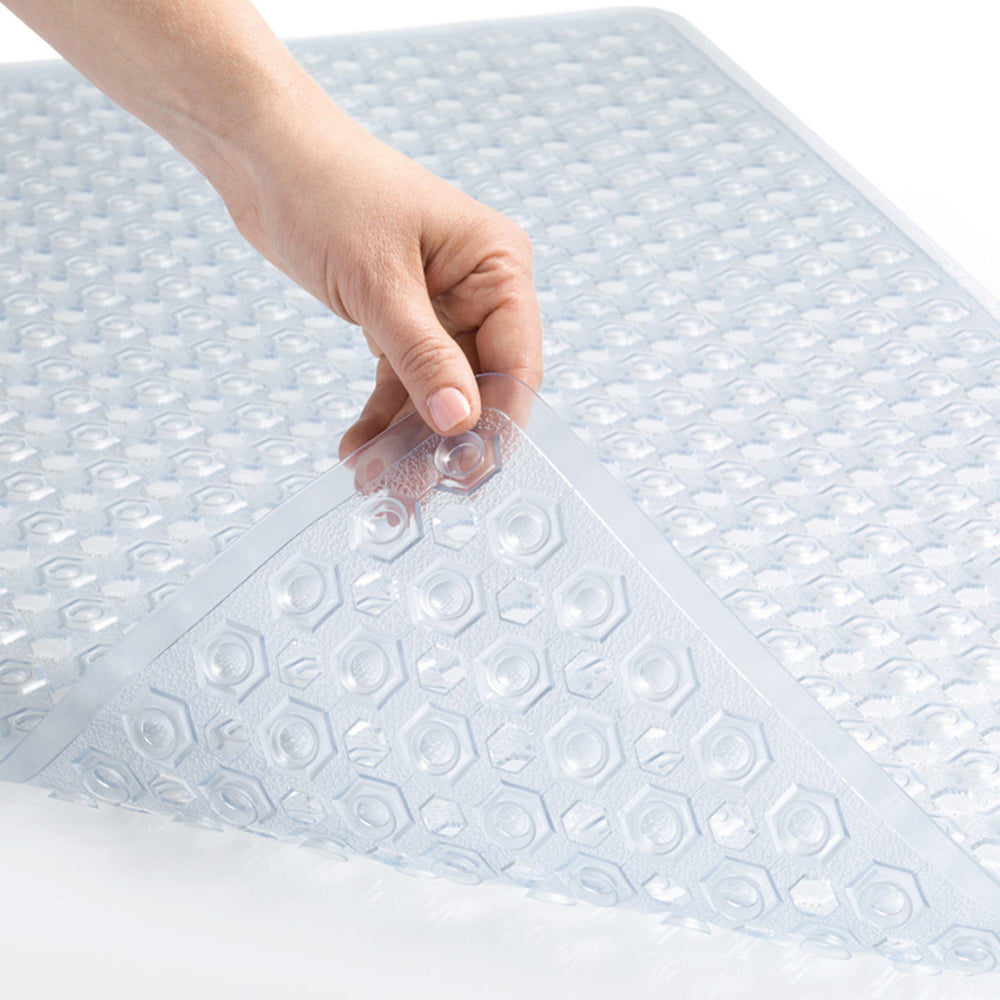
Thick memory foam with suction-cup TPR backing — the best non-slip grip performance on smooth tile in this comparison. The cushioned surface creates a comfort factor that stone and wood alternatives cannot match. cannot be machine washed; foam interior retains moisture and can develop mildew smell over months; suction-cup grip degrades as cups age and accumulate soap residue; 12–24 hour dry time makes it a poor choice for busy bathrooms where two or more people use the space in the morning.
The Gorilla Grip is the strongest-gripping mat in this lineup on smooth bathroom tile, and that single trait is why it keeps selling. The suction-cup TPR base pulls a clean vacuum against flat tile and resists the lateral push that ends most bath-mat slips. The thick memory foam core gives a cushioned, slightly springy feel underfoot that stone and wood mats simply cannot reproduce — meaningful for users who stand on the mat to apply lotion or dry their hair. The trade-off is moisture management: the foam cannot be machine washed, holds water inside for 12–24 hours, and in a humid bathroom develops mildew smell over several months that surface cleaning will not fix. Suction-cup elasticity also fades after twelve to eighteen months of daily use, so plan on replacement on that cycle.
Pros
- ✓Strongest suction-cup grip on smooth tile in this comparison
- ✓Cushioned memory foam is comfortable for prolonged standing
- ✓Wide range of sizes and colors available
- ✓Suction backing works for elderly users and balance concerns
Cons
- ✗Foam cannot be machine washed — surface cleaning only
- ✗Dry time of 12–24 hours leaves the mat damp for the next user
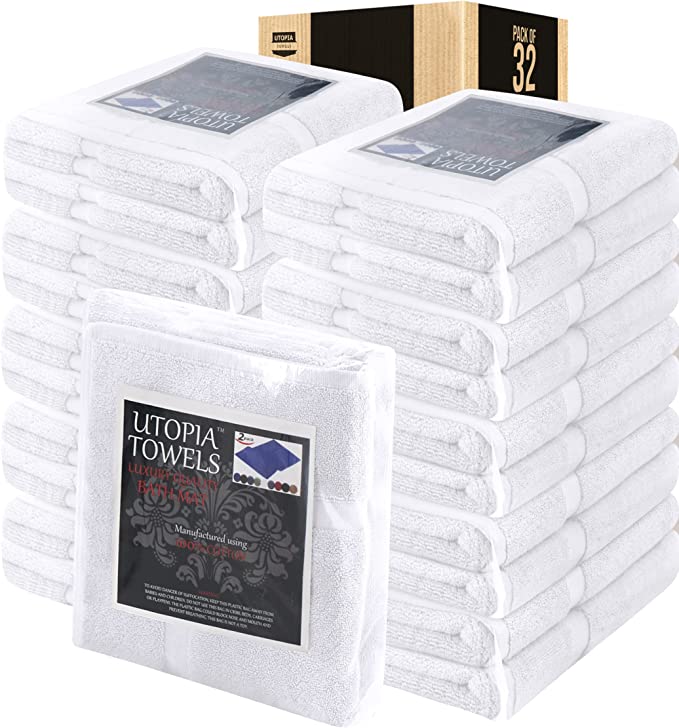
Machine-washable cotton terry at a price point that makes multi-mat rotation practical. Buying three and rotating every three to five days keeps each mat clean and the bathroom covered. slow drying in humid conditions (8–12 hours); mildew risk if washing frequency lapses; thinner rubber backing may curl after repeated washing; lower pile depth means less underfoot cushioning than premium plush options.
Utopia Towels' 400–450 GSM cotton terry mats are sold in value multi-packs that make a rotation strategy actually viable: buy three, swap every two to three days, and each mat gets washed before mildew can start. The terry surface is the most familiar feel for users who grew up with bath towels in front of the shower, the machine-wash cycle takes no special care, and the per-mat price is low enough that replacement is not a difficult decision. The honest weaknesses are inherent to cotton: it dries slowly (8–12 hours in an unventilated bathroom), develops odor within three to five days of summer humidity without washing, and the thinner rubber backing on budget mats curls at the corners after repeated wash cycles. The right buyer treats these as consumables rather than long-term fixtures.
Pros
- ✓Multi-pack pricing makes rotation strategy affordable
- ✓Machine washable with standard household detergent
- ✓Familiar terry feel — no adaptation period
- ✓Easy to replace when worn rather than coddle
Cons
- ✗Develops mildew odor within 3–5 days in humid summers without washing
- ✗Rubber backing thins and curls after many wash cycles
Subscribe to our newsletter
Occasional updates and new releases — no spam.

Premium 600+ GSM plush micro-cotton — the softest underfoot feel in this comparison and a genuine visual upgrade for a design-led bathroom. Machine washable in large sizes. the thickest pile takes longest to dry (12–18 hours in unventilated bathrooms); high pile traps lint and pet hair; requires low-heat drying to maintain pile structure; premium price requires care discipline to justify the investment.
Hotel Collection's 600+ GSM micro-cotton tufted pile genuinely reads as spa-quality underfoot — the difference from a standard 400 GSM mat is immediately obvious the first time you step onto it post-shower. Larger runner formats (up to roughly 24×60 inches) cover the full shower-to-vanity transition zone, which standard 17×24 mats cannot. The plush surface is machine washable, and for a design-led bathroom renovation it is the only mat in this comparison that actively contributes to the room's visual identity rather than just functioning quietly. The premium price asks for care discipline in return: high-heat tumble drying crushes the pile over time, and the deeper pile takes 12–18 hours to dry in an unventilated bathroom and traps pet hair and lint more visibly than low-pile alternatives.
Pros
- ✓Genuinely plush 600+ GSM pile — top-tier underfoot feel
- ✓Available in long runner formats for open-plan bathrooms
- ✓Machine washable with appropriate care
- ✓Visual upgrade for design-conscious renovations
Cons
- ✗Slow 12–18 hour dry time in unventilated bathrooms
- ✗High-heat drying crushes the pile permanently
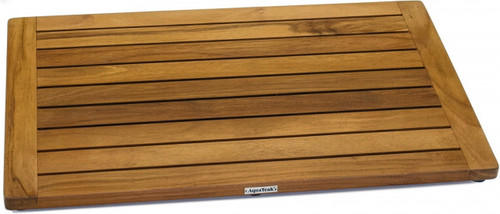
Solid teak slats with natural oil content — resistant to moisture damage, naturally inhibits mold, drainage gaps keep the standing surface dry during use. The spa-aesthetic visual is distinctive and intentional. no cushioning; water drains through slats to floor below (floor needs wiping); requires oil maintenance twice yearly; premium price is justified by aesthetics rather than functional superiority over fabric alternatives.
A teak slat platform changes the bathroom visual in a way no fabric mat can, and the natural oil content in the wood gives it inherent moisture and mold resistance without chemical treatment. The slatted design drains water through the gaps so the standing surface stays surface-dry during use, and the platform itself dries fully within one to two hours. With occasional teak-oil or food-safe mineral-oil application — roughly twice a year — the wood holds its color and grain rather than going gray. The honest limitations are functional rather than aesthetic: the rigid wood is hard underfoot with zero cushioning, water passes through to the floor below which then needs wiping, and the 1.5–2.5 kg weight plus rigid form makes the mat awkward to store or move. The premium price is paid for the look, not for measurable performance gains over diatomite.
Pros
- ✓Drainage gaps keep the standing surface dry during use
- ✓Natural teak oil resists moisture damage and mold
- ✓Distinctive spa-natural aesthetic for design renovations
- ✓Surface dries within 1–2 hours of use
Cons
- ✗Rigid wood is hard underfoot — zero cushioning
- ✗Requires teak-oil maintenance approximately twice a year
Which one is right for you?
For bathrooms where mold is the main concern
Townselect Diatomite Bath Mat
30–60 minute vapor-release dry time eliminates the moisture window mold needs to colonize, and there is no foam interior or terry pile to harbor bacteria.
For households with elderly users or balance concerns
Gorilla Grip Original Bath Mat
The suction-cup TPR base creates the strongest grip on smooth tile in this lineup, and the cushioned foam reduces impact for users who already step cautiously.
For budget-conscious households happy to rotate mats
Utopia Towels Bath Mat
The multi-pack pricing makes a three-mat rotation cheaper than a single premium mat and lets each one get washed every 2–3 days.
For a design-led bathroom renovation
Hotel Collection Bath Rug
The 600+ GSM plush pile and large runner formats turn the mat into part of the room's visual identity rather than a utilitarian splash guard.
For a spa-natural aesthetic with low-maintenance moisture handling
Teak Bath Mat
Slatted drainage keeps the standing surface dry during use and natural teak oil resists mold — the look is the headline, but the function holds up too.
Material types: what actually happens when wet feet touch each surface
Diatomite is a naturally porous sedimentary rock formed from fossilized algae (diatoms). The microscopic pores in the stone surface absorb water from wet feet almost instantly — typically within one to two seconds — and then release that water through the stone's back face as vapor over the following thirty to sixty minutes. The absorption mechanism is passive capillary action, not fabric wicking, which means the surface of a diatomite mat feels dry within moments of use even though the stone itself still contains moisture. Diatomite's pore structure is inherently antimicrobial: the microscopic channels are too small and dry too quickly for mold and bacteria to colonize effectively under normal bathroom use.
Memory foam bath mats use a viscoelastic polyurethane foam core, typically 3–5 cm thick, with a fabric cover and a rubber or suction-cup backing. The foam compresses underfoot and the fabric cover absorbs surface water. Dry time is significantly longer than diatomite — a saturated memory foam mat can take 12–24 hours to dry fully, and in a humid bathroom with limited air circulation the foam core retains moisture that creates conditions for mold growth over months of use. The softness underfoot is genuinely distinctive: stepping onto memory foam after a shower is a different tactile experience than stepping on stone or terry cloth, and for users with joint pain or cold floors this is a meaningful comfort factor.
Cotton terry bath mats function similarly to bath towels — the loop-pile fabric surface wicks moisture from skin and feet into the cotton fibers. Machine washability is the primary advantage: a terry mat can be laundered with standard household detergent in a standard wash cycle, and regular washing prevents the bacterial accumulation that causes odor. The limitation is the same as terry towels in humid conditions: cotton holds moisture and dries slowly, and an unwashed terry mat left in an unventilated bathroom develops mildew smell within three to five days. Cotton terry is the most familiar feel for most users and the lowest-friction category in terms of availability and price.
Teak bath mats are slatted wood platforms that elevate feet above the shower or bath floor, allowing water to drain through the gaps between slats. The wood surface stays relatively dry during use because water drains away rather than being absorbed. Teak's natural oil content makes it resistant to moisture damage and inhibits mold and mildew growth in ways that untreated wood would not tolerate. The spa aesthetic of a teak mat is distinctive — it looks different from any fabric mat and creates a specific bathroom visual that some users are actively seeking. The surface is firm and rigid underfoot, not cushioned, and the wood slats can feel hard on bare feet compared to foam or terry alternatives.
Non-slip backing: suction cups vs rubber vs natural rubber — real performance on different floor types
Suction-cup backing — the type used on most memory foam bath mats including Gorilla Grip — creates a mechanical grip by pressing individual suction cups against the floor surface. The vacuum held in each cup provides resistance against sliding. This backing works well on smooth, impervious tile because the cups form a clean seal against a flat surface. On textured tile (common in some bathrooms as an anti-slip measure on the floor itself), on vinyl with embossed patterns, or on rough stone, the cups cannot form a complete seal and grip is substantially reduced. New suction-cup mats grip better than older ones — the cups lose elasticity over time and collect soap scum that prevents proper seal formation.
Flat rubber backing — a continuous sheet of rubber across the mat's underside — works differently. Instead of mechanical suction, rubber relies on friction between the rubber surface and the floor. Friction-based backing performs more consistently across textured tile and vinyl than suction cups, but provides less absolute grip on perfectly smooth surfaces where the suction-cup approach creates strong vacuum seals. Natural rubber backing performs better than synthetic rubber over time because natural rubber maintains its flexibility longer before hardening and losing grip. Rubber backing can discolor light-colored grout and leave marks on certain vinyl floor materials — a practical concern for users with new bathroom flooring.
Diatomite bath mats and teak mats have no soft backing — they rely on their own weight and surface friction for stability. A diatomite mat typically weighs 1–2 kg for a standard 35×45 cm size, which provides some inherent stability on flat floors, but neither diatomite nor teak mats are rated non-slip in the way that suction-cup or rubber-backed fabric mats are. On wet tile, both can slide if pushed laterally. Both Townselect and most diatomite manufacturers sell optional silicone feet or anti-slip pads that can be applied to the mat's base for improved stability — these are worth adding in households with elderly users or on floors that get very wet.
Drying time and mold resistance — the factor that determines six-month performance
Drying time is the single most important factor in bath mat performance over time. A mat that stays wet between uses is a mat that will develop mold, mildew, or bacterial odor. The ranking by material in ascending dry time under typical bathroom conditions (humidity 60–80%, one to two hours between morning uses): diatomite dries in 30–60 minutes through vapor transmission; teak stays surface-dry during use and the wood itself dries in one to two hours; cotton terry at 400–500 GSM dries in six to twelve hours hung in a moderately ventilated bathroom; memory foam dries in twelve to twenty-four hours even when hung vertically — the foam core retains moisture significantly longer than the surface suggests.
Diatomite's antimicrobial properties are structural rather than chemical: the pore dries too fast for organisms to colonize. This is not a marketing claim — diatomite pore structure under microscopic analysis shows drying behavior that is incompatible with the moisture conditions required for mold and Candida growth. In practice, a diatomite mat used once or twice daily in a moderately ventilated bathroom will not develop mold smell under normal conditions. The caveat is hard-water mineral deposits: in areas with high calcium content in tap water, the pores gradually fill with mineral scale and absorption efficiency decreases over months. Periodic sanding with fine-grit sandpaper (180–240 grit) removes the surface scale layer and restores absorption — this maintenance step has no equivalent in fabric mats.
Cotton terry mats must be washed regularly to prevent bacterial accumulation — every three to five days in humid summer conditions, and every one to two weeks in dry winter conditions. Skipping washes does not mean a mat is fine until it visibly molds — bacterial colonies producing odor can establish well before visible mold appears. The machine-washable advantage of cotton terry is a real practical benefit because it enables the regular cleaning that the material requires. Memory foam mats cannot be machine washed — the foam core is damaged by agitation and water submersion — meaning surface cleaning with a damp cloth or spray is the maintenance option, which cleans the surface but does not address moisture retained in the foam.
Size: standard 17×24 vs large 20×32 — what each format is actually suited for
Standard bath mat size — approximately 17×24 inches (43×60 cm), or 35×45 cm to 50×80 cm in metric sizing — fits in front of a standard bathtub or shower stall and provides coverage for stepping out with wet feet. This size works for most bathrooms where the wet and dry areas are separated by a low threshold or the bath mat sits on the dry-area tile just outside the shower or bath enclosure.
Large 20×32 inch (51×81 cm) formats are better suited to walk-in shower enclosures without a threshold, where the wet floor area extends further before the user reaches the dry tile, and for households where more than one person uses the bath area simultaneously. Walk-in showers (the kind increasingly common in newer apartment construction and renovation-focused housing) benefit from a larger mat footprint. Diatomite mats are less commonly available in large sizes than fabric mats — most diatomite products are in the 35×45 to 45×60 cm range because larger stone panels are heavier and more fragile in shipping.
Memory foam mats are the easiest to find in large and oversized formats because the material is lightweight and flexible, and retailers stock them in a wide variety of sizes. Teak mats are typically in the 40×60 cm to 50×80 cm range. Hotel Collection plush bath rugs are commonly available in runner formats (50×80 cm and larger) that can cover the full transition zone from shower to vanity in an open-plan bathroom.
Product deep-dives
Townselect Diatomite Bath Mat: Natural diatomite stone in a rectangular tile format (typically 35×45 cm, 1–1.5 kg). Surface absorption is genuinely fast — wet feet are noticeably drier within two to three seconds of standing on the surface, which no fabric mat can match. The wipe-clean maintenance means surface hygiene is handled with a damp cloth; the periodic sanding maintenance for mineral deposit removal is a three-minute task with fine sandpaper. No washing machine required, no laundry frequency concern. The aesthetic is clean and modern — matte stone surface suits minimalist and Scandinavian-inspired bathrooms. heavier and more fragile than fabric mats — dropping a diatomite mat on a hard floor can chip or crack it; the firm stone surface has zero cushioning underfoot, which is uncomfortable for users with plantar fasciitis or those who stand on the mat for extended periods; non-slip grip without added silicone feet is weaker than a suction-cup fabric mat, particularly on wet tile; and the 35×45 cm standard size provides less coverage than a large fabric mat.
Gorilla Grip Original Bath Mat: Thick memory foam (typically 3–4 cm) with a machine-printed fabric cover and suction-cup TPR backing. The non-slip backing is the brand's primary differentiator — the suction-cup TPR base creates strong grip on smooth tile and most bathroom floors, and the Gorilla Grip name has become synonymous with the product category. The memory foam compression creates a cushioned, responsive feel that users who stand on the mat to apply lotion or dry their hair notice as a comfort benefit. Available in a wide range of colors and sizes. memory foam cannot be machine washed — the foam core is damaged by submersion; surface cleaning with a spray and cloth is possible but does not address moisture retained in the foam core; in humid bathroom conditions the foam interior can develop mildew smell within months that is not eliminated by surface cleaning; the suction-cup backing performance degrades over time as the cups lose elasticity and accumulate soap residue — expect re-gripping performance to decrease after six to twelve months of daily use; dry time of 12–24 hours means the mat is still damp for the second person using the bathroom in the morning.
Utopia Towels Bath Mat: Cotton terry construction at approximately 400–450 GSM, standard 17×24 inch format, available in value multi-packs. Machine washable at standard household temperatures with no special care requirements — this is the primary practical advantage. The familiar terry surface feel is accessible and inoffensive, and the price point (particularly in multi-packs) makes rotation possible: buying three and rotating them means each mat gets washed every three days without leaving the bathroom mat-free. cotton terry dries slowly — expect 8–12 hours in an unventilated bathroom; in humid summer conditions without regular washing every three to five days, mildew odor develops; the terry loop surface accumulates lint and fibers visible in darker colorways; GSM at 400 means the mat has less pile depth than premium terry options, which translates to less cushioning underfoot; rubber or non-slip backing on budget cotton mats is thinner than premium options and may curl at the corners after repeated washing.
Hotel Collection Bath Rug: Premium plush micro-cotton terry construction at 600+ GSM with a tufted pile that creates a noticeably thick, soft surface. The out-of-wash feel is genuinely plush in a way that standard terry mats are not — the higher pile density and premium cotton specification creates a surface that reads as spa-quality rather than functional bathroom accessory. Machine washable. Available in large formats up to 24×60 inch runners. 600+ GSM means the mat dries significantly slower than lighter options — in an unventilated bathroom expect 12–18 hours for the pile to dry fully; the high pile traps pet hair and lint more than low-pile options; premium plush mats require low-heat or air-dry care to maintain the pile structure — high-heat tumble drying crushes the pile and reduces the mat to a flat, less luxurious feel over time; at the premium price point the per-mat cost requires the purchase decision to involve care compliance that budget mats don't demand.
Teak Bath Mat: Solid teak wood slats with stainless steel screws and pre-drilled drainage gaps. The elevated design allows water to drain through the slats to the floor below, keeping the standing surface dry during use. Teak's natural oil content provides inherent resistance to moisture damage and inhibits mold growth without chemical treatment. The spa aesthetic is distinctive and intentional — this mat looks different from any fabric option and suits bathrooms where the design choice is part of the experience. the rigid wood slats are hard underfoot — zero cushioning for users who prioritize comfort; the drainage gaps mean water does go through to the floor below, which needs wiping, making the floor-maintenance trade-off less favorable in small bathrooms; teak mats require occasional oiling (teak or mineral oil) to maintain the wood's oil content and prevent the surface from going gray — perhaps twice a year, but a maintenance step fabric mats do not require; the weight (typically 1.5–2.5 kg) and rigid construction make the mat harder to store or move than fabric alternatives; premium teak mats are significantly more expensive than fabric options and the price gap is hard to justify on functional grounds alone.
Which mat fits which situation
Bathroom with tile floor, limited ventilation, and concern about mold: Townselect Diatomite. The fast-drying stone surface eliminates the moisture retention that causes mold and odor in fabric mats, and the wipe-clean maintenance is lower friction than laundry rotation. Add the optional silicone feet to the base for adequate non-slip performance on tile.
Household where non-slip grip is the primary concern (elderly users, young children, anyone with balance considerations): Gorilla Grip. The suction-cup TPR backing creates the strongest grip of any product in this comparison on smooth tile floors. Accept the shorter product lifespan for the grip performance, and plan on replacement every twelve to eighteen months as suction-cup elasticity degrades.
Budget multi-mat household rotation with laundry already in the routine: Utopia Towels multi-pack. Buy three, rotate weekly or every three days in summer, wash with standard laundry. The per-mat price makes disposable-attitude purchasing possible — replace a mat when it looks tired rather than trying to extend its life.
Design-led bathroom renovation where the mat is part of the visual: Teak or Hotel Collection. Teak for a spa-natural aesthetic; Hotel Collection for soft luxury. Both require more care attention than a basic terry mat, and both justify their price through aesthetics rather than raw functional performance.
Frequently asked questions
Do diatomite bath mats actually prevent mold?▼
Can memory foam bath mats be machine washed?▼
Which bath mat material is best for textured tile floors?▼
How often should a bath mat be washed?▼
What is the difference between a bath mat and a bath rug?▼
How do you care for a teak bath mat?▼
Prices change. Check the retailer for the current price.
Comments & questions
Discussion happens on nattzy, our community forum. Sign in with Google to post — it takes a second.