Best Electric Blanket 2026: 5 models compared honestly
WriterPickly Editorial
Updated 2026-10-10
Five electrically heated bedding products — from the Beautyrest Secure Comfort electric blanket to dual-zone mattress pads — compared on heat settings, zone control, auto-shutoff, washability and how each one handles a shared bed. Warmth preference varies by person, so a spec-sheet wattage means little without that context.
Quick answer
For couples with mismatched temperature preferences, the Beautyrest Secure Comfort is the pick — dual-control king and queen versions with 20 heat settings, the finest control among the blankets here. Choose the Sunbeam Microplush if you overheat mid-night, since ThermoFine cycles wattage down at setpoint; the Biddeford for all core functions at the lowest price; and the Serta Fleece for sherpa softness as a couch throw.
📋How we compared
We assessed each product on real-world durability, ease of daily use, performance against marketing claims, build quality, and long-term value. Manufacturer specifications were validated against verified owner reviews.
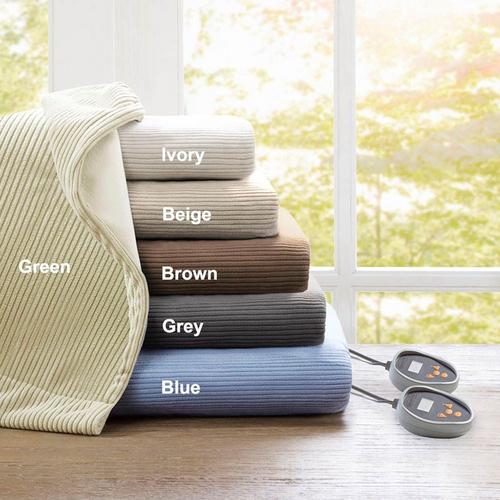
Best for Couples: The Secure Comfort offers the finest temperature control in this comparison: twenty heat settings against the 10-step controllers on competitors. Dual-control king and queen versions split the bed into independent left and right zones for couples with mismatched temperature preferences, and the 10-hour auto-shutoff covers a full night of sleep plus 30 minutes of pre-warming.
This button opens Amazon search results, not a specific product page.
This button opens Amazon search results, not a specific product page.
- 2
This button opens Amazon search results, not a specific product page.
This button opens Amazon search results, not a specific product page.
This button opens Amazon search results, not a specific product page.
Which one is right for you?
Related articles

1★ Best PickA+Best for CouplesBeautyrest Secure Comfort Electric Blanket
Beautyrest Secure Comfort Electric Blanket with 20 heat settings and a 10-hour auto-shutoff. Dual-control versions available in king and queen for couples. The widest heat-setting range in this comparison gives fine-grained temperature control. the most expensive of the four over-blankets; the controller must be disconnected before every wash; 20 settings is more granularity than most users will explore, and adjacent settings differ by small increments.
The Secure Comfort offers the finest temperature control in this comparison: twenty heat settings against the 10-step controllers on competitors. Dual-control king and queen versions split the bed into independent left and right zones for couples with mismatched temperature preferences, and the 10-hour auto-shutoff covers a full night of sleep plus 30 minutes of pre-warming. The fabric is on the heavier woven side rather than ultra-soft, which is what you want under a comforter where pile is irrelevant. The honest weaknesses are price — the dual-control king routinely sits north of $100 — and that, like the other blankets here, the controller must be disconnected before every wash.
Pros
- ✓Blanket body is machine washable once the controller is detached
- ✓20 heat settings give the finest granularity in this comparison
- ✓Dual-control king and queen for couples with different preferences
- ✓10-hour auto-shutoff covers a full night plus pre-warming
Cons
- ✗Most expensive of the four over-blankets — dual-control king above $100
- ✗Controller must be disconnected before every wash
This button opens Amazon search results, not a specific product page.
2ABest Self-Regulating ComfortSunbeam MicroPlush Heated Blanket
Sunbeam MicroPlush Heated Blanket with ThermoFine self-regulating technology that dynamically adjusts wattage output to maintain set temperature rather than running at fixed output. Soft microplush fabric is noticeably softer than woven electric blanket fabric. 10 heat settings with 10-hour auto-shutoff. Dual-control variants available. ThermoFine can cycle down aggressively in warm rooms, making some higher settings feel cooler than expected; microplush fabric pills with repeated washing faster than the Beautyrest's construction; quality control reviews have shown some unit-to-unit variation in maximum heat output.
Sunbeam's ThermoFine technology is the genuine differentiator here: rather than running the wire at fixed output, the system senses temperature and cycles wattage down once the setpoint is reached. The practical result is a lower risk of waking up overheated a few hours after you set the blanket warm at bedtime, and energy use over a full heating season should be lower than fixed-output designs at equivalent perceived warmth. The microplush fabric is softer than the Beautyrest's woven construction and significantly softer than budget electric blankets. Ten heat settings cover a practical range and a 10-hour auto-shutoff handles the full night. The honest weaknesses are quality-control variation between units (some run cooler than expected on high settings as ThermoFine cycles down aggressively), microplush pilling faster than woven fabric over repeated wash cycles, and dual-control SKUs being harder to find in stock than the single-control version.
Pros
- ✓ThermoFine self-regulation reduces mid-night overheating
- ✓Microplush fabric is softer than woven electric blankets
- ✓Lower seasonal energy use than fixed-output designs
- ✓10 settings and 10-hour auto-shutoff cover a full night
Cons
- ✗Some units run cooler than expected on high — ThermoFine cycles aggressively
- ✗Microplush pills faster than woven fabric over many wash cycles
This button opens Amazon search results, not a specific product page.
3ABest BudgetBiddeford Comfort Knit Electric Heated Blanket
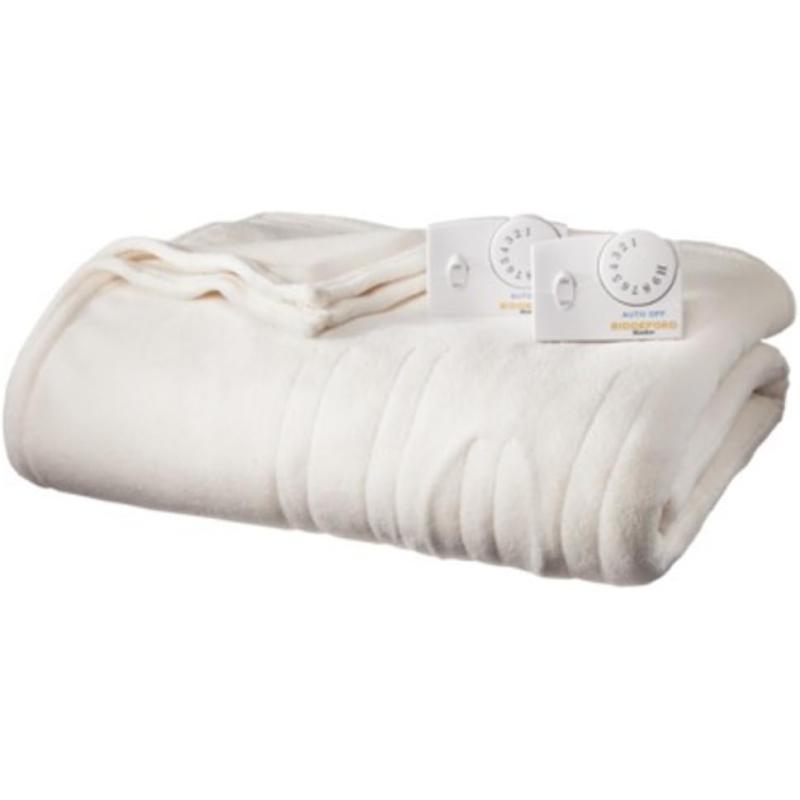
Biddeford Electric Blanket at the budget price tier — 10 heat settings, auto-shutoff, machine-washable body once controller is detached. Provides the core electric blanket function without the premium price. Widely available through major US retailers. budget construction shows in fabric feel, which is thinner and less soft than Sunbeam MicroPlush; heat distribution is less consistent across the surface than the premium-tier blankets based on aggregated user reviews; fixed-output design (no ThermoFine equivalent) means no self-regulation; the controller feels less substantial than premium options.
Biddeford delivers the essential electric-blanket function — wire matrix, 10 heat settings, 10-hour auto-shutoff, UL/ETL certification, machine-washable body — at a price tier well below the Beautyrest and Sunbeam. Available through every major US retailer, replacement parts and warranty service are easier to access than for premium imported brands. For a guest bedroom, a college dorm, or a household that has not previously owned an electric blanket and wants to see whether the category fits before committing to a premium model, this is the rational entry point. The honest weaknesses are exactly what the price tier predicts: the fabric is thinner and less soft than Sunbeam's microplush, surface-temperature consistency across the blanket is less uniform than the premium-tier picks based on aggregated owner reviews, the controller feels less substantial in the hand, and there is no ThermoFine-equivalent self-regulation so the wire runs at fixed output across all heat settings.
Pros
- ✓Lowest price in this comparison with all core functions intact
- ✓UL/ETL certification and 10-hour auto-shutoff are present
- ✓Widely available through US retailers — easy warranty access
- ✓Machine-washable body once controller is detached
Cons
- ✗Fabric is thinner and less soft than Sunbeam MicroPlush
- ✗Fixed-output design has no self-regulation against overheating
This button opens Amazon search results, not a specific product page.
Subscribe to our newsletter
Occasional updates and new releases — no spam.
4B+Best Plush FeelSerta Plush Fleece Electric Heated Blanket

Serta Plush Electric Heated Blanket in sherpa-style fleece construction — the softest tactile experience in this comparison, doubles as a couch throw as well as a bed warmer. 10 heat settings, 10-hour auto-shutoff, dual-control variants available in larger sizes. fleece construction retains heat more than woven fabric, making the high settings more likely to feel uncomfortably warm; fleece requires gentle-cycle cold wash to prevent matting, which is more maintenance-intensive than standard electric blanket washing; fleece surface shows lint and pet hair more prominently than microplush or woven fabric.
The Serta Plush is the most tactile blanket in this comparison — sherpa-style fleece on one face creates a physical softness and visual warmth cue that microplush and woven fabrics cannot match, and it works equally well as a couch throw and as a bed warmer. Ten heat settings, a 10-hour auto-shutoff, and dual-control variants in larger sizes round out the spec. If you intend to use the heated blanket on a sofa during evening reading or movie nights as well as in bed, no other product in this comparison provides comparable couch-throw appeal. The honest weaknesses are inherent to the fleece construction: fleece traps body heat more aggressively than woven fabric, which means the higher settings can feel uncomfortably hot, fleece requires a gentle cold-water wash to prevent matting (more care than woven blankets), and the high pile shows lint and pet hair more prominently than microplush or woven alternatives.
Pros
- ✓Softest tactile feel in this comparison — sherpa-style fleece
- ✓Doubles as couch throw for evening sofa use
- ✓Dual-control variants available in king and queen
- ✓Visual warmth cue beyond functional heating
Cons
- ✗Fleece traps body heat — high settings can feel uncomfortably hot
- ✗Requires gentle cold wash to prevent matting of the pile
5B+Best Under-Body HeatingPerfect Sleep Pad Heated Mattress Pad

Perfect Sleep Pad — a water-based mattress pad that goes under you, not over you. A bedside unit circulates warm or cool water through the pad, so it warms the bed in winter and cools it in summer. Compatible with any blanket, comforter, or duvet you already own. No heated fabric weight on top, no blanket sliding off during the night, no hot air at face level. far more expensive than an electric blanket — the queen is listed at $1,450 on the maker's site; the product page does not state wattage or an auto-shutoff time; designed for western mattress use, not floor futon setups; restless sleepers may find body parts off the pad during the night.
The Perfect Sleep Pad is the only product in this comparison that works from below — and the only one that is not an electric blanket. A bedside unit warms or chills water and circulates it through a pad that sits between you and the mattress; the maker lists a range of 55–118°F, so it cools the bed in summer as well as warming it in winter. Any blanket or comforter you already own goes on top unchanged, and the face stays at ambient room temperature, which many people find more comfortable than hot air trapped under a heated blanket. Queen and king sizes are dual zone. The honest weaknesses: it is in a different price class (the queen is listed at $1,450 on the maker's site), the product page does not state wattage or an auto-shutoff time, it is made for Western mattresses rather than floor-futon setups, and restless sleepers can move off the pad during the night.
Pros
- ✓Warms and cools — water-based, 55–118°F range per the maker
- ✓Works under any blanket or comforter you already own
- ✓No blanket weight on top, no hot air at face level
- ✓No heating wire in the pad itself
Cons
- ✗Restless sleepers may move off the pad during the night
- ✗Far more expensive — the queen is listed at $1,450
This button opens Amazon search results, not a specific product page.
How we compared
We did not run independent thermal imaging tests to map heat distribution across blanket surfaces. We did not measure actual wattage draw under controlled ambient temperature conditions or test auto-shutoff circuits with calibrated timing equipment. We did not verify safety certification claims independently — the four electric blankets are sold as UL- or ETL-listed according to their product pages, and we did not conduct our own electrical safety testing. Real thermal mapping of electric blanket surfaces requires infrared imaging equipment and controlled ambient conditions that produce repeatable results; the kind of single-room test where you set the blanket to maximum and wait twenty minutes is not a reliable methodology for comparing products.
Instead: we read the manufacturer and retailer product pages and the published care instructions for each product, and built a simple electricity-cost model from typical wattage ranges and average residential electricity rates. We calculated electricity cost per month at standard usage assumptions (8 hours per night, 30 nights per month). We call out the explicit weakness on every product because an electric blanket that overheats in one zone, shuts off too early on a cold night, or has a controller that fails after a few washes is not providing the warmth or safety it was purchased for.
One distinction matters before the comparisons begin: the Perfect Sleep Pad is not an electric blanket. It is a water-based mattress pad — a bedside unit warms or chills water and circulates it through a pad you lie on, so there is no heating wire in the pad itself, and it can cool the bed in summer as well as warm it in winter. It is also in a different price class: the queen size is listed at $1,450 on the maker's site, roughly ten times the price of the blankets here. Comparing it directly to the four over-blankets is like comparing a heated car seat to a car heater — both add warmth, but through different mechanisms with different advantages. We include it because warming from underneath solves problems that over-blankets cannot: it does not slide off a restless sleeper, it works under any existing bedding, and it avoids the 'overheated from above, cold air on the face' feeling that some people dislike with heated over-blankets.
Heat distribution: zone heating vs single heat zone
Single heat zone electric blankets use one continuous wire circuit across the entire blanket surface. The wire generates heat uniformly, but uniform wire density does not translate to uniform warmth across your body — feet lose heat quickly and get less blood flow when you are cold, so they feel colder than your torso. Single-zone blankets compensate by setting the thermostat high enough that the feet feel warm, which means the core may feel uncomfortably hot. This is a common complaint with electric blankets: waking up overheated at the torso while the feet remain comfortable.
Zone heating blankets split the wire circuit into distinct sections — typically upper body and lower body zones — each with an independent controller. You set the foot zone warmer and the torso zone cooler, or turn the foot zone on thirty minutes before bed to pre-warm and then reduce it for sleeping. Dual-control blankets for couples extend this logic to left-side and right-side zones, so two people with different temperature preferences can share one blanket without compromise. The Beautyrest Secure Comfort and Serta Plush both offer dual-control variants; Sunbeam and Biddeford also sell dual-control versions in larger sizes, and the Perfect Sleep Pad's queen and king sizes are dual zone.
The Perfect Sleep Pad distributes heat differently from any of the over-blankets: the warmth comes from the pad under your body, so the area in contact with the pad gets the most heat, and the areas not in contact — your sides, your face — stay at ambient room temperature. This avoids the hot-air-around-the-head feeling. The trade-off is that the heat does not reach parts of your body that are not in contact with the pad — if you roll over and a shoulder or hip is off the pad, those areas cool faster than they would under a heated blanket. For people who stay in one position through the night, the pad works well; for restless sleepers, the over-blanket's full surface coverage may be more reliable.
Auto-shutoff: timing, safety, and what it means for overnight use
Auto-shutoff is one of the most safety-relevant specifications in the electric blanket category. All four electric blankets in this comparison have auto-shutoff. The relevant differences are in how long before the shutoff activates and whether the shutoff is truly automatic or requires a timer setting from the user.
The Beautyrest Secure Comfort shuts off automatically after 10 hours — one of the longest intervals in the category. This is useful if you want the blanket to pre-warm the bed for 30 minutes before sleep and then run through the night without shutting off mid-sleep; 10 hours covers a full 8-hour sleep period with pre-warming time. The Sunbeam MicroPlush and Biddeford both shut off after 10 hours as well. The Serta Plush shuts off after 10 hours. The Perfect Sleep Pad's product page does not state an auto-shutoff time; it is a water-based system designed to hold a set temperature.
Beyond the timer, overheat protection is a separate and more fundamental safety feature. UL and ETL certification for electric blankets requires passing overheat protection tests — the wire insulation must withstand temperatures significantly above normal operating range without degrading or igniting. The ETL mark (issued by Intertek) indicates independent third-party verification that the product passed these tests on the specific production samples submitted. This does not guarantee every unit from a production run is identical to the certified sample — manufacturing variation is a real concern — but certification is a meaningful baseline floor for safety, and the four electric blankets are sold as UL- or ETL-listed.
The most important practical safety rule applies to all four electric blankets equally: do not tuck an electric blanket tightly under a mattress. The wire insulation is rated for the heat it generates when air can circulate around it; a tightly tucked blanket that traps heat against the wire can exceed the design temperature of the insulation even within the normal operating range. Use an electric blanket as a flat drape over the bed, not as fitted bedding. Do not use an electric blanket for an infant, or for anyone who cannot feel heat or cannot move away from it. The Perfect Sleep Pad has no heating wire in the pad, so follow its own manual for setup.
Wattage, warmth, and electricity cost
Electric blanket wattage typically ranges from 60W to 200W depending on blanket size and construction. A twin blanket at medium setting draws less power than a king blanket at high setting. The wattage number on the specification sheet is the maximum draw at the highest heat setting; actual energy use during normal operation at a mid-range setting is significantly lower.
Using representative wattage figures and standard residential electricity rates, the monthly cost for 8 hours of nightly use over 30 nights works out as follows. At 100W (representative of a queen-size blanket at medium setting): 100W × 8h × 30 days = 24 kWh per month. At the US average residential rate of approximately $0.17 per kWh, this is approximately $4.08 per month. At 150W (high setting or larger blanket): approximately $6.12 per month. These costs are modest — less than a cup of coffee per night at medium settings — but dual-blanket couples running two controllers simultaneously double the consumption.
The Sunbeam MicroPlush uses ThermoFine technology, which dynamically adjusts wattage output based on a temperature feedback loop: the controller measures the actual blanket surface temperature and reduces wattage when the setpoint is reached, rather than running continuously at fixed wattage. This is similar to a thermostat versus a fixed-output heater. In warm rooms or under heavy comforters that trap heat, ThermoFine will cycle the element down frequently, consuming less energy than a fixed-output blanket at the same nominal heat setting. In cold rooms with minimal bedding, it will run closer to maximum wattage. Over a full heating season, ThermoFine-type self-regulation can meaningfully reduce total electricity use compared to fixed-output designs at equivalent warmth levels.
The Perfect Sleep Pad's product page does not state its wattage, so we cannot compare its running cost with the blankets. As a general point, electric under-pads tend to need less power than over-blankets of the same size, because the pad is pressed against the body and covered by the bedding, so less heat escapes into the room.
Washing: detach the controller first
Washing an electric blanket means removing the controller entirely before the blanket goes into the washing machine. The controller housing is not waterproof, and submerging it in the wash cycle will destroy the electronics and create a safety hazard. The care instruction on these blankets specifies 'remove controller before washing' as a non-negotiable step.
None of the four blankets in this comparison should go into the washing machine with the controller attached. Retail care instructions for Beautyrest heated blankets say to disconnect the controller before washing, the same as the other three. After washing, confirm the connector is completely dry and firmly re-seated before the next use. Controllers themselves must never be washed or tumble-dried.
The blanket body — the fabric and wire matrix — on all four blankets is machine washable once the controller is detached. The connection point on the blanket is sealed with plastic housing that keeps water out of the wire terminals during washing. After washing, air-dry the blanket or tumble-dry on low heat before reattaching the controller; high heat can damage the wire insulation. The Perfect Sleep Pad is a water-filled pad, so follow its own manual for cleaning.
Dual control for couples
Dual-control electric blankets split a king or queen blanket into left and right halves, each with an independent controller. The left-side person sets their temperature independently of the right-side person. This eliminates the most common couple-blanket conflict: one person runs hot and wants the blanket off, while the other runs cold and wants it on maximum.
The Beautyrest Secure Comfort and Serta Plush both offer dual-control king and queen sizes as specific SKUs. The dual-control version costs more than the single-control version — typically $20-40 more — and comes with two controllers rather than one. Both controllers must be plugged into outlets, which means you need two accessible outlets near the bed. This is straightforward in a bedroom with outlets on both sides of the bed; it requires an extension cord in a bedroom with outlets only on one side, which introduces its own safety consideration (never run an extension cord under a rug or mattress).
The Sunbeam MicroPlush offers dual-control in specific sizes. The Biddeford's lineup includes dual-control variants at the budget price point. The Perfect Sleep Pad is sold as a single-zone pad in the single size and as a dual-zone pad in queen and king, where each side sets its own temperature.
Over-blanket vs under-blanket, and energy-saving
In Japan, the term for an electric blanket refers broadly to both the over-blanket, placed on top of the body, and the under-blanket, placed between the mattress and the sleeper. The Perfect Sleep Pad sits in the under-blanket position — you lie on top of it — although it circulates warm water rather than using a heating wire. The four other products in this comparison are over-blankets. Electric under-blankets as a category have existed for decades.
Electricity pricing structure and energy-saving awareness make the wattage comparison salient, where running costs vary by region and contract type. Running costs add up over a heating season, and doubly so for couples running two controllers. Sunbeam's ThermoFine technology is a genuine energy-saving advantage for buyers on time-of-use electricity contracts or for households trying to reduce heating loads.
The futon context adds a specific consideration for the Perfect Sleep Pad: futon bedding is traditionally placed directly on the floor or on a low platform, and some people sleep on tatami or thin platform arrangements where a western-style mattress topper layout would not apply. For these setups, a traditional under-blanket that is specifically designed for placement inside a futon set may be a more practical fit than the Perfect Sleep Pad, which is designed for western mattress use. The four over-blankets in this comparison work equally well in both Western-bed and futon-over-blanket use cases.
Where each fits
Couples who need independent temperature control and want a well-made blanket with a long auto-shutoff window: Beautyrest Secure Comfort Electric Blanket. The 20-heat-setting range is the widest in this comparison, and dual-zone control is available in king and queen sizes. The 10-hour auto-shutoff covers a full night. the Beautyrest is the most expensive of the four over-blankets in this comparison — the dual-control king version typically retails above $100; the controller must be disconnected before every wash; 20 settings is more granularity than most people use, and the difference between setting 10 and setting 11 is small.
Soft feel and self-regulating warmth at a mid-range price: Sunbeam MicroPlush Heated Blanket. The microplush fabric is softer than standard fleece and significantly softer than the woven fabric construction used in some budget electric blankets. ThermoFine self-regulation is a genuine feature that reduces overheating at night. 10 heat settings cover a practical range. Sunbeam's quality control has produced mixed reviews over multiple product generations — some units run cooler than expected at higher settings due to ThermoFine cycling down aggressively; the MicroPlush fabric pills with repeated washing faster than the Beautyrest's fabric; dual-control models exist but the single-control version is the more commonly available SKU.
Budget constraint, basic heated blanket functionality without premium features: Biddeford Electric Blanket. At the budget price tier, the Biddeford provides the essential function of an electric blanket — warmth, 10 heat settings, auto-shutoff, machine washable body — without the price premium of the Beautyrest or Sunbeam. Widely available through major US retailers. the budget construction shows in the fabric — less soft than Sunbeam MicroPlush and noticeably thinner than the Serta fleece; heat distribution from user reviews shows more inconsistency than the premium-tier blankets; the controller feels less substantial in the hand than the Beautyrest's controller; no ThermoFine equivalent means fixed-output running at all heat settings.
Plush fleece warmth and visual warmth cue: Serta Plush Electric Heated Blanket. The sherpa-style fleece construction provides a physical softness and visual warmth cue that microplush and woven-fabric blankets do not. If tactile comfort is a primary criterion — blanket as couch throw as well as bed warmer — the Serta's fleece construction is the most comfortable in this comparison to sit under on a sofa. fleece construction traps more heat than woven fabric, which means the ThermoFine-equivalent behaviour matters more here — at high settings, the Serta can retain body heat under the fleece in a way that microplush does not, and some users report that the high setting is uncomfortably hot; fleece requires more careful washing to prevent matting and should be washed on a gentle cycle cold.
Different use case: warmth from underneath, no weight on top, works under any bedding: Perfect Sleep Pad. A bedside unit circulates warm or cool water through a pad that sits between you and the mattress, and you can use any blanket or comforter on top. It also cools the bed in summer, which no electric blanket does. No blanket slides off during the night, no hot air trapped against the face. the Perfect Sleep Pad costs far more than any blanket here — the queen is listed at $1,450 on the maker's site — and its product page does not state wattage or an auto-shutoff time; it is designed for western mattress use and does not work well on floor futon setups; if you move a lot during the night, parts of your body may be off the pad and will not receive heat.
Verdict
For couples sharing a bed with different temperature preferences: Beautyrest Secure Comfort dual-control. The 20 heat settings give each person more granularity than the standard 10-setting controllers, and the 10-hour auto-shutoff covers the full night. If the price is a constraint, the Sunbeam MicroPlush dual-control is the next step down — ThermoFine self-regulation reduces the risk of mid-night overheating, and the microplush fabric is noticeably softer than budget alternatives.
For solo use, budget constraint: Biddeford at the budget tier provides the core function. For solo use with tactile warmth priority: Serta Plush provides the softest physical experience in this comparison, though the fleece construction requires attention to wash settings.
For anyone who wants warmth from underneath, finds over-blanket heating uncomfortable, or also wants cooling in summer: Perfect Sleep Pad. It works with any existing bedding and keeps the face at room temperature, but it is a water-based system in a much higher price class, so it only makes sense if you will use it all year.
One rule that applies to all four electric blankets: do not fold an active electric blanket back on itself. The wire matrix is not designed to withstand the heat concentration that occurs when a folded blanket runs — the heat from two wire layers stacks inside the fold. Store electric blankets unfolded or loosely rolled, and always inspect the wire along the blanket surface before seasonal use for any kinks, bends, or damaged insulation that might have occurred during storage.
Frequently asked questions
Is it safe to sleep with an electric blanket on all night?▼
Can I use an electric blanket with a memory foam mattress?▼
How do I wash an electric blanket without damaging it?▼
What is the difference between an electric blanket and a heated mattress pad?▼
Why does my electric blanket have cold spots or heat unevenly?▼
How much electricity does an electric blanket use per month?▼
What heat setting should I use for sleeping versus pre-warming the bed?▼
Check the details of the products in this article
- Beautyrest Secure Comfort Electric Blanket$144.05Reference price
This button opens Amazon search results, not a specific product page.
- Sunbeam MicroPlush Heated Blanket$49.99〜$109.99Reference price
This button opens Amazon search results, not a specific product page.
- Biddeford Comfort Knit Electric Heated Blanket$67.45Reference price
This button opens Amazon search results, not a specific product page.
- Serta Plush Fleece Electric Heated Blanket$91.99Price as of 2026-11-10
- Perfect Sleep Pad Heated Mattress Pad$1,450.00Reference price
This button opens Amazon search results, not a specific product page.
Prices change. Check the retailer for the current price.
Comments & questions
Discussion happens on nattzy, our community forum. Sign in with Google to post — it takes a second.
Still deciding? Ask the community your own question — Post a question on nattzy ↗
Related articles
Best Electric Wine Openers 2026: Oster vs Secura vs Ozeri
Best Electric Grills 2026: George Foreman & Indoor Picks
Best Travel Blanket 2026: 5 Picks Compared

Best Electric Griddles 2026: Presto vs Blackstone Compared

Best Electric Scooters 2026: 5 Compared (Segway G2, Apollo)
Best Electric Shaver 2026: 5 models compared honestly
