Best Beginner Electric Guitar 2026: 5 Compared
Beginners rarely quit because their guitar sounds cheap. They quit because it hurts to play: strings set too high, sharp fret ends, and a bridge that drifts out of tune between songs.
Quick answer
The Yamaha Pacifica PAC112V is the beginner electric guitar to buy: its HSS pickups cover clean pop through overdriven rock, and it has the most consistent build and factory setup reputation in this price band, which is what actually decides whether a first guitar is playable. The Squier Sonic Stratocaster is the cheapest sensible option, the Squier Affinity Telecaster stays in tune best, the Epiphone SG Standard is the rock pick, and the Ibanez GRX70QA has the easiest neck for small hands.
We did not run our own testing on any of these guitars. Doing it properly would mean measuring string action, fret-end finish and tuning drift across several units of each model straight out of the box — and one sample of each would tell you little anyway, because unit-to-unit variation is the main problem at this price. What we did instead: took the published specifications (scale length, pickup layout, bridge type, neck profile) from each maker's own product pages, checked current street prices at major US retailers, and read owner reviews at volume, filtering for complaints that repeat across many buyers — high action, sharp fret ends, tuning instability, electronics noise — rather than one-off impressions. Where a spec is a manufacturer claim rather than an independent measurement, we say so in the text.

🏆 Best overall: The Pacifica PAC112V has been the default beginner recommendation for years for one reason: it is the most consistently built guitar at its price. Owner reviews complain far less about sharp fret ends and bad factory setup than they do for most rivals.
Top picks ↓| Product | Price | Link |
|---|---|---|
| $300〜$380Reference price | ||
| $180〜$230Reference price | ||
| $250〜$300Reference price | ||
| $450〜$550Reference price | ||
| $230〜$300Reference price |
Top picks
Related articles


The PAC112V and the cheaper PAC112J are different models — check the V suffix in the listing.
The Pacifica PAC112V has been the default beginner recommendation for years for one reason: it is the most consistently built guitar at its price. Owner reviews complain far less about sharp fret ends and bad factory setup than they do for most rivals. The HSS layout with coil-split covers almost every style a beginner will try. The tremolo is the one weak point for tuning, as on any budget vibrato bridge.
Pros
- ✓Most consistent build and setup in its price band
- ✓HSS pickups with coil-split cover clean to rock
- ✓Comfortable double-cutaway body
Cons
- ✗Tremolo can drift out of tune under heavy use
- ✗Costs more than the Squier Sonic

Sold in SSS and HSS versions and in beginner packs with an amp — confirm which one the listing is.
The Squier Sonic Stratocaster is the cheapest guitar here that is still worth buying. It gets the Strat essentials — three single-coils, a 25.5-inch scale, a tremolo and a neck Squier describes as slim — at the lowest price in the group. The trade is quality control: fret ends and factory setup vary more than on the Yamaha, so budgeting for a setup is part of the deal.
Pros
- ✓Lowest price in the group
- ✓Classic Strat tones and shape
- ✓Slim, easy neck
Cons
- ✗Wider unit-to-unit variation in fret finish
- ✗Single-coil hum and tremolo drift

Earlier Affinity Telecasters differ in finish and neck details; buy the current listing, not old stock.
The Affinity Telecaster is the low-maintenance pick. Its fixed string-through bridge has no springs to shift, so it holds tuning better than any of the tremolo guitars here, and the two single-coils give the bright, cutting Tele sound that suits country, indie and rock rhythm playing. It is a simple guitar with few things to go wrong. The pickups are single-coils, so expect some background hum.
Pros
- ✓Fixed bridge holds tuning well
- ✓Simple, low-maintenance design
- ✓Bright, versatile Tele tone
Cons
- ✗Single-coil hum
- ✗Less suited to high-gain metal
Subscribe to our newsletter
Occasional updates and new releases — no spam.
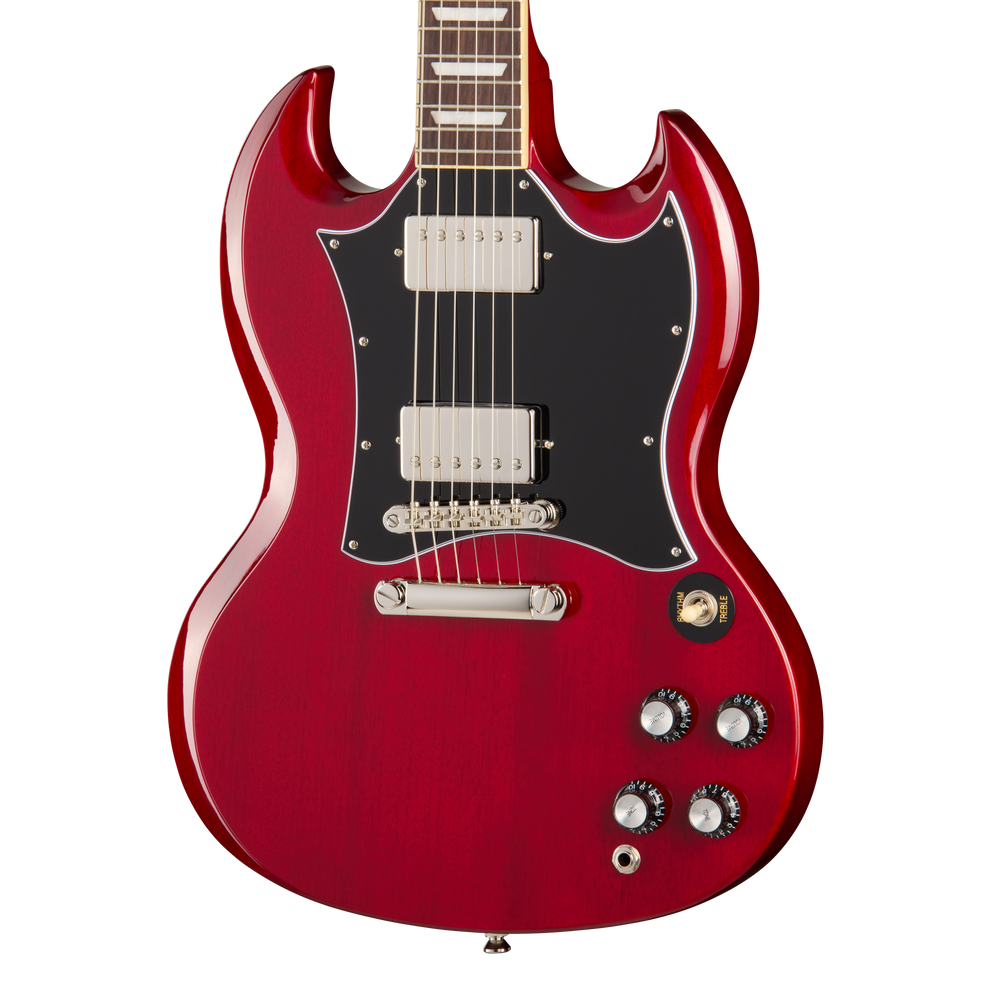
Do not confuse it with the cheaper SG Special variants, which differ in pickups and construction.
The Epiphone SG Standard is the pick if you already know you want rock. Two humbuckers give a thick, hum-free sound, the shorter Gibson-style scale makes bends and stretches a little easier, and the thin mahogany body is light to wear standing up. The fixed bridge keeps it stable. It is the most expensive guitar here, and the SG shape is known to be neck-heavy on a strap.
Pros
- ✓Two humbuckers, no single-coil hum
- ✓Shorter scale is easier on the fretting hand
- ✓Light body and fixed bridge
Cons
- ✗Most expensive in the group
- ✗Neck dives on a strap
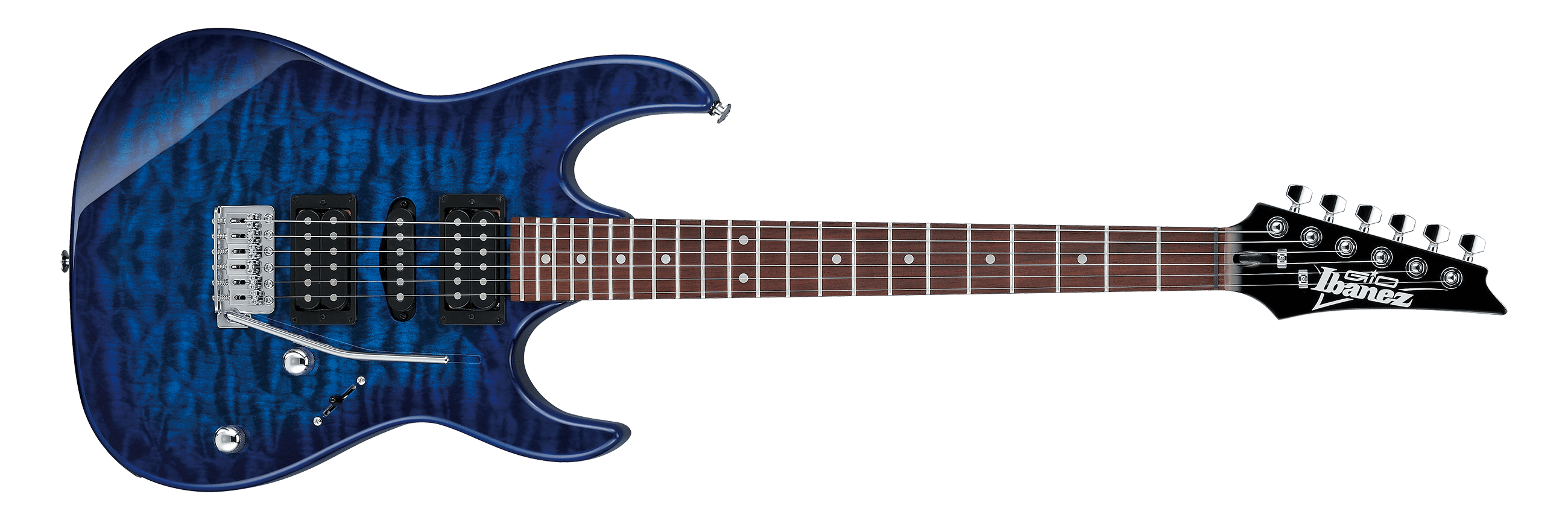
The QA suffix refers to the quilted-maple-look top; the cheaper GRX40 is a different model, so check the number.
The GRX70QA is the best choice when the neck is the problem. Ibanez builds thin, flat necks, and this model gives the easiest reach in the group. The HSH layout offers humbucker weight at both ends with a single-coil in the middle, which suits rock and metal while still giving cleaner tones. The tremolo is the usual budget type, so tuning stability is its weak spot.
Pros
- ✓Thin neck, easiest reach here
- ✓HSH layout suits rock and metal
- ✓Low price for the features
Cons
- ✗Budget tremolo affects tuning stability
- ✗Hardware feels cheaper than the Yamaha
Neck shape and scale length decide how hard the first month is
The single biggest physical difference between these guitars is not the body shape but the neck. Scale length — the vibrating length of the string — sets how much tension the strings carry and how far apart the frets are. The Squiers and the Yamaha use the Fender-style 25.5-inch scale; Gibson-style guitars like the Epiphone SG use a shorter scale of roughly 24.75 inches. The shorter scale means slightly slacker strings and slightly closer frets, which is noticeably easier on the fretting hand in the first weeks.
Neck profile matters as much as scale. Ibanez is known for thin, flat necks, and the GRX70QA follows that approach; for smaller hands or players who find thick necks tiring, that is the most comfortable neck in this group. The Squier Sonic's neck is also described by Squier as slim. The Yamaha and Telecaster are more middle-of-the-road — comfortable for most adult hands, but not the pick if reach is your specific problem.
Pickups: single-coil vs humbucker, and what it means for noise
Single-coil pickups (the thin ones on the Strat and Tele) sound bright and clear, which suits pop, funk, country, indie and blues. Their drawback is a steady background hum, especially near computers, dimmers and fluorescent lights — something beginners often mistake for a fault. Humbuckers (the wide ones on the SG, and in the bridge position of the Yamaha and Ibanez) cancel that hum and sound thicker, which is why they dominate rock and metal.
That is why mixed layouts are the safest choice when you do not yet know what you will play. The Yamaha's HSS layout (humbucker at the bridge, two single-coils) and the Ibanez's HSH layout both give you a quieter, heavier bridge sound plus the brighter single-coil tones. The Yamaha also adds a coil-split on the tone control, which lets the humbucker behave like a single-coil. If you already know you want classic rock or heavier music, the SG's two humbuckers are the direct route.
Bridge: tremolo vs fixed, and why tuning stability matters to beginners
A tremolo (whammy) bridge floats on springs so you can bend the pitch with the arm. On budget guitars that same mechanism is the most common cause of a guitar going out of tune — string bends, heavy strumming and string changes all shift the balance of the springs. Owner reviews of inexpensive tremolo guitars repeat this complaint more than any other.
A fixed bridge avoids the problem entirely. The Squier Affinity Telecaster's string-through bridge and the Epiphone SG's tune-o-matic and stopbar are both fixed, and both hold tuning better with less maintenance. The Yamaha, Squier Sonic and Ibanez all have tremolos; if tuning drift bothers you, you can leave the arm off, and a setup technician can also block or deck the bridge so it behaves like a fixed one.
For a first guitar, stability is worth more than the whammy effect. A guitar that sounds wrong every time you pick it up is discouraging, because a beginner cannot yet hear whether the problem is their fingers or the tuning.
The real difference at this price is setup and fret ends — and the budget you leave for the rest
Between guitars under $500, the gap in wood and hardware matters much less than how the individual guitar left the factory. High string action makes every chord harder to press; poorly finished fret ends scratch the side of your hand as you slide along the neck. These are the two complaints that appear most often in owner reviews across all five models, and they vary from unit to unit rather than model to model. The Yamaha's reputation for consistency is the main reason it ranks first.
Budget for a professional setup at a guitar shop — it typically costs less than the difference between two tiers of guitar, and it fixes action, intonation and minor fret issues. Also leave money for a small practice amp (or a headphone amp), a clip-on tuner, a cable and a strap. A cheaper guitar with a proper setup and a decent amp is a better start than a more expensive guitar played through nothing.
Frequently asked questions
Should a beginner start on electric or acoustic guitar?▼
Do I need an amp to practise?▼
What does a setup do, and is it worth paying for?▼
Is a short-scale guitar better for small hands?▼
Prices change. Check the retailer for the current price.
Comments & questions
Discussion happens on nattzy, our community forum. Sign in with Google to post — it takes a second.
Still deciding? Ask the community your own question — Post a question on nattzy ↗