Best Digital Piano 2026: 5 Weighted 88-Key Pianos Compared
A home digital piano is bought for its sound and kept or abandoned for its keys. The action is the one part you can never upgrade later, so it is where the money should go.
Quick answer
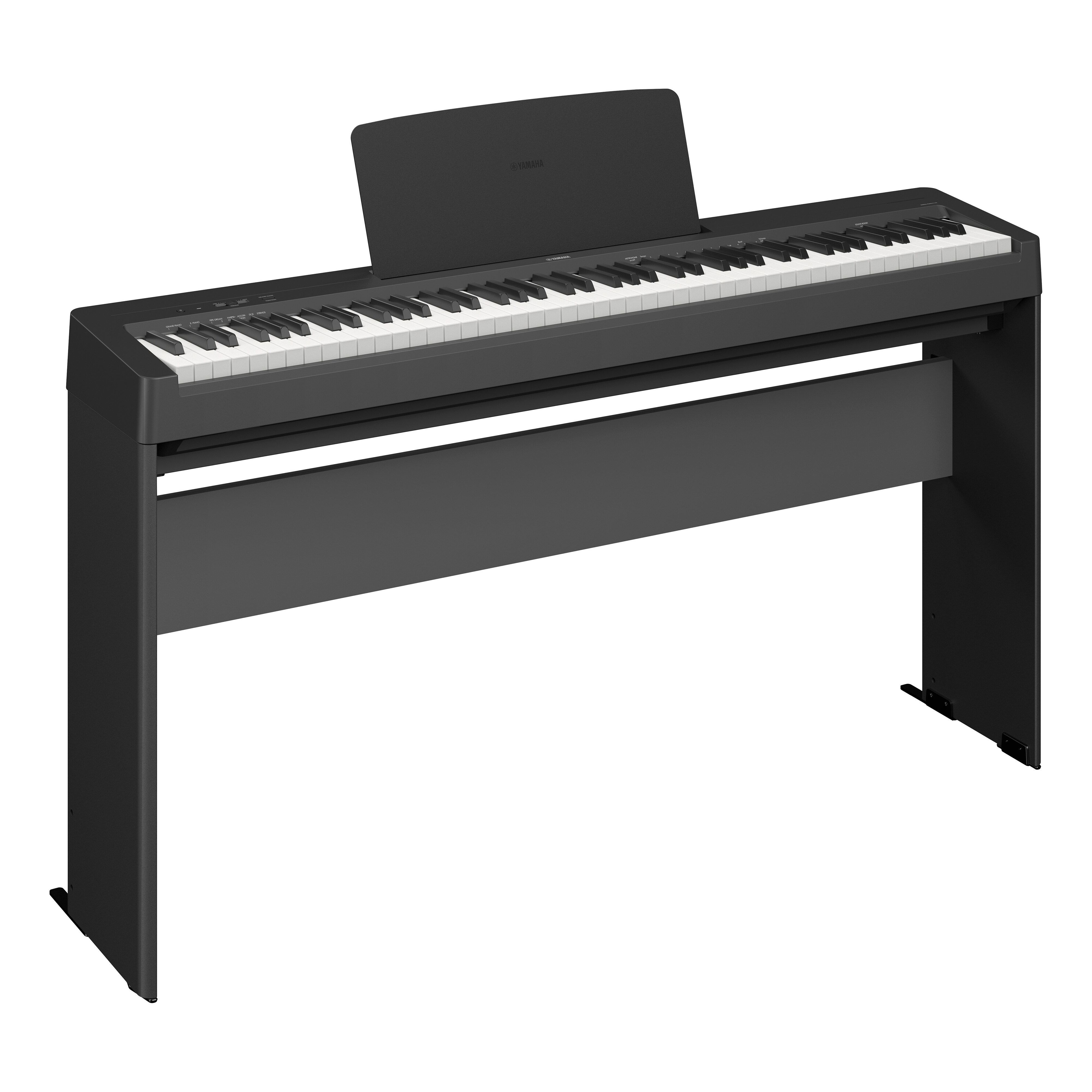
The Roland FP-30X is the digital piano to buy: its PHA-4 Standard action adds escapement to a properly weighted hammer mechanism, it has the deepest polyphony here at a mid-range price, and Bluetooth audio and MIDI are built in. The Yamaha P-225 is the lighter, more compact alternative, the Kawai ES120 has the most piano-like touch if you can stretch the budget, the Casio PX-S1100 is the one to buy for a small room, and the Yamaha P-145 is the cheapest real hammer action worth having.
We did not run our own testing on any of these pianos. Doing it honestly would mean measuring key-weight curves with calibrated gauges, recording each instrument in the same treated room, and logging long-term key wear — none of which we did. What we did instead: took every specification from each manufacturer's own product page and manual (action name, polyphony, connectivity, power options), cross-checked current prices against major US retailer listings, and read owner reviews at volume, keeping only complaints that recur across many buyers — key noise, dropped notes, flimsy included pedals, stand wobble — rather than first-day impressions. Action descriptions such as 'escapement' or 'ivory feel' and all polyphony figures are manufacturer specifications, and we say so where they matter in the text.
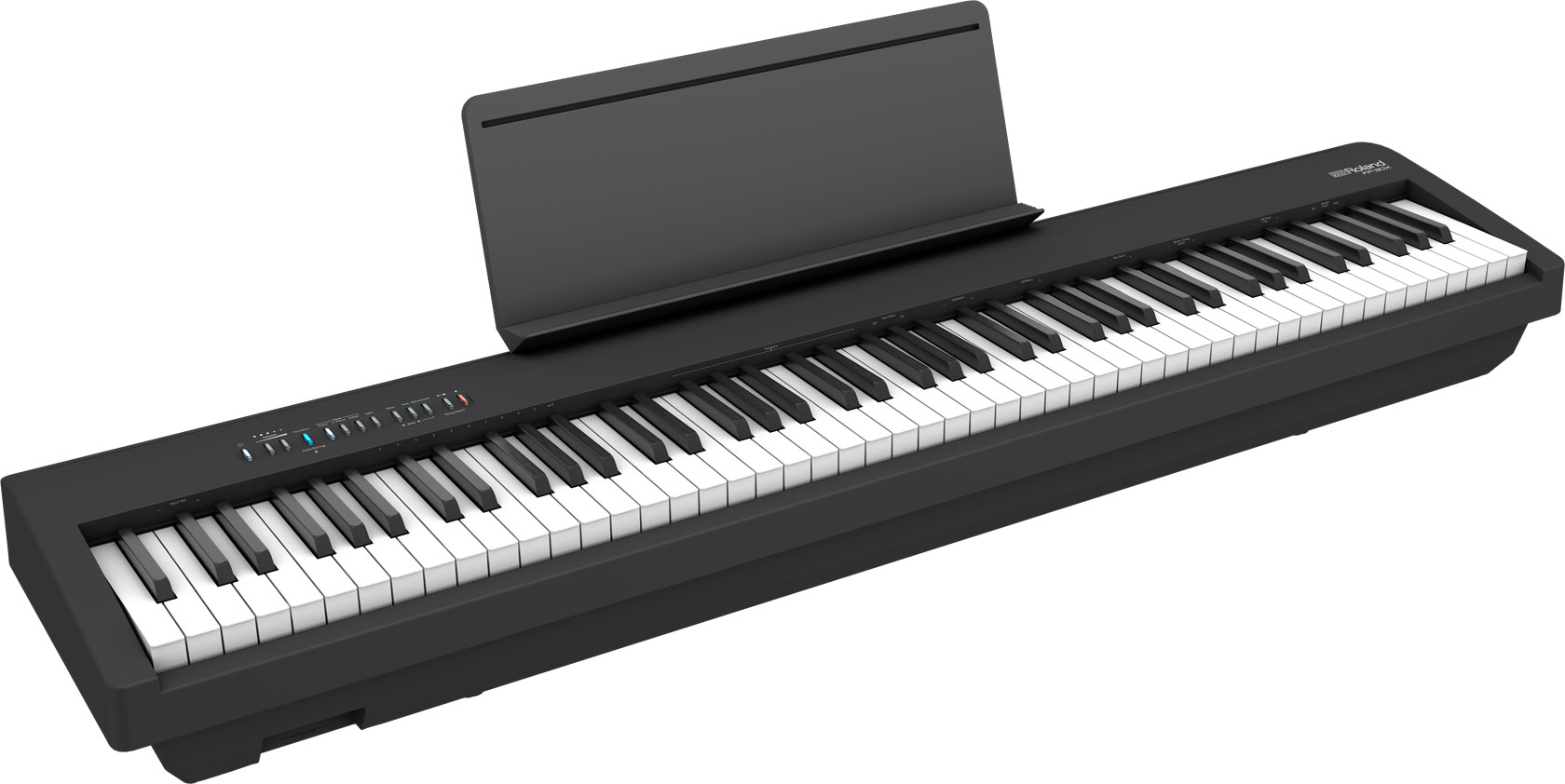
🏆 Best overall: The FP-30X is the pick because it gets the thing that cannot be upgraded — the action — right at a mid-range price. PHA-4 Standard is a properly graded hammer action with escapement and textured keytops, and it is paired with Roland's SuperNATURAL piano engine and a manufacturer-rated 256-note polyphony, the deepest here.
Top picks ↓| Product | Price | Link |
|---|---|---|
| $700〜$800Reference price | ||
| $600〜$700Reference price | ||
| $800〜$900Reference price | ||
| $550〜$700Reference price | ||
| $450〜$550Reference price |
Related articles


Sold alone and in bundles with a stand and pedal; the bundle with Roland's own wooden stand is the one that accepts the three-pedal unit.
The FP-30X is the pick because it gets the thing that cannot be upgraded — the action — right at a mid-range price. PHA-4 Standard is a properly graded hammer action with escapement and textured keytops, and it is paired with Roland's SuperNATURAL piano engine and a manufacturer-rated 256-note polyphony, the deepest here. Bluetooth audio and MIDI are built in. The recurring complaint is key noise: the action is audibly clacky, which matters if someone sleeps below.
Pros
- ✓Weighted hammer action with escapement
- ✓256-note polyphony, the highest here
- ✓Built-in Bluetooth audio and MIDI
Cons
- ✗Key action is noticeably noisy
- ✗Included pedal is a basic footswitch
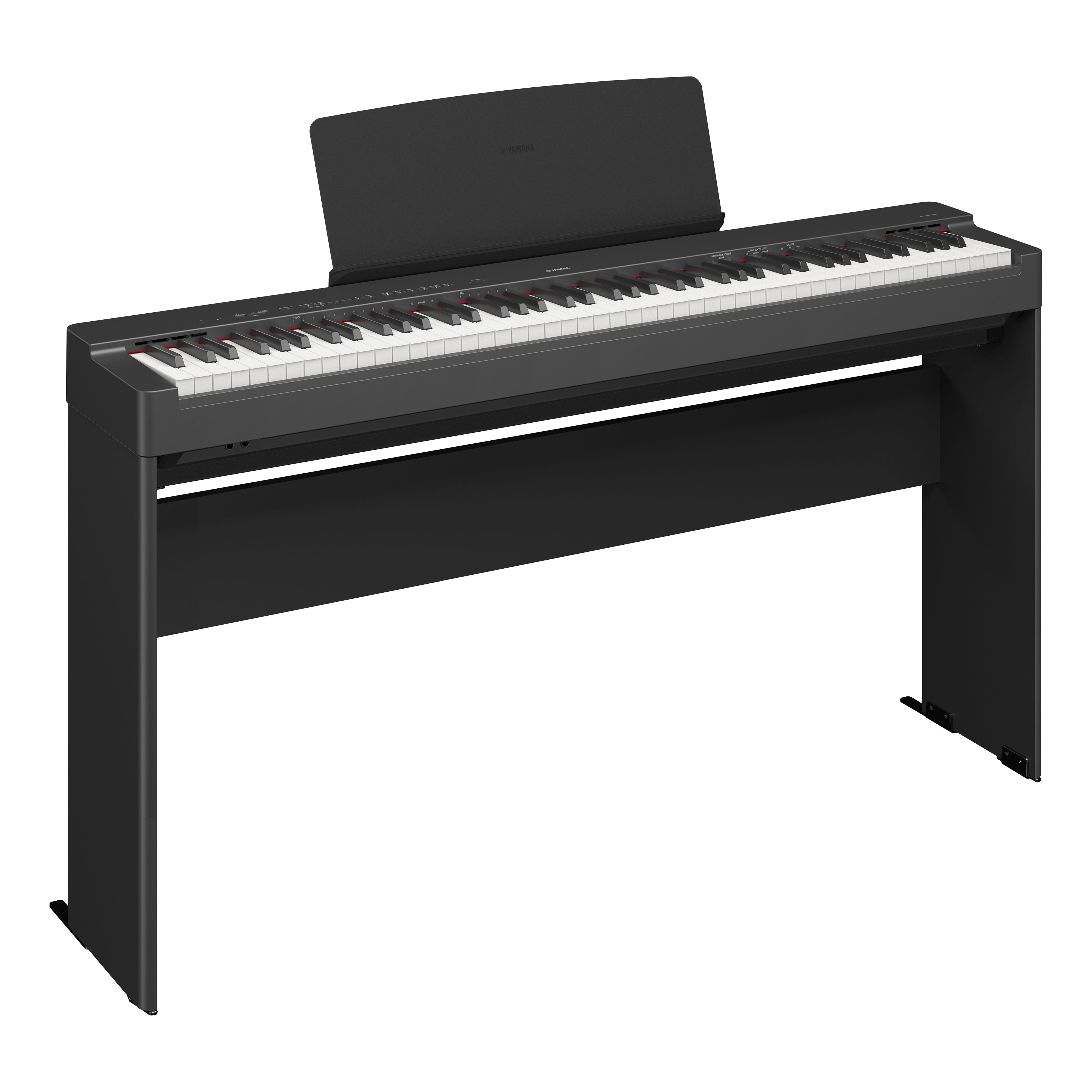
Available in black and white finishes; confirm whether the listing includes the stand, which is sold separately.
The P-225 is the Yamaha to buy if the FP-30X feels like too much piano. The GHC action is lighter and quieter than Roland's or Kawai's, which suits adult beginners and small spaces, and the voice is sampled from Yamaha's CFX concert grand with 192-note polyphony. The trade is that the lighter touch is a step further from an acoustic piano, so a student preparing for exams on a real instrument is better served by a heavier action.
Pros
- ✓CFX concert grand sample
- ✓Light, quiet action suits adult beginners
- ✓Compact, low-profile body
Cons
- ✗Action lighter than an acoustic piano
- ✗No built-in Bluetooth audio

Offered in several colours and in stand bundles; Kawai's matching furniture stand is a separate item on most listings.
The ES120 is the choice for a player who cares most about touch. Kawai's Responsive Hammer Compact action is the one owners most consistently describe as heavy and controlled, and the grand piano sample comes from a piano maker rather than a keyboard maker. It has 192-note polyphony and Bluetooth audio and MIDI. It is the most expensive piano here and has fewer extra sounds and features than the Roland, which is fine if the piano voice is all you use.
Pros
- ✓Heavy, controlled action close to an acoustic
- ✓Grand piano sound from an acoustic maker
- ✓Bluetooth audio and MIDI
Cons
- ✗Highest price of the five
- ✗Fewer extra voices and features
Subscribe to our newsletter
Occasional updates and new releases — no spam.

Comes in black, white and red; check whether the Bluetooth adapter is included for your region.
The PX-S1100 is the answer when the piano has to live on a desk or move between rooms. It is one of the slimmest 88-key hammer-action pianos available, can run on batteries, and still offers 192-note polyphony. Owners most often mention two compromises: the action feels shallower than the Roland or Kawai, and the glossy top panel with touch-sensitive buttons shows fingerprints and is hard to read in low light.
Pros
- ✓Exceptionally slim, light body
- ✓Can run on batteries
- ✓192-note polyphony
Cons
- ✗Action feels shallower than heavier rivals
- ✗Glossy touch panel shows fingerprints
Often bundled with a stand, bench and headphones — compare the bundle price against buying a better sustain pedal separately.
The P-145 is the cheapest way into a real graded hammer action from a major maker, and for a first-year student that is the thing that counts. It shares the GHC action family with the P-225 but has 64-note polyphony, fewer voices and no Bluetooth. That is enough for method books and early repertoire; heavily pedalled pieces are where the 64-note limit starts to be heard.
Pros
- ✓Lowest price for a real hammer action
- ✓Light, quiet GHC keys
- ✓Simple, uncluttered controls
Cons
- ✗64-note polyphony limits pedalled pieces
- ✗No Bluetooth
Key action is the purchase — everything else can be added later
Every piano here uses a hammer action with graded weighting, meaning the low keys are heavier than the high ones as on an acoustic piano. The differences are in how that weight is produced and how the key feels at the bottom of its travel. Roland's PHA-4 Standard (FP-30X) adds escapement — the faint notch you feel when a key is pressed slowly on a grand — and textured keytops that grip a sweaty finger better than smooth plastic. Kawai's Responsive Hammer Compact (ES120) is the action owners most often describe as heavy and piano-like. Yamaha's GHC (P-225, P-145) is lighter and quieter, and Casio's Smart Scaled Hammer Action (PX-S1100) is the most compact mechanism of the group.
The practical rule: if the player already studies on an acoustic piano or plans to, buy the heavier, more controlled action (Roland or Kawai), because moving between a light digital and a real piano is where technique suffers. If the player is an adult beginner playing for enjoyment, a lighter action like Yamaha's GHC is easier on the hands and not a mistake.
Speakers, voices, apps and pedals can all be supplemented later with headphones, a better pedal or a computer. The action cannot be changed without replacing the instrument, which is why it outranks every other spec on this list.
Polyphony: when 64 notes is enough and when it is not
Polyphony is the number of notes the sound engine can produce at once, and it runs out faster than the number of fingers suggests. Holding the sustain pedal keeps every struck note sounding, and layered voices or resonance effects use extra notes per key. When the limit is reached, the oldest notes are cut off, which you hear as a sudden thinning in pedalled passages.
By the manufacturers' figures, the Yamaha P-145 has 64-note polyphony, the P-225, Kawai ES120 and Casio PX-S1100 have 192, and the Roland FP-30X has 256. For a beginner working through method books, 64 is adequate. For romantic repertoire with long pedal and fast arpeggios, 192 and above removes the ceiling entirely, and that is the level we would buy for anyone past their first year.
Quiet practice: headphones fix the sound, not the thud
Every model here has a headphone output, and plugging in mutes the speakers, so the sound itself is never the neighbour problem. The problem is mechanical: hammer actions make a clack when keys return and a thud when they bottom out, and that noise travels through the stand into the floor. Key noise is one of the most repeated complaints in owner reviews across all brands, and it appears most often for the heavier actions.
If you live above someone, plan for the stand as much as the piano. A heavy, braced furniture-style stand transmits less than a folding X-stand, and a thick rubber mat or anti-vibration pads under the stand feet cut the thump further. None of the pianos here is meaningfully quieter than the others through a floor; placement is what changes it.
Portable slab or furniture piano: stands, pedals and what ships in the box
All five are slab pianos that sit on a separate stand, and in their standard packages they typically ship with only a basic square footswitch as the sustain pedal. That switch slides on hard floors and is either fully on or fully off. A piano-style damper pedal is the first accessory worth buying, and on models that support it, a continuous pedal allows half-pedalling.
Roland, Yamaha and Kawai each sell a matching wooden stand and a three-pedal unit for their model, which turns the slab into something close to a small upright in the room. The Casio PX-S1100 goes the other way: it is one of the slimmest 88-key pianos made and can run on batteries, so it suits a desk, a shelf or a move between rooms better than a fixed setup.
Every model here also has a USB connection to a computer or tablet for learning apps and recording software. The Roland, Kawai and Casio add Bluetooth audio, which lets the piano speakers play backing tracks from a phone — useful, but not a reason to accept a weaker action.
Frequently asked questions
Does a beginner really need 88 weighted keys?▼
Is 64-note polyphony a problem?▼
Do I need the matching stand and three-pedal unit?▼
How long does a digital piano last?▼
Prices change. Check the retailer for the current price.
Comments & questions
Discussion happens on nattzy, our community forum. Sign in with Google to post — it takes a second.
Still deciding? Ask the community your own question — Post a question on nattzy ↗
Related articles
Best Smart Watch 2026: 5 Fitness & Lifestyle Watches

Best Tablet Stand 2026: 5 Compared
Best LED Face Masks 2026: 3 Light Therapy Devices Compared
Best Robot Vacuums 2026: 5 Models Compared Honestly
Best Hair Dryers 2026: 5 high-end models compared honestly
Food
Best Rice Cookers 2026: 5 Top Models Compared
Best Rice Cookers 2026: 5 Top Models Compared