Best Pet First Aid Kit 2026: 5 Kits for Dogs and Cats
WriterPickly Editorial
Updated 2026-06-12
A pet first aid kit fills the gap between an injury and a veterinary appointment — it's not a replacement for professional care, but the right supplies applied correctly can stabilize a wound, reduce infection risk, and buy the time needed to reach a vet safely. The kits here range from compact 50-piece pouches to comprehensive emergency cases, and the meaningful differences aren't in piece count but in what those pieces are. A kit with 60 identical cotton balls is less useful than one with a thermometer, gauze, styptic powder, and saline flush.
Quick answer
Judge kits by contents, not piece count — sixty identical cotton balls inflate the number while doing nothing useful. The items that matter are a digital thermometer, sterile gauze, styptic powder for nail-quick bleeding, saline flush, and a self-adhesive bandage wrap that will not stick to fur. Kits here run from compact 50-piece pouches to comprehensive emergency cases. None of it replaces veterinary care; the point is stabilizing a wound and reducing infection risk long enough to reach a vet safely.
Kits were evaluated on completeness against a 15-item checklist of critical first aid supplies, supply quality (sterile vs. non-sterile packaging, gauge/grade of materials), case organization and stress-navigability, portability, and price relative to contents. All five were cross-referenced against American Veterinary Medical Association first aid guidance.
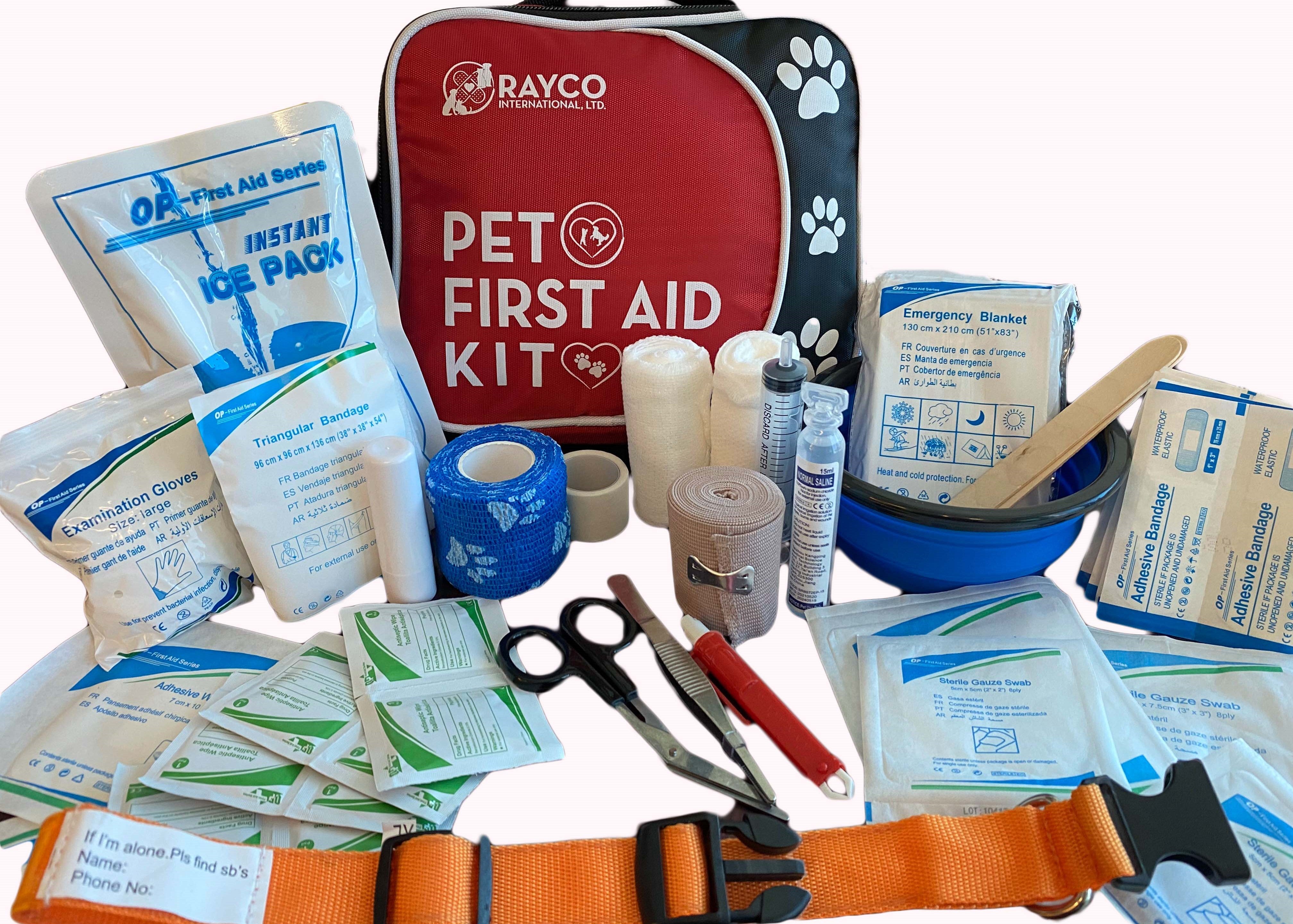
Best budget pick: Rayco's 50-piece kit covers the basics — gauze, bandages, antiseptic wipes, scissors, and tweezers — at the lowest price point in this group. The soft-sided zippered case is compact enough for a car glove box or a hiking daypack.
Top picks ↓Related articles



1★ Best PickBBest budget pickRayco Pet First Aid Kit
Rayco's 50-piece kit covers the basics — gauze, bandages, antiseptic wipes, scissors, and tweezers — at the lowest price point in this group. The soft-sided zippered case is compact enough for a car glove box or a hiking daypack. It skips a thermometer and styptic powder, which are the two items most likely to be needed in the specific emergencies a home kit addresses. At $29, it's a reasonable starting point for owners who plan to supplement with a $10 pet thermometer and a tube of styptic powder purchased separately.
Pros
- ✓Compact and portable
- ✓Covers wound care basics
- ✓Lowest price
Cons
- ✗No thermometer
- ✗No styptic powder
- ✗Quality of some individual items is basic
- Pieces
- 50
- Case
- Soft-sided zip pouch
- Includes muzzle
- No
- Price
- $29
2A-Best for guidance + suppliesAmerican Red Cross Pet Kit

The American Red Cross kit distinguishes itself by pairing physical supplies with curated guidance — a first aid manual, reference card, and access to the ARC Pet First Aid app. The supplies themselves are solid: rectal thermometer, tick remover, styptic pencil, gauze, bandages, antiseptic, and gloves. The organization is logical enough to navigate under stress. At $35 it earns the premium through the institutional credibility and the practical guidance materials that kit-only competitors skip.
Pros
- ✓Includes first aid guidance manual
- ✓ARC app access
- ✓Thermometer and styptic pencil included
Cons
- ✗Some supplies are basic grade
- ✗Case is soft-sided with limited organization
- Pieces
- 42
- Case
- Soft-sided
- Includes muzzle
- Yes (strip)
- Price
- $35
3ABest organization and caseFieldtex Pet First Aid
Fieldtex makes first aid kits for professional environments, and the construction shows. The hardshell case keeps supplies organized in labeled mesh compartments — wound care, tools, and documentation separated and accessible. Contents are professional grade: individually packaged sterile gauze, medical-grade bandage wrap, stainless steel scissors, and a quality thermometer. At $45 it's the most expensive option but also the most credibly built for the supplies to still be usable in 2-3 years of storage.
Pros
- ✓Hardshell case protects contents
- ✓Professional-grade supply quality
- ✓Logical compartment organization
Cons
- ✗Heaviest and bulkiest option
- ✗Overkill for occasional pet owners
- Pieces
- 65
- Case
- Hardshell compartmented
- Includes muzzle
- Yes
- Price
- $45
Subscribe to our newsletter
Occasional updates and new releases — no spam.
4A-Best for hiking and travelSurviveware Pet First Aid

Surviveware built this kit with outdoor use as the primary design constraint. The water-resistant nylon case, clearly labeled exterior zipper pulls, and compact packable size are all optimized for a pack-in situation where you can't afford disorganization. The supplies are labeled with large text, readable in low light or with one hand occupied restraining an animal. Biodegradable waste bags are included — a practical detail most kits skip. At $38 it's the right kit for hiking, camping, and road trips.
Pros
- ✓Water-resistant case
- ✓Large-text labeled compartments
- ✓Includes biodegradable bags
Cons
- ✗Slightly less comprehensive than Fieldtex
- ✗Not optimized for home medicine cabinet use
- Pieces
- 100+
- Case
- Water-resistant nylon
- Includes muzzle
- Yes
- Price
- $38
5A-Best vet-curated kitVet Worthy Pet First Aid

Vet Worthy is assembled with veterinary input rather than general first aid logic, and it shows in the supply selection. The inclusion of a proper digital thermometer, cohesive bandage, EMT gel (a veterinary wound care product), and eye wash gives this kit a clinical credibility others lack. The organization is functional if not exceptional. At $40 it sits in the upper mid-range and provides genuinely better clinical supplies than kits priced similarly.
Pros
- ✓Vet-curated contents
- ✓EMT gel for wound care
- ✓Proper digital thermometer
Cons
- ✗Organization less intuitive than Fieldtex
- ✗Slightly bulky
- Pieces
- 55
- Case
- Soft-sided organized
- Includes muzzle
- Yes
- Price
- $40
| Product | Case | Includes muzzle | ||
|---|---|---|---|---|
| Rayco Pet First Aid Kit | 50 | Soft-sided zip pouch | No | $29 |
| American Red Cross Pet Kit | 42 | Soft-sided | Yes (strip) | $35 |
| Fieldtex Pet First Aid | 65 | Hardshell compartmented | Yes | $45 |
| Surviveware Pet First Aid | 100+ | Water-resistant nylon | Yes | $38 |
| Vet Worthy Pet First Aid | 55 | Soft-sided organized | Yes | $40 |
How to Choose a Pet First Aid Kit: Contents, Organization, and Portability
Piece count is largely irrelevant — what matters is whether the key supplies are present and whether you can find them quickly in a stressful situation.
The Non-Negotiable Contents
Any kit worth keeping should include: sterile gauze pads and self-adhesive bandage wrap, antiseptic wipes or spray, digital rectal thermometer (normal pet temp: 100-102.5°F), blunt-tip scissors, styptic powder or pencil (for nail bleeds), tweezers for splinter/tick removal, nitrile gloves, saline eye wash, and a muzzle or muzzle strip. If a kit is missing three or more of these, supplement it or choose a different one.
Organization Under Stress
A pet emergency is rarely calm. Kits with separate compartments labeled by use (wound care, tools, medications) are faster to navigate than single-compartment cases where everything shifts around. Hardshell cases keep supplies sterile and dry but are heavier. Soft-sided pouches are lighter and more portable for hiking but less organized. Consider whether your primary use is home emergency prep or outdoor travel.
Medications and Their Limitations
Most over-the-counter pet kits include basic antiseptic and some include hydrogen peroxide (for wound cleaning or emesis induction under vet guidance). Very few include any actual medications — and this is appropriate, since prescription medications require a vet diagnosis. What matters is that the non-medication supplies are pharmaceutical grade and sterile, not dollar-store quality gauze.
Refreshing and Expiration
Sterile supplies have expiration dates. Check your kit every 12 months and replace any expired saline, wipes, or medications. Peroxide loses efficacy after opening. A visually appealing kit that hasn't been audited in 3 years may have supplies that are no longer sterile or effective when you actually need them.
Bottom line
American Red Cross Pet Kit is the most credibly curated for someone who wants proven guidance alongside the supplies. Fieldtex is the best-organized professional-grade case. Surviveware is the best choice for hiking and outdoor travel. Vet Worthy covers the clinical basics well at a fair price. Rayco is the right choice when budget is the primary constraint and you plan to supplement with items you already have at home.
Frequently asked questions
What should a pet first aid kit always contain?▼
Should I take a pet first aid course?▼
Can I use human first aid supplies on my pet?▼
Where should I keep my pet first aid kit?▼
Is a $30 kit enough or do I need a $45+ one?▼
Check the details of the products in this article
- Rayco Pet First Aid Kit$29.99Price as of 2026-10-05
- American Red Cross Pet Kit$35Reference price
- Fieldtex Pet First Aid$45Reference price
- Surviveware Pet First Aid$38Reference price
- Vet Worthy Pet First Aid$40Reference price
Prices change. Check the retailer for the current price.
Comments & questions
Discussion happens on nattzy, our community forum. Sign in with Google to post — it takes a second.
View the discussion thread on nattzy ↗
Still deciding? Ask the community your own question — Post a question on nattzy ↗