Best Email Marketing Software 2026: Mailchimp vs Kit
WriterPickly Editorial
Updated 2026-10-20
Your list is growing, and the tool you picked on day one is starting to creak.
Quick answer
For most small businesses, Mailchimp is the safest starting point: the easiest editor, a free tier for small lists and a huge integration catalog. Creators selling newsletters or courses will like ConvertKit (now Kit) for tag-based segmentation, online stores get the most from Klaviyo's Shopify depth and built-in SMS, Brevo is the budget pick as volume grows, and ActiveCampaign wins when automation workflows are the main job.
📋How we compared
These platforms were compared using published plan information, vendor documentation and independent reviews, weighing ease of use, automation depth, integrations, segmentation, and how pricing behaves as a list grows. Pickly did not run hands-on tests. Prices and free tiers change often, so confirm current plans on each official site.

Best Overall: Mailchimp Standard is the safest all-round choice: the most approachable editor in the group, a large integration catalog and a free tier for small lists. It covers newsletters and basic automation well.
Top picks ↓Which one is right for you?
Related articles

1★ Best PickABest OverallMailchimp Standard
The easy default: friendly editor, big integration catalog and a free tier for small lists.
Mailchimp Standard is the safest all-round choice: the most approachable editor in the group, a large integration catalog and a free tier for small lists. It covers newsletters and basic automation well. The main drawback is that cost rises quickly as your contact count grows, and the most advanced features sit on higher plans.
Pros
- ✓Easiest editor to learn
- ✓Large integration catalog
- ✓Free tier for small lists
Cons
- ✗Costs climb quickly as the list grows
Score breakdown
- Best for
- Small businesses and first-time senders
- Starting price
- From $13/mo
- Channels
- Email + marketing automation
- Free tier
- Up to 500 contacts
2B+Best for CreatorsConvertKit Creator Pro
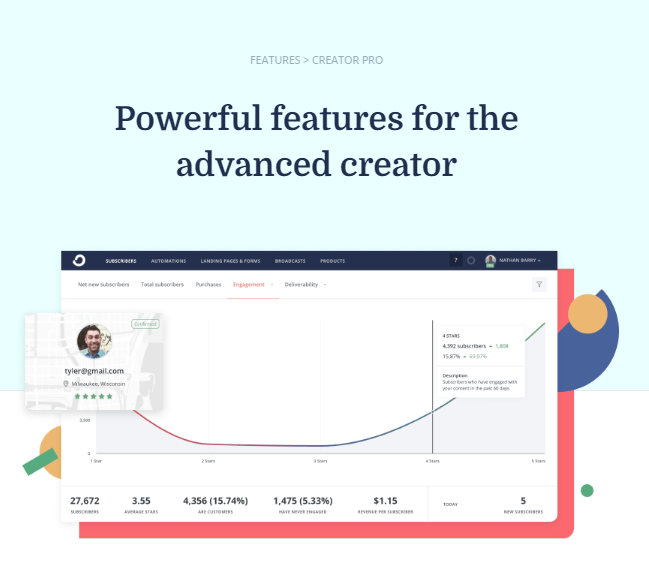
Built for creators who sell through their audience, with tag-based segmentation and simple automations.
ConvertKit (now Kit) is built for people whose audience is the business: newsletter writers, course sellers and coaches. Tag-based segmentation and simple automations make it easy to speak to subscribers by interest. Design options are intentionally limited, so brands wanting highly styled campaigns may find it restrictive.
Pros
- ✓Tag-based segmentation suits creators
- ✓Simple, readable automations
- ✓Good for newsletters and course sales
Cons
- ✗Limited design flexibility for styled campaigns
Score breakdown
- Best for
- Newsletter writers, course sellers
- Starting price
- From $25/mo
- Channels
- Email newsletters + automations
- Free tier
- See official site
3A-Best for E-commerceKlaviyo Email + SMS

The e-commerce specialist: Shopify and BigCommerce data drives email and SMS flows.
Klaviyo is the strongest option for online stores. Deep Shopify and BigCommerce integration turns purchase and browsing behavior into segments and flows, and SMS sits alongside email. Outside e-commerce it is more tool than most senders need, and costs can climb with the size of your profile list.
Pros
- ✓Deep Shopify and BigCommerce integration
- ✓Email and SMS in one platform
- ✓Strong behavior-based segmentation
Cons
- ✗Overkill and costly for plain announcements
Score breakdown
- Best for
- Online stores on Shopify/BigCommerce
- Starting price
- From $45/mo
- Channels
- Email + SMS
- Free tier
- See official site
Subscribe to our newsletter
Occasional updates and new releases — no spam.
4A-Best ValueBrevo Business (formerly Sendinblue)
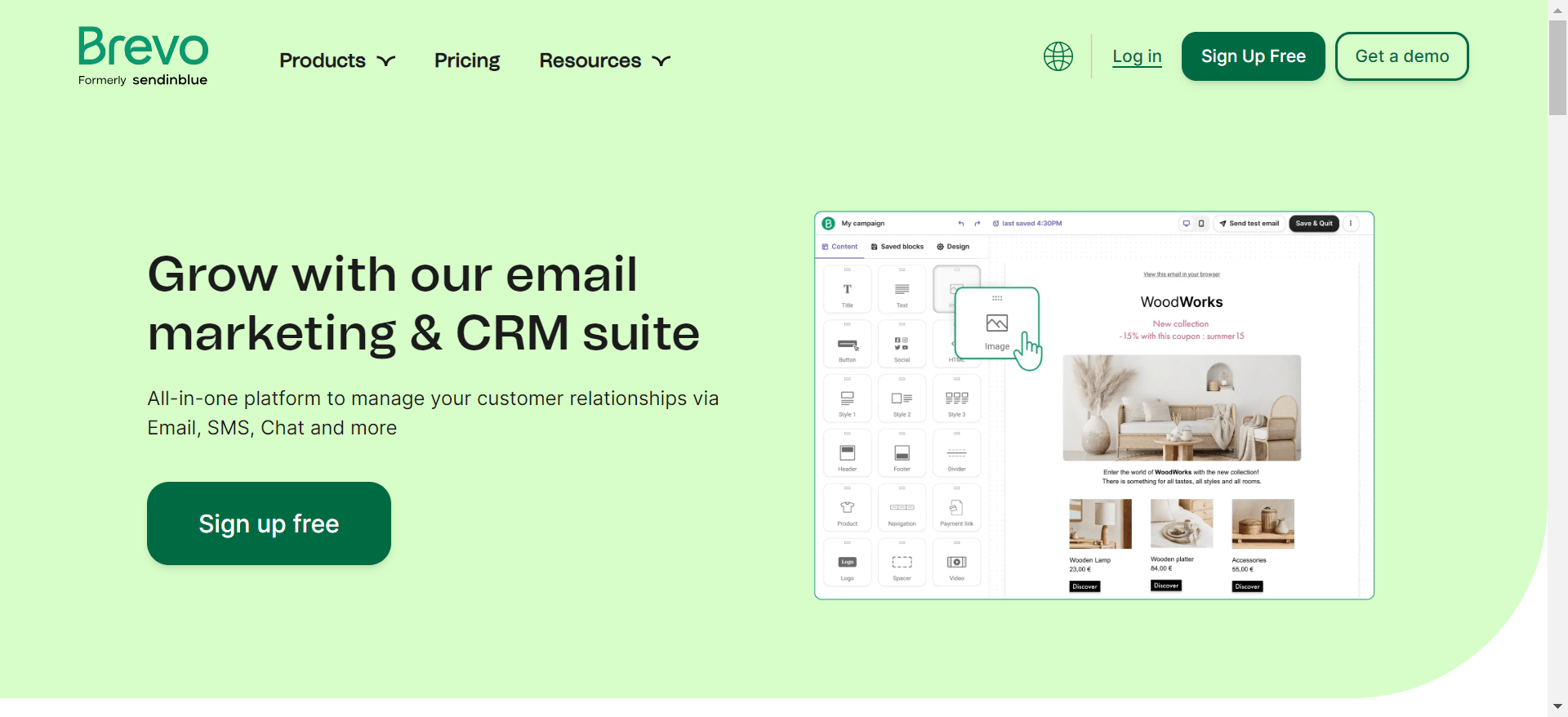
Email, SMS and CRM together, priced to undercut Mailchimp as volume grows.
Brevo combines email, SMS and a basic CRM, and the catalog positions it as cheaper than Mailchimp at higher volumes, with a free allowance of 300 emails per day. It is a good fit for small teams watching the budget. The interface is busier than Mailchimp's, so give the editor a trial before migrating a full list.
Pros
- ✓Email, SMS and CRM in one login
- ✓Lower cost than Mailchimp at higher volumes
- ✓Free daily sending allowance
Cons
- ✗Busier interface; check template polish yourself
Score breakdown
- Best for
- Budget-minded small teams
- Starting price
- From $25/mo
- Channels
- Email + SMS + CRM
- Free tier
- 300 emails/day
5B+Best for AutomationActiveCampaign Plus

The deepest automation and CRM combination here, for marketers who build real funnels.
ActiveCampaign Plus offers the deepest automation in this comparison, paired with built-in CRM. Conditional branching, lead scoring and sales handoff make it the pick for serious funnel builders. Beginners will face a learning curve, and simple newsletter senders will pay for power they do not use.
Pros
- ✓Most powerful automation workflows
- ✓Built-in CRM
- ✓Lead scoring and conditional logic
Cons
- ✗Learning curve and higher price than simple tools
Score breakdown
- Best for
- Marketers running multi-step funnels
- Starting price
- From $49/mo
- Channels
- Email automation + CRM
- Free tier
- See official site
| Product | Best for | Channels | ||
|---|---|---|---|---|
| Mailchimp Standard | Small businesses and first-time senders | From $13/mo | Email + marketing automation | Up to 500 contacts |
| ConvertKit Creator Pro | Newsletter writers, course sellers | From $25/mo | Email newsletters + automations | See official site |
| Klaviyo Email + SMS | Online stores on Shopify/BigCommerce | From $45/mo | Email + SMS | See official site |
| Brevo Business (formerly Sendinblue) | Budget-minded small teams | From $25/mo | Email + SMS + CRM | 300 emails/day |
| ActiveCampaign Plus | Marketers running multi-step funnels | From $49/mo | Email automation + CRM | See official site |
How to choose: audience, channels and automation depth
Start with what you actually send. A monthly newsletter to a few hundred subscribers needs a clean editor and reliable delivery, not a visual workflow engine. A store that wants abandoned-cart flows, post-purchase sequences and SMS needs product data flowing in from the shop platform. Matching the tool to that job matters far more than comparing feature checklists.
Then look at how the price scales. Some platforms charge mainly by the number of contacts, others lean more on how much you send, and extras such as SMS are usually billed separately. Starting prices look similar on paper, but the bill at 10,000 or 50,000 contacts can differ a lot, so price your list size a year from now, not today.
Mailchimp and Brevo: the two general-purpose options
Mailchimp is the default most people reach for, and for good reason. The drag-and-drop editor is approachable, templates are plentiful, the integration catalog is one of the largest in the category, and a free tier covers up to 500 contacts according to the catalog. The trade-off is cost: as the list grows, pricing tends to climb faster than on competitors, and the most advanced automation sits behind higher plans.
Brevo (formerly Sendinblue) bundles email, SMS and a lightweight CRM, and its catalog entry highlights a free allowance of 300 emails per day plus lower cost than Mailchimp at higher volumes. It suits small teams that want several channels under one login without paying enterprise prices. The interface is a little busier than Mailchimp's, and deliverability and template polish are areas worth checking against your own needs.
ConvertKit and Klaviyo: built for creators and online stores
ConvertKit, now branded Kit, is designed around the creator: newsletter writers, course sellers and coaches. Its tag-based segmentation lets you describe subscribers by what they did rather than by rigid lists, and its automations are simple enough to set up in an afternoon. Design flexibility is deliberately limited, which keeps emails plain and readable but may frustrate brands that want heavily designed campaigns.
Klaviyo is the e-commerce specialist. Deep Shopify and BigCommerce integrations feed order and browsing data straight into segments and flows, and email and SMS live in the same platform. That data depth is what drives revenue for stores, but it also makes Klaviyo overkill, and often more expensive, for a business that just sends announcements.
ActiveCampaign: when the automation is the product
ActiveCampaign is the pick when your marketing is a set of conditional workflows rather than a series of broadcasts: score leads, branch on behavior, hand warm contacts to sales and trigger follow-ups. It combines email automation with a built-in CRM, which is its real differentiator over the simpler tools above.
That power has a learning curve. Expect to spend time mapping your funnel before building, and expect to pay more than for a basic newsletter tool. If you only send occasional campaigns, you will pay for depth you never use; if you run multi-step funnels, nothing else in this list goes as far.
Frequently asked questions
Which email marketing platform is best for beginners?▼
Is a free plan enough?▼
Can I switch platforms later without losing my list?▼
Check the details of the products in this article
- Mailchimp Standard$0〜$500Reference price
- ConvertKit Creator Pro$15〜$150Reference price
- Klaviyo Email + SMS$0〜$500Reference price
- Brevo Business (formerly Sendinblue)$0〜$100Reference price
- ActiveCampaign Plus$29〜$400Reference price
Prices change. Check the retailer for the current price.
Comments & questions
Discussion happens on nattzy, our community forum. Sign in with Google to post — it takes a second.
Still deciding? Ask the community your own question — Post a question on nattzy ↗