Best Doorframe Pull-Up Bars 2026: 5 Compared
A doorframe pull-up bar is the fastest path from zero to pulling — no drilling, no studs, nothing beyond the door frame you already have. Weight range and build quality determine long-term value far more than feature lists.
Quick answer
The Iron Gym Total Upper Body Workout Bar is the reference buy: the lever-and-hook design fits 61 to 91 cm openings, supports 136 kg static, covers three grip positions, and costs the least here. Users between 100 and 120 kg should spend more on the Perfect Fitness Multi-Gym Pro, whose thicker tubing and wider lever arm cut the flex the Iron Gym shows at that weight. If your door frame falls outside 61 to 91 cm, the Pullup & Dip adjusts from roughly 62 to 100 cm.
This comparison is desk research. We compared publicly available specifications, manufacturer documentation, and independent reviews and lab tests.

Iron Gym Total Upper Body Workout Bar
Best Overall: The Iron Gym Total Upper Body Workout Bar is the reference standard in this category because the core lever-and-hook design works reliably across the door frames most people actually own. It fits openings from 61 to 91 cm (24 to 36 inches), supports 136 kg static, and offers the three grip positions that matter — wide overhand, neutral parallel on the angled side handles, and close supinated at the center bar.
Top picks ↓| Product | Price | Link |
|---|---|---|
| $47.99Price as of 2026-09-24 | ||
| $44.99Reference price | ||
| $89.95Reference price | ||
| $59.99Reference price | ||
| $49.99Reference price | No partner store here — this opens an Amazon search. |
| Product | Mount type | Doorway width range | Max user weight | Grip positions | Material |
|---|---|---|---|---|---|
| Iron Gym Total Upper Body Workout Bar | leverage (no screws) | 24–32 in (61–81 cm) | 300 lb (136 kg) | 3 (narrow/chin-up, neutral/hammer, wide) | steel |
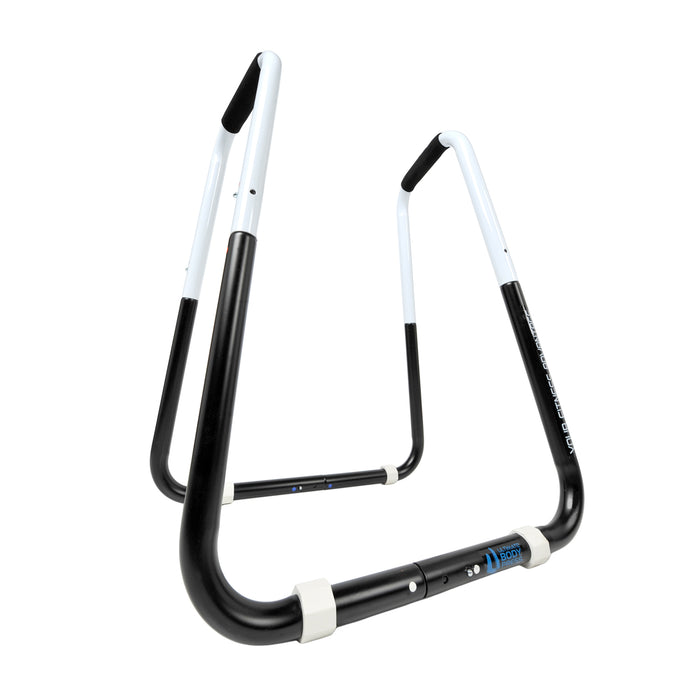
| Perfect Fitness Multi-Gym Pro | leverage (no screws) | 27–33 in (69–84 cm) | 300 lb (136 kg) | 3 (close, normal/wide, hammer) | — |
| Pullup & Dip Doorframe Pull-Up Bar | leverage (no drilling) | 70–95 cm (28–37 in) | 110 kg (242 lb) | 4 | steel |
| Garren Fitness Maximiza Pull Up Bar | screw (screw-in door mounts) | 26–39 in (66–99 cm) | 330 lb (150 kg) | — | chrome steel |
| ProSource Multi-Grip Chin-Up/Pull-Up Bar | leverage (slip-in, no permanent modification) | 24–36 in (61–91 cm) | 300 lb (136 kg) | 12 grips (wide, hammer, close) | steel |
Top picks
Related articles
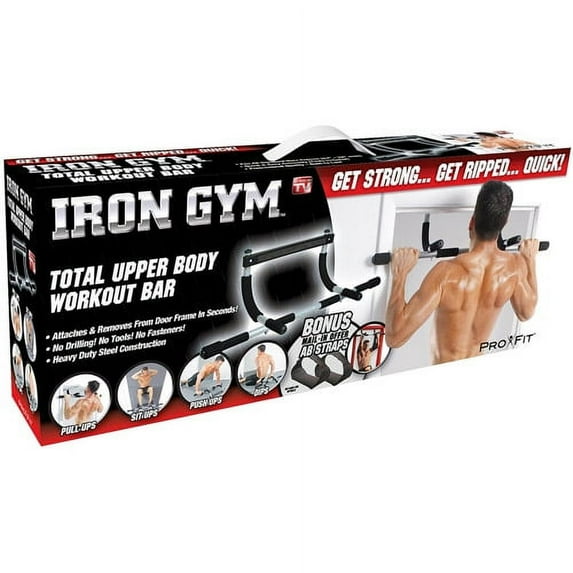


The reference standard doorframe pull-up bar. Over-the-door lever mount, no tools required, fits 61–91 cm door openings. Three grip positions: wide overhand, neutral parallel, close supinated. Rated to 136 kg static. The right first pull-up bar for anyone who wants to start training immediately without permanent installation.
The Iron Gym Total Upper Body Workout Bar is the reference standard in this category because the core lever-and-hook design works reliably across the door frames most people actually own. It fits openings from 61 to 91 cm (24 to 36 inches), supports 136 kg static, and offers the three grip positions that matter — wide overhand, neutral parallel on the angled side handles, and close supinated at the center bar. The outer handles sit roughly 81 cm apart for a competition-grip pull-up. No tools, no installation, drop it onto the door trim and train. The known limitation is door clearance: anyone over about 175 cm tall will bend the knees on a strict dead-hang. Worth knowing for renters that frame pads can leave pressure marks on painted trim with heavy use.
Pros
- ✓Works on most standard door frames with no tools or installation
- ✓Three grip positions cover the core pull-up and chin-up variations
- ✓Rated to 136 kg static loading for strict dead-hangs
- ✓Lowest-friction entry point into pull-up training
Cons
- ✗Trainees over 175 cm tall must bend knees on a full dead-hang
- ✗Foam pads can leave pressure marks on painted trim over heavy use
| Mount type | leverage (no screws) |
| Doorway width range | 24–32 in (61–81 cm) |
| Max user weight | 300 lb (136 kg) |
| Grip positions | 3 (narrow/chin-up, neutral/hammer, wide) |
| Material | steel |
Thicker frame and wider padding than the Iron Gym reduces flex for heavier users. Fits 61–91 cm openings. Same three grip positions plus floor-use push-up and dip function. Rated to 136 kg static. Best doorframe bar choice for users between 100–120 kg who found lighter bars insufficiently stable.
The Perfect Fitness Multi-Gym Pro improves on the basic lever-mount with thicker door frame padding and a wider lever arm that distributes mounting load across more of the trim. The result is noticeably less bar movement under bodyweight, especially for users between 100 and 120 kg who feel the Iron Gym flex. Door compatibility runs the same 61 to 91 cm and the static rating is the same 136 kg, but the thicker steel tubing on the main bar reduces flex meaningfully under heavier loads. It also doubles as a floor-use push-up and dip stand. The dip depth is limited by the bar's height off the floor, but the versatility is real for small-apartment training.
Pros
- ✓Thicker main bar tubing reduces flex for users 100–120 kg
- ✓Wider lever arm distributes mounting load across more of the trim
- ✓Doubles as a push-up and dip stand when placed on the floor
- ✓Same 136 kg static rating and 61–91 cm door compatibility as Iron Gym
Cons
- ✗Floor-use dip depth is limited by bar height off the ground
- ✗Bulkier than the Iron Gym to mount and remove
| Mount type | leverage (no screws) |
| Doorway width range | 27–33 in (69–84 cm) |
| Max user weight | 300 lb (136 kg) |
| Grip positions | 3 (close, normal/wide, hammer) |

Pullup & Dip Doorframe Pull-Up Bar
Adjustable-width design covers door openings outside the standard 61–91 cm range. Metal knurled grips instead of foam padding. Rated to 100 kg static — best for users under 90 kg. The right pick when your door frame does not fit standard fixed-width bars.
The Pullup & Dip doorframe bar uses an adjustable extension system rather than a fixed-width hook, which covers door openings from roughly 62 to 100 cm — wider than any other bar in this comparison. That extra range matters specifically for door frames outside the standard 61 to 91 cm range, common in older housing and some interior doors. Weight capacity is rated to 100 kg, the lowest here, so it is built for users under about 90 kg doing controlled bodyweight movements. The grip surface is knurled steel rather than foam-padded tube, which improves grip security when palms sweat and removes the foam degradation issue, at the cost of more wrist contact pressure.
Pros
- ✓Adjustable width covers 62–100 cm openings outside the standard range
- ✓Knurled steel grip stays secure when palms sweat
- ✓No foam padding to compress or degrade over time
- ✓Solves door-fit problems that fixed-width bars cannot
Cons
- ✗100 kg rating is lower than the 136 kg fixed-width bars here
- ✗Setup is more involved than a simple over-the-door drop
| Mount type | leverage (no drilling) |
| Doorway width range | 70–95 cm (28–37 in) |
| Max user weight | 110 kg (242 lb) |
| Grip positions | 4 |
| Material | steel |
Subscribe to our newsletter
Occasional updates and new releases — no spam.

Telescoping friction-mount design allows height adjustment anywhere in the door opening — not just at the top trim level. Useful for taller users who need more head clearance than over-the-door hook bars provide. Fits 61–91 cm openings. Rated to 136 kg static for strict dead-hang movements.
The Garren Fitness Maximiza uses a telescoping friction-mount mechanism that presses against the jambs rather than hooking over the top trim. Because the bar is held in place by lateral pressure against the door jambs, it can mount at any height within the door opening, not just at the top trim level. That height flexibility is the bar's distinctive feature — useful for users over 180 cm who need full dead-hang clearance, and for beginners who want a lower bar for band-assisted variations. Door width compatibility covers 61 to 91 cm and the rating is 136 kg static. The mounting trade-off is stability: friction systems are less rigid under dynamic loading than lever-mount designs.
Pros
- ✓Mount at any height within the door opening, not just at the top
- ✓Solves head clearance problems for users over 180 cm
- ✓Useful for band-assisted variations at lower bar heights
- ✓Rated to 136 kg static for strict dead-hang movements
Cons
- ✗Friction mount is less rigid under dynamic loading than lever-mount designs
- ✗Bar is visible in the door opening rather than tucked above the trim
| Mount type | screw (screw-in door mounts) |
| Doorway width range | 26–39 in (66–99 cm) |
| Max user weight | 330 lb (150 kg) |
| Material | chrome steel |

Most grip positions of any bar in this comparison: wide, medium, and close overhand plus two neutral parallel positions. Fits 61–91 cm openings. Rated to 120 kg static. Wider outer frame may conflict with clearance in tight hallways. Best for intermediate trainees who run multi-grip pull-up programs.
The ProSource Multi-Grip offers the widest range of grip positions in this comparison: wide overhand at 81 cm, medium overhand at 61 cm, close supinated at 30 cm, and two neutral parallel positions at 45 and 61 cm. That breadth matters for intermediate trainees running multi-grip pull-up programs and for shoulder rehab work where grip width and rotation change frequently. Door compatibility runs the same 61 to 91 cm. The static rating is 120 kg — adequate for users under 100 kg but with less margin than the 136 kg-rated bars. The wider outer frame extends further beyond the door frame than narrower designs, so check the side clearance in tight hallways before ordering.
Pros
- ✓Five distinct grip positions cover the widest range of pull-up variations
- ✓Useful for multi-grip programs and shoulder rehab work
- ✓Standard over-the-door lever mount keeps installation simple
- ✓Fits the same 61–91 cm openings as the other lever-mount bars
Cons
- ✗120 kg rating has less margin than 136 kg-rated bars
- ✗Wider outer frame can conflict with clearance in tight hallways
| Mount type | leverage (slip-in, no permanent modification) |
| Doorway width range | 24–36 in (61–91 cm) |
| Max user weight | 300 lb (136 kg) |
| Grip positions | 12 grips (wide, hammer, close) |
| Material | steel |
No partner store here — this opens an Amazon search.
Which one is right for you?
For first-time pull-up training
Iron Gym Total Upper Body Workout Bar
Lowest-friction entry into doorframe pull-ups: drop it onto standard door trim, train the same day, no tools needed.
For users between 100 and 120 kg
Perfect Fitness Multi-Gym Pro
Thicker main bar tubing and wider lever arm reduce the flex that lighter bars exhibit under heavier loads.
For non-standard door widths
Pullup & Dip Doorframe Pull-Up Bar
Adjustable extension covers 62–100 cm openings — the only bar here that fits outside the 61–91 cm standard range.
For users over 180 cm
Garren Fitness Maximiza Pull Up Bar
Friction-mount design lets you set the bar higher than any over-the-door hook for full dead-hang clearance.
For multi-grip programs
ProSource Multi-Grip Chin-Up/Pull-Up Bar
Five distinct grip positions cover the widest range of pull-up and chin-up variations in any doorframe bar here.
Iron Gym Total Upper Body Workout Bar — the classic lever-mount design
The Iron Gym Total Upper Body Workout Bar uses a leverage-based over-the-door mount: a steel hook seats over the door trim, and your bodyweight pressing down creates a lever that pins the bar's foam pads against the interior door frame. No screws, no tools beyond lifting it into place. The bar fits door openings from 61 to 91 cm (24 to 36 inches) wide, which covers the majority of interior door frames in North American and European housing stock.
Weight capacity is rated at 136 kg (300 lbs) for static loading — meaning strict dead-hang pull-ups with no kipping or jumping momentum. The multiple grip positions (wide overhand at the outer handles, narrow supinated at the center bar, neutral parallel at the angled side grips) let you rotate between pull-up and chin-up variations in a single session without swapping equipment. The outer handles sit at approximately 81 cm apart, giving enough width for a competition-grip pull-up.
The practical limitation is door clearance. The bar mounts at the height of the door's top trim, which in standard 200–210 cm door frames leaves users taller than 175 cm unable to hang fully without bending their knees. The frame pads can also leave pressure marks on painted wood trim over time with heavy use — acceptable for most homeowners, but worth noting for renters with strict damage-deposit terms.
Best for: anyone who wants to start pull-up training the same day with no installation work and who weighs under 120 kg. The Iron Gym is the reference standard in this category because the core design works reliably across most standard door frames.
Perfect Fitness Multi-Gym Pro — thicker padding and a wider mounting footprint
The Perfect Fitness Multi-Gym Pro improves on the basic lever-mount design with thicker door frame padding and a wider lever arm that distributes the mounting load across more of the door frame trim. The result is noticeably less bar movement under bodyweight compared to lighter over-the-door bars — the wider contact area reduces the rocking sensation that some users feel during the dead-hang bottom position.
Door width compatibility runs from 61 to 91 cm (24 to 36 inches), the same as the Iron Gym. The bar's stated weight capacity is 136 kg (300 lbs) static. Grip positions include wide overhand, neutral parallel (on angled side handles), and close supinated — the same three categories as the Iron Gym, though the grip spacing is slightly different. The main structural improvement is the thicker steel tubing on the main bar, which reduces flex noticeably for users between 80 and 120 kg.
The Multi-Gym Pro is also designed to double as a push-up and dip stand when placed on the floor — the bar's frame geometry accommodates both elevated push-up grips and narrow parallel dip handles. This versatility is useful in small apartments where you want one piece of equipment to cover multiple movement patterns, though the dip depth is limited by the bar's height off the floor.
Best for: buyers who felt the Iron Gym was too light or flexed too much under their bodyweight. The additional padding and wider frame make this a more stable option for heavier users up to about 110–115 kg doing strict dead-hang pulls.
Pullup & Dip Doorframe Bar — the adjustable-width niche product
The Pullup & Dip doorframe bar takes a different approach to the door compatibility problem: rather than a fixed-width design with a single hook span, it uses an adjustable extension system that lets you dial in the fit for your specific door frame width. Door opening compatibility is wider than most fixed designs, covering frames from roughly 62 to 100 cm, which matters for the subset of door frames that fall outside the 61–91 cm range of standard over-the-door bars.
Weight capacity is rated to 100 kg (220 lbs), which is lower than the Iron Gym and Perfect Fitness. The bar is built for users in the under-90 kg range doing controlled bodyweight movements. The grip surface uses knurled steel rather than foam-padded tube, which improves grip security for users whose palms sweat and reduces the material degradation that happens to foam grips over time, but increases wrist contact hardness for users sensitive to bar pressure.
The standout use case for this bar is doors that don't fit standard models. If your door frame is narrower than 61 cm — common in older housing stock and some interior doors — or wider than 91 cm, the adjustable design opens up door frame compatibility that fixed-width bars cannot offer. Installation is more involved than a simple over-the-door drop, requiring adjustment of the extension arms before first use.
Best for: buyers whose door frames fall outside the standard 61–91 cm range, or who prefer metal knurled grips over foam-padded tube and weigh under 90 kg.
Garren Fitness Maximiza Pull Up Bar — budget option with telescoping design
The Garren Fitness Maximiza Pull Up Bar is a telescoping no-screw doorframe bar that extends to press against both sides of the door opening using friction — a different mounting mechanism than the lever-and-hook designs of the other bars. The bar's spring tension or manual extension creates lateral pressure against the door frame jamb, holding the bar in place during use. This allows it to mount at any height within the door opening, not just at the top trim level.
This height flexibility is the bar's most distinctive feature. Because it presses against the jamb rather than hooking over the top trim, you can mount it at any height — high for full dead-hang clearance for tall users, lower for band-assisted pull-up work, or at a convenient chin height for beginners. Door width compatibility covers 61 to 91 cm. Weight capacity is rated at 136 kg (300 lbs).
The mounting trade-off is stability. Friction-based doorframe bars depend on the consistent lateral pressure between the bar's end caps and the door jamb surface. On painted drywall jambs, this friction is reliable for strict pull-ups but less stable than lever-mount designs during dynamic movements. The bar is also visible in the door opening when mounted rather than sitting above the trim line — a functional consideration in doorways used regularly by multiple people.
Best for: taller users (over 180 cm) who need the bar mounted higher than an over-the-door hook allows, or beginners who want adjustable height for assisted variations and who weigh under 110 kg.
ProSource Multi-Grip Chin-Up/Pull-Up Bar — the widest grip variety in the category
The ProSource Multi-Grip Chin-Up/Pull-Up Bar offers the most grip position variety of any bar in this comparison: wide overhand at 81 cm apart, medium overhand at 61 cm, close supinated at 30 cm, and two neutral parallel grip positions at 45 and 61 cm. This breadth matters for intermediate and advanced trainees who run specific grip rotation programs or who are rehabbing shoulder issues and need to shift grip width and rotation frequently.
Door frame compatibility runs 61 to 91 cm wide. Weight capacity is rated at 120 kg (265 lbs) — adequate for users under 100 kg doing strict dead-hang pull-ups, but with less margin than the 136 kg-rated bars. The bar mounts via the standard over-the-door lever-and-hook design, seating over the top door trim with foam pads protecting the frame contact points.
The wider outer frame of the ProSource — necessary to accommodate the spread of grip positions — means the bar extends further beyond the door frame on both sides than narrower designs. In tight hallways or rooms where the door is close to adjacent walls, the bar's side extension can conflict with clearance. Measure the space on both sides of your door frame before ordering.
Best for: intermediate trainees running multi-grip pull-up programs who want the widest range of grip positions in a doorframe-mount package, and who weigh under 100 kg.
Door frame requirements: what actually determines compatibility
The most common reason a doorframe pull-up bar fails to work as expected is not weight capacity — it is door frame geometry. Over-the-door lever-mount bars require a door frame with a trim (the flat board that surrounds the door opening) that is deep enough for the bar's hook to seat properly, and a door opening width that falls within the bar's adjustment range. Some interior door frames have narrower trim depth than others, which affects how securely the hook seats and how much the bar rocks under load.
Hollow-core interior doors — the standard in most apartments — create a different problem. The door itself is not the anchor; the frame's structural header above the door opening carries the load. A structurally sound frame header handles the lever forces of a 100 kg user without issue. A deteriorating frame in an older building, or a door frame that is wood over metal furring rather than solid lumber, may flex more visibly under load — and should be inspected before use.
Door trim finish also matters for maintenance. Bars with harder edge contact points (less padding, thinner foam) abrade painted wood trim faster than bars with thicker foam or rubber pads. Rubber-padded designs protect both the bar and the trim better over time but are slightly less rigid — the foam compresses slightly under load, creating a very small amount of bar movement that metal-contact designs do not have.
A simple compatibility check before buying: measure your door opening width (should be between 61 and 91 cm for most standard bars), check the depth of your door trim (at least 2–3 cm depth for the hook to seat), and confirm the structural condition of the frame header. If any of these are marginal, either address the compatibility concern before purchasing or consider a wall-mounted alternative.
How to pick the right bar for your door and training goals
If your door frame is standard (61–91 cm wide, solid trim, good condition) and you weigh under 120 kg: the Iron Gym Total Upper Body Workout Bar is the simplest, most proven option. It works on the first attempt for most users, costs less than the multi-grip alternatives, and covers the three core pull-up grip positions.
If you weigh between 100 and 120 kg and found lighter doorframe bars too flexy: the Perfect Fitness Multi-Gym Pro's thicker frame and wider padding distribution reduces bar movement under heavier loads while maintaining the same door frame compatibility.
If your door opening falls outside the 61–91 cm range: the Pullup & Dip doorframe bar's adjustable extension system is the only option in this comparison designed to fit non-standard widths. Accept the lower weight capacity ceiling of 100 kg.
If you are taller than 180 cm and need more head clearance: the Garren Fitness Maximiza's telescoping height-adjustable design lets you mount higher up the door opening than any over-the-door hook bar. The friction-mount system works for strict pull-ups at any bodyweight under the rated capacity.
If you are an intermediate or advanced trainee who programs multiple grip widths: the ProSource Multi-Grip bar's five grip positions cover a range that no other bar in this comparison matches — worth the wider frame footprint and the slight weight capacity reduction versus the 136 kg-rated models.
Frequently asked questions
Will a doorframe pull-up bar damage the door frame or trim?▼
What is the maximum body weight a doorframe pull-up bar can support?▼
How do I know if my door frame is compatible with an over-the-door pull-up bar?▼
Prices change. Check the retailer for the current price.
Comments & questions
Discussion happens on nattzy, our community forum. Sign in with Google to post — it takes a second.