Best Yoga Wheels 2026: Dharma vs Tumaz vs Chirp vs Plexus
A yoga wheel is a hollow ring, typically 12-13 inches in diameter, that supports and deepens backbends by giving the spine a curved surface to rest against. Density and size matching your body type matter more than brand or feature count.
Quick answer
The Dharma Yoga Wheel is the pick: a 12.5-inch outer diameter calibrated to average adult thoracic spine length, an injection-molded ABS ring with zero flex or creak, and a 550 lb static load rating, though at $75 to $100 it is the priciest here. Tumaz halves the price at 13 inches across three sizes, BLY's 3.8cm padding suits sensitive spines, Plexus carries third-party 500 lb certification, and the Chirp Wheel Plus grooves 5cm to spare the spinous processes.
Each wheel was evaluated on ABS ring structural integrity under rated load (flex and creak under 70kg user), EVA foam padding thickness for holds over 30 seconds, outer surface grip on a damp yoga mat, size options for different torso lengths, and total cost-to-confidence ratio including third-party certifications.
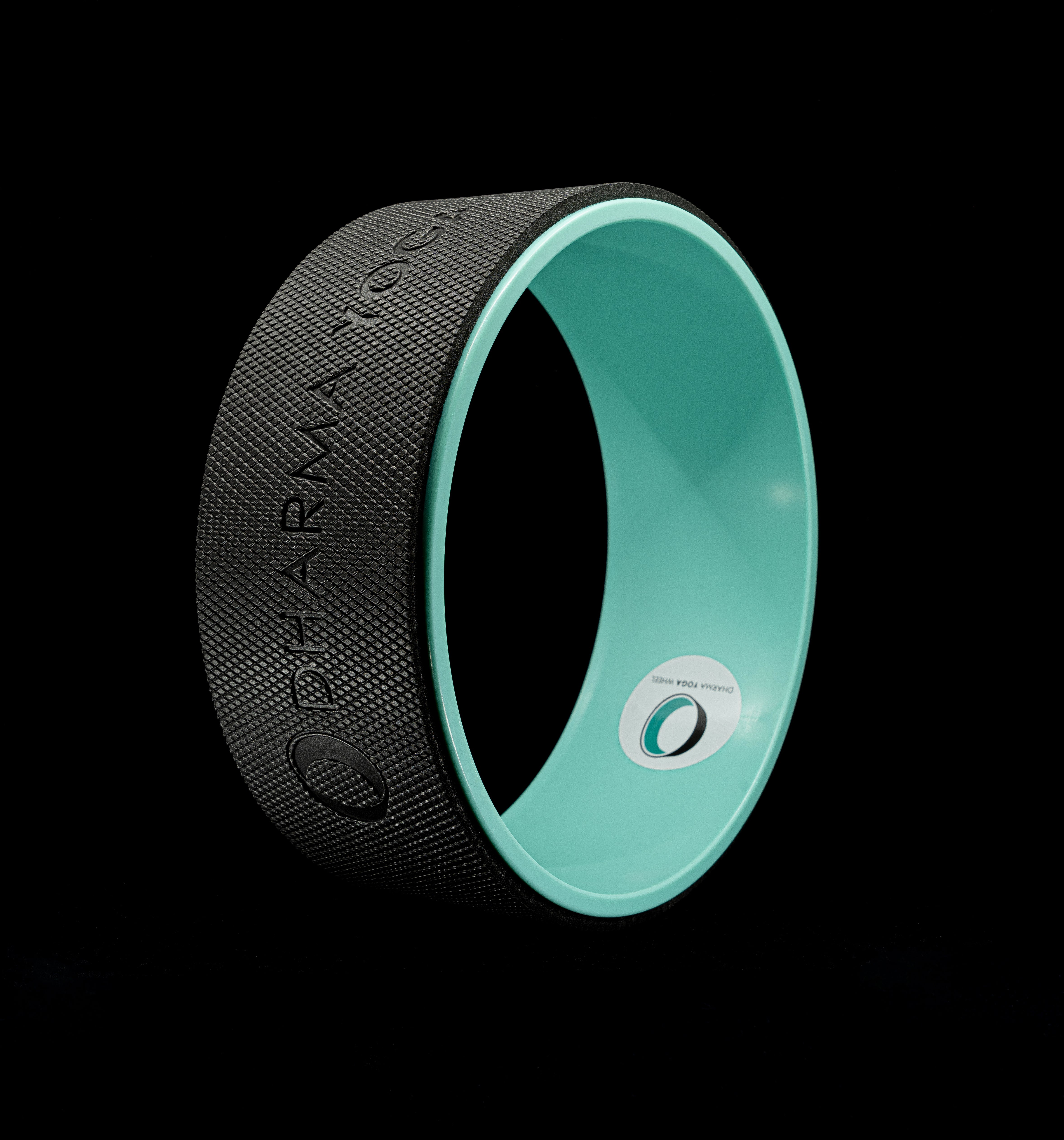
Dharma Yoga Wheel (Original)
Best Overall: The original yoga wheel — 12.5-inch outer diameter calibrated to match average adult thoracic spine length, injection-molded ABS ring that shows no flex or creak under load, and 1-inch EVA foam padding adequate for standard practice holds. The 550 lb static load rating exceeds any realistic single-user scenario.
Top picks ↓| Product | Price | Link |
|---|---|---|
| $75Reference price | ||
| $35Reference price | No partner store here — this opens an Amazon search. | |
| $40Reference price | ||
| $40Reference price | ||
| $30Reference price | No partner store here — this opens an Amazon search. |
| Product | Outer diameter | EVA padding | Load rating | Ring material | Surface | Price | Sizes available | Best for | Load certification | Certification | Spinal groove |
|---|---|---|---|---|---|---|---|---|---|---|---|
| Dharma Yoga Wheel (Original) | 12.5 inches (31.75cm) | 1 inch (2.5cm) | 550 lb (250kg) | Injection-molded ABS | Non-slip textured | ~$75–100 | — | — | — | — | — |
| Tumaz Yoga Wheel 13-inch | 13 inches (33cm) | 1.5cm | — | ABS | Non-slip textured | ~$35–50 | 6 / 10 / 13 inch | — | — | — | — |
| BLY Yoga Wheel Extra-Thick Padding | ~12 inches (standard) | 1.5 inches (3.8cm) | — | ABS | Non-slip textured | ~$40–60 | — | Extended holds / sensitive spines | — | — | — |
| Plexus Yoga Wheel Certified | ~12 inches (standard) | — | — | ABS | Non-slip textured | ~$40–60 | — | — | 500 lb (independent 3rd party) | Independent testing body | — |
| Chirp Wheel+ Spinal Groove Yoga Wheel | 12 inches (largest size) | — | — | ABS | Non-slip textured | ~$30–70 (size dependent) | 6 / 10 / 12 inch | — | — | — | 5cm wide circumferential |
Top picks
Related articles


The original yoga wheel design, 12.5-inch diameter, 1-inch EVA foam, 550 lb load rating, non-slip surface. Premium price at $75-100 but superior injection-molded construction with no flex or creak under load. Best for serious practitioners who want the original design and maximum structural confidence.
The original yoga wheel — 12.5-inch outer diameter calibrated to match average adult thoracic spine length, injection-molded ABS ring that shows no flex or creak under load, and 1-inch EVA foam padding adequate for standard practice holds. The 550 lb static load rating exceeds any realistic single-user scenario. At $75–100 it is the most expensive option, but the manufacturing quality is visibly superior to budget alternatives.
Pros
- ✓Original design with longest proven track record since 2014
- ✓Injection-molded ABS ring shows zero flex or creak under load
- ✓12.5-inch diameter precisely calibrated for average adult thoracic spine
Cons
- ✗Most expensive at $75–100 — meaningful premium over value alternatives
Score breakdown
| Outer diameter | 12.5 inches (31.75cm) |
| EVA padding | 1 inch (2.5cm) |
| Load rating | 550 lb (250kg) |
| Ring material | Injection-molded ABS |
| Surface | Non-slip textured |
| Price | ~$75–100 |

13-inch diameter (fits longer torsos better), 1.5 cm EVA foam, three sizes available (6/10/13 inch), $35-50. Best value for standard yoga wheel use. Slightly thinner padding than Dharma becomes noticeable in extended holds.
Tumaz offers the Dharma's basic format — ABS ring, EVA foam, textured outer surface — at roughly half the price. The 13-inch outer diameter is slightly larger than the Dharma, which suits taller users with longer torsos better. The 1.5cm foam is thinner than the Dharma's 1 inch; this becomes noticeable only in holds longer than 60 seconds or on hard floors without a yoga mat beneath. Three available sizes (6/10/13 inch) cover different body sizes and use cases.
Pros
- ✓Best price-to-performance ratio in this comparison
- ✓13-inch diameter suits taller/longer-torso users better than 12.5-inch
- ✓Three sizes available (6/10/13 inch) for different needs
Cons
- ✗1.5cm padding thinner than Dharma — noticeable in holds over 60 seconds
Score breakdown
| Outer diameter | 13 inches (33cm) |
| EVA padding | 1.5cm |
| Sizes available | 6 / 10 / 13 inch |
| Ring material | ABS |
| Surface | Non-slip textured |
| Price | ~$35–50 |
No partner store here — this opens an Amazon search.

Extra-thick 1.5-inch padding for softer feel during extended holds, $40-60. Best for users who find standard yoga wheel padding too hard at the spinous processes during long stretches.
BLY's extra-thick 1.5-inch (3.8cm) padding reduces pressure intensity at spinous process contact points during extended holds — users who find standard yoga wheel padding too hard during longer stretches will notice an immediate difference. The trade-off is reduced stretch precision: thicker padding means the spine contact arc is less defined, which matters when working on specific spinal segment mobility.
Pros
- ✓Extra-thick 3.8cm padding reduces bony spinous process contact pressure
- ✓Better comfort in holds longer than 60 seconds vs Dharma or Tumaz
- ✓Good choice for users with existing upper back sensitivity
Cons
- ✗Thicker padding reduces stretch precision — less defined spinal segment contact arc
Score breakdown
| Outer diameter | ~12 inches (standard) |
| EVA padding | 1.5 inches (3.8cm) |
| Ring material | ABS |
| Surface | Non-slip textured |
| Best for | Extended holds / sensitive spines |
| Price | ~$40–60 |
Subscribe to our newsletter
Occasional updates and new releases — no spam.
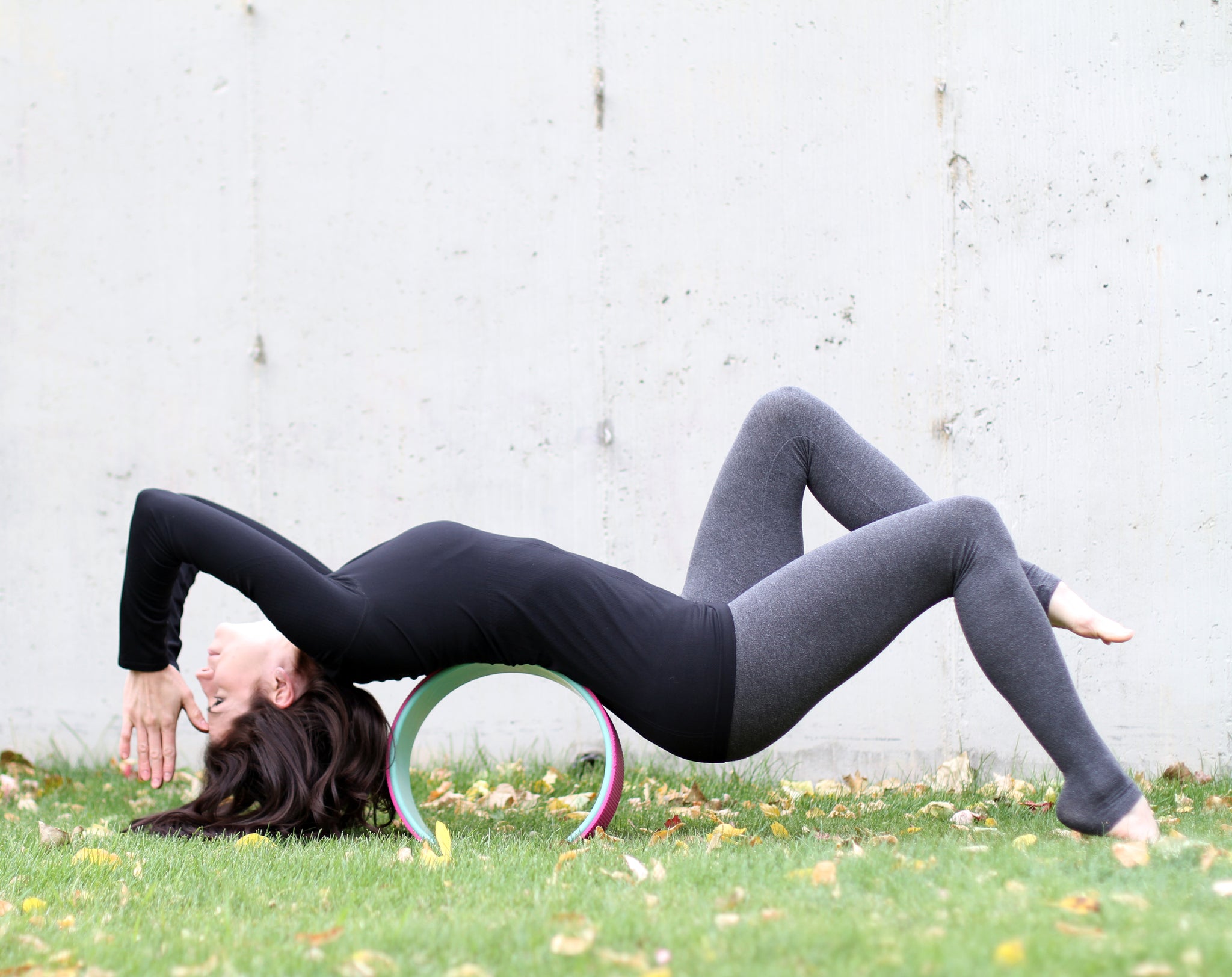
500 lb static load certification from independent testing body, $40-60. Best for users who prioritize third-party structural safety verification.
The Plexus wheel carries a 500 lb static load certification from an independent third-party testing body — the only wheel in this comparison with externally verified structural documentation rather than manufacturer-only claims. For users who prioritize documented safety verification, the Plexus provides that assurance at a price similar to the Tumaz. Performance is comparable to other ABS-ring designs at this price point.
Pros
- ✓Third-party independent 500 lb static load certification — unique in this comparison
- ✓Provides safety assurance beyond manufacturer-only claims
- ✓Priced comparably to Tumaz with added certification confidence
Cons
- ✗No functional performance advantage over Tumaz beyond the certification
Score breakdown
| Outer diameter | ~12 inches (standard) |
| Load certification | 500 lb (independent 3rd party) |
| Ring material | ABS |
| Surface | Non-slip textured |
| Certification | Independent testing body |
| Price | ~$40–60 |
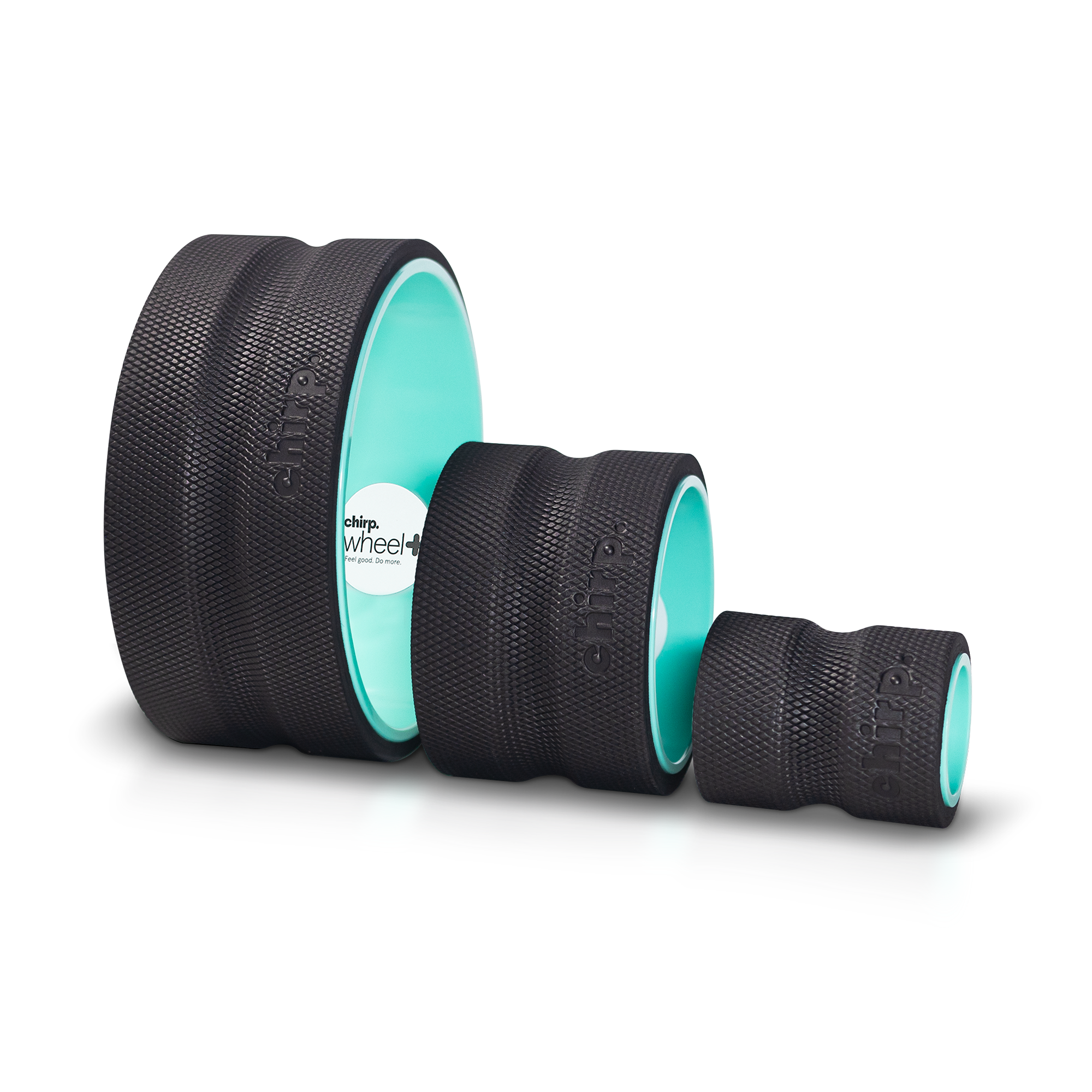
Distinctive spinal groove design redirects pressure from spinous processes to paraspinal muscles — reduces bony contact discomfort. Three sizes (6/10/12 inch), $30-70. Best for users who find standard yoga wheels uncomfortable at the spine contact points.
Chirp's distinctive 5cm circumferential spine groove redirects pressure from spinous processes (bony vertebral protrusions) to the paraspinal muscles on either side — a fundamentally different pressure pattern from standard yoga wheels. For users who find standard wheels uncomfortable at spine contact points, the groove is a genuine structural solution. Three sizes (6/10/12 inch) allow targeting different spinal segments. The trade-off is that the groove changes the feel of backbend stretches for users who don't have spinous process sensitivity.
Pros
- ✓Spinal groove redirects pressure away from spinous processes to paraspinal muscles
- ✓Three sizes target different spinal segments precisely
- ✓Best option for users who find standard wheels uncomfortable at spine contact
Cons
- ✗Groove changes stretch feel — may be unnecessary for users without spinous process sensitivity
Score breakdown
| Outer diameter | 12 inches (largest size) |
| Spinal groove | 5cm wide circumferential |
| Sizes available | 6 / 10 / 12 inch |
| Ring material | ABS |
| Surface | Non-slip textured |
| Price | ~$30–70 (size dependent) |
No partner store here — this opens an Amazon search.
Which one is right for you?
For serious yoga practitioners wanting the original design
Dharma Yoga Wheel (Original)
Best construction quality and longest proven track record — the reference yoga wheel against which all alternatives are judged.
For most adult beginners and value seekers
Tumaz Yoga Wheel 13-inch
Half the price of the Dharma with slightly larger diameter that suits taller users — adequate padding for standard practice holds.
For users with spine contact sensitivity
Chirp Wheel+ Spinal Groove Yoga Wheel
The spinal groove is the only structural solution in this comparison for practitioners who find standard wheels painful at spinous process contact points.
For safety-conscious purchasers
Plexus Yoga Wheel Certified
Third-party 500 lb certification provides documented structural verification — unique in this comparison.
For extended holds with sensitive backs
BLY Yoga Wheel Extra-Thick Padding
Extra-thick 3.8cm padding reduces pressure intensity for users who find standard yoga wheel padding too hard during longer stretches.
What a yoga wheel actually does — and what it cannot do
A yoga wheel changes the angle and depth of backbend stretches by providing a curved support surface. In a standard unsupported backbend (wheel pose or urdhva dhanurasana), your weight is distributed across your hands and feet and the apex of the curve is wherever your body naturally bends. With a yoga wheel under your spine, the wheel provides support along the arc, allowing you to hold the stretch longer and with less effort — which deepens the stretch over time.
The practical benefits that consistent yoga wheel users report are three: increased thoracic spine mobility (the upper and mid-back, which most desk workers need most), improved shoulder flexibility through supported chest openers, and core engagement through plank and pike variations on an unstable surface. These benefits are real but not unique to yoga wheels — a foam roller, a bolster, or a skilled yoga instructor can achieve similar results through different techniques.
What yoga wheels cannot do: they do not replace strength training for the muscles needed in backbends (glutes, erector spinae, core), they do not accelerate progress for beginners who haven't developed the foundational flexibility, and they require practice and body awareness to use safely. Dropping your full weight onto a yoga wheel without understanding where your spine should contact it first is a recipe for a sharp, unpleasant spinal compression. The wheel is a tool for assisted progression, not an instant flexibility hack.
The original: Dharma Yoga Wheel
The Dharma Yoga Wheel was the first commercially available yoga wheel, designed by Sri Dharma Mittra and his son Yogi Varuna, and introduced to the market in 2014. Its design has become the template that most other yoga wheels follow: a rigid ABS plastic ring at 12.5 inches outer diameter, wrapped in EVA foam padding, covered in a non-slip outer layer. The dimensions are specifically calibrated — 12.5 inches matches the average adult thoracic spine length, allowing the wheel to support the full thoracic curve without the rim contacting the lumbar vertebrae.
The Dharma wheel is rated for 550 lb of static load, which exceeds the weight of virtually any single user. The structural integrity is not a concern under normal use. The padding — approximately 1 inch of EVA foam — provides enough cushioning for extended holds without bottoming out. The outer surface is a textured material that grips a yoga mat without slipping during weight-bearing movements.
At $75-100, the Dharma is the most expensive option in this comparison. The premium is partly for the original design and partly for the manufacturing quality — the plastic ring is injection-molded and shows no flex or creak under load, which cheaper alternatives sometimes do. For a yoga prop that you will use for years, the durability premium is usually justified.
The value pick: Tumaz Yoga Wheel
The Tumaz Yoga Wheel offers the same basic format as the Dharma — ABS ring, EVA foam, textured outer surface — at roughly half the price ($35-50). The outer diameter is 13 inches, slightly larger than the Dharma's 12.5 inches. For taller users with longer torsos, the slightly larger diameter is actually more appropriate — the wheel fits their spinal curve more precisely.
The padding on the Tumaz is 1.5 cm of foam — thinner than the Dharma's 1 inch, which is approximately 2.5 cm. In practice, the difference in padding thickness becomes noticeable in extended holds (more than 60 seconds) or when using the wheel directly on a hard floor rather than a yoga mat. For typical yoga practice use — holds of 15-45 seconds with a yoga mat beneath — the Tumaz padding is adequate.
The Tumaz comes in three sizes: a standard 13-inch wheel for adults, a 10-inch wheel for smaller users or children, and a 6-inch mini wheel for targeted spinal work. The mini wheel is used differently from the standard — it targets a smaller segment of the spine and is positioned more precisely for spinal segment-specific work rather than full thoracic support. Having size options is a meaningful advantage if you're purchasing for multiple people with different body sizes.
Chirp Wheel Plus: the targeted spinal decompression option
The Chirp Wheel Plus has a distinctive design difference from standard yoga wheels: a groove running around the circumference of the wheel. The groove is 5 cm wide and positioned so that when the wheel rests against your spine, the groove protects the spinous processes (the bony protrusions of each vertebra) from contact pressure while the wider padded edges contact the paraspinal muscles on either side of the spine.
This design produces a different pressure pattern than a standard yoga wheel. Standard wheels apply pressure across the entire width of the wheel including the spinous processes. The Chirp groove redirects pressure to the paraspinal muscles where it can be therapeutic — similar to the pressure pattern used in foam rolling for spinal mobility. For users who find standard yoga wheels uncomfortable at the spinous process contact points, the Chirp is a genuine improvement.
The Chirp Wheel Plus comes in three sizes (6, 10, and 12 inches) with the groove on all sizes. At $30-70 depending on size, it is priced similarly to the Tumaz. The most commonly used size for thoracic backbend support is the 12-inch. The smaller sizes produce more localized pressure, useful for targeted spinal segment work.
BLY and Plexus: the extra-padding alternatives
The BLY Yoga Wheel and Plexus Wheel both offer increased padding thickness compared to the Dharma and Tumaz standard. The BLY uses approximately 1.5 inches of padding (compared to the Dharma's 1 inch), which noticeably changes the feel of extended holds — softer and less pressure-intensive, which some users prefer and others find reduces the precision of the stretch.
The Plexus Wheel is notable for being among the first yoga wheels certified to a specific load rating by a third-party testing body. Its 500 lb static load certification is similar to the Dharma's rating but with independent verification. For users who prioritize structural certification, the Plexus provides documented safety validation.
Both the BLY and Plexus wheels are priced in the $40-60 range. The primary differentiator is the increased padding on the BLY and the load certification on the Plexus. For most yoga practitioners, these differences are marginal — the Tumaz or Dharma remains the practical recommendation — but they represent specific solutions for specific preferences.
Frequently asked questions
What size yoga wheel should I get?▼
How do you use a yoga wheel for back pain?▼
Is a yoga wheel better than a foam roller for back stretches?▼
Prices change. Check the retailer for the current price.
Comments & questions
Discussion happens on nattzy, our community forum. Sign in with Google to post — it takes a second.