Best Compression Socks for Running 2026: Compared by mmHg
WriterPickly Editorial
Updated 2026-10-10
Compression socks are sold by their mmHg rating, but the number on the label only holds if the sock fits your leg. This comparison covers socks with a published manufacturer rating — and what 20–30 mmHg means for runners, including who should check with a doctor first.
Quick answer
For a running-specific compression sock, CEP Run 4.0 is the pick — 20–30 mmHg graduated compression by manufacturer rating, from CEP, a brand of medi. Sockwell Pulse is the merino-blend alternative at the same 20–30 mmHg, which Sockwell labels Firm. If you have peripheral arterial disease, diabetic neuropathy or heart failure, ask a doctor before wearing any of these socks.
📋How we compared
Each sock was compared on: the compression level in mmHg published by the manufacturer (graduated compression is tightest at the ankle and eases toward the calf), the fiber blend the maker lists, construction details stated by the manufacturer, and care instructions. Socks without a published mmHg rating are not included. Price is discussed per pair; no wash-count durability figures are used.

Best for Running: CEP Run 4.0 is rated at 20–30 mmHg graduated compression by the manufacturer. CEP is a brand of medi.
Top picks ↓Which one is right for you?
Related articles

1★ Best PickABest for RunningCEP Run Compression Socks 4.0
CEP Run 4.0 is rated at 20–30 mmHg graduated compression by the manufacturer. CEP is a brand of medi. The 4.0 version, launched in 2022, added Smart Dry Extreme Air yarn and extra footbed padding. At about $60 (list price $59.95), it is the priciest option here, built specifically for running rather than everyday wear.
Pros
- ✓20–30 mmHg graduated compression (manufacturer rating)
- ✓Running-specific build — Smart Dry Extreme Air yarn and a padded footbed (4.0 update, 2022)
- ✓From CEP, the sports brand of compression maker medi
Cons
- ✗$60 per pair — the highest price in this comparison
Score breakdown
- Compression
- 20–30 mmHg (manufacturer rating)
- Fiber
- 83% polyamide, 17% spandex
- Anatomical
- Left/right specific
- Toe
- Seamless
- Wash durability
- Depends on care — follow the label
- Price
- $60
2B+Best Merino OptionSockwell Pulse Graduated Compression Socks
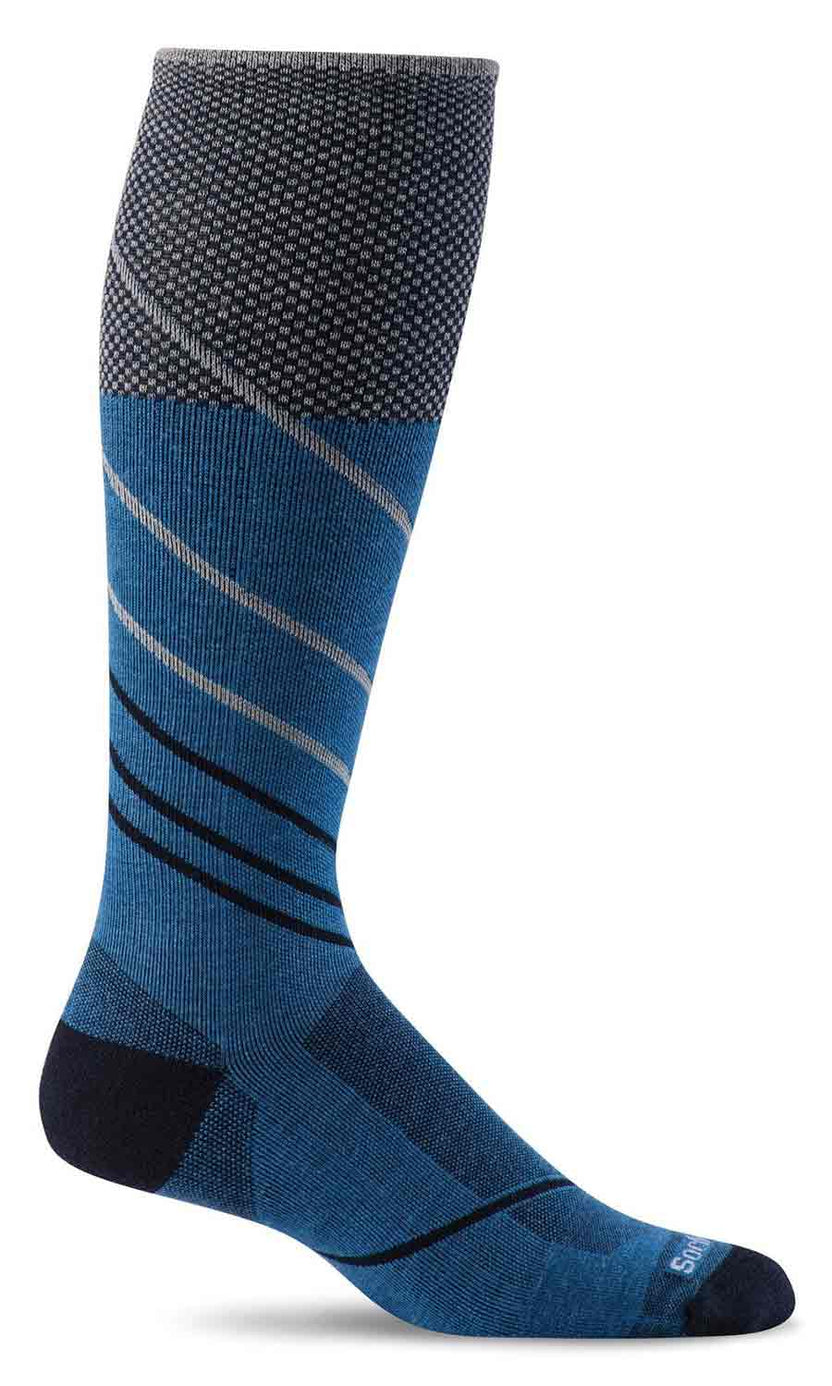
Sockwell Pulse is rated at 20–30 mmHg graduated compression, which Sockwell labels Firm. The blend is 32% merino wool, 31% bamboo rayon, 32% nylon and 5% spandex. Merino absorbs moisture vapor and stays warm when damp, and it helps regulate temperature and resists odor — useful on runs and trail days where the temperature changes. It is as firm as the CEP, so it is not a light-compression sock.
Pros
- ✓Merino-rich blend helps regulate temperature and resists odor
- ✓Merino absorbs moisture vapor and stays warm when damp
- ✓Less than the CEP and SIGVARIS at $35
Cons
- ✗Firm 20–30 mmHg — check with a doctor first if you have circulation problems
Score breakdown
- Compression
- 20–30 mmHg (Firm, manufacturer rating)
- Fiber
- 32% merino wool, 31% bamboo rayon, 32% nylon, 5% spandex
- Toe
- Seamless
- Wash durability
- Depends on care — follow the label
- Price
- $35
3BBest Budget PickPhysix Gear Sport Compression Socks 20-30 mmHg

Physix Gear Sport Compression Socks are rated at 20–30 mmHg with a graduated fit by the manufacturer. Physix Gear describes the fabric as Lycra but does not publish a fiber percentage breakdown. At about $19 per pair, they are the lowest-priced sock in this comparison, and the maker markets them for running, long days on your feet and flights. They are as firm as the CEP and Sockwell, so they are not a light-compression sock.
Pros
- ✓20–30 mmHg graduated fit (manufacturer rating)
- ✓Lowest price in this comparison at about $19
- ✓Sizes S/M, L/XL and 2XL, in a wide range of colors
Cons
- ✗No fiber percentages published — the maker only names Lycra fabric
- ✗Firm 20–30 mmHg — check with a doctor first if you have circulation problems
Score breakdown
- Compression
- 20–30 mmHg, graduated (manufacturer rating)
- Fiber
- Lycra fabric (percentages not published)
- Wash durability
- Depends on care — follow the label
- Price
- $19
Subscribe to our newsletter
Occasional updates and new releases — no spam.
4B+Best Lighter CompressionSIGVARIS Athletic Recovery Socks 15-20 mmHg

SIGVARIS Athletic Recovery Socks are rated at 15–20 mmHg by the manufacturer — lighter than the other three socks here. SIGVARIS makes medical compression garments and lists post-workout recovery, mild athletic activity and walking as intended uses for this sock. The blend is 67% drirelease polyester (85% polyester, 15% cotton), 26% nylon and 7% spandex; SIGVARIS says the drirelease yarn wicks moisture and controls odor. There is no compression in the heel and instep, which makes them easier to put on. At about $40 per pair, they are mid-priced in this comparison.
Pros
- ✓15–20 mmHg — lighter than the 20–30 mmHg socks in this comparison (manufacturer rating)
- ✓drirelease yarn for moisture wicking and odor control (manufacturer description)
- ✓No compression in the heel and instep for easier donning; latex free
Cons
- ✗About $40 per pair — more than the Sockwell and Physix Gear
- ✗Not a running-specific build — SIGVARIS lists recovery, mild activity and walking
Score breakdown
- Compression
- 15–20 mmHg (manufacturer rating)
- Fiber
- 67% drirelease polyester (85% polyester, 15% cotton), 26% nylon, 7% spandex
- Toe
- Closed toe
- Wash durability
- Depends on care — follow the label
- Price
- $40
| Product | Anatomical | Toe | Wash durability | |||
|---|---|---|---|---|---|---|
| CEP Run Compression Socks 4.0 | 20–30 mmHg (manufacturer rating) | 83% polyamide, 17% spandex | Left/right specific | Seamless | Depends on care — follow the label | $60 |
| Sockwell Pulse Graduated Compression Socks | 20–30 mmHg (Firm, manufacturer rating) | 32% merino wool, 31% bamboo rayon, 32% nylon, 5% spandex | — | Seamless | Depends on care — follow the label | $35 |
| Physix Gear Sport Compression Socks 20-30 mmHg | 20–30 mmHg, graduated (manufacturer rating) | Lycra fabric (percentages not published) | — | — | Depends on care — follow the label | $19 |
| SIGVARIS Athletic Recovery Socks 15-20 mmHg | 15–20 mmHg (manufacturer rating) | 67% drirelease polyester (85% polyester, 15% cotton), 26% nylon, 7% spandex | — | Closed toe | Depends on care — follow the label | $40 |
How we compared
This comparison is limited to socks that publish an mmHg rating. Three of the four current picks — CEP Run 4.0, Sockwell Pulse and Physix Gear — are rated 20–30 mmHg, and are considered for daily training, marathon racing and post-run recovery; SIGVARIS Athletic Recovery is lighter at 15–20 mmHg, for recovery and mild activity. Prices run from about $19 to $60 per pair.
Compression labels are not standardized: brands and countries use different words for the same pressure. US retailers commonly call 15–20 mmHg moderate and 20–30 mmHg firm, and Sockwell labels its 20–30 mmHg socks Firm — so compare the mmHg number, not the word. Above 30 mmHg is medical-grade compression that should be fitted under medical guidance. Compression is also not for everyone: people with peripheral arterial disease, diabetic neuropathy or heart failure should talk to a doctor before wearing compression socks at any mmHg level.
What changed in this update
CEP's Run Socks 4.0 launched in 2022, adding Smart Dry Extreme Air yarn and extra footbed padding. CEP is a brand of medi; its product page lists 20–30 mmHg graduated compression and a blend of 83% polyamide and 17% spandex.
In October 2026 this comparison was revised against manufacturer pages. Sockwell rates the Pulse at 20–30 mmHg (Firm), and it is listed at that level here. Running socks that only have an arch compression band and no published mmHg rating are no longer included.
Where each fits
CEP Run 4.0 is the running-specific option — 20–30 mmHg graduated compression by manufacturer rating (one retailer lists about 22–24 mmHg at the ankle and 16–18 mmHg at the calf), in a polyamide/spandex knit with the 4.0 update's Smart Dry Extreme Air yarn and padded footbed. CEP is a brand of medi, but these are running socks, not prescribed medical stockings. At about $60 per pair (CEP's list price is $59.95), it is the most expensive of the four.
Sockwell Pulse is the merino option — 20–30 mmHg graduated compression, which Sockwell labels Firm, in a blend of 32% merino wool, 31% bamboo rayon, 32% nylon and 5% spandex. Merino absorbs moisture vapor and stays warm when damp, and it helps regulate temperature and resists odor, which suits cool mornings, trail days and travel. It is as firm as the CEP, so the same caution applies: check with a doctor first if you have circulation problems.
Physix Gear Sport Compression Socks are the budget option — 20–30 mmHg with a graduated fit by manufacturer rating, in a Lycra fabric (Physix Gear does not publish a fiber percentage breakdown). The maker markets them for running, long days on your feet and flights. At about $19 per pair, they are the least expensive sock here, but they are as firm as the CEP and Sockwell, so the same caution applies: check with a doctor first if you have circulation problems.
SIGVARIS Athletic Recovery Socks are the lighter option — 15–20 mmHg by manufacturer rating, from a maker of medical compression garments. The blend is 67% drirelease polyester (85% polyester, 15% cotton), 26% nylon and 7% spandex, and SIGVARIS says the drirelease yarn wicks moisture and controls odor. There is no compression in the heel and instep, which makes them easier to put on, and SIGVARIS lists post-workout recovery, mild athletic activity and walking as intended uses. At about $40 per pair, they sit in the middle of this comparison on price. Lighter compression is not a substitute for medical advice: if you have peripheral arterial disease, diabetic neuropathy or heart failure, ask a doctor before wearing them.
Verdict
For a running-specific compression sock, CEP Run 4.0 is the reference pick: 20–30 mmHg by manufacturer rating, a polyamide/spandex build and a padded running footbed. At about $60, it costs more than the Sockwell.
Sockwell Pulse is the choice if you want merino: the same 20–30 mmHg level in a wool-rich blend that helps with temperature swings and odor. None of these socks replaces medical compression stockings — if you have leg swelling or vein symptoms, see a doctor.
mmHg ratings are from manufacturer data, and a sock delivers its rated pressure only in the right size — measure your ankle and calf against the maker's chart. How long the compression lasts depends on construction, wear and care, so no wash counts are given here. Individual benefit varies with leg shape, running gait and health conditions.
Frequently asked questions
Do compression socks actually improve running performance?▼
What mmHg level is appropriate for running?▼
How do I know if my compression socks have lost their compression effectiveness?▼
Check the details of the products in this article
- CEP Run Compression Socks 4.0$60Reference price
- Sockwell Pulse Graduated Compression Socks$30.47Price as of 2026-10-19
- Physix Gear Sport Compression Socks 20-30 mmHg$19.20Price as of 2026-10-19
- SIGVARIS Athletic Recovery Socks 15-20 mmHg$40.36Price as of 2026-10-19
Prices change. Check the retailer for the current price.
Comments & questions
Discussion happens on nattzy, our community forum. Sign in with Google to post — it takes a second.
View the discussion thread on nattzy ↗
Still deciding? Ask the community your own question — Post a question on nattzy ↗