Best Yoga Blocks 2026: Cork vs Foam density compared
Yoga blocks are the piece of equipment most beginners underestimate and most experienced practitioners refuse to practice without. Density and size matching your body type matter more than brand or feature count.
Quick answer
The Manduka Recycled Foam Block wins on density: its above-standard EVA deforms measurably less under a 70kg practitioner's hand in Half Moon than the Gaiam Essentials, and the beveled edge works for both restorative contact and standing balance. The Hugger Mugger cork block deforms under 1mm and grips better when damp, at roughly 1.4kg. Gaiam Essentials is the cheap first pair, JadeYoga adds tree-planting transparency, and ProSource is the hardest, squarest foam for pure stability.
This comparison is desk research. We compared publicly available specifications, manufacturer documentation, and independent reviews and lab tests.

Manduka Recycled Foam Yoga Block
Best Overall: Manduka's recycled-content EVA foam is denser than standard-grade options — deformation under a 70kg practitioner's hand in Half Moon pose is measurably less than the Gaiam Essentials. The beveled edge works in both restorative contact positions (comfortable against the sacrum) and standing balance poses (stable enough to trust as a floor substitute).
Top picks ↓| Product | Price | Link |
|---|---|---|
| $20.00Reference price | ||
| $24.00Reference price | ||
| $10〜$17Reference price | ||
| $30.00Reference price | ||
| $19.99Reference price |
| Product | Material | Dimensions | Edge profile | Weight | Price | Colors | Biodegradable | Tree-planting | Density |
|---|---|---|---|---|---|---|---|---|---|
| Manduka Recycled Foam Yoga Block | Recycled-content EVA foam | 9×6×4 in (standard) | Beveled | ~300g | $20.00 | Multiple | — | — | — |
| Hugger Mugger Cork Yoga Block | Natural cork | 9×6×4 in (standard) | Square-cut | ~1.4kg | $24.00 | — | Yes | — | — |
| Gaiam Essentials Yoga Block | Standard-density EVA foam | 9×6×4 in (standard) | Rounded | ~230g | $10–17 | Multiple | — | — | — |
| JadeYoga Foam Yoga Block | Recycled-content EVA foam | 9×6×4 in (standard) | Rounded | ~280g | $30.00 | — | — | 1 per product sold | — |
| ProSource Firm High-Density Foam Yoga Block | High-density EVA foam | 9×6×4 in (standard) | Square-cut | ~290g | $19.99 | — | — | — | Firm (highest in comparison) |
Top picks
Related articles

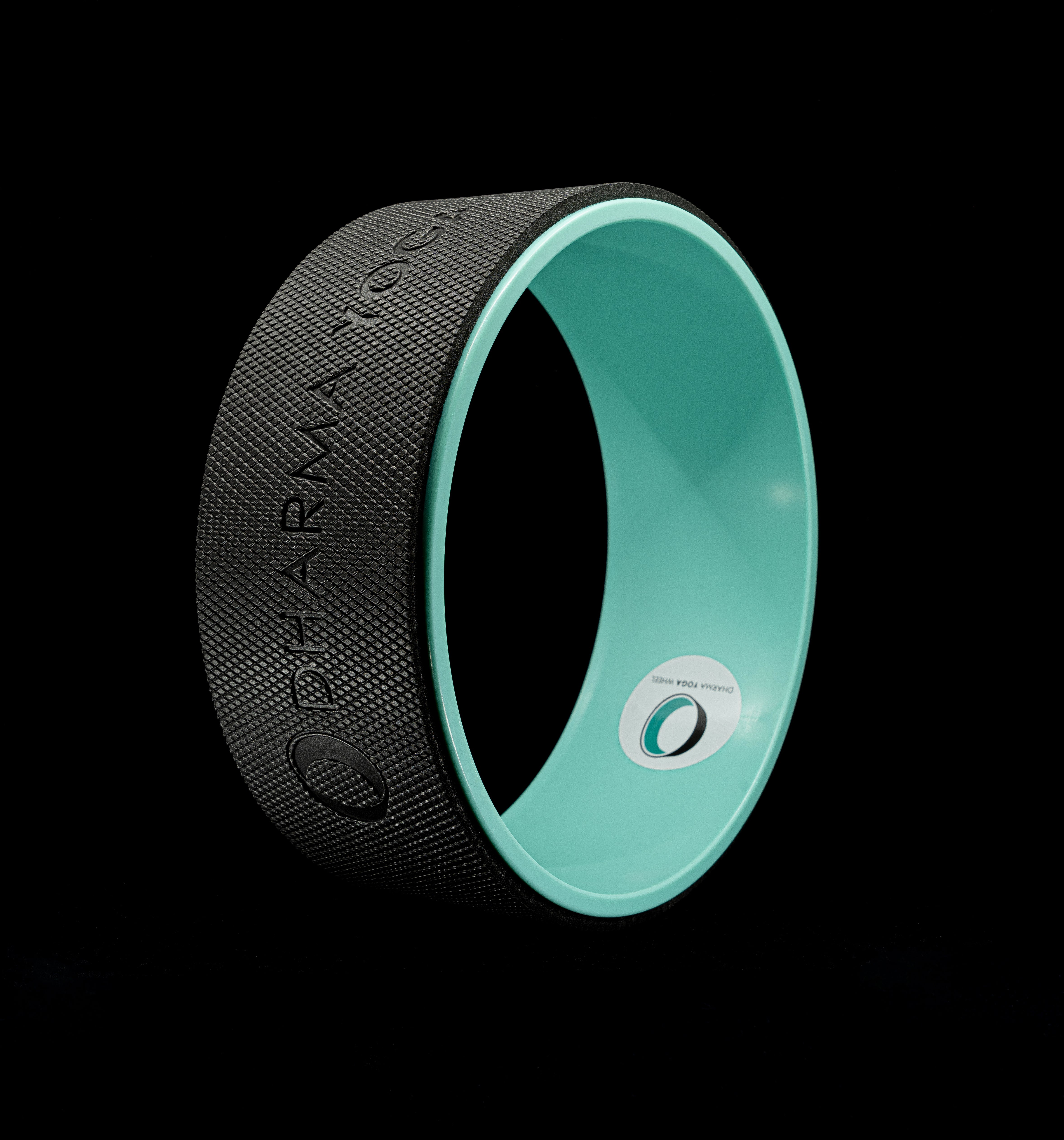
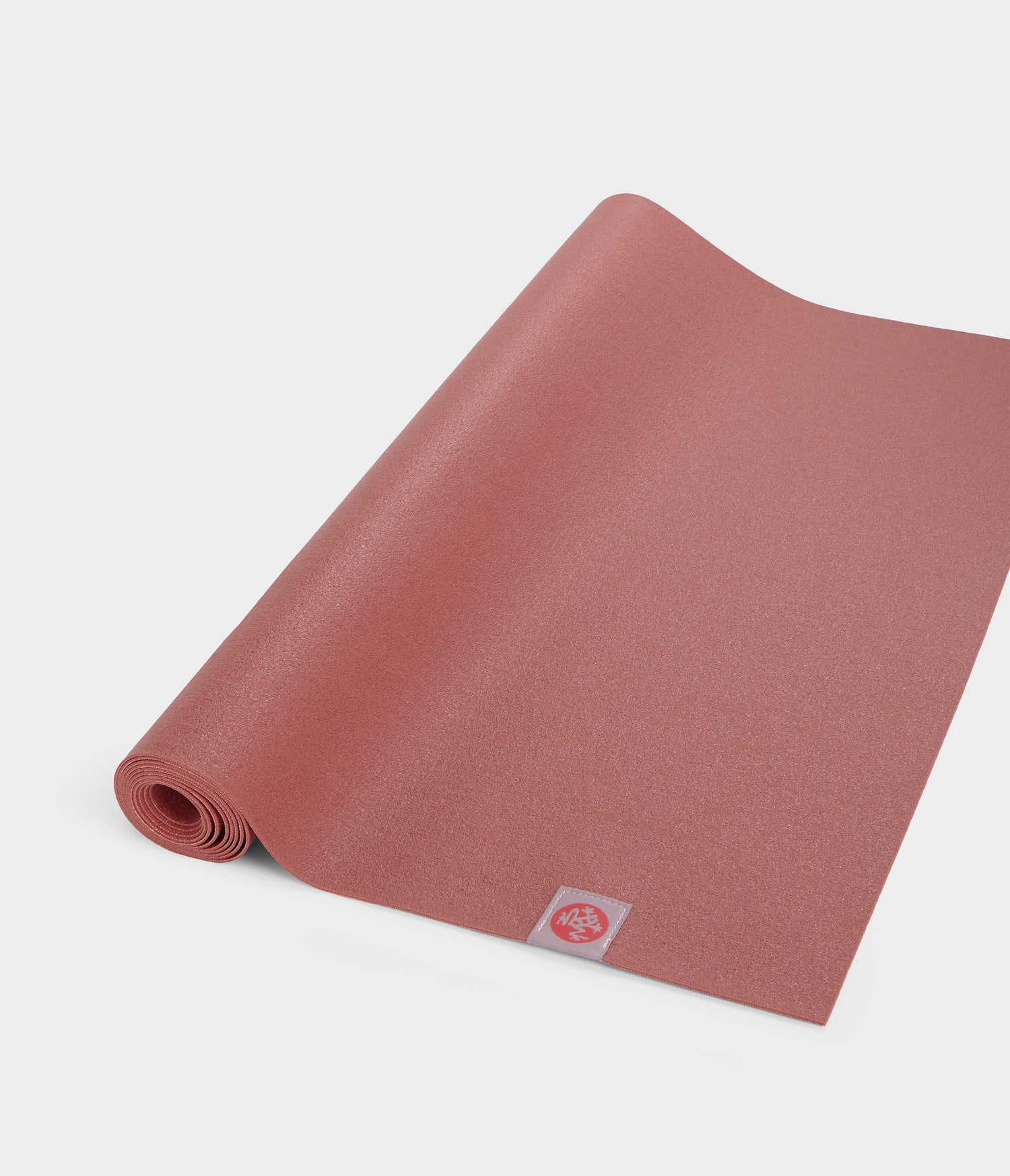
Best premium foam yoga block — recycled-content EVA foam with above-standard density, beveled edges that work in both restorative and standing balance applications, and consistent Manduka build quality. The default upgrade from standard-grade foam for practitioners who want blocks that last years without compression deformation. Supports sustained daily practice including weight-bearing standing poses without the rigidity of cork.
Manduka's recycled-content EVA foam is denser than standard-grade options — deformation under a 70kg practitioner's hand in Half Moon pose is measurably less than the Gaiam Essentials. The beveled edge works in both restorative contact positions (comfortable against the sacrum) and standing balance poses (stable enough to trust as a floor substitute). For practitioners committing to a sustained practice, this is the default upgrade from standard foam.
Pros
- ✓Above-standard EVA density reduces compression in standing balance poses
- ✓Beveled edge works for both restorative and standing applications
- ✓Recycled-content EVA foam with consistent Manduka build quality
Cons
- ✗Higher price than standard foam — buy as a pair only if practice is established
Score breakdown
| Material | Recycled-content EVA foam |
| Dimensions | 9×6×4 in (standard) |
| Edge profile | Beveled |
| Weight | ~300g |
| Price | $20.00 |
| Colors | Multiple |
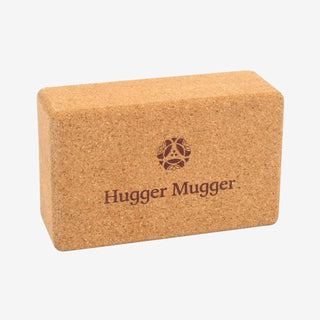
Best natural cork yoga block — non-compressible under full body weight, natural grip that improves in humid conditions, and biodegradable material sourced from sustainable cork oak harvesting. The correct choice for Iyengar-style alignment work, hot yoga, and any pose where the block regularly carries significant load. Heavier than foam blocks and costs more as a pair; worth it when stability and traction are the priority.
Cork does not compress under yoga loads — pressing your hand into a Hugger Mugger block in Half Moon pose deforms less than 1mm, which the nervous system registers as 'floor-level' stability. The natural surface grip improves marginally when slightly damp, the opposite of foam. For hot yoga or any vigorous practice where hands are wet, cork's traction advantage over smooth EVA is meaningful. The trade-off is weight (~1.4kg vs 200–400g for foam) and higher cost per pair.
Pros
- ✓Non-compressible under full body weight — floor-level stability
- ✓Natural grip improves in humid/wet conditions (opposite of foam)
- ✓Biodegradable from sustainable cork oak harvesting
Cons
- ✗~1.4kg — noticeably heavier than foam for studio commuters
Score breakdown
| Material | Natural cork |
| Dimensions | 9×6×4 in (standard) |
| Edge profile | Square-cut |
| Weight | ~1.4kg |
| Price | $24.00 |
| Biodegradable | Yes |

Best value foam yoga block — standard-density EVA foam at the most accessible price point in this comparison, rounded edges comfortable in contact positions, and available in multiple colors. The correct first pair for beginners establishing a practice: inexpensive enough to buy two at once, functional for the majority of beginner modifications, and adequate for a year or more of regular use before foam compressibility becomes limiting.
Standard-density EVA at the most accessible price makes the Gaiam Essentials the correct first pair for beginners establishing a practice. The rounded edges are comfortable in contact positions (inner thighs, sacrum, shins) and the blocks are inexpensive enough to buy two at once — which matters because bilateral poses require a matching pair. Foam compressibility becomes a limiting factor only when the practice develops into regular weight-bearing standing balance work.
Pros
- ✓Most accessible price — easy to buy as a pair immediately
- ✓Rounded edges comfortable in all contact positions
- ✓Adequate for 12+ months of beginner-level practice before upgrading
Cons
- ✗Standard-density EVA compresses visibly under full body weight in standing balance poses
Score breakdown
| Material | Standard-density EVA foam |
| Dimensions | 9×6×4 in (standard) |
| Edge profile | Rounded |
| Weight | ~230g |
| Price | $10–17 |
| Colors | Multiple |
Subscribe to our newsletter
Occasional updates and new releases — no spam.
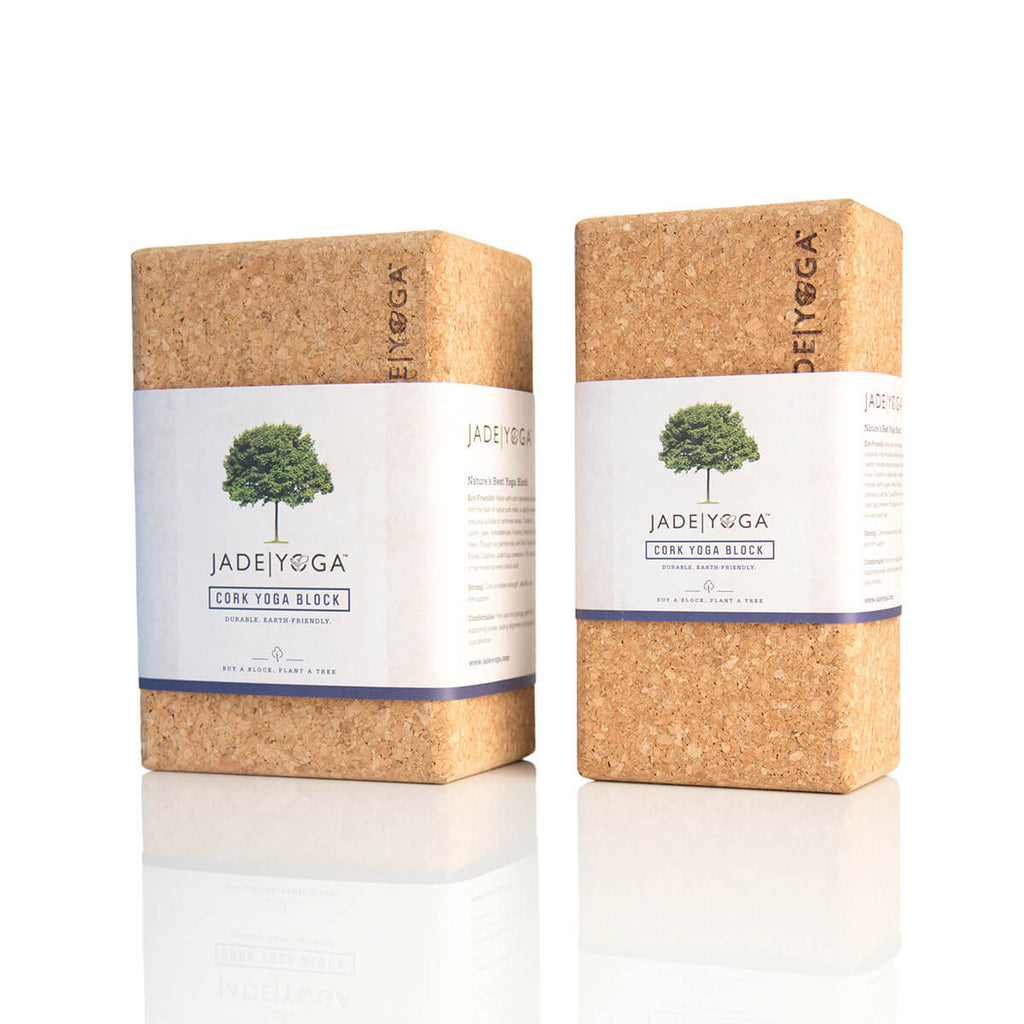
Best eco-conscious foam yoga block — recycled-content EVA foam from a brand with documented environmental commitments including a tree-planting program. Performance comparable to the Manduka recycled foam block at a similar price; the differentiator is brand values and program participation. For practitioners who want to support sustainability initiatives alongside a quality yoga block, JadeYoga's provenance transparency is among the clearest in the market.
JadeYoga's recycled-content EVA foam performs comparably to the Manduka block on density and compression resistance. The differentiator is brand provenance: JadeYoga documents a tree-planting program for every product sold and is among the most transparent yoga equipment brands on supply chain commitments. For practitioners who factor environmental impact into purchasing decisions, the JadeYoga block delivers premium foam performance with clearer sustainability documentation than most competitors.
Pros
- ✓Documented tree-planting program — one tree per product sold
- ✓Recycled-content EVA performance comparable to Manduka
- ✓Most transparent supply chain documentation in this comparison
Cons
- ✗Premium price primarily justified by brand values, not unique performance
Score breakdown
| Material | Recycled-content EVA foam |
| Dimensions | 9×6×4 in (standard) |
| Edge profile | Rounded |
| Weight | ~280g |
| Price | $30.00 |
| Tree-planting | 1 per product sold |
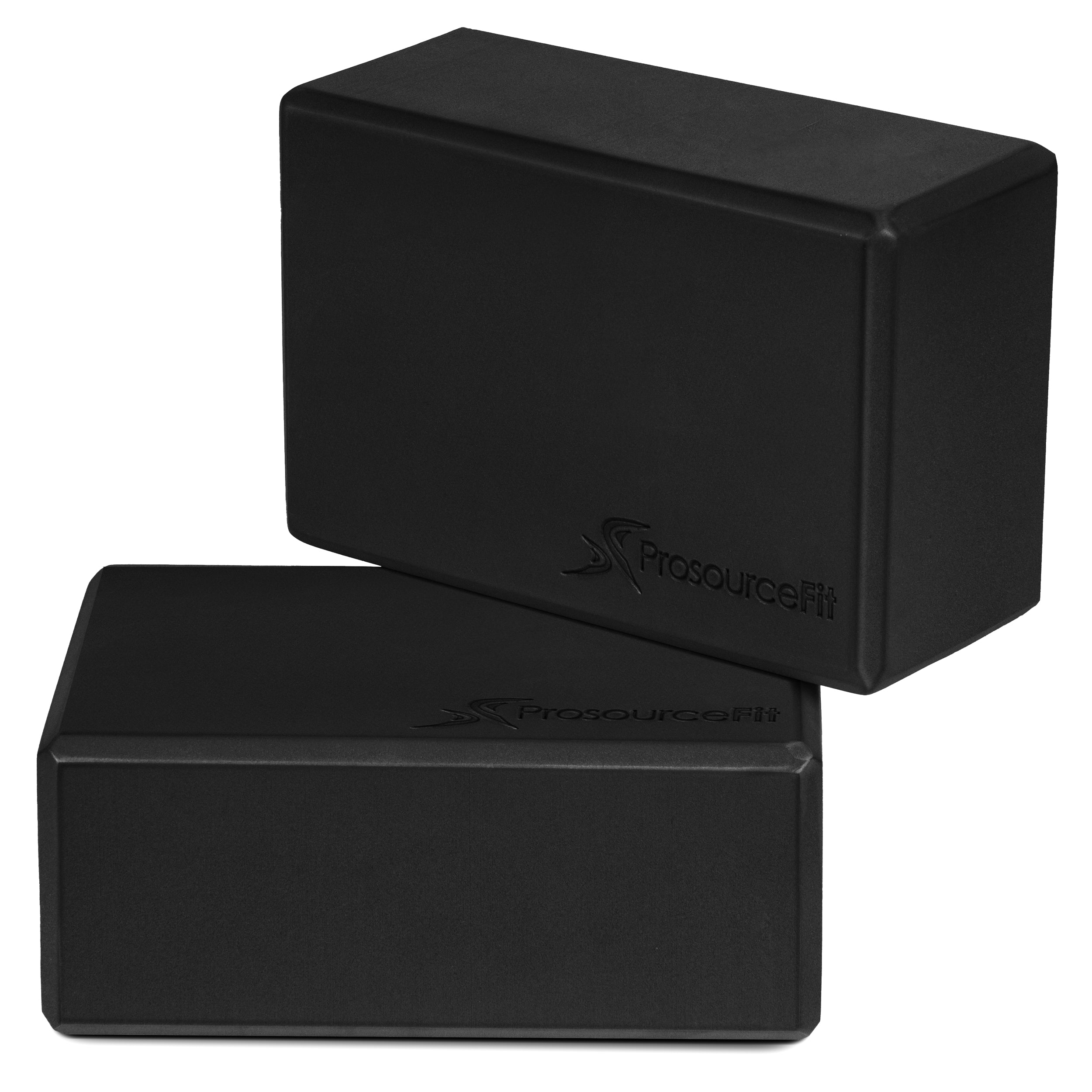
Best firm high-density foam yoga block — the hardest EVA foam block in this comparison, with square-cut edges that maximize surface stability and load-bearing resistance approaching cork levels. Lighter than cork at the same rigidity. The correct choice for practitioners who want cork-like stability without the weight, or who prefer firm non-compressible support but find cork's surface texture uncomfortable on the skin.
ProSource uses the hardest EVA foam in this comparison — square-cut edges maximize surface stability and compression resistance approaches cork levels while remaining lighter than cork at the same rigidity. The hardness is an asset in standing balance work and a liability in restorative contact positions where the block presses against bony prominences. Use it where stability is the priority, not cushioning.
Pros
- ✓Hardest EVA foam in this comparison — cork-like compression resistance
- ✓Square-cut edges maximize stability in standing weight-bearing poses
- ✓Lighter than cork at comparable rigidity
Cons
- ✗Square edges uncomfortable against bony prominences in restorative applications
Score breakdown
| Material | High-density EVA foam |
| Dimensions | 9×6×4 in (standard) |
| Edge profile | Square-cut |
| Weight | ~290g |
| Price | $19.99 |
| Density | Firm (highest in comparison) |
Which one is right for you?
For practitioners building a sustained practice
Manduka Recycled Foam Yoga Block
Above-standard density and beveled edge works in both restorative and standing balance work — blocks that last years without compression deformation.
For Iyengar-style or hot yoga
Hugger Mugger Cork Yoga Block
Non-compressible under load and natural grip in humid conditions — the correct material for standing alignment precision work.
For beginners buying their first pair
Gaiam Essentials Yoga Block
Cheap enough to buy two at once, adequate for 12+ months of beginner practice — don't start with one premium block when you need a matching pair.
For eco-conscious shoppers
JadeYoga Foam Yoga Block
Tree-planting program and transparent supply chain combine premium foam performance with the clearest environmental documentation in this comparison.
For standing balance work without cork weight
ProSource Firm High-Density Foam Yoga Block
Cork-like rigidity in a lighter package — the correct choice when stability is the priority and you prefer lighter blocks for travel.
Cork vs foam: what density actually means in a yoga block
The fundamental difference between cork and foam yoga blocks is compressibility. EVA foam — the most common yoga block material — is a closed-cell foam that compresses under sustained load. The degree of compression depends on density: standard-density EVA (the Gaiam Essentials block) will deform visibly under a practitioner's full body weight in poses like Ardha Chandrasana, where one hand presses the block while the opposite leg and torso extend laterally. High-density EVA (the ProSource firm block) resists that compression more effectively but not completely. Cork, which is what the Hugger Mugger block uses, does not compress meaningfully under yoga loads — it is a rigid foam-like natural material with a cellular structure that distributes pressure without deformation. For standing balance poses and any pose where a block carries substantial body weight, cork's non-compressibility is a real functional advantage.
The practical consequence is that cork blocks feel more like the floor than foam blocks do. When you press your hand into a cork block, the surface gives no feedback of yielding — you are pressing against something stable, which allows the nervous system to trust the support fully. Foam blocks, even high-density ones, provide a slight yield that some practitioners find reassuring in restorative applications (it cushions bony prominences) but disorienting in standing balance work (the small compression under the palm requires constant micro-adjustment). This is why Iyengar practitioners, who use blocks extensively for precise alignment work, typically use cork or very firm foam — the block needs to be an extension of the floor, not a sponge.
Weight follows from material: cork blocks are heavier than foam blocks of the same dimension. The Hugger Mugger cork block is approximately 1.4 kg, while foam blocks in the same standard size are 200–400 g. For studio use where blocks stay on a shelf, this is irrelevant. For practitioners who carry blocks to class, the weight difference is worth considering. JadeYoga's recycled foam block and the Manduka recycled foam block are lighter than cork while providing more density stability than standard-grade EVA — they occupy a middle position on both weight and compressibility.
Grip surface varies between materials in ways that matter in humid conditions. Cork has a naturally rough, porous surface that grips wet skin effectively — the surface texture improves marginally when slightly damp, which is the opposite of foam, whose smooth surface becomes slippery when coated with sweat. For hot yoga or vigorous vinyasa where hands are wet, cork's grip advantage over smooth EVA foam is meaningful. Textured EVA foam (some Gaiam and ProSource surfaces have a ribbed or embossed texture) partially addresses this but does not fully match cork's grip-in-moisture performance. If your practice regularly involves sweating onto the block surface, cork is the correct material choice.
Standard dimensions and why small variations matter
The standard yoga block is 9 inches long, 6 inches wide, and 4 inches tall — a dimension that emerged from the Iyengar practice tradition and has become de facto standard across the industry. These dimensions allow three distinct height positions: 4 inches (tallest, standing on the short face), 6 inches (medium, standing on the wide face), and 9 inches (lowest, lying flat). The 4-inch position is the most commonly used for standing poses and forward folds; the 6-inch position provides a lower support for more flexible practitioners; the 9-inch position is primarily used as a bolster under the sacrum, thoracic spine, or as a prop in restorative poses.
Half-inch differences in block dimensions affect practice in two ways. First, slightly narrower blocks — some are 5.5 inches wide rather than 6 — are easier to grip in poses where the hand wraps around the block rather than pressing on top of it. Second, blocks that are 3.5 inches rather than 4 inches tall change the reach distance in standing balance poses: half an inch less height means the arm angle changes slightly when pressing into the block, which can affect shoulder alignment in Extended Triangle pose for practitioners with shorter arms. Neither dimension variation is wrong, but it helps to know which you have before assuming the block is the correct height.
Rounded edges versus square edges is the other significant dimensional variable. Most foam blocks have rounded edges — corners with a 1–2 cm radius — which makes the block comfortable to press against the shin, spine, or hips in restorative poses but slightly less stable as a sitting surface. Cork blocks and firm foam blocks like the ProSource tend to have sharper, more square-cut edges, which maximizes the surface area in contact with the mat and provides more stability in standing weight-bearing use but can be uncomfortable pressed against soft tissue. The Manduka recycled foam block uses a beveled edge that is sharper than standard foam but less angular than cork — a middle-ground that works in both restorative and standing applications.
The 9×6×4 standard does have exceptions. Some manufacturers produce junior or compact blocks at 8×5×3.5 inches, which are lighter and easier to grip for practitioners with smaller hands but provide meaningfully less height support in standing poses. Compact blocks are appropriate for children's yoga or practitioners who consistently use the 6-inch or 9-inch position and never need the full 4-inch height. For adult beginners who are unsure, standard-dimension blocks are the correct starting point — the full 4-inch height is the most useful when flexibility is limited.
Edge vs flat face orientation: how you use the block determines which surface matters
Yoga blocks are multi-surface tools, and each of the three surface orientations serves different functions. The 6×4-inch short face (the block standing on its long end, 9 inches tall) is rarely used in standard standing poses because it is narrow and unstable — this orientation appears in some seated strap work and as a bolster height adjustment. The 9×4-inch medium face (block standing on its wide side, 6 inches tall) is stable enough for seated and kneeling poses and appropriate for more flexible practitioners who need less height in standing work. The 9×6-inch large flat face (block lying flat, 4 inches tall) is the most stable orientation and the most commonly recommended for beginners in standing balance poses.
Edge orientation matters specifically for poses where the block is placed between the thighs or behind the knees — Utkatasana (Chair pose) block squeeze drills, for example. In this application, the narrow 4-inch edge is pressed against the inner thighs, and a block with sharper edges distributes less load and can create pressure points on soft tissue. Foam blocks with rounded edges are more comfortable for inner-thigh engagement drills. Cork blocks, with their denser material and sharper edges, can be used for this but require more attention to edge placement. For practitioners whose practice emphasizes somatic feedback drills — learning to activate adductors, feel sacral position, or engage the pelvic floor — foam blocks with rounded edges are generally more comfortable in contact positions.
Weight-bearing hand positions — Extended Triangle, Half Moon, supported Warrior III — place the block on its flattest and most stable face (the 9×6 face) and load it with 15–40% of body weight depending on the practitioner's balance and strength. This is where foam compressibility becomes most relevant: a standard-density foam block under a 70 kg practitioner's hand in Half Moon pose will deform 3–6 mm under load, which the hand registers as instability. Cork and high-density foam blocks deform less than 1 mm under the same load. The difference is measurable and, for practitioners working on single-leg balance poses, meaningful to their ability to create a stable foundation.
For restorative and yin yoga applications — blocks under the sacrum, under the thoracic spine in supported backbends, or as a bolster under the forehead in Balasana — the hardness of cork and firm foam is a liability rather than an advantage. Rigid surfaces against the sacrum or thoracic vertebrae create localized pressure that interrupts the relaxation that restorative poses aim to produce. Standard-density EVA foam blocks are the correct choice for restorative use: the slight cushion under bony prominences allows the body to release weight into the surface rather than bracing against it. This is why many experienced practitioners own both types — foam blocks for restorative practice and cork or firm foam blocks for standing alignment work.
Do beginners need one block or two?
The most common beginner's yoga equipment question is whether to buy one block or two. The short answer is two, but the reason matters. Many standard poses call for two blocks simultaneously: Setu Bandha Sarvangasana (Supported Bridge) uses blocks under both sacrum and feet for height adjustment; Viparita Karani (Legs Up the Wall) uses a block under the sacrum; supported Matsyasana (Fish pose) uses blocks under both the thoracic spine and the head. Trying to substitute one block between two positions mid-pose or using a folded blanket as a substitute for the second block works, but it interrupts the continuity of the practice.
The asymmetry case for two blocks is standing balance poses practiced on both sides. In Extended Triangle pose, the block goes under the lower hand on one side, then the other. With one block, you pick it up and reposition it each time you switch sides — which is fine for a standalone pose but interrupts the flow of a linked sequence. With two blocks, you set both on the same side, transition, and reset both. The time difference is seconds, but the psychological friction of managing one block in a flow sequence adds up over an hour-long class.
The financial argument against buying two premium blocks immediately is valid. A pair of Hugger Mugger cork blocks costs significantly more than a pair of Gaiam Essentials foam blocks — the price scales directly with material quality. For a beginner who is not yet sure whether yoga will be a sustained practice, starting with two standard-density foam blocks at low cost and upgrading one or both to cork or high-density foam if and when the practice develops is a reasonable approach. The Gaiam Essentials blocks are the appropriate choice for this: inexpensive enough to buy as a pair, functional enough to support a beginner's practice for a year or more before the foam compressibility becomes a limiting factor.
One scenario where a single premium block makes sense over two budget blocks: practitioners who already own one block and are buying a second to complete a pair. In that case, buying a matching block of the same material is more important than buying a cheaper one — height and density mismatches between a pair of blocks are noticeable when both are used in the same pose. A cork block and a foam block under the two hands in Triangle pose create asymmetric load feedback that is genuinely disorienting. Buy in pairs of the same model.
Eco-consciousness and material provenance
The yoga equipment market has developed meaningful variation in material provenance that is worth understanding before purchasing. JadeYoga has built its brand identity around natural rubber sourced from trees (for its mats) and recycled foam (for its blocks), with a documented commitment to planting a tree for every product sold. The JadeYoga foam block is made from EVA foam with recycled content, which does not affect performance but reduces the virgin polymer demand. For practitioners who factor supply chain and environmental impact into purchasing decisions, the JadeYoga provenance documentation is more transparent than most competitors.
Manduka's recycled foam block uses a similar approach: the foam contains recycled EVA content, and Manduka publishes its material sourcing commitments. Both JadeYoga and Manduka operate at higher price points than Gaiam, in part because the recycled material sourcing costs more than standard virgin EVA production. The performance difference between recycled-content EVA foam and standard EVA foam at the same density is negligible — recycled content is a sourcing attribute, not a performance attribute.
Cork as a material is inherently sustainable in a different way from recycled foam. Cork is harvested from the bark of cork oak trees without felling the tree — the bark regenerates over approximately nine years. Portugal produces roughly half of the world's cork. Natural cork blocks like the Hugger Mugger are biodegradable, unlike EVA foam, which is not currently recyclable through standard municipal streams. For practitioners who want the lowest-environmental-impact block that also provides non-compressible stability, cork is the correct choice on both axes.
PVC yoga blocks, which were common in earlier generations of yoga equipment, are now largely replaced by EVA foam in mainstream retail. PVC is denser and harder than EVA, provides excellent compression resistance, but contains phthalate plasticizers that raise environmental and contact health concerns. If you have older yoga blocks that feel unusually hard and cold to the touch, they may be PVC rather than EVA — EVA is lighter and has a slightly warmer feel. For new purchases, EVA foam and cork are the two standard options, and PVC blocks are no longer recommended.
Verdict
The Manduka Recycled Foam Block is the correct choice for practitioners who want the feel of a premium foam block with eco-conscious sourcing — the beveled edge works in both restorative and standing applications, the recycled-content EVA foam provides density above standard grade, and the build quality is consistent with Manduka's reputation across its mat line. For a practitioner who is building a practice kit and wants blocks that will last without upgrading for years, this is the default recommendation.
Choose the Hugger Mugger Cork Block for Iyengar-style practice, hot yoga, or any setting where the block routinely carries significant body weight or is used with wet hands. Cork's non-compressibility under load and natural grip in humid conditions address both the stability and traction requirements of vigorous standing balance work. The weight and cost are the trade — cork blocks are heavier to carry and more expensive to buy as a pair.
Choose the Gaiam Essentials Yoga Block as a first pair of blocks for a beginner establishing a practice. The standard-density EVA foam is appropriate for the majority of beginner-level modifications, the price makes buying two at once accessible, and the rounded edges are comfortable in contact positions. The foam will compress more than premium options under sustained load, but this rarely matters until a practitioner is using blocks extensively in standing balance poses — which typically means the practice has developed enough to justify upgrading.
Choose the JadeYoga Foam Block if ecological provenance is a primary purchasing criterion and you want a block that performs like a premium foam option while supporting the JadeYoga tree-planting program. Performance is similar to the Manduka recycled foam block at a comparable price — the differentiator is brand commitment and program participation rather than functional performance.
Choose the ProSource Firm Foam Block for the firmest non-cork option in this comparison. High-density EVA with square-cut edges makes this the correct choice for practitioners who want cork-like stability in a lighter, less expensive package. The hardness makes it less comfortable in restorative contact positions than standard foam — use it where stability is the priority, not cushioning.
Beginners should buy two blocks of the same model to support bilateral poses and side-switching without equipment management interruptions. Product specifications are drawn from manufacturer published data and standard material science. Prices reflect standard retail and vary by color and retailer. For a complete beginner setup, two Gaiam Essentials blocks represent the correct entry-point investment; for practitioners committed to a sustained practice, two Manduka or Hugger Mugger blocks justify the higher cost.
Frequently asked questions
What is the standard size of a yoga block, and does it matter?▼
Is cork or foam better for yoga blocks?▼
How many yoga blocks do I need as a beginner?▼
Can yoga blocks be used for exercises other than yoga?▼
How long do yoga blocks last, and when should I replace them?▼
Prices change. Check the retailer for the current price.
Comments & questions
Discussion happens on nattzy, our community forum. Sign in with Google to post — it takes a second.